REVIEW · SYRACUSE
Syracuse Showdown Scavenger Hunt
Book on Viator →Operated by Alley Kat Adventures · Bookable on Viator
Syracuse turns into a game map fast. What makes this hunt fun is that you are not left alone with a static puzzle; a live remote host talks with your team through your phone while you chase clues across Syracuse. You’ll feel guided without losing the freedom to go at your own pace.
I also love the way this uses photo and video challenges to turn everyday streets into part of the action. You’ll solve prompts, sometimes with your own interpretation, and sometimes with very specific tasks like filming and sending it back. It is funny in a you-will-actually-do-it-now kind of way.
One thing to watch: the hunt depends on phone tech working smoothly. You’ll need a correct, working domestic phone number and at least one smart phone with GPS plus the ability to send and receive data, photos, videos, and text messages.
In This Review
- Key Highlights You Should Know Before You Go
- Cafe Kubal Start Point: How the Hunt Gets Going
- Your Remote Host: Help Through Your Phone, Not a Scripted Group
- How the Syracuse Route Works Without a Fixed Itinerary
- Checkpoint Challenges: Solving, Interpreting, and Filming
- Indoors, Outdoors, and Even Interacting With Locals
- Scoring and the Syracuse Showdown Feeling
- Timing, Logistics, and What 2 Hours Feels Like
- Price and Value: Is $29 Worth It?
- Who This Syracuse Hunt Fits Best
- Should You Book the Syracuse Showdown Scavenger Hunt?
- FAQ
- What is the duration of Syracuse Showdown Scavenger Hunt?
- Where does the hunt start and end?
- How much does it cost?
- Is the hunt hosted by someone, or is it self-guided?
- Do I need a smart phone for the hunt?
- What if my phone number is international or I have technical issues?
- Is it a mobile ticket only?
- Can I walk or drive between checkpoints?
- Is it dog and family friendly?
- What is the cancellation policy?
Key Highlights You Should Know Before You Go

- Live remote host, in real time: you text photos and get encouragement during the hunt
- Built for points and friendly rivalry: scores land on a leaderboard across cities
- Mix of walking and driving: you can choose how you reach checkpoints
- Indoor and outdoor flow: the game alternates so you do not just roam the same type of spot
- Social challenge energy: some tasks involve interacting with locals to solve clues
- Team size stays manageable: up to 30 travelers for the full activity
Cafe Kubal Start Point: How the Hunt Gets Going
You begin at Cafe Kubal, located at 401 S Salina St, Syracuse. The start matters because it gives you a real location to orient yourself, not just a pin on a map. From there, your hunt kicks off with your digital quest and a remote check-in.
Right away, you’ll get your first instructions from the host remotely. In practice, that means you should be ready to read on your phone, confirm your team setup, and then head out to the first checkpoint your hunt assigns. Your ending point is the same place you start, so you always have a finish line.
If you arrive early, use that time to get your phone charged, camera ready, and any team members who are slower with tech on the same page. These hunts run on momentum, not on troubleshooting.
You can also read our reviews of more tours and experiences in Syracuse.


Your Remote Host: Help Through Your Phone, Not a Scripted Group
This is hosted by Alley Kat Adventures, an Austin, TX-based custom event design company running scavenger hunts in 300+ cities. The big difference here is the human element: instead of a one-way puzzle app, you get a remote, interactive, live host who assists and encourages you as you go.
That changes the feel of the hunt. When you get stuck on a clue or you’re not sure how to interpret a prompt, you can message the host and keep moving. You are also more likely to try the wacky tasks because you can send them back and get cheerleading, not just a silent score screen.
In the reviews and how the format works, you can expect the host to pull you into the fun with prompts and follow-ups. You’ll also be asked to document progress by sending in photos, and sometimes video, which makes the communication feel like part of the game.
How the Syracuse Route Works Without a Fixed Itinerary

You should think of this less like a bus tour and more like a guided scavenger route you complete on your own. After the start, you’ll head to multiple checkpoint locations around town to solve clue-based tasks. You can walk or drive between spots, so you can match the route to your team’s comfort level.
The tour alternates between indoors and outdoors, which helps with pacing. Outdoors keeps you exploring streets and landmarks you might otherwise skip, and indoors gives your brain a change of scenery when you need a break from walking.
Because the checkpoints are spread out, the biggest practical skill is simple: keep your phone ready, watch for where GPS points you, and move efficiently between tasks. When your team is spending time debating clues, use that time to communicate with your host and keep your next stop lined up.
Checkpoint Challenges: Solving, Interpreting, and Filming

Each checkpoint is built around a set of tasks, usually clue-solving plus a challenge. Some prompts are specific, meaning the host expects a particular kind of answer or output. Other tasks leave more room for your own interpretation, so the fun part is taking a guess, explaining it in your submission, and seeing how well it lands.
A key part of the challenge style is documentation. You may be asked to take photos and text them to the host, and you may also be asked to video yourself and send the clip back. That turns a normal scavenger hunt into something closer to an improv mini-series.
Here is what that means for you as a practical traveler:
- Assign one person as the camera person at the start, so you do not lose time swapping devices
- Make sure your team feels comfortable doing silly things in public, because some missions ask you to act
- If you are with friends who take things too seriously, this format can feel odd at first, but the host feedback helps break the tension
If you’re on the shy side, lean into the interpretation tasks first. You do not have to perform in every way, but you should be ready for some fun interaction.
Indoors, Outdoors, and Even Interacting With Locals
The hunt is designed so you are not stuck in one environment. Indoors gives you opportunities for quicker tasks, like reading clues or handling prompts where GPS may feel more precise. Outdoors keeps you moving and gives more chances to look at what you would normally pass.
One of the more interesting options in the clue mechanics is that you can interact with locals. That does not mean you need to go door-to-door; it means if a checkpoint suggests a question or a local reference, you can involve people to solve the riddle.
This is also where the “social experiment” angle shows up. The host’s encouragement helps you feel like you’re supposed to talk to others, not just browse the street. If your group enjoys friendly conversation, this can be the highlight of the whole run.


Scoring and the Syracuse Showdown Feeling
You earn points as you complete tasks, and your team’s result shows up on a leaderboard. What I like is that the leaderboard isn’t just a local scoreboard for people who happen to be hunting that day. The idea is that you are racing teams in other cities too, even if Syracuse is quiet that particular date.
That matters because it changes your motivation. You are not only trying to finish; you’re trying to score well enough to compare yourself against other teams elsewhere. Even if your team does not win, the race mindset keeps you engaged.
You’ll also get “fame and glory” in the sense that your score can appear on the website’s international leaderboard. It’s a small digital souvenir, but it gives the hunt a competitive edge without taking the joy out of the walking.
Timing, Logistics, and What 2 Hours Feels Like
The hunt lasts about 2 hours. That sounds short, but the mix of traveling plus clue-solving plus photo/video submissions adds up. Plan for a steady pace rather than long stops. If you linger, your team may rush the later checkpoints to stay on track.
There’s also a practical group-size note: the activity has a maximum of 30 travelers. In scavenger hunts like this, that typically translates to several teams rather than one big crowd, which helps keep the experience from feeling chaotic.
For your best experience, arrive at Cafe Kubal with at least one fully charged smart phone. The game requires GPS and the ability to send and receive data, photos, videos, and texts. If you have two phones in your team, you have a backup when someone runs low on battery.
Price and Value: Is $29 Worth It?

At $29.00 per person for a roughly 2-hour outing, you’re paying for a full package: a live remote host, multiple clue checkpoints, photo/video missions, and the leaderboard competition. This is not just a self-guided walk where you keep your money and figure it out alone.
For value, I’d look at three things:
1) You’re buying guidance in real time, which can save time when you get stuck
2) You’re buying structured fun tasks, including documentation, which turns the day into an activity instead of a chore
3) You’re buying a competitive hook that keeps most groups moving
If you love doing interactive challenges while exploring, the price feels fair. If you hate filming or you prefer silence and wandering without prompts, you might feel like you’re paying for a format you will not fully enjoy.
Who This Syracuse Hunt Fits Best
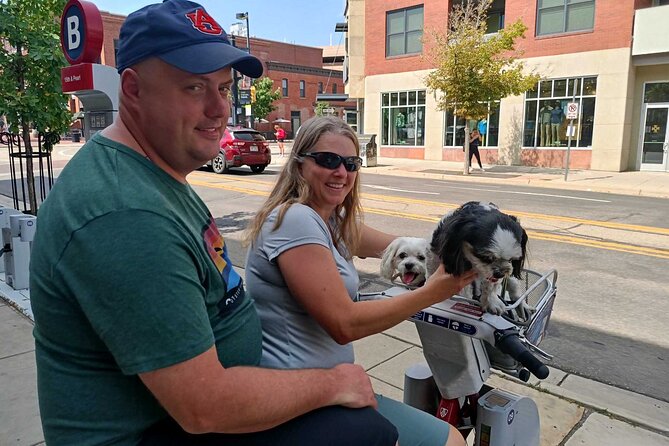
This one fits a lot of travel styles. It is family and dog friendly, and service animals are allowed. It also works well for friend trips, bachelor(ettes), birthdays, curious locals, and corporate groups, since it naturally creates teamwork and conversation.
I’d especially recommend it if you like:
- light competition with a friendly scoreboard
- walking and solving while staying in motion
- a structured way to see parts of Syracuse you might skip
You might want to skip it if your group really wants a traditional guided tour with fixed stops and a historian voice. This is more playful and task-driven. It is also phone-dependent, so it may not be ideal if your cell service is unreliable or you can’t get data to work.
Should You Book the Syracuse Showdown Scavenger Hunt?
If you want a fun, low-pressure way to explore Syracuse for about two hours, I think this is an easy yes. The live remote host plus the photo/video missions make it more engaging than a typical scavenger hunt, and the leaderboard adds a race feel that keeps teams focused.
Book it if your group can handle a phone-based game and is comfortable doing a few goofy tasks. Skip it if you know you won’t have reliable phone function or you want a quiet, traditional sightseeing day.
FAQ
What is the duration of Syracuse Showdown Scavenger Hunt?
The hunt lasts about 2 hours.
Where does the hunt start and end?
It starts at Cafe Kubal, 401 S Salina St, Syracuse, NY 13202, and ends back at the same meeting point.
How much does it cost?
The price is $29.00 per person.
Is the hunt hosted by someone, or is it self-guided?
It is remotely hosted by a live, interactive remote host who assists and encourages you through your phone.
Do I need a smart phone for the hunt?
Yes. Each team must bring at least one fully charged smart phone with GPS that can send and receive data, photos, videos, and text messages.
What if my phone number is international or I have technical issues?
If you have an international phone number or other technical difficulties, you can complete the game using WhatsApp or email. You can provide the contact information in advance through a message.
Is it a mobile ticket only?
Yes, it uses a mobile ticket.
Can I walk or drive between checkpoints?
The experience includes checkpoints you can reach by walking or driving.
Is it dog and family friendly?
Yes, it is described as family and dog friendly. Service animals are also allowed.
What is the cancellation policy?
You can cancel for free up to 24 hours in advance for a full refund.