REVIEW · SYRACUSE
Syracuse: Ortygia & Neapolis Archaeological Park Guided Tour
Book on GetYourGuide →Operated by Italygonia Travel T.O. · Bookable on GetYourGuide
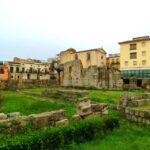
Syracuse tells its story in stone and sea. In just 2 hours, I love the fact that you start at the Temple of Apollo (580 BC, oldest Doric temple in Sicily), and I love the Cathedral of Syracuse built on the ruins of Athena, where columns re-emerge from the walls. The only catch: tickets for the Duomo and the Neapolis park are extra, and the transfer between Ortigia and Neapolis is on you.
You meet at the Umbertino Bridge by the Archimedes statue, where your licensed guide has a visible license badge. This is a private group tour, and the guide tone matters here: one guide named Giuseppe is singled out for being entertaining, with a style that works well for younger people too.
You also get the fun “Syracuse waterfront + archaeology” mix, with Fonte Aretusa’s ducks and papyrus, then the Neapolis sites like the Ear of Dionysus for a jaw-dropping echo-in-a-cave moment.
In This Review
- Key highlights at a glance
- Ortygia to Neapolis in 2 hours: what you’re really signing up for
- Starting at Umbertino Bridge and the 580 BC Temple of Apollo
- Piazza Archimede, the Diana Fountain, and Ortygia’s walking rhythm
- Cathedral of Syracuse: Baroque façade over ancient Athena columns
- Santa Lucia alla Badia and Caravaggio’s burial scene
- Fonte Aretusa: waterfront calm with papyrus and ducks
- Moving to Neapolis: Roman waterworks and showground engineering
- Ara of Hieron, Latomie del Paradiso, and the Ear of Dionysus
- Price and value: when $369.31 per group makes sense
- Best for families, art lovers, and time-crunched history fans
- Should you book this Syracuse Ortygia & Neapolis guided tour?
- FAQ
- How long is the Syracuse Ortygia & Neapolis Archaeological Park guided tour?
- Where do I meet the tour guide?
- Is this tour private?
- What is included in the price?
- Are tickets included for the Duomo or the Neapolis Archaeological Park?
- Is transportation from Ortygia to Neapolis included?
- What cancellation flexibility do I get?
Key highlights at a glance
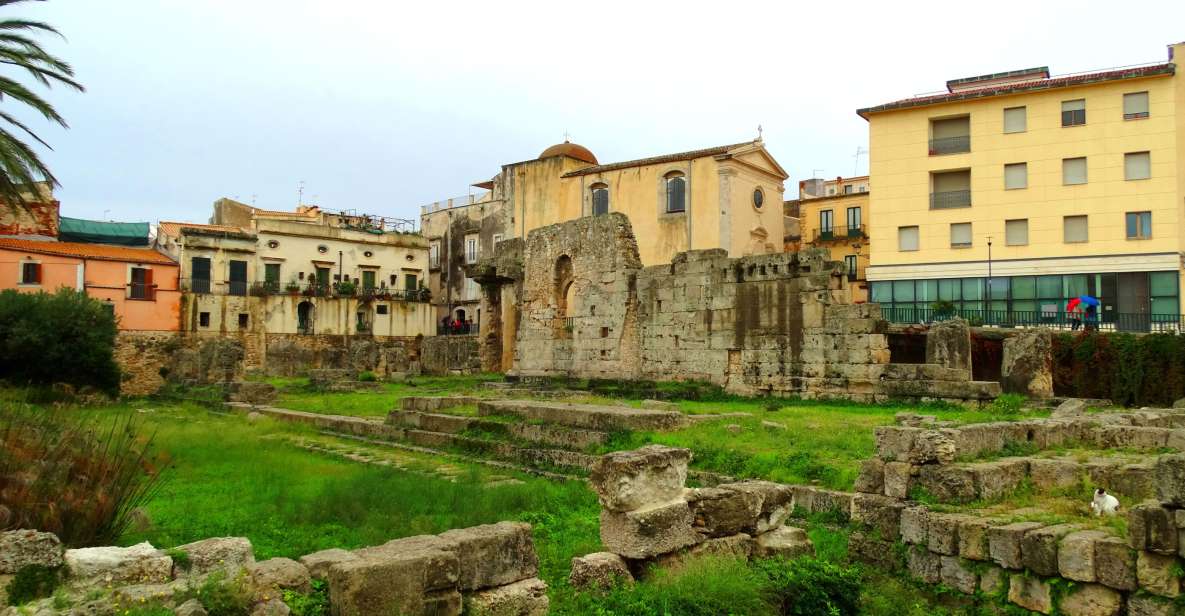
- Temple of Apollo (580 BC), the oldest Doric temple in Sicily
- Cathedral of Syracuse built over Athena’s temple remains, with ancient columns visible
- Santa Lucia alla Badia and Caravaggio’s The burial of Saint Lucia
- Fonte Aretusa with freshwater fish and ducks, plus papyrus plants
- Neapolis Archaeological Park stops that move from Roman showgrounds to Greek theater
Ortygia to Neapolis in 2 hours: what you’re really signing up for
This tour is short on paper—2 hours—but it’s packed with “big place, fast context” moments. You’re covering the historic center of Ortigia and then the Neapolis Archaeological Park sites. The value here is not that you’ll linger for long at every stop; it’s that a guide stitches the story together while you’re standing right in front of the monuments.
One practical point that affects your day: the tickets for the Duomo and for Neapolis are not included, so you should expect to pay separately. Another practical point: the transfer from Ortigia to Neapolis and back isn’t included, so you’ll need your own transport plan (car or public transport) between the areas.
If you’re someone who wants the “greatest hits” without building your own route, that’s where this tour shines. And if you’re traveling with limited time, this is a strong way to get oriented fast—especially in a place like Syracuse, where old Greek, Roman, and later styles are right on top of each other.
You can also read our reviews of more guided tours in Syracuse


Starting at Umbertino Bridge and the 580 BC Temple of Apollo
You begin at the Umbertino Bridge by the statue of Archimedes. That’s a smart way to start: Archimedes is part of the Syracuse identity, so it sets the tone for a tour about science, empire, and long memory.
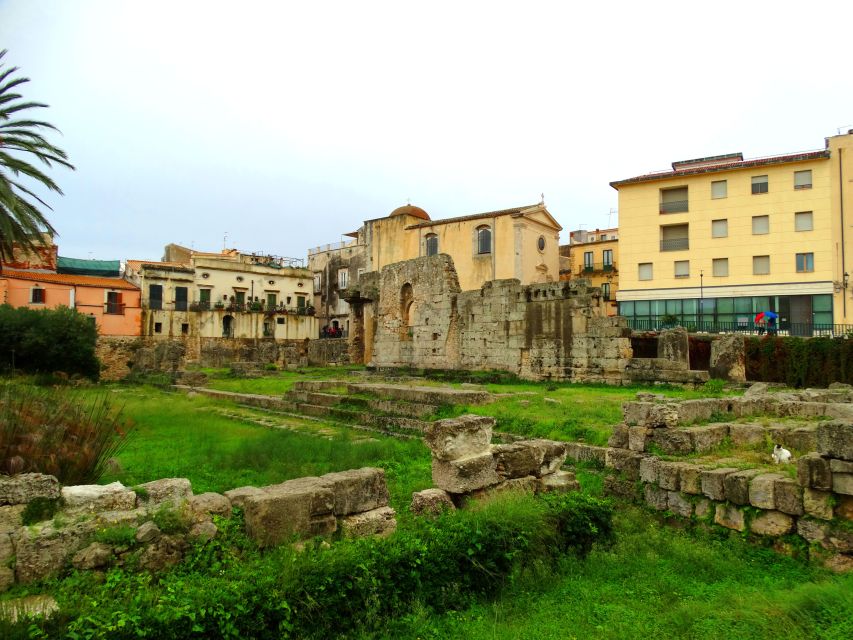
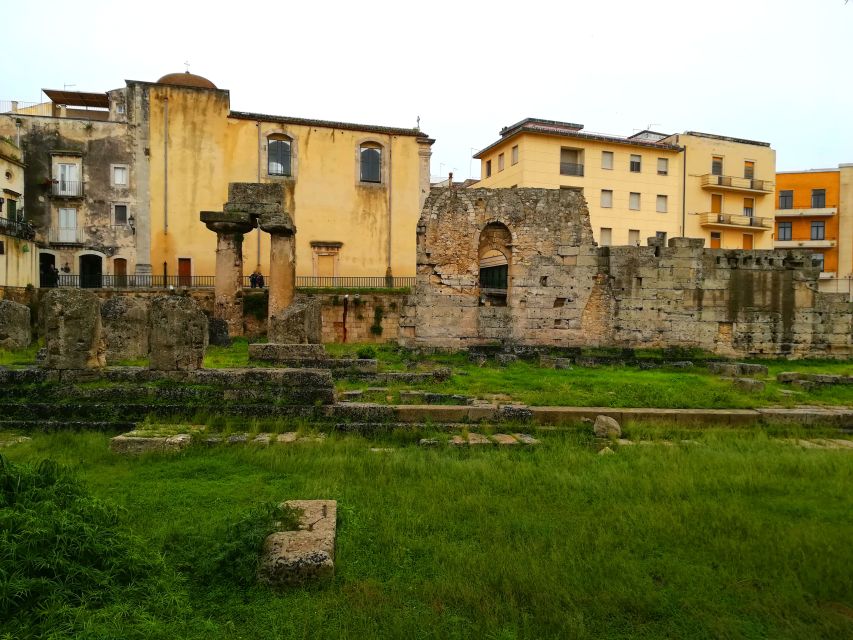
Then you head to the Temple of Apollo, dated to 580 BC. This temple is one of the reasons people fall for Ortygia. It’s not just an impressive ruin; it’s described as the oldest Doric temple in all of Sicily, which gives you a clear “this is early” reference point. Standing there, you can understand why later generations kept building and re-building on this island—because the location and the sacred weight of the site were already proven.
What I like about this opening is the way it anchors everything else. When you later see the cathedral layered over older structures, or the Roman theater architecture, you’ll recognize the pattern: Syracuse kept reusing the best ground and the most meaningful places.
Piazza Archimede, the Diana Fountain, and Ortygia’s walking rhythm
After Apollo, the route turns into classic Ortygia mode: tight streets, sudden views, and squares that feel like they were designed for slow conversation. You’ll pass through Piazza Archimede, named for the Syracusan mathematician. It’s the kind of stop that helps you understand why names matter here—these aren’t random street labels. They’re identity markers tied to the city’s story.
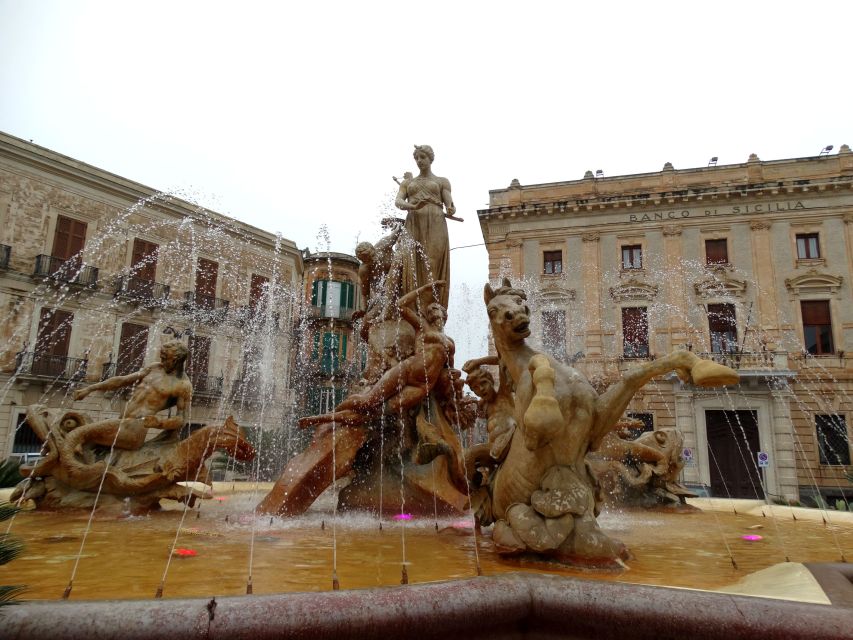
Then comes the Diana Fountain. In the tour flow, this is where you get an outdoor “myth meets daily life” moment. The fountain links to Syracuse’s tradition of storytelling through water and legend, which pays off later when you reach Fonte Aretusa. Think of it like a warm-up scene.
The walk also takes you to Piazza della Minerva, a white-limestone square with buildings that overlook the space. The setup matters: Ortygia is one of those places where the architecture frames the view, so you start to notice details while you’re moving. That’s usually when a guided tour adds real value—your guide helps you see what you’d otherwise rush past.
Cathedral of Syracuse: Baroque façade over ancient Athena columns
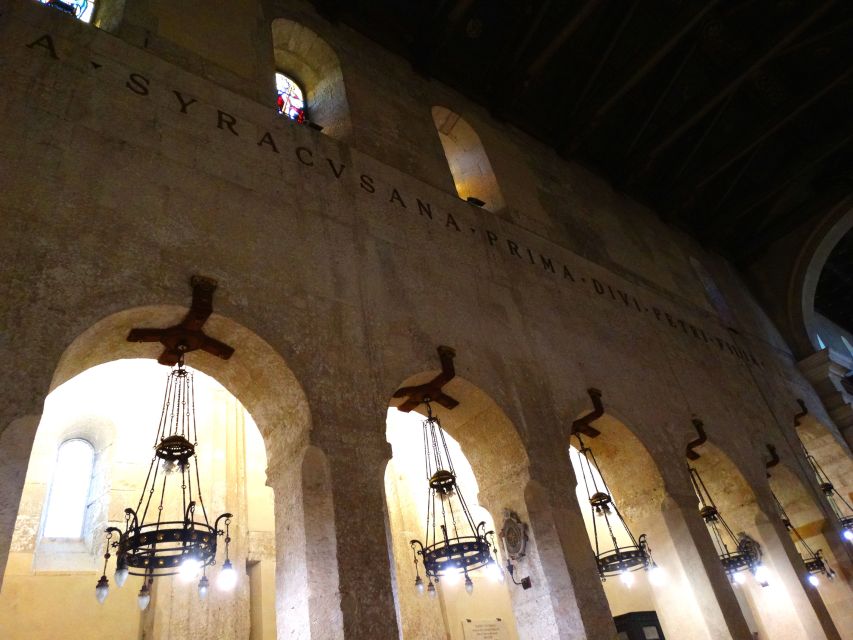
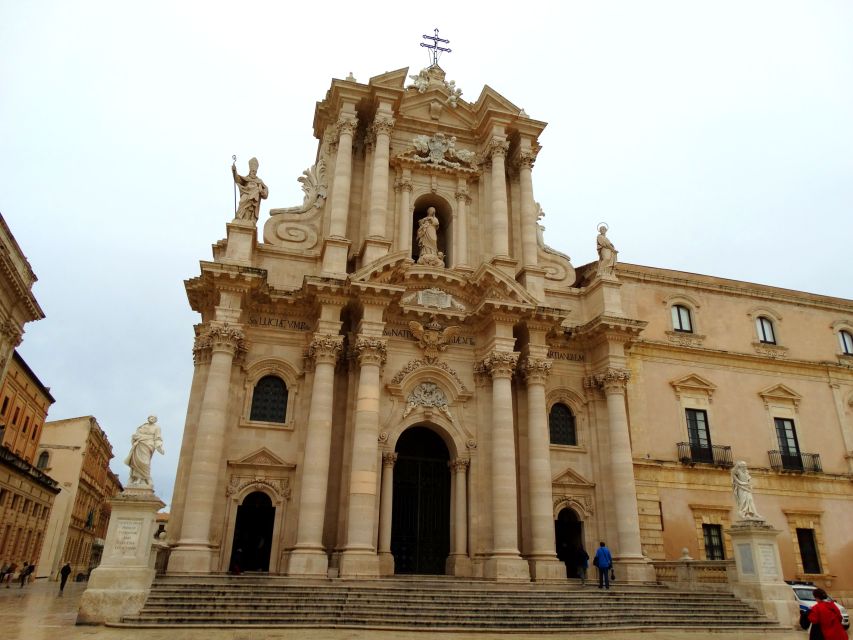
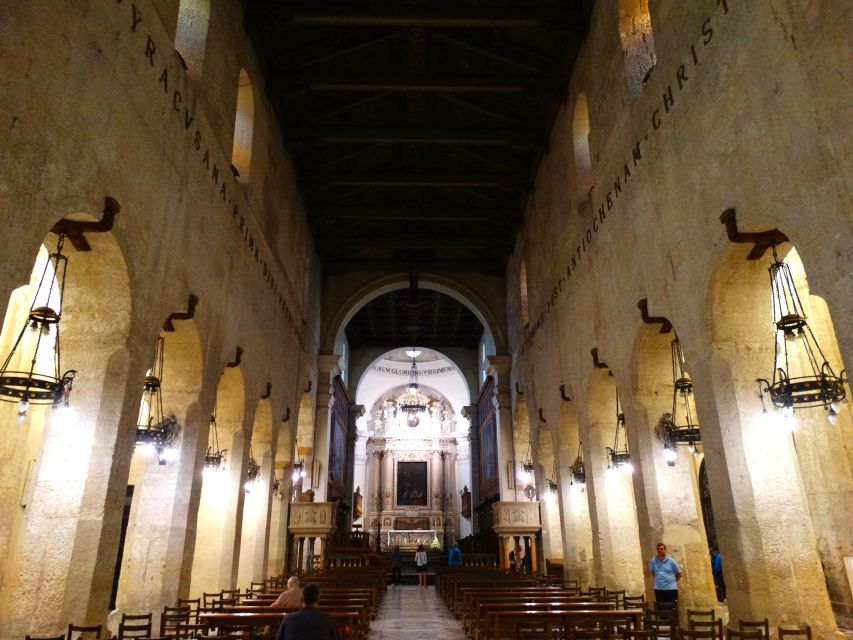
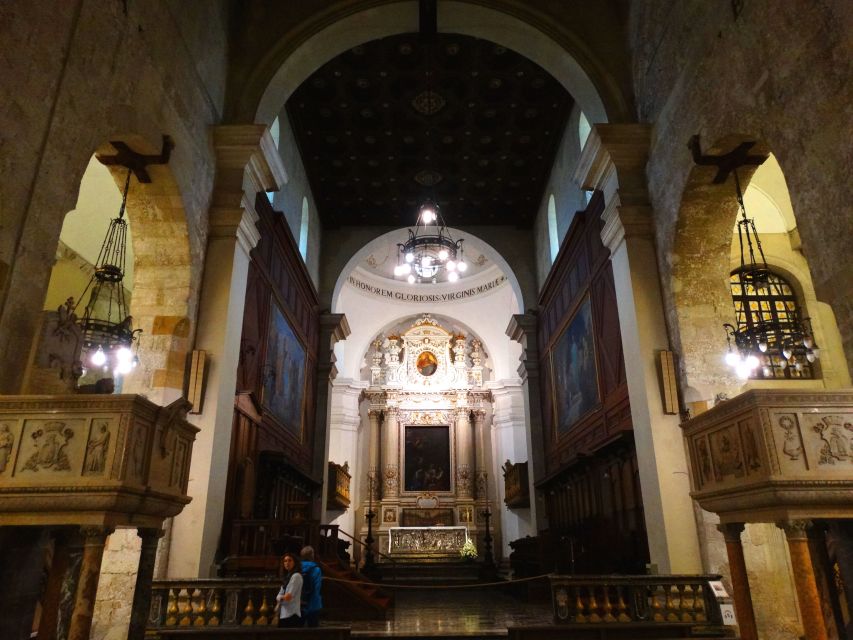
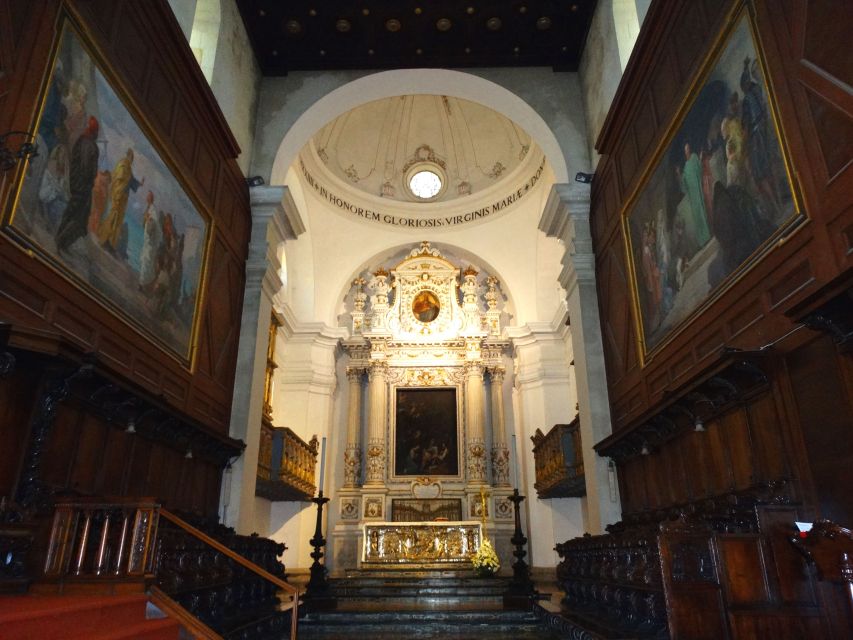
The big centerpiece on Ortygia is the Cathedral of Syracuse, tied to the Nativity of Mary Most Holy. What makes this stop genuinely interesting is the layering. The cathedral was founded on the remains of an ancient Temple of Athena, and parts of the older structure—columns—can be seen both externally and, more importantly, internally.
You’ll get the Baroque and Rococo mood from the imposing façade, framed by other prominent buildings around the square, including the seat of the town hall (Palazzo del Vermexio) and Palazzo Beneventano. You’re standing in the heart of a space where religious authority, civic power, and historical prestige all overlap.
One more practical note: the tour includes the cathedral entry as part of the experience, but the Duomo ticket is not included, so you’ll want to plan for that cost. If you can, arrive with enough time to handle ticketing smoothly so the rest of the tour doesn’t feel rushed.
This is also where guides can make the difference between “I saw a church” and “I understand what I’m looking at.” The cathedral story is basically a visual timeline: Greek sacred ground, later religious re-use, then Baroque-era expression. That’s the kind of perspective that makes a short tour feel longer in your head.
Santa Lucia alla Badia and Caravaggio’s burial scene
From the cathedral square, the route brings you to Church of Santa Lucia alla Badia. The reason this church belongs on most Syracuse lists is specific: it preserves Caravaggio’s painting The burial of Saint Lucia.
Even if you’re not a museum person, this stop is worth it because it adds a completely different layer to the story. You’ve just been talking about ancient temples and civic squares; now you’re in a church that holds one of the best-known names of Italian art.
The practical drawback here is ticket timing again. Since tickets are not included for the cathedral/major sites, you’ll want to keep your schedule tidy so you don’t lose time at the door when the guide wants to move on.
Still, this is exactly the kind of “why Syracuse matters” stop that turns a simple walking tour into an art-and-architecture lesson.

Fonte Aretusa: waterfront calm with papyrus and ducks
Next you shift to the sea side. The tour heads toward Fonte Aretusa, described as an unusual freshwater mirror inhabited by fish and ducks, with papyrus plants growing there. That’s one of those Syracuse details that sounds like a storybook—until you’re standing there and seeing the real waterline with the Mediterranean around it.
This stop is valuable for two reasons. First, it breaks up the archaeological intensity with an easy-to-feel-atmosphere moment. Second, it ties back to earlier “myth to place” themes you saw in the squares. You’re watching legend and geography meet in one spot.
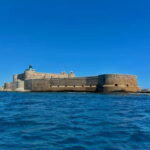
A few meters away is the Alfeo seafront, called the oldest stretch of seafront on the island. From there you also get the view of Maniace Castle, a fortress dating to the Swabian period. The castle’s past includes uses as a prison and military barracks, which makes it more than a pretty photo stop.
If you’re the kind of person who enjoys coastal pauses but hates vague “look at the view” sightseeing, you’ll like this pacing. The waterfront stops aren’t random; they’re connected to the same Syracuse story.
Moving to Neapolis: Roman waterworks and showground engineering
At some point in your day, you’ll transition from Ortygia to the Neapolis Archaeological Park area. Since the transfer isn’t included, make sure you’ve built time and transport into your plans. Neapolis is where the “main monument stacking” happens, and you don’t want to arrive late.
The Neapolis visit often starts around the Church of San Nicolò ai Cordari, noted here as an 11th-century church. From there, the route heads to the Roman Pool—big water tanks dug into the rock, with pipes that brought water to the Roman amphitheater for nautical games and water fights.
This is a great stop for anyone who thinks ancient Rome is only about politics and stone buildings. Water engineering was part of the spectacle. You can picture how they created a controlled environment in a hard, rocky setting. It’s one of those details that makes the site feel alive.
Then you reach the Roman amphitheater, dated here to the Augustus era. It has an elliptical structure carved into the rock and spread across three levels. The famous use: gladiator fights.
Even if you know the concept of Roman amphitheaters, this place feels different because the theater is tied to real local stone and the earlier water system you just saw. That’s what a guide does well in a short timeframe: they make each stop explain the next one.
Ara of Hieron, Latomie del Paradiso, and the Ear of Dionysus
After the Roman showgrounds, the route takes you to the Altar of Hieron, described as an immense altar dedicated to Zeus, where sacrifices of bulls took place. This is a blunt, physical reminder of how religion worked as public action. It’s not symbolic in the modern sense; it’s ceremony with scale.
Then you move toward the Latomie del Paradiso, described as quarries used for extracting stone. Among them is the Ear of Dionysus, a cave noted as 23 meters high, with an exceptional echo.
This is one of the moments where it’s hard not to smile. Even if you’ve never visited, the idea is simple: you’re in a carved space, and sound behavior becomes part of the experience. It turns a geological feature into a human story about acoustics and observation.
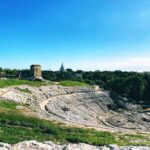
After that comes the Greek theater, carved into the stone. It’s described as the most famous and important monument of the archaeological park, originally built by the Greeks and later renovated by the Romans.
That Greek-to-Roman evolution is the core theme of Neapolis. You’re not just seeing separate monuments. You’re seeing how power and culture reused forms. When you finish here, you understand the park as a timeline you can walk through, even on a 2-hour visit.
Price and value: when $369.31 per group makes sense
The listed price is $369.31 per group (up to 30 people). Because this is a private group tour with a licensed guide, the price isn’t just “per head.” It’s more like you’re paying for someone to keep the route coherent, handle the story, and guide you through the major landmarks without you building the full plan.
What’s included is straightforward: a licensed tour guide. What’s not included: Duomo ticket, Neapolis Archaeological Park ticket, and transfer from Ortygia to Neapolis and back.
So the real cost picture is:
- Tour fee covers guide-led movement and explanation
- You pay separately for the key site admissions
- You handle your own transport between the two areas
Is that worth it? For me, it is when you fit one of these situations:
- You want a structured route but don’t want to spend time planning stops and reading up on everything
- You’re short on time and want the biggest highlights in a tight window
- You’re traveling as a group and want everyone to hear the same explanation at the same pace (that’s where private guides earn their keep)
If you’re traveling solo with lots of flexibility, you might compare this against self-guided routes plus a ticketed entry strategy. But if you want someone to tie together Apollo, Athena, Caravaggio, water traditions, Roman spectacle engineering, and the acoustic cave, the guide-led format is the value.
Also: a guide name mentioned in the available feedback is Giuseppe, and the note is that he was entertaining and worked well for younger visitors. That’s a good sign for pacing and delivery, not just facts.
Best for families, art lovers, and time-crunched history fans
This tour is especially friendly if you like variety. You’re not stuck only with temples, and you’re not stuck only with museums. You get:
- Ancient Greek architecture cues (Temple of Apollo)
- Layered religious architecture (Cathedral with Athena remains)
- A major art name (Caravaggio)
- Waterfront nature oddities (Fonte Aretusa’s fish, ducks, and papyrus)
- Roman spectacle (amphitheater and its water system)
- Sound and stone magic (Ear of Dionysus)
It’s also built to work with different languages—your live guide can operate in English, Italian, French, German, or Spanish—so it’s easier to match your group’s comfort level.
Who might consider another option? If you absolutely want slow time inside ticketed spaces, this 2-hour structure could feel tight. This is a “guided overview with standout stops,” not a “settle in for hours” kind of tour.
Should you book this Syracuse Ortygia & Neapolis guided tour?
I’d book it if you want a fast, guided way to connect Syracuse’s key layers—Greek roots, Roman reinvention, Baroque religious expression, and an unforgettable cave stop—without spending your energy building a route.
I’d pause and rethink it if you don’t want to handle two separate ticket costs or if arranging the Ortigia-to-Neapolis transfer sounds like a headache. The tour is designed to make sense as a guided walkthrough, but the admissions and the transfer are your responsibility.
One more practical nudge: since tickets aren’t included, make sure you’re ready to buy them quickly so you keep the tour rhythm.
If that all sounds manageable, this is a strong choice for getting real understanding fast—standing in the exact places where Syracuse’s story was written in stone and sound.
FAQ
How long is the Syracuse Ortygia & Neapolis Archaeological Park guided tour?
The tour duration is 2 hours.
Where do I meet the tour guide?
You meet at the Umbertino Bridge, at the statue of Archimedes. The tour ends back at the same meeting point.
Is this tour private?
Yes, it’s listed as a private group tour.
What is included in the price?
A licensed tour guide is included.
Are tickets included for the Duomo or the Neapolis Archaeological Park?
No. The Duomo ticket and the ticket to the Neapolis Archaeological Park are not included.
Is transportation from Ortygia to Neapolis included?
No. Transfer by own vehicle or public transport from Ortygia to Neapolis and back is not included.
What cancellation flexibility do I get?
Free cancellation is available up to 24 hours in advance for a full refund.