REVIEW · SYRACUSE
Siracusa: Neapolis’s Archaeological Park small group tour
Book on GetYourGuide →Operated by Enrica De Melio · Bookable on GetYourGuide
You can’t really appreciate Neapolis at speed. A small group tour here turns scattered ruins into a guided storyline across Greek and Roman Siracusa.
I really like the small-group pace, which makes it easier to look closely instead of rushing from one photo spot to the next. I also love that the guide is an archaeologist herself, so the sites feel less like names on a map and more like real places with reasons behind them.
One thing to plan for: you need to have your entrance ticket already sorted before you meet the guide, since tickets are not included.
In This Review
- Key things I’d watch for before you go
- Neapolis feels different when an archaeologist guides it
- Starting at Parco Archeologico Neapolis: get your bearings fast
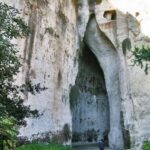
- The Greek Quarry of Paradise and the Ear of Dionysius
- Cave of Salnitro and the rope makers: where function hides in plain sight
- The Greek theater (early V century B.C.): when design does the talking
- Altar of Ierone II (III century B.C.): the civic side of the park
- Roman amphitheater: continuity with a new power
- How the 1.5-hour small-group pace keeps it fun
- Price and value: what $113.29 really covers
- Who this Neapolis tour suits best
- Should you book this Siracusa Neapolis tour?
- FAQ
- How long is the Neapolis Archaeological Park small group tour?
- Is the entrance ticket to the Neapolis Archaeological Park included?
- Where do we meet for the tour?
- Who is the guide?
- What languages is the tour offered in?
- What’s the group size?
- Is the tour wheelchair accessible?
Key things I’d watch for before you go
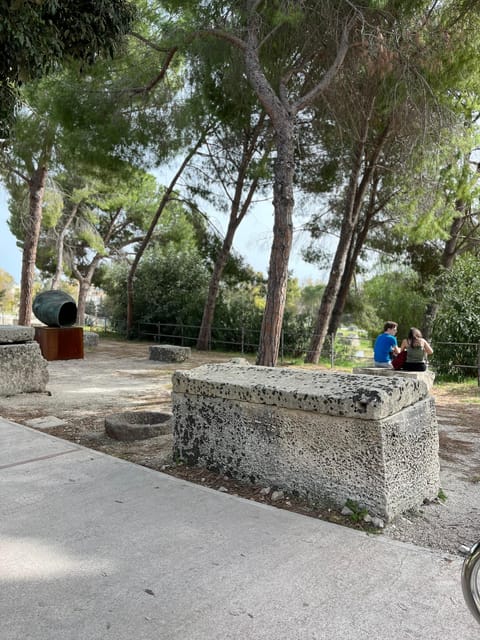
- PhD archaeologist guide (Dr. Enrica De Melio): you’re not getting generic commentary.
- Ninety minutes of actual walking and stops across the Neapolis Monumental Area.
- Greek Quarry of Paradise plus iconic caves (Ear of Dionysius, Salnitro, rope makers).
- Major performance sites: the Greek theater and the Roman amphitheater.
- Limited to 8 people, which keeps questions from feeling like a game of telephone.
Neapolis feels different when an archaeologist guides it
Neapolis is where Siracusa shows its layers. You’re moving through a place shaped by Greek engineers, Roman reuse, and centuries of changing purpose. Without context, it can feel like impressive stones with big labels. With Dr. Enrica De Melio, it clicks into something you can follow.
What makes this tour work so well is the way it connects physical spaces to the human story of how they were used. The park includes theatrical and underground spaces, plus structures tied to civic and cultural life. That mix can be confusing on your own. On this tour, it’s organized into a clear flow.
And yes, it’s also an enjoyable pace. The tour is described as slow and emotional, and you feel that right away: fewer rushed stops, more time to look and ask why something was built where it was.
You can also read our reviews of more tours and experiences in Syracuse.
Starting at Parco Archeologico Neapolis: get your bearings fast
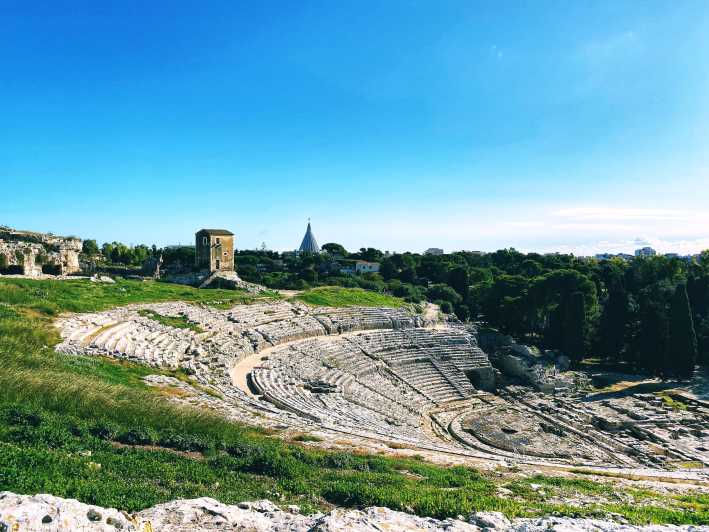
You meet at Parco Archeologico Neapolis. The key practical point: you must be there with your entry ticket already purchased. The guide will be holding a sign that says Get your Guide, so you can’t miss them.
Once you’re grouped up, you get an introduction to ancient Siracusa that acts like your anchor. That matters because the Neapolis area is spread out and the features are varied. When you understand the overall setting first, the individual stops make sense instead of competing for your attention.
This tour is also listed as wheelchair accessible, and it’s a live guided experience in Italian and English. If you need the simplest route and smoother pacing, this small group format helps.
The Greek Quarry of Paradise and the Ear of Dionysius
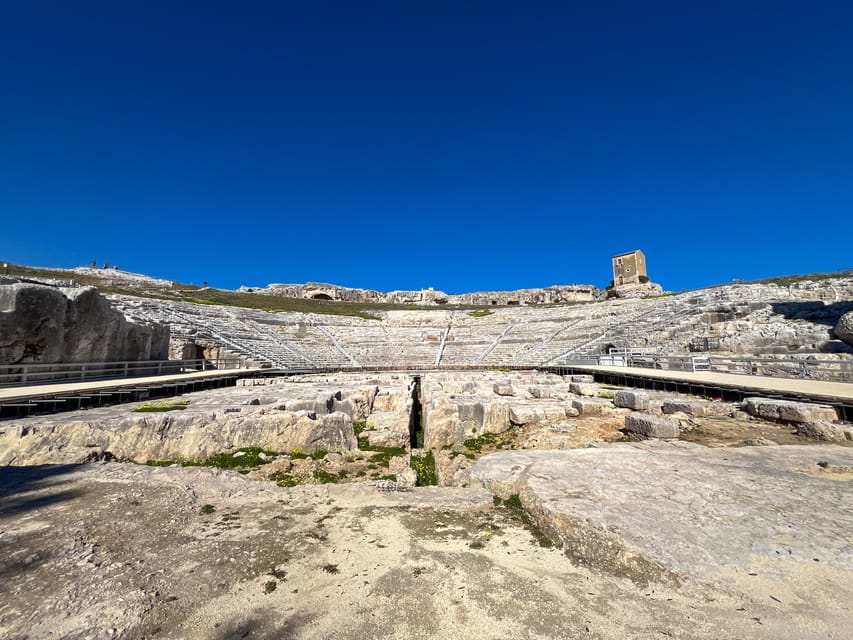
The tour’s opening walking segment goes into the Greek quarry of Paradise, a setting that feels both natural and engineered at the same time. The highlight here is the Ear of Dionysius, plus two other cave stops later, so this first area sets the emotional tone fast: you’re suddenly in a place built from stone where sound, ritual, and daily function can all overlap.
Even if you’ve seen the Ear of Dionysius in photos, I’d still expect it to land differently in person. In a quarry setting, it feels more specific and physical. It’s not just a curiosity. It’s a clue. This is the kind of stop where a guide’s context matters because the story has multiple strands and details that are easy to miss if you’re rushing.
A drawback to note: because it’s a compact tour over about 1.5 hours, you won’t have hours to linger in every nook. If you’re the type who wants to study every surface for 20 minutes straight, you might wish the time were longer. For most people, though, it’s a smart way to cover the essentials with good explanations.
Cave of Salnitro and the rope makers: where function hides in plain sight
Next come more underground stops in the same broader quarry area: the Cave of Salnitro and the cave of the rope makers.
These are the kinds of places that can sound mysterious on paper. The tour framing helps you understand them as parts of a lived system, not just spectacle. The guide ties these spaces to why people used them and how they fit into the larger ancient operation of the park area.
Also, underground spaces are where small details start to matter: how the space feels, what looks adapted versus carved, and how a guide helps you read those clues without turning it into a lecture that loses you. This tour strikes a good balance—enough information to make the setting understandable, without drowning you in facts.
And because the group is limited to 8, you don’t get that awkward bottleneck effect where half the group is blocked while the other half tries to photograph around them.
The Greek theater (early V century B.C.): when design does the talking
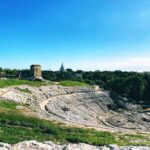
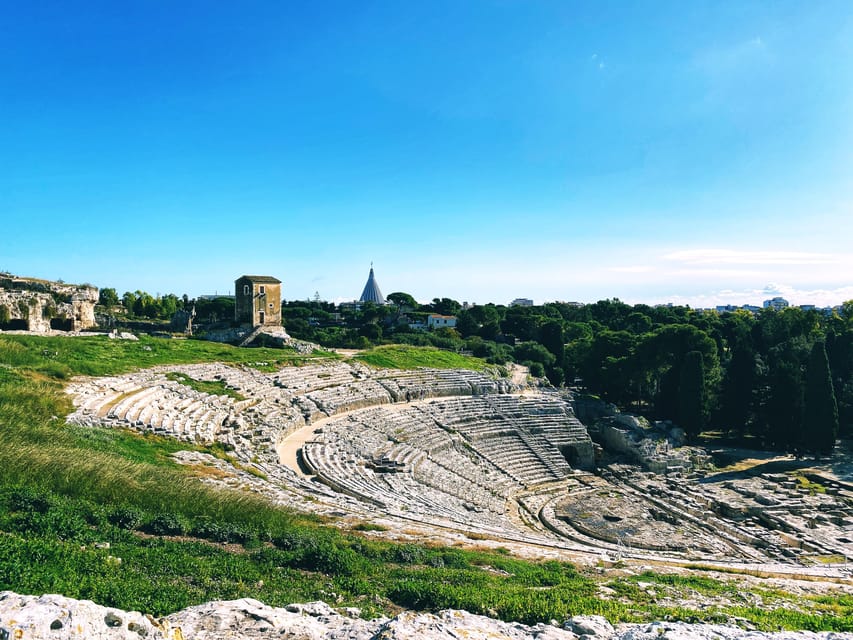
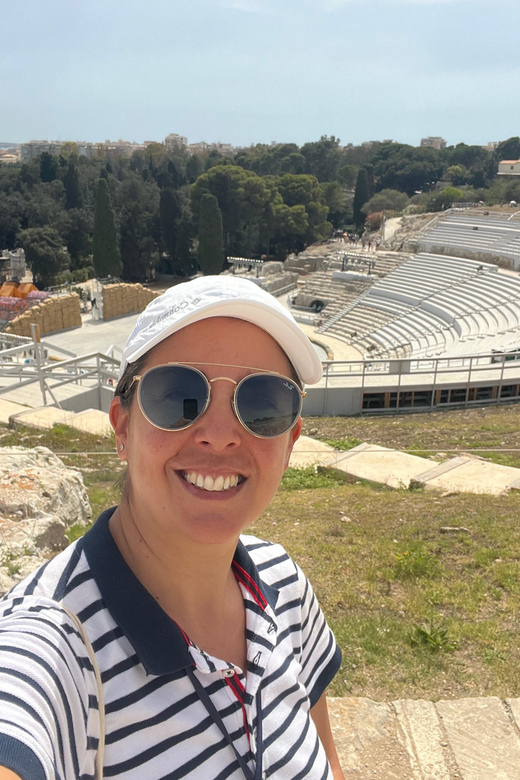
After the quarry and caves, the tour moves into the big open-air arena of the Greek theater (early V century B.C.). This stop is about perspective. In a theater, you can see how architecture channels movement and sound. You also see how Greek public life was built for gatherings.
The value here is not only what you see, but how you’re guided to see it. Instead of you guessing what each section was for, the explanation provides a route through the site: what mattered to performers, what mattered to spectators, and how the structure reflects the purpose.
If you’re even mildly interested in theater history, this is where the tour starts to feel like more than a list of landmarks. It becomes a story about attention—where people faced, how they listened, and why certain choices in design were practical.


Altar of Ierone II (III century B.C.): the civic side of the park
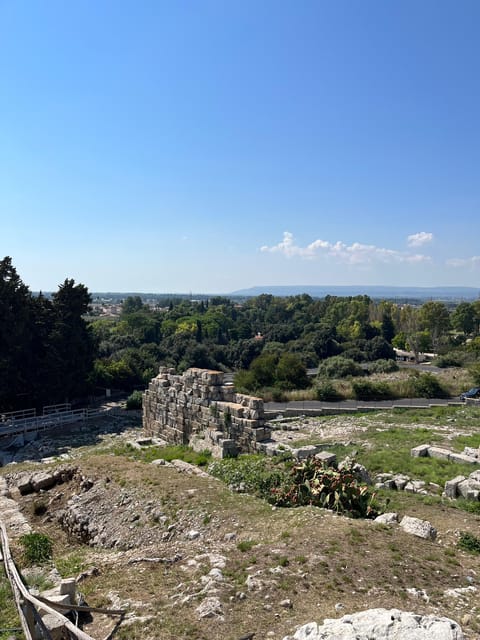
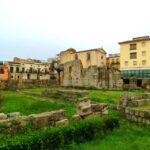
Then you reach the Altar of Ierone II (III century B.C.). This stop shifts you from performance space to civic and religious space—an important change, because it broadens what “cultural monument” means here.
An altar isn’t just a pretty slab. It’s a clue to how authority, ritual, and community life were staged in public space. With the guide’s archaeologist background, you get a clearer sense of why this location and this kind of structure belong inside the same Neapolis story as the theater and amphitheater.
The main benefit: it prevents the tour from becoming one long “look at cool ruins” walk. You start noticing patterns: where Greeks placed major public functions and how later periods kept using the same broader zone for their own needs.
Roman amphitheater: continuity with a new power
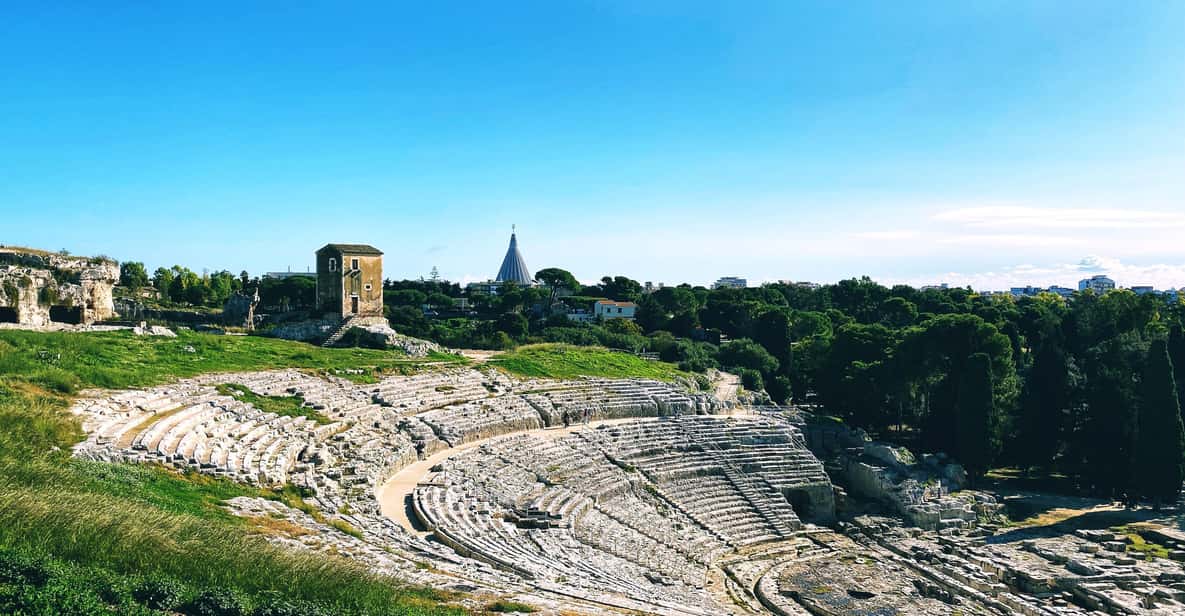
The tour finishes with the Roman amphitheater. This is where you feel the Roman chapter take over. Even without getting technical beyond what’s presented, the shift is visible in form and function: the Romans didn’t just build new sites; they adapted and expanded cultural life using their own style.
This stop tends to work especially well when you’ve already seen the Greek theater earlier. With that comparison in mind, the amphitheater stops feeling like a separate attraction and starts feeling like a continuation—same location category (public show space), different imperial voice.
It’s also a very satisfying end point. By the time you reach the amphitheater, you’ve crossed underground quarry spaces, moved through a civic anchor, and seen both Greek and Roman approaches to public gatherings. The tour has built a full arc.
How the 1.5-hour small-group pace keeps it fun
The entire experience runs about 1.5 hours. That’s a sweet spot for a place like Neapolis, where there’s a lot to see and a lot of context to understand.
With a group capped at 8 participants, the guide can actually answer questions without constantly repeating herself. It also means you’re not stuck behind crowds at each viewpoint. The tour is also offered in English and Italian, and it’s described as an emotional and slow tour—so expect more explanation and time to absorb, not just a sprint.
If you like an efficient plan that still feels personal, this is a good match. If you’re the type who wants maximum time per stop, you may prefer a longer self-guided visit after this tour, so you can come back to your favorite area.
Price and value: what $113.29 really covers
This tour is priced at about $113.29 per person and lasts around 1.5 hours. On paper, that can sound steep—until you look at what you’re paying for:
- A PhD archaeologist as the guide, not just a generic tour host
- A guided route through the Greek and Roman masterpieces of the Neapolis Monumental Area
- A small group cap that supports questions and slower pacing
- Expert interpretation of features like the Ear of Dionysius and the quarry caves, which are hard to understand without someone translating the site into human meaning
In other words, you’re paying for fewer guesswork moments. You spend your time looking at the right things and understanding why they mattered, instead of spending your energy reading labels and trying to piece together the story yourself.
If you love archaeology and enjoy being guided through major monuments, the value feels fair. If you just want photos with minimal explanation, a self-guided visit might cost less. But if context is what you want, this tour makes that expensive ticket price feel justified.
Who this Neapolis tour suits best
This is ideal if you want:
- A guided route through the core Neapolis sites without planning each stop
- Clear explanations of what you’re looking at, especially in caves and performance spaces
- A calm experience with a maximum of 8 people
- A guide who can field questions with an archaeologist’s precision
It’s also a good choice if you’ve got limited time in Siracusa. The park is big, and this route hits the key structures in one organized visit.
Should you book this Siracusa Neapolis tour?
I’d book it if you want your Neapolis visit to feel like a story, not a scavenger hunt. Dr. Enrica De Melio is central here: she’s an archaeologist and the tour style is built around making the site understandable, including the less obvious spots like the quarry caves.
Skip it if you hate guided tours in general, or if you’re looking for long free time in one spot. The tour is intentionally compact, and you’ll move with a plan.
My advice: buy your entrance ticket before the start time, arrive ready to meet at Parco Archeologico Neapolis, and treat this as your orientation into the park. Then, if you still have energy, you can go back on your own for extra time where you felt the most pull.
FAQ
How long is the Neapolis Archaeological Park small group tour?
The tour lasts about 1.5 hours.
Is the entrance ticket to the Neapolis Archaeological Park included?
No. Entrance tickets are not included, and you need to purchase them before the tour start time.
Where do we meet for the tour?
You meet at Parco Archeologico Neapolis.
Who is the guide?
The tour includes an Archaeologist and Qualified Tourist Guide of the Sicilian Region, PhD Dr. Enrica De Melio.
What languages is the tour offered in?
The tour is offered live in Italian and English.
What’s the group size?
It’s a small group limited to 8 participants.
Is the tour wheelchair accessible?
Yes, the activity is listed as wheelchair accessible.