REVIEW · SICILY
Baroque Noto private walking tour
Book on Viator →Operated by Hermes Sicily Tourist guides group · Bookable on Viator
Noto’s Baroque streets move fast. In this private walking tour, you’ll cover the town center’s big-name highlights in roughly 1.5 to 2 hours, with a guide to explain what you’re seeing and why it matters. I love the tight, efficient route through Noto’s main churches and palazzi, and you’ll also like how your group gets a personal pace instead of getting swept along in a crowd. One thing to consider: some interiors may cost extra (and the biggest-name palace stop isn’t included), and the walk means you’ll want decent shoes and patience for church dress rules.
What surprised me most is how much variety you get without changing locations. You’ll bounce between neoclassic and Baroque design, then finish on a lively central square where the architecture keeps talking long after the tour ends. The only real drawback is expectations: if you’re hoping for a long sit-down museum-style experience, this is a walking-and-looking tour, not a deep archive day.
In This Review
- Key Highlights Worth Booking For
- Noto’s Baroque in 90 Minutes to 2 Hours: What the Tour Feels Like
- Getting Started at Villa Comunale and Ending at Fontana d’Ercole
- Neoclassic Stops That Make the Baroque Make Sense
- Convento San Francesco d’Assisi all’Immacolata: First Look at Noto’s Dramatic Church Style
- Chiesa Santa Chiara: Small Stop, Big Message
- Cattedrale di San Nicolo: The Main Church Stop You Shouldn’t Rush
- Palazzo Nicolaci: One Extra Interior Fee Can Be Worth It
- Rosario Gagliardi’s Church Work and the Baroque-to-Story Connection
- Fontana d’Ercole: The Finish Line That Still Gives You More to See
- Price and Value: Is $123.16 Worth Two Hours of Noto?
- What Makes the Guide So Important Here (and How to Get the Most)
- Comfort Tips: Shoes, Steps, and the Church Dress Code
- Who Should Book This Private Baroque Noto Walk
- Should You Book This Baroque Noto Private Walking Tour?
- FAQ
- How long is the Baroque Noto private walking tour?
- What is the meeting point and where does the tour end?
- Is the tour offered in English?
- Is this tour private?
- Are entrance fees included?
- What dress code do you need for church visits?
- Can I cancel for a refund?
Key Highlights Worth Booking For
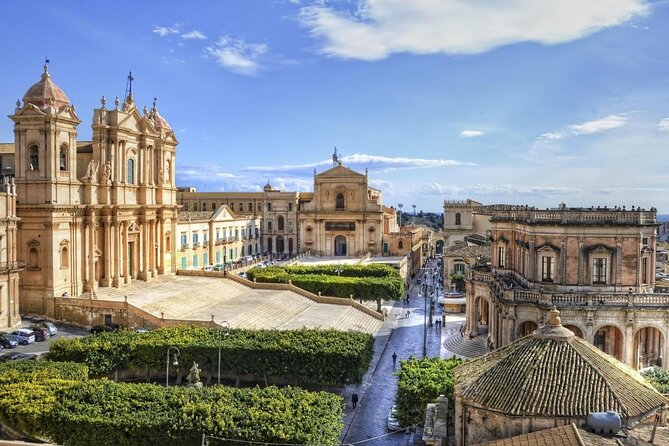
- Neoclassic meets Baroque in one compact route, so your brain actually connects the styles.
- Private format means your guide can slow down for questions and photos.
- Major Noto church stops are time-efficient, with several entry tickets noted as free for the listed visits.
- Palazzo Nicolaci is the one interior that may cost extra, so you can plan ahead.
- A great “end-point” finish at Fontana d’Ercole, right where you can keep exploring on your own.
Noto’s Baroque in 90 Minutes to 2 Hours: What the Tour Feels Like
Noto is small, but it’s not simple. In a short amount of time, you can see why this town’s Baroque look is famous: everything is designed to pull your eyes upward, around, and back again. This tour helps you do that without guessing. Your guide points out the details you’d usually miss while just walking through.
The private aspect matters more than you’d think. A group tour is still fun, but here you’re not stuck timing your day to other people’s photo habits. If you want to linger at a façade, pause to compare shapes, or ask what a specific element is meant to do, you can. That makes the two-hour window feel generous instead of rushed.
You also get the best kind of structure: start with context, then move through the main religious and civic landmarks that shape Noto’s center. That rhythm turns the walk into a story instead of a checklist.
You can also read our reviews of more walking tours in Sicily


Getting Started at Villa Comunale and Ending at Fontana d’Ercole
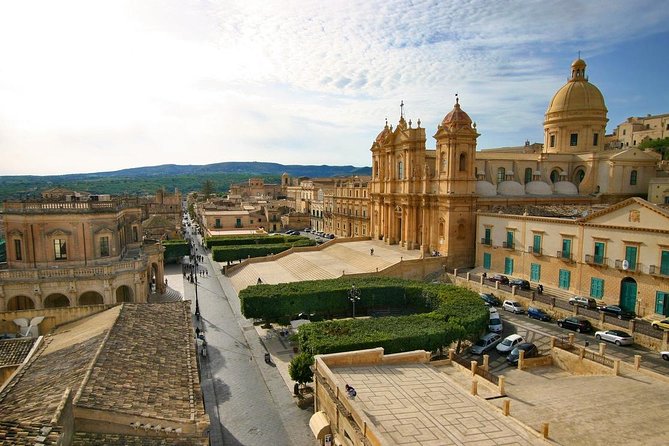
Your tour begins at Villa Comunale Noto, a helpful starting point because it’s easy to recognize and gives you a clean launch into town. The end point is Fontana d’Ercole on Via Matteo Raeli, which is a smart way to finish. Squares and fountains in Noto are more than scenery. They’re built into how the town lives—so after the last stop, you’re in the middle of things.
This “start here, finish there” layout is great if you want to keep exploring afterward. You’re not doubling back across the same streets just to get out of the center. Instead, you finish close to a natural next step: coffee, a quick stroll, or another church you’ve spotted on the way.
Neoclassic Stops That Make the Baroque Make Sense
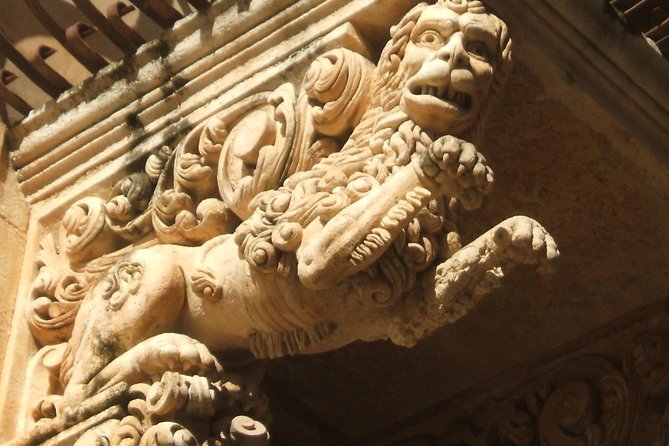
Noto’s Baroque is the headline, but the neoclassic moments are what help your brain decode the town. The tour includes neoclassic architecture early on, including the neoclassic town hall stop. Why does that matter? Because it gives you contrast.
When you see a neoclassic façade right before Baroque churches and palazzi, the differences snap into focus. Neoclassic tends to feel more ordered and restrained. Baroque feels like movement—curves, dramatic emphasis, and storytelling in stone. If you pay attention during that contrast, you’ll leave understanding the style, not just admiring it.
Convento San Francesco d’Assisi all’Immacolata: First Look at Noto’s Dramatic Church Style
The first major church stop is Convento San Francesco d’Assisi all’Immacolata. It’s listed as a Baroque church visit with about 15 minutes. Even in a short stop, churches like this are packed with design choices meant to guide your eye.
Here’s what to watch for during your look: the way the façade signals importance, the way openings and ornamentation frame the center, and how the style sets the tone for what you’ll see in the next places. Since the visit includes free admission for this specific stop, it’s an easy win for your time. You get a taste of the Baroque “voice” early, without spending extra.
Chiesa Santa Chiara: Small Stop, Big Message
Next up is Chiesa Santa Chiara, also a Baroque church visit with about 15 minutes and free admission for the listed stop. This church is where many visitors start noticing patterns—how ornamentation repeats, how angles are used for visual drama, and how the spiritual message gets translated into architecture.
Since it’s a short visit, your best move is to focus. Pick one detail to keep returning to: a sculpted element, a façade line, or a window arrangement. Doing that turns a brief stop into a “learn something” stop.
You can also read our reviews of more private tours in Sicily




Cattedrale di San Nicolo: The Main Church Stop You Shouldn’t Rush
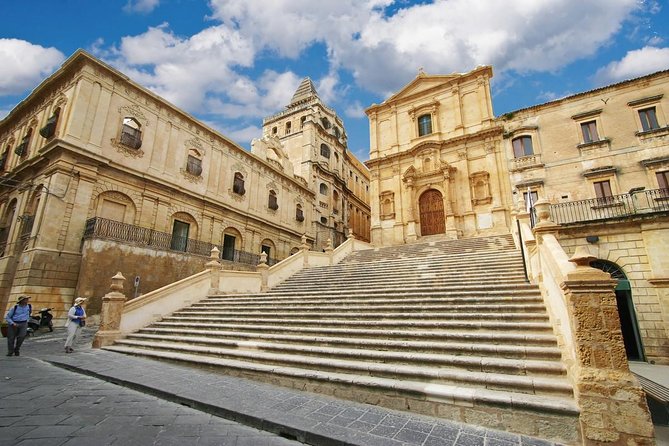
Then you hit Cattedrale di San Nicolo, Noto’s main church in this route, with about 20 minutes and free admission listed for this stop. This is the kind of place where you’ll want to slow down a bit, even if the overall tour is moving efficiently.
Why? The main cathedral usually acts like a compass for the rest of the town’s religious architecture. Even if you’re not a church superfan, you’ll feel the difference between a “pretty church” and the one that anchors the center.
You’ll likely find it easier to connect what you saw earlier once you’re here. The façade style, the emphasis, and the way the building claims space in the town make more sense after you’ve compared it with the other stops.
Palazzo Nicolaci: One Extra Interior Fee Can Be Worth It
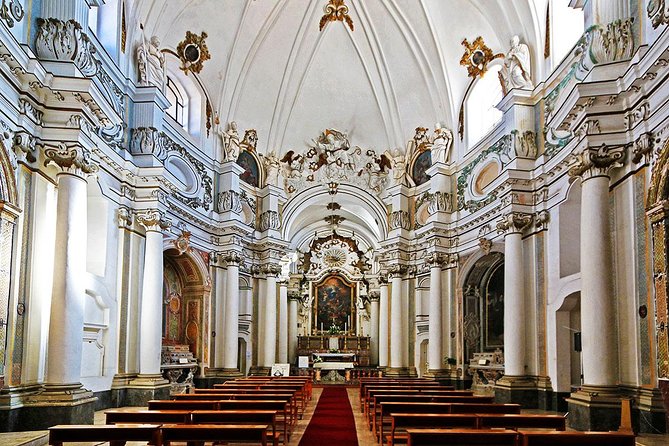
The standout civic stop in the route is Palazzo Nicolaci, described as the most beautiful Baroque building in Noto. Your time here is listed as about 20 minutes, and the key practical note is that admission isn’t included.
That matters for value. This is the one place on the route where you may pay an extra entry fee to see the interior. If Baroque palazzi interiors are your thing—staircases, painted surfaces, and the kind of decorative effort that signals wealth—this is the kind of extra cost that can feel justified.
If interiors don’t interest you as much, you can still enjoy the exterior focus. But if you’re paying for a Baroque tour, it’s worth budgeting for the chance to see at least one interior in detail.
Rosario Gagliardi’s Church Work and the Baroque-to-Story Connection
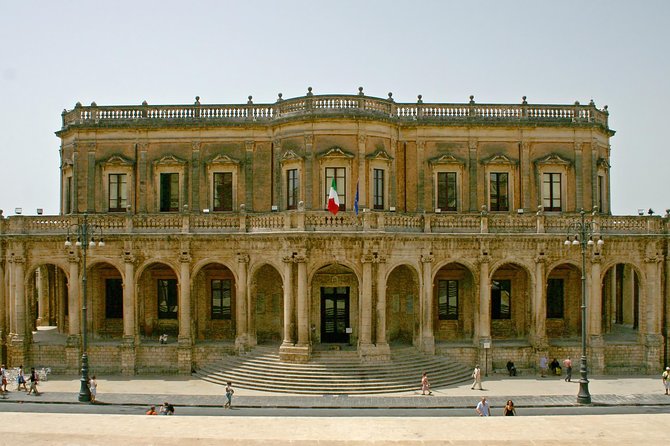
The tour also includes a stop described as a Baroque church by Rosario Gagliardi. That’s a name worth remembering because it points to the idea that Noto’s Baroque isn’t random decoration. It’s a coherent approach to architecture—someone shaped the look, and the town carries that signature.
You’ll get the most from this stop if you keep asking one simple question while you look: what is the building trying to make you feel, and how does it do that? Once you notice the building’s “direction”—where it draws your eyes and how it frames key elements—the entire walk starts to feel like a conversation between stone and sky.
Fontana d’Ercole: The Finish Line That Still Gives You More to See
The tour ends at the Fontana d’Ercole area, with about 15 minutes and free admission for the listed stop. The description ties together a square, the fountain itself, and nearby architectural anchors like San Domenico’s church and a neoclassical theater.
Why ending here works: you get a visual break. You’ve been focused on façades and church fronts. Now you’re in a space that feels like a town living room. It’s an ideal place to reset your senses and then keep exploring in your own direction.
If you want an extra payoff after the tour, plan for the views. One of the best panorama experiences in the area is a climb to the top of the bell tower at San Carlo—there’s a stair climb involved, but it’s often described as worth it, with a small cost (about 3 euros per person) for the ascent. It’s not part of the standard walking tour stops, but it’s a smart add-on if you’re physically up for steps.
Price and Value: Is $123.16 Worth Two Hours of Noto?
The price is $123.16 per person, and the duration sits around 1 hour 30 minutes to 2 hours. On paper, that might look like a lot for a walking tour. In practice, private tours tend to cost more for a reason: you’re not splitting a guide fee across strangers. You’re paying for attention.
Here’s where the value often lands for people:
- You’re seeing multiple key landmarks back-to-back, instead of spending half your day figuring out logistics and route order.
- You’re getting interpretation, so the architecture becomes understandable rather than just pretty.
- The tour format is flexible, so your guide can adjust when you stop for questions or photos.
The one value caveat is the interior access situation. Some stops are listed as free admission, and one major palace interior (Palazzo Nicolaci) is not included. If you’re the type who wants interiors as part of your “Baroque experience,” budget for that extra entry. If you’re more exterior-focused, the cost may feel more comfortable because you can enjoy the route’s external storytelling without paying more than necessary.
A practical note: if you prefer to travel light on extra costs, ask ahead what interiors are likely to require payment beyond the listed included stops. That’s the simplest way to avoid surprises.
What Makes the Guide So Important Here (and How to Get the Most)
This kind of tour lives or dies on the guide’s ability to translate stonework into plain language. The good news: multiple guides connected to this experience have been praised for passion and story-driven explanations. Names that show up in past traveler feedback include Giovanna, Tommaso, Eva, Roberto, and Sebastiano.
Even if you don’t know who you’ll get, you can set yourself up to benefit. Ask for comparisons. For example: compare one church façade to another. Ask why one building feels more dramatic than another. Ask what role the palazzi played in the town’s social life. A great guide will turn those into mini-lessons that stick.
And if your group likes practical help, lean in on it. Good questions include:
- Where should we look first for the most important details?
- What should we ignore because it’s not the signature element?
- What’s the best nearby spot to continue after the tour ends?
Comfort Tips: Shoes, Steps, and the Church Dress Code
This tour is doable for most participants, but plan for real walking and street-level stairs. Noto’s center is made for strolling, but it’s not flat like a theme park.
Also read the church dress guidance carefully. The requirement is simple: no shorts or sleeveless tops, and shoulders must be covered for both men and women. If you don’t comply, you may be refused entry. I’d rather you plan once than waste time standing outside a beautiful church entrance.
For footwear, go with something grippy. You’ll appreciate it when you’re turning corners, stepping down slightly uneven pavement, or climbing small changes in elevation between stops.
Who Should Book This Private Baroque Noto Walk
This tour is a strong fit if you want a fast, high-signal introduction to Noto’s architecture. You’ll especially like it if:
- You enjoy churches and want someone to explain what you’re seeing.
- You want the highlights in a short window without turning the day into navigation work.
- You prefer a private, small-group feel where your pace matters.
It may be less ideal if you’re looking for a slow museum-style experience or you want lots of time inside many interiors. In this format, you’re trading extra indoor time for more landmark coverage and a clearer overall storyline.
If you’re traveling with someone who doesn’t know much about Baroque art, that can actually be a plus. The guide’s job is to connect the dots, and a short, well-structured route helps everyone keep interest.
Should You Book This Baroque Noto Private Walking Tour?
If you’re spending limited time in Sicily and want Noto to feel meaningful, I’d say yes—with one smart condition: come ready to look upward and outward, not just forward at street-level scenery.
Book it if you want:
- a compact route through Noto’s key church and palace landmarks,
- an interpretation-focused walking experience in English,
- and a finish at Fontana d’Ercole that doesn’t trap you back at the start.
Skip or rethink it if:
- you want mostly interior museum time,
- you hate stair-heavy sightseeing,
- or you’re very price-sensitive and don’t plan to pay for extra interior access like Palazzo Nicolaci.
Overall, this is the kind of tour that helps you leave Noto with more than photos. You’ll leave with a mental map of styles—neoclassic setting the stage, Baroque doing the storytelling, and the town center ending in a square where the architecture still feels alive.
FAQ
How long is the Baroque Noto private walking tour?
It lasts about 1 hour 30 minutes to 2 hours.
What is the meeting point and where does the tour end?
The tour starts at Villa Comunale Noto and ends at Fontana d’Ercole (Via Matteo Raeli, 21, 96017 Noto SR, Italy).
Is the tour offered in English?
Yes, it is offered in English.
Is this tour private?
Yes. It is a private tour/activity, so only your group participates.
Are entrance fees included?
The listed church stops and the Fontana d’Ercole area are marked as free admission for the tour stops. Palazzo Nicolaci is listed as admission not included.
What dress code do you need for church visits?
You need to cover your shoulders, and you should not wear shorts or sleeveless tops. You may risk refused entry if you don’t meet the dress requirements.
Can I cancel for a refund?
Yes. You can cancel for a full refund if you cancel up to 24 hours in advance of the experience start time.