REVIEW · SICILY
Ortigia: Syracuse’s Ancient Town Center Private Walking Tour
Book on Viator →Operated by Hermes Sicily Tourist guides group · Bookable on Viator
Ortigia clicks into place with a guide’s route. This private 2-hour walk through Syracuse’s old heart helps you link the Temple of Apollo to the winding streets of Ortigia, so you spend time seeing instead of figuring out where to go.
I love the stop-by-stop explanations, especially at Fonte Aretusa, where the guide connects papyrus plants and the Alpheus and Arethusa myth to what you’re standing in. The main drawback to plan for is the cathedral rules: dress requirements can be strict, and interior access can be limited.
In This Review
- Key highlights worth planning around
- Ortigia in two hours: why a private walk saves your vacation
- Temple of Apollo: starting with Syracuse’s Greek foundation
- Piazza Archimede and the Diana fountain: a square built for contrasts
- Via Cavor near Collegio dei Gesuiti: learning from the side streets
- Piazza Duomo and the cathedral square: learn the cast of characters
- Syracuse Cathedral interiors: baroque on top of Greek stone
- Chiesa di Santa Lucia alla Badia: St. Lucy’s interior and the Monday snag
- Fonte Aretusa: papyrus, myth, and why the spring mattered
- Island of Ortigia and the Giudecca streets: walking the Jewish quarter
- Price and value: $107.53 and where the cost actually goes
- Practical tips that make the walk easier
- Should you book this Ortigia private walking tour?
- FAQ
- How long is the Ortigia private walking tour?
- Is the tour offered in English?
- Is this tour private or shared?
- Do I have to pay to enter Syracuse Cathedral?
- What dress code is required for the cathedral?
- When might the interior visit to Chiesa di Santa Lucia alla Badia not be possible?
- Can I cancel for a full refund?
Key highlights worth planning around
- Private, just your group: fewer awkward pauses, more time to ask questions and set the pace.
- Greek roots first: the tour starts at the Temple of Apollo, described as the oldest stone Greek temple in Sicily.
- Cathedral square with names you can place: you’ll learn what you’re looking at around the Duomo area, including Palazzo Vermexio.
- Optional cathedral interior: you can pay €2 per person for entry, but service times can restrict interior access.
- Fonte Aretusa myths in real time: papyrus plants and the Alpheus/Arethusa story are part of the walk, not a lecture from far away.
- Giudecca district streets: you’ll walk the old Jewish quarter area as part of the Ortigia loop.
Ortigia in two hours: why a private walk saves your vacation
Ortigia is gorgeous, but it’s also a maze of tight lanes and sudden views. This tour makes that problem disappear by giving you a clear line through the old town center. You’re not trying to match street corners to a map while everyone else steers toward the next church.
What you’re really paying for is time and confidence. Most stops are outside-focused and admission-free, so you get a lot of context without feeling like you’re rushing from one paid entry to the next. And because it’s private, your guide can adjust the emphasis to what you care about most.
You can also read our reviews of more walking tours in Sicily


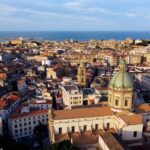
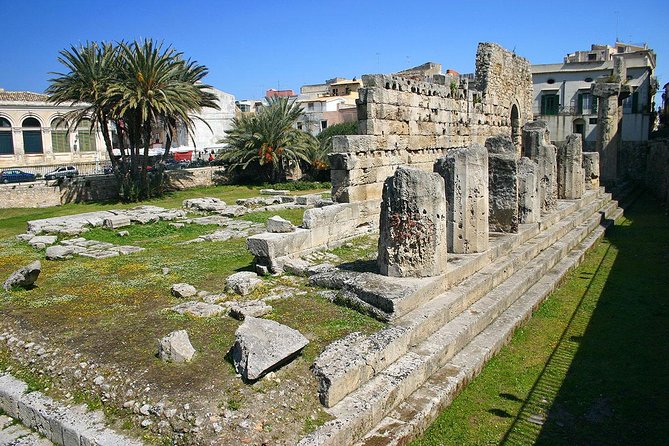
Temple of Apollo: starting with Syracuse’s Greek foundation
The walk begins near Tempio di Apollo, the oldest stone temple built by Greeks in Sicily. Even if you know almost nothing about Greek architecture, the guide’s job is to help you read the building as a clue. You’re not just looking at ruins; you’re seeing one of the earliest anchors of Syracuse’s long timeline.
A short visit here works well because it sets the theme for the rest of Ortigia. Later, you’ll keep noticing how later cultures added their own layers on top of what was already there. Think of it like the tour gives you a key, then hands you a bunch of locks to try.
You’ll also appreciate the practical side: this is an exterior stop, and there’s no admission ticket required. That means you get a strong start without spending time in ticket lines.
Piazza Archimede and the Diana fountain: a square built for contrasts
Next you’ll reach Piazza Archimede, where the standout is the neoclassical Diana fountain. The square is small enough that you can actually take in the surrounding facades, but big enough to feel like a true meeting point in the city.
This stop matters because it teaches you that Syracuse never became one single style. Greek roots are still visible nearby, but the squares and streets often reflect later tastes: Roman influence, baroque flourishes, and then more modern layers. When the guide points out what you’re looking at, you start noticing details on your own afterward.
It’s also one of those places where you can pause and look around without feeling like you’re falling behind. You’ll get the fountain, then you move on while the town is still fresh in your eyes.
Via Cavor near Collegio dei Gesuiti: learning from the side streets
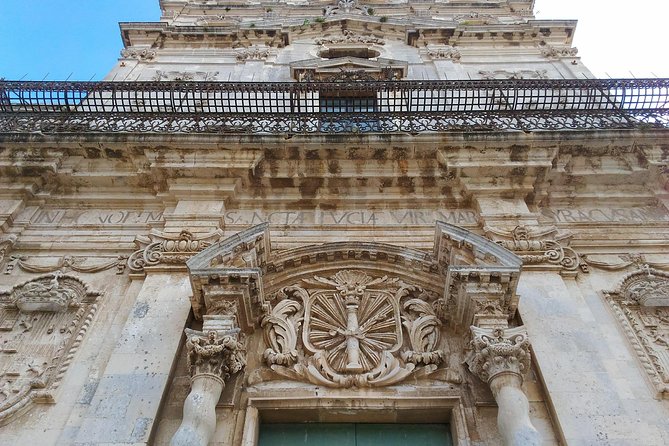
From the squares, the route shifts into the kind of street you’d normally pass without a second glance. Walking through via Cavor, you pass near the Collegio dei Gesuiti.
This is the kind of stop that feels small on paper and big in practice. Side streets are where you see how Ortigia actually functions. The walls, the doorways, the narrow approach to bigger landmarks—these details help the bigger sights make sense.
If you like history but also like real street life, this is a good moment in the walk. You’re transitioning from the public squares into the lived-in fabric of the island.
Piazza Duomo and the cathedral square: learn the cast of characters
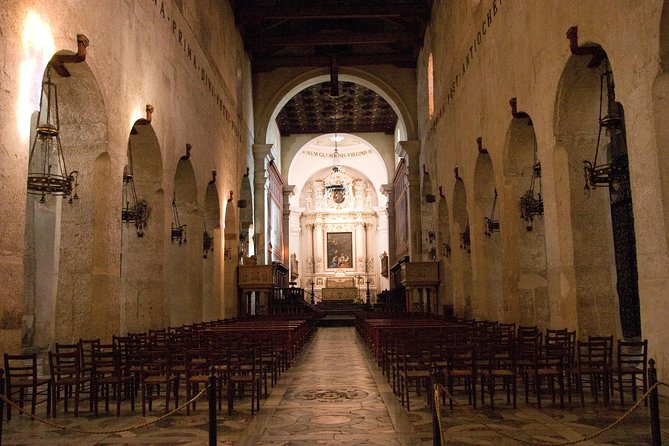
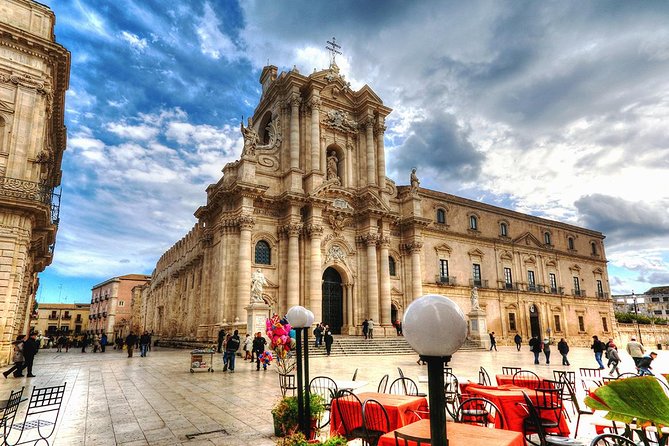
At Piazza Duomo, you’ll slow down and take in the main “stage” area of Syracuse’s cathedral complex. The guide explains what you’re looking at, including the cathedral, Palazzo Vermexio, the arcivescovado, and Palazzo Beneventano del Bosco.
This stop is valuable because it turns the square into a map of powers and eras. You’re not just admiring a church facade. You’re learning how religious authority, civic life, and historic buildings sit next to each other in the same view.
It’s also a good photographic zone. If you’re the type who likes to take a few minutes to frame shots without feeling hurried, this is one of those points where the tour tempo stays friendly.
You can also read our reviews of more private tours in Sicily


Syracuse Cathedral interiors: baroque on top of Greek stone
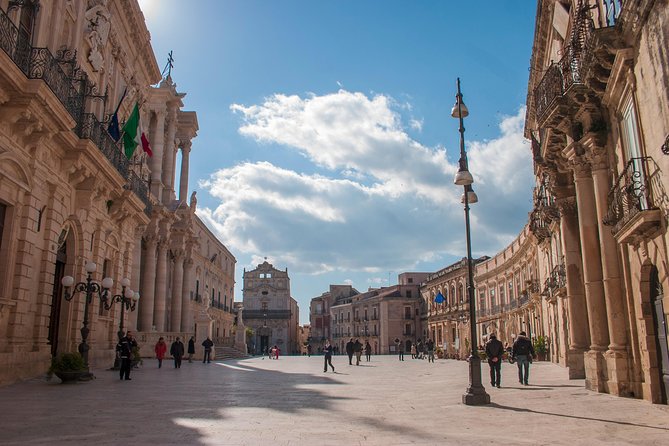
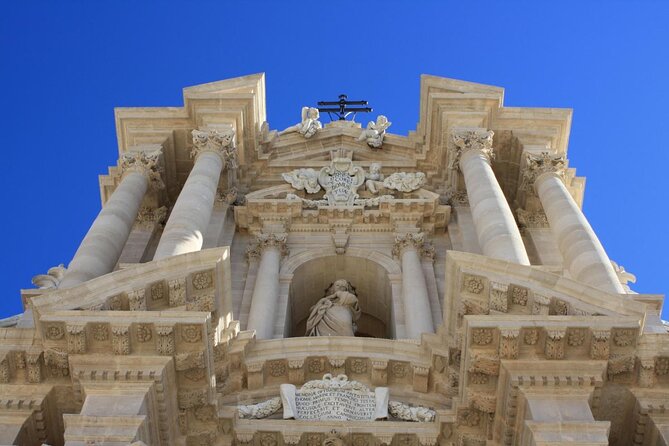
The tour then brings you to Syracuse Cathedral, a baroque church built on an ancient Greek temple. That combination is the star of the story. You’re seeing one culture overwrite another, but you’re also seeing how the old bones remain.
A key practical detail: the cathedral interior has an entrance fee of €2 per person, and it’s not included. Also, interior visits aren’t possible during holy mass or marriages. If that happens, your guide explains what you would have seen from the outside instead.
This is where the tour’s “value” math becomes very clear. You can treat the interior as an optional add-on rather than a mandatory cost, and the guide still gives you the architectural meaning even if the interior isn’t available that day.
One more must-know: dress code is required. No shorts or sleeveless tops, and shoulders must be covered for both men and women. If you show up dressed for summer sightseeing, plan for the possibility of being refused entry. I’d rather you arrive slightly over-covered than arrive confident and get turned away.
Chiesa di Santa Lucia alla Badia: St. Lucy’s interior and the Monday snag
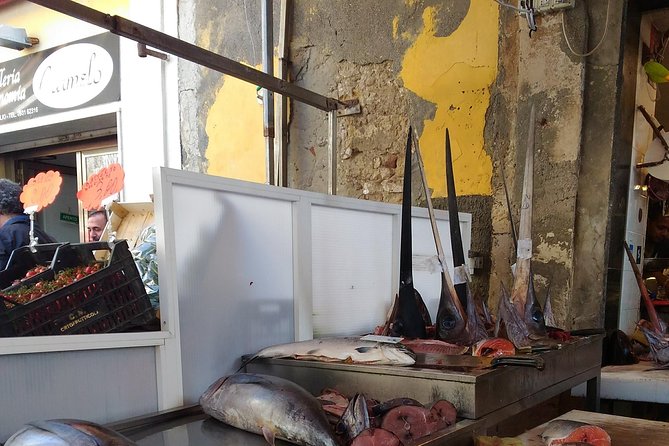
Next comes Chiesa di Santa Lucia alla Badia, with a visit to the interiors of the church of St. Lucy. This is a great stop for anyone who wants the tour to include more than exterior architecture.
There’s one scheduling limitation you should actually care about: the church is closed on Mondays, so interior access isn’t possible on that day. If your dates include a Monday, the guide can still show you what’s relevant from outside, but don’t expect the same interior payoff.
This is also one of those places where it’s useful to have a guide who’s good at explaining what you’re seeing. Even when access shifts, the story behind the building still lands better with a person walking you through it.
Fonte Aretusa: papyrus, myth, and why the spring mattered
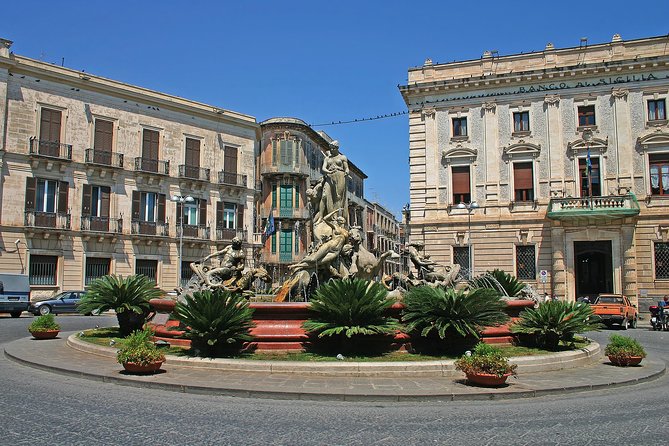
At Fonte Aretusa, you get a change of pace from stone and squares. This is Syracuse’s legendary spring, also known for its papyrus plants.
Your guide talks about the myth of Alpheus and Arethusa, connecting classical storytelling to the place itself. It’s one of the reasons Ortigia feels different from a typical sightseeing stop: the landscape isn’t just a backdrop. It’s part of the narrative the city repeats over and over.
This stop is also why I like this tour for people who want depth without suffering. You’re not trapped in a long museum. You stand where the story started, then you move on with your head full of connections.
Island of Ortigia and the Giudecca streets: walking the Jewish quarter
Then you shift into the narrow streets that make Ortigia feel like a living historic district instead of a checklist. You’ll walk through the old town center of Ortigia and into the Giudecca district, the historic Jewish quarter.
This section is where you’ll start noticing the city at human speed: small streets, quick turns, and views that appear only when you’re actually walking. You also get the added value of understanding what used to be here, instead of only reading plaques at the end of a walk.
The tour ends with Via della Giudecca, a focused walk that ties up the story of the district. It’s a satisfying final note because you’re leaving with a clearer sense of how many chapters Syracuse has held.
Price and value: $107.53 and where the cost actually goes
At $107.53 per person for about two hours, the price might feel high at first glance. But the value depends on what you’re getting and what you’re not paying extra for.
Here’s how the cost works in your favor:
- Most stops are admission-free and focused on learning from the outside.
- The only explicit optional paid entry is the cathedral interior (€2 per person).
- You’re getting a professional guide and a private walking experience (only your group participates).
Group discounts are mentioned as well, which can make a private tour feel more reasonable if you’re traveling with friends or family. And because the route reduces navigation stress, you’re not wasting time backtracking.
If you hate planning and want a guided spine for Ortigia, this price can make sense. If you only want a self-guided stroll and don’t care about architectural context, then you might decide to save money and go on your own. This tour shines when you want interpretation with your walking.
Practical tips that make the walk easier
Ortigia walking is pleasant, but it’s still walking through narrow streets and tight sightlines. Good shoes help, especially because you’ll want to stop for photos and look closer when something catches your eye.
For the cathedral, treat clothing rules as part of your travel plan, not a last-minute hassle. Bring a layer if you’re concerned about shoulders, and keep your legs covered if you want a smooth interior visit.
Weather matters too. The experience is described as requiring good weather, so if rain clouds gather, expect the provider may adjust dates rather than push through.
Language is English, and the guide is set up to handle questions. Guides associated with this experience in recent outings include Eva, Ava, Valeria, Carmine, and Frau Maier, so you’re likely to get a guide who enjoys explaining how all these eras connect. Even when the day includes access limits (like mass times), you still won’t feel left with a dead-end stop.
Should you book this Ortigia private walking tour?
Book it if you want a guided route that makes Ortigia feel coherent fast. I’d choose this when you care about history that you can actually see in the street: Greek foundations, baroque layers, and the Giudecca district all in one connected walk.
Skip it or downshift your expectations if you’re mainly hunting for independent wandering and you don’t want to deal with dress rules or optional paid entries. Also note the interior limitations: cathedral access can depend on services, and St. Lucy’s interior is closed on Mondays.
If you’re balancing limited time in Syracuse with a strong interest in what you’re looking at, this tour is a solid use of two hours. You’ll leave with a mental map, not just photos.
FAQ
How long is the Ortigia private walking tour?
It lasts about 2 hours.
Is the tour offered in English?
Yes, it is offered in English.
Is this tour private or shared?
It is private. Only your group participates.
Do I have to pay to enter Syracuse Cathedral?
You may pay an optional entrance fee of €2 per person for the cathedral interiors. It is not included.
What dress code is required for the cathedral?
No shorts or sleeveless tops are allowed. Shoulders must be covered for both men and women, or you may be refused entry.
When might the interior visit to Chiesa di Santa Lucia alla Badia not be possible?
The church is closed on Mondays, so interior access isn’t possible on that day.
Can I cancel for a full refund?
Yes. You can cancel up to 24 hours in advance for a full refund.