REVIEW · SICILY
Catania walking Tour – small group
Book on Viator →Operated by EtnaTribe · Bookable on Viator
Catania in two hours takes real shortcuts. This small-group walk threads from the baroque core toward Sant’Agata Cathedral, the fish market, and Roman-era sights, in English with guides such as Esther or Angela.
I love how it hits the big highlights without wasting time, and I also like the audio setup that helps you hear the guide clearly while you’re moving through busy streets.
One consideration: some stops have inside access that is not included, so you’ll decide on the spot whether you want to pay for entry at places like the Greek-Roman theatre, Roman amphitheater, and Teatro Massimo Bellini.
In This Review
- Key Things to Know Before You Go
- A 2-Hour Catania Walk That Helps You Plan Smarter
- Meeting Point on Via Erasmo Merletta: Convenient Start, Clean Finish
- Catania’s Baroque Heart: How the Tour Frames the Cathedral
- The Fish Market Stop That Makes the City Feel Real
- Greek-Roman Theatre: Quick Views, Clear Context
- Via dei Crociferi: A Baroque Street You Can Read Like a Map
- Anfiteatro Romano and Teatro Massimo Bellini: When Not Included Can Be a Benefit
- How the Small Group Works: Headsets, Pace, and Listening Comfort
- Guides Like Esther and Angela: Why Narration Changes a Short Tour
- Price and Value: Is $24 Worth Two Hours in Catania?
- What to Do After: Turning a Highlights Tour into a Real Day
- Who This Tour Suits Best (and Who Might Want More Time)
- Should You Book This Catania Walking Tour?
- FAQ
- FAQ
- How long is the Catania walking tour?
- What time does the tour start?
- How much does the tour cost?
- Where do I meet, and does the tour end anywhere else?
- Is it a small group?
- What is included in the tour?
- What is not included?
- Is free cancellation available?
Key Things to Know Before You Go
- A tight route through Catania’s main layers (baroque + ancient)
- Sant’Agata Cathedral first, so the tour sets the story early
- Fish market as a real-life stop, not a photo-op-only moment
- Quick, guided passes at Roman landmarks without eating your whole morning
- Small group size (max 15) for easier listening and a calmer pace
- A practical loop that ends where it starts, so you can pivot fast afterward
A 2-Hour Catania Walk That Helps You Plan Smarter
Catania can feel like a lot at once. You’ve got baroque streets that twist and open, churches that demand attention, and ancient ruins that seem to pop up where you least expect them. This tour is designed for the kind of day when you want the highlights without turning your schedule into a checklist.
The big win is the pacing. In about two hours, you get a guided sense of where everything sits, why Catania looks the way it does, and what’s worth returning to later. That’s a real value in Sicily, where you often want the morning for walking and the afternoon for something bigger, like Etna.
You can also read our reviews of more walking tours in Sicily



Meeting Point on Via Erasmo Merletta: Convenient Start, Clean Finish
You meet at Via Erasmo Merletta, 3, 95124 Catania CT and the tour ends back at the same meeting point. That might sound small, but it matters. When a walk loops back, you’re not stuck figuring out transport or backtracking through the old streets in heat, crowds, or both.
The tour start time is 10:30 am, and it runs for about two hours. It’s also described as near public transportation, which makes it easier to pair with other plans around town.
If you like having your bearings early, this setup helps. You finish near where you began, which is ideal if you want to grab lunch, start a self-guided wander, or head off toward another attraction.
Catania’s Baroque Heart: How the Tour Frames the Cathedral
The route begins by pulling you into Catania’s baroque historic centre. The point here isn’t just to look at pretty façades. It’s to learn how the city’s look ties together the time periods you’ll see later, from churches to streets to theatre spaces.
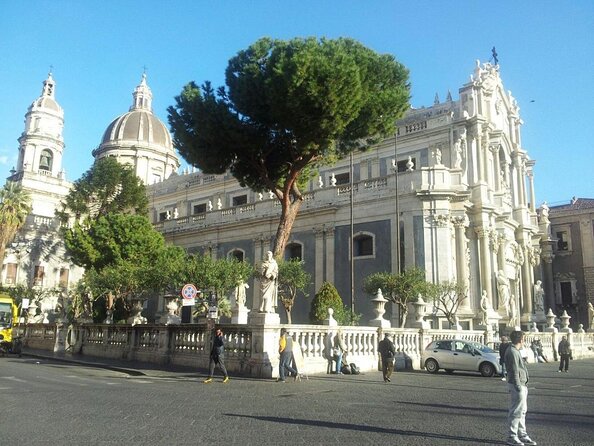
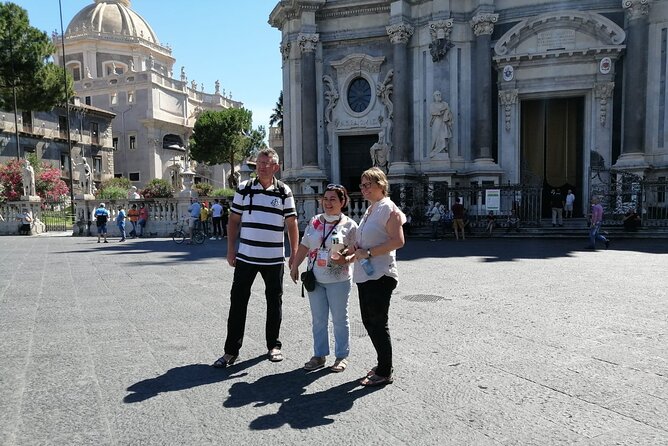
Then you stop at Basilica Catedrale Sant’Agata V.M. Catania, commonly known as Catania’s cathedral. This is a quick stop (around 10 minutes), but it’s placed at the start for a reason. If you understand the city’s central figure and the importance of the church, the rest of the architecture makes more sense as you walk.
Entrance is free for this stop, so you’re not stuck juggling tickets early in the morning. Even if you don’t go deep inside, you’ll get the context that makes a return visit more meaningful.
The Fish Market Stop That Makes the City Feel Real
One of the most practical stops on the route is the Catania Fish Market. It’s brief (about 10 minutes), but it’s the kind of moment that changes how you experience a place. Instead of only admiring historic stone, you get a sense of how Catania functions day to day.
This is also where the tour’s listening style matters. Guides can point out what you’re seeing right in front of you, and the small-group audio setup helps you catch details even when the street noise is loud. You’re not just passing through; you’re learning how the market fits into the city’s rhythms.
Admission is free for the market stop, so this is one of those “no extra decision needed” stops. If you like travel that includes everyday life, this alone can justify the tour.
Greek-Roman Theatre: Quick Views, Clear Context

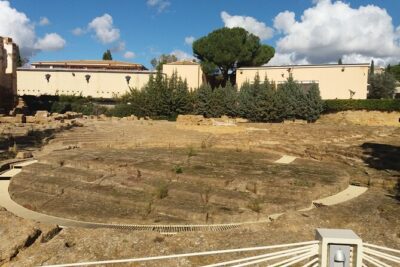
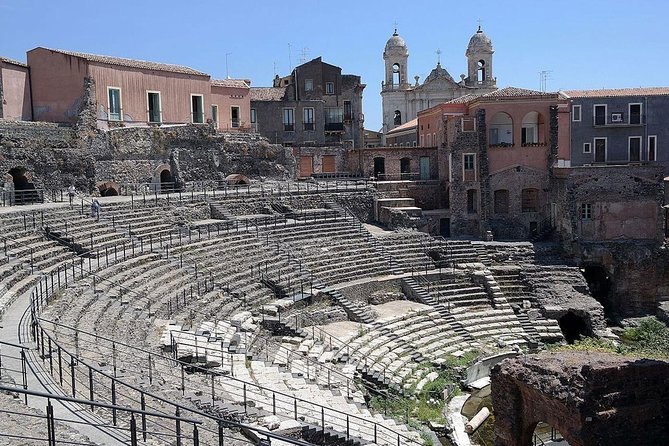
Next comes a stop at the Greek-Roman theatre. You’re given a 10-minute visit, and admission tickets are not included. That means you’re seeing it as a guided exterior or light stop, not a full inside tour.
This is a smart move for a short walking experience. If your time is limited, you don’t want to burn it waiting for museum-style entry. Instead, you get the framework: what the ruins represent and where they sit in the larger story of the city.
If you decide you want to go deeper, you’ll know why. And you’ll also know whether it’s worth spending extra time later to see more formally.






Via dei Crociferi: A Baroque Street You Can Read Like a Map
One of the most enjoyable parts of Catania is how quickly the city’s style changes as you turn corners. The tour hits Via dei Crociferi, a baroque street stop for around 10 minutes with free admission.
The value here is in interpretation. A guided walk helps you notice patterns and features you’d probably miss if you just wandered on your own. That’s how you turn a street view into a story you can carry into future stops.
You’ll also walk through the centre streets and squares on the route. These are short, but they matter because they connect the big landmarks. They also help you understand the spacing and flow of the old town.
Anfiteatro Romano and Teatro Massimo Bellini: When Not Included Can Be a Benefit
The tour includes two more major sights where inside access is not included:
- Anfiteatro Romano (Roman amphitheater), about 10 minutes
- Teatro Massimo Bellini, about 10 minutes
Both are marked as admission ticket not included, which is important for your planning. In a short tour, not including entry fees often means the guide can keep the pace moving. You see the landmarks, you get the context, and you avoid spending half your morning on waiting and ticketing.
If you love theatre and performance spaces, you may want to return for a longer look. If you mostly want the highlights and context, you’ll still get value from the guided stops.
This is where your tour audio and guide style can really affect your experience. Some guides work best at a steady pace with narration, while others talk in brief bursts tied to each stop. Either way, you’re set up to decide what to do next.
How the Small Group Works: Headsets, Pace, and Listening Comfort
This is a maximum 15 travelers tour, which is one of the reasons it stays enjoyable. On a busy street, small groups don’t bunch up as much, and it’s easier to hear the guide without playing the game of craning your neck behind taller people.
One review noted an individual ear speaker system, and that’s a big deal in a city like Catania. It helps you keep up with explanations even while the group is in motion. If you’ve ever struggled to hear a guide in another location with street noise, this kind of setup is the difference between learning and just observing.
Pace is another theme in the feedback. Many people liked that the duration felt “perfect” for a highlights tour. That matches the structure: lots of short stops, fewer long waits, and enough breathing room for you to continue exploring after.
Guides Like Esther and Angela: Why Narration Changes a Short Tour
Two guide names came up in the feedback: Esther and Angela. What you can take from that is simple: this tour leans on the guide’s ability to connect the dots fast.
The best version of this kind of walking tour does two things:
- It makes each landmark feel connected to the bigger city story.
- It gives you enough background that you can recognize themes when you return later.
Some feedback praised guides for beautiful narration and for using pictures to bring history to life. That matters because a cathedral or theatre can look like stone until someone explains what you’re looking at and why it matters.
There’s also a fair consideration to keep in mind. One person felt the walking time had less commentary than they expected and thought the time at the church ran longer than ideal. If you’re the type who likes constant talk while moving, you might mentally prepare for a stop-and-explain rhythm rather than nonstop commentary on every step.
Price and Value: Is $24 Worth Two Hours in Catania?
At $24 per person for about two hours, you’re paying for guided route efficiency. You’re not paying for a long museum day with many paid entrances. Instead, you’re buying:
- A plan for where to go first in the city centre
- Guided context for baroque and ancient layers
- A small-group experience with audio support
- Access to the key free sights along the route
And because several highlights have free admission on the schedule, you’re not forced into extra costs just to participate. Cathedral and the fish market are free stops on the route. That makes the overall value feel more predictable than tours where most of the time is spent paying entry fees.
If you only have a morning in Catania, this is exactly the kind of structure that helps your time feel useful instead of spent “mostly walking around.”
What to Do After: Turning a Highlights Tour into a Real Day
When your tour ends back at the meeting point, you’re ready to pivot. That’s helpful because Catania pairs well with both slow wandering and bigger day plans. If you’re planning something like Etna later, you’ll probably appreciate having your city bearings first.
Here’s how I’d use this tour as a launchpad:
- Go back to the cathedral area if you want a longer look without the pressure of staying on schedule.
- If you’re curious about Roman sites, decide whether you want paid entry based on how interested you are after the guided context.
- Build your lunch plan around the fact that the fish market stop confirms where daily life happens close to the historic centre.
The tour also supports follow-up exploring. Once you understand the route logic, your self-guided time is more targeted instead of scattered.
Who This Tour Suits Best (and Who Might Want More Time)
This tour fits best if you want:
- A short, structured intro to Catania’s major sights
- A small-group pace (max 15)
- Guided context that helps you walk the historic centre with confidence
- Time left afterward for food, shopping, or extra attractions
It might be less ideal if you’re looking for a deep, inside-focused day with lots of paid admissions. Since several of the major attractions are marked as not included for tickets, you’ll need to either accept the quick stop or plan extra time to see interiors.
If you’re a first-timer in Catania, this tour can save you from spending your limited time on the wrong side streets. If you’ve already visited a few sites and want only one or two big deep dives, you might prefer a longer, more focused tour.
Should You Book This Catania Walking Tour?
I’d book it if your priority is an efficient, guided overview that helps you understand Catania fast. The mix of baroque highlights, Sant’Agata Cathedral, the fish market, and quick Roman stops gives you a broad sense of what makes the city worth returning to.
The biggest reasons to choose it are the small group size, the audio-supported listening comfort, and the short route that leaves you time for your own plans. If you’re okay making decisions on optional entrances and you want a morning you can build on, this is a strong pick.
FAQ
FAQ
How long is the Catania walking tour?
It lasts about 2 hours.
What time does the tour start?
The start time is 10:30 am.
How much does the tour cost?
The price is $24.00 per person.
Where do I meet, and does the tour end anywhere else?
You meet at Via Erasmo Merletta, 3, 95124 Catania CT, Italy, and the tour ends back at the same meeting point.
Is it a small group?
Yes. The tour has a maximum of 15 travelers.
What is included in the tour?
Included is a multilingual guide and the tour uses a mobile ticket.
What is not included?
Food and drinks are not included. Also, admission tickets for some stops (like the Greek-Roman theatre, Roman amphitheater, and Teatro Massimo Bellini) are listed as not included.
Is free cancellation available?
Yes. You can cancel for a full refund up to 24 hours before the experience starts.
If you tell me your travel dates and what else you’re doing in Catania (food, Etna day trip, or more ruins), I can suggest a simple follow-up plan that fits right after this tour.