REVIEW · SICILY
Excursion on the summit craters of Etna, with cable car and 4×4 bus
Book on Viator →Operated by Etna Together · Bookable on Viator
Etna’s summit craters are loud and real. I like the combo of professional volcanic guidance and fast altitude shifts—cable car up to 2,500 m and 4×4 to 2,800 m—so you spend more time on the actual crater walk. I also love that you’re kitted for the higher zone with a mandatory helmet above 2,900 m. One drawback to plan for: weather and wind can slam the top, and visibility may drop hard.
You start at about 1,900 m at the Rifugio Sapienza area in Nicolosi Nord, with pickup optional (extra cost). The day runs about 5 hours 30 minutes and keeps groups small (max 15 people), which matters on active volcano terrain where everyone needs clear instructions and steady pacing.
In This Review
- Key Highlights You’ll Actually Feel
- Etna Summit Craters: what this tour gets right
- From Nicolosi to Rifugio Sapienza at 1,900 m
- Cable car up to 2,500 m: energy-saving by design
- 4×4 minibus to 2,800 m: the shortcut to the real terrain
- Trek to ~3,340 m: what you’ll see at the active craters
- Valle del Bove: where Etna’s volcanic structure shows through
- Descent on volcanic sand and back via cable car
- Guides and safety gear: why this matters on an active volcano
- Price and value: is $168.58 a fair deal?
- Weather and wind: how to protect your summit expectations
- Language and guide communication: what you can expect from the day
- Who should book this Etna craters tour (and who shouldn’t)
- Should you book Etna Together’s summit craters tour?
- FAQ
- How long is the Etna summit craters excursion?
- Where does the tour start?
- Is pickup included?
- What’s included in the ticket price?
- Do I need to bring lunch?
- What’s the highest altitude you reach?
- When is a helmet required?
- What fitness level do I need?
- What language is the tour offered in?
- What happens if the tour can’t run due to weather?
Key Highlights You’ll Actually Feel
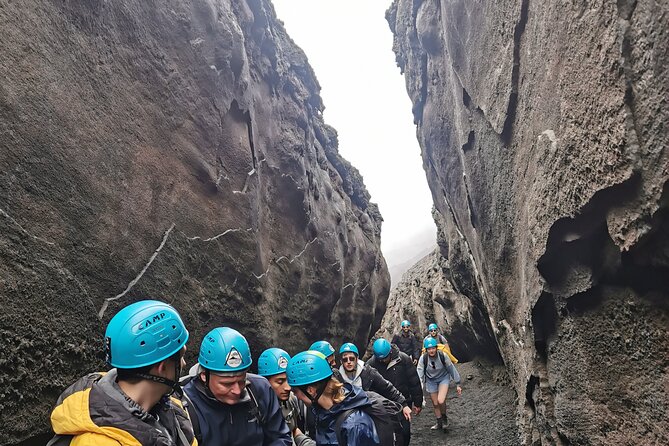
- Cable car to 2,500 m: less scrambling, more time for the summit crater experience
- 4×4 minibus up to 2,800 m: you trade roads for altitude gain
- Helmet mandatory above 2,900 m: safety isn’t an afterthought on active Etna
- Active craters up around 3,340 m: fumaroles, explosions, and ash/steam puffs are the whole point
- Descent on mostly sandy ground: it’s fun and easy to manage, even when it looks intimidating
Etna Summit Craters: what this tour gets right
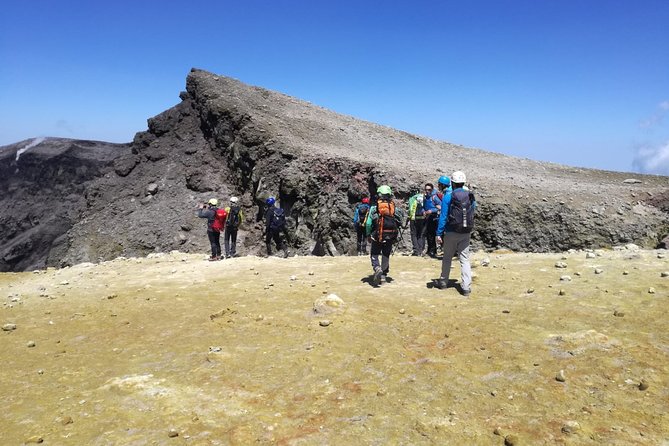
This is an Etna summit trip built around one big goal: getting you close to the active craters without turning the whole day into an exhausting hike from the start. You’re moving from altitude to altitude—starting around 1,900 m, then climbing in stages—so by the time the trekking begins, your legs are saving energy for the real walk.
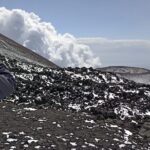
The other win is how the day is framed. You’re not just seeing a volcano from a distance. You’re going to areas associated with very recent lava flows (the last mentioned is January 2024) and into that “lunar” style terrain Etna creates when fresh rock meets wind and time. At the top area near 3,340 m, the spectacle is active: fumaroles are ongoing, and there can be intermittent explosions plus surprising puffs of ash and steam.
Is it for everyone? No. The route is physically demanding enough that the operator says it’s absolutely forbidden for anyone with cardiovascular problems, and it’s only recommended for people with moderate fitness. If you’re in that gray zone physically, the safest move is to be honest about what you can handle before you book.
You can also read our reviews of more tours and experiences in Sicily.
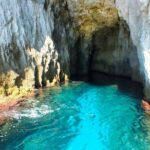
From Nicolosi to Rifugio Sapienza at 1,900 m
Your day starts in the Rifugio Sapienza zone near Nicolosi Nord, at roughly 1,900 meters. The exact meeting area is listed around Monte Gebel Di Mariangela Carbonaro, Contrada Cantoniera, Nicolosi (CT 95030). If you’re taking a taxi, this is one of those Etna logistics days where you’ll want to double-check the pickup timing with your confirmation email and arrive early enough to avoid stress.
Pickup is offered from roundtrip accommodation, but it’s an extra 30 euros per person. If you’re traveling as a couple or small group, pickup can be convenient. If you’re already close to the area, you might prefer public transportation since the tour notes it’s near public transit.
At this early altitude, you’ll feel the change in air and temperature. It’s not a reason to panic—just a reminder that you’re heading into wind and colder air fast. Dress as if it will get worse before it gets better.
Cable car up to 2,500 m: energy-saving by design
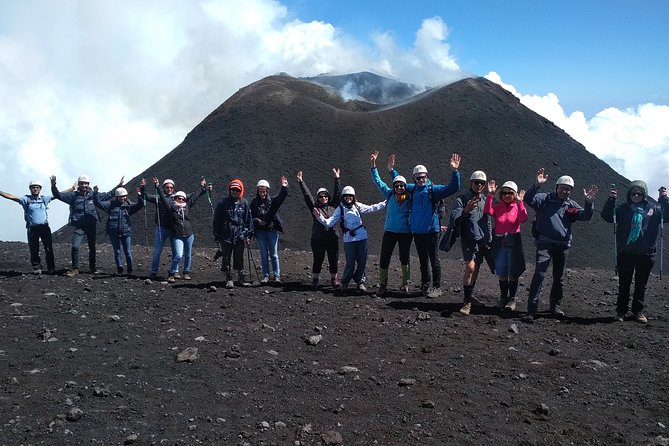
Once you’re at the starting altitude, you’ll take a cable car service to about 2,500 m. This matters more than it sounds. Hiking Etna from the bottom would be a long, grindy day even for strong walkers. The cable car does two things for you:
- It saves your legs for the trek to the crater zone.
- It helps the group stay together during the first big altitude jump.
You’ll also start to feel how different footing becomes as you go higher. Lower down, the ground may look more normal. Higher up, volcanic grit can replace soil and grass. That transition is part of the experience, but the cable car helps you arrive there without spending the day “earning” every meter the hard way.
The day continues with guided movement, and the plan is clearly paced: cable car first, then 4×4, then trekking.
4×4 minibus to 2,800 m: the shortcut to the real terrain
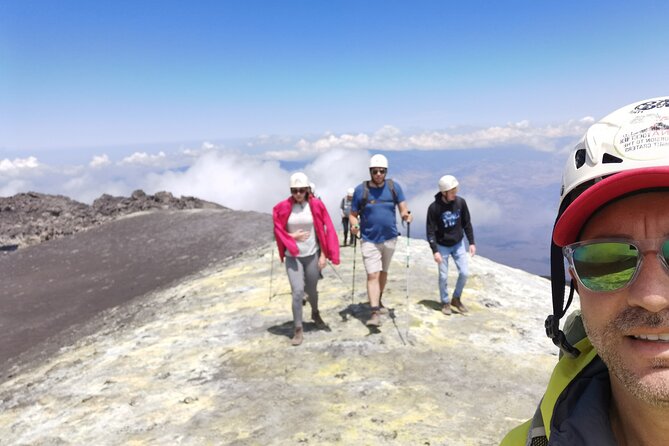
After the cable car, you’ll ride special off-road minibuses up to around 2,800 meters. This is where the tour earns its “summit craters” label. The 4×4 stage gets you near the start of the trekking without forcing you to walk the rough volcanic approach.
The practical value is simple: you’ll spend your energy on walking where it counts—closer to the crater area—rather than burning legs on rock, dust, and elevation gain that the vehicle can handle.
It’s also a good moment to think about your gear. If you have wind protection, this is when you’ll be glad you packed it. Etna weather can flip quickly.
Trek to ~3,340 m: what you’ll see at the active craters
The actual trek begins from roughly 2,800 m, and it climbs to about 3,340 m. From there, the goal is the active crater zone, where you can admire four active craters with continuous fumaroles, ongoing explosions, and puffs of ash and steam.
A few things to keep expectations grounded:
- The activity is real, which means it can also be unpredictable in intensity.
- Visibility can change quickly with wind and weather.
- You’ll want to listen to the guide’s instructions about when to pause, where to walk, and what to watch for.
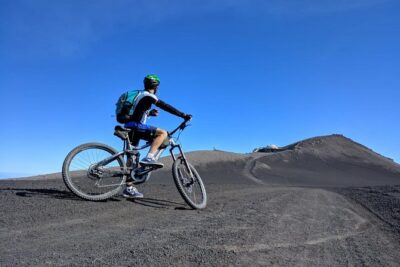
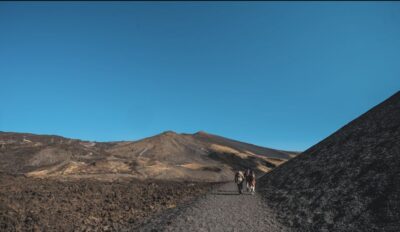
The terrain is described as passing through very recent lavas and lunar-style stretches. That’s not just a poetic description. It also means you’ll likely be walking over surfaces that don’t behave like normal trails—rock fragments, sandy patches, and uneven volcanic ground are common in places like this.
At around the highest zone, protective gear becomes non-negotiable. The tour states that a protective helmet is mandatory from an altitude of 2,900 metres. You should treat the helmet like part of your body, not a spare accessory.
From a planning point of view, this trek is the heart of the day. If you go expecting a gentle nature walk, you’ll be surprised. If you go expecting a guided summit crater experience with active geology in your face, you’ll get exactly what you came for.

Valle del Bove: where Etna’s volcanic structure shows through
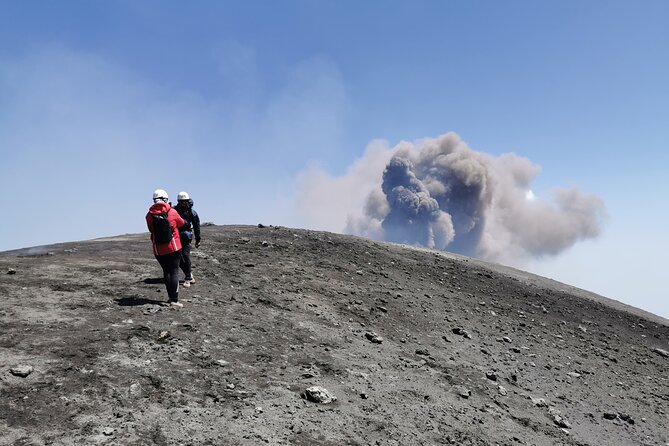
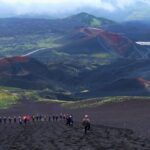
Your day includes Valle del Bove as a stop. This area is one of those places on Etna where the volcanic structure becomes obvious. Even without turning it into a textbook, you’ll see how the mountain has been shaped and rebuilt by past eruptions.
In a practical sense, this stop also helps break the day into segments. You’re not just climbing and climbing. You’re moving through meaningful zones with the guides explaining what to look for in the volcanic terrain you’re walking through.
The value here is context. Etna isn’t one big eruption at one moment—it’s a system of flows, vents, and crater activity. When you’re seeing the terrain close-up, understanding what you’re looking at can make the whole experience click.
Descent on volcanic sand and back via cable car
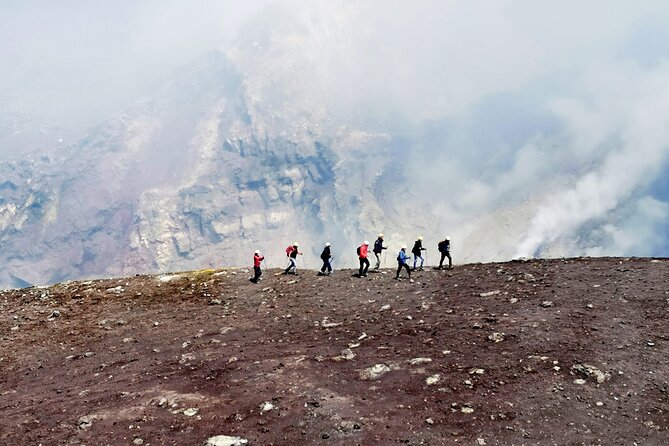
After spending time near the summit craters, the descent is described as mainly on a sandy surface. The good news: the tour frames it as easy enough to feel fun, and it’s designed to lead you back toward the valley without a super technical scramble.
Along the way, you’ll pass through crater areas tied to the 2002/2003 eruptions, plus other points of volcanic interest as you drop to around 2,500 m. That 2,500 m mark is where the cable car returns you to the starting point area.
Two practical takeaways for the descent:
- Sandy ground can feel slippery or slow. Good shoes help a lot.
- Your legs will be tired from the climb, so descent pace matters. Don’t rush it.
If you’ve ever thought a hike is “harder going down than up,” this is the kind of terrain that can prove you right—unless the guide keeps you moving steadily.
Guides and safety gear: why this matters on an active volcano
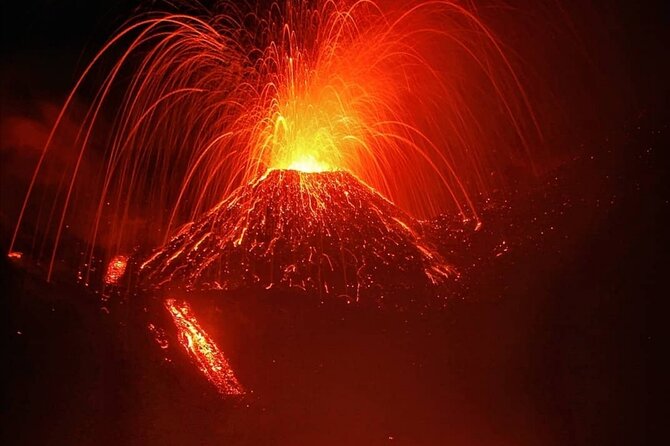
This tour is led by alpine and volcanological guides, described as the only professional figures authorized to accompany active volcanoes. You’re not just getting a friendly hike guide. You’re getting people trained for the realities of moving on active Etna.
Group size matters here: the tour caps the group at 15 people. On active volcano routes, smaller groups tend to mean clearer walking lines, easier communication, and quicker response if conditions change.
Gear is also part of the safety plan. You’re provided trekking poles on request, and you get a protective helmet that becomes mandatory above 2,900 m. You’ll also be covered by insurance.
The biggest “safety” tip isn’t about equipment—it’s about your health. The tour explicitly says it’s forbidden for anyone with cardiovascular problems. If that applies to you, don’t try to negotiate with altitude and exertion. Choose a different Etna experience that’s less intense.
Price and value: is $168.58 a fair deal?
At $168.58 per person for about 5 hours 30 minutes, this tour isn’t cheap. But when you break down what’s included, it starts looking more like value than like a splurge.
Included basics:
- Return cable car ticket
- 4×4 minibus ticket
- Alpine/volcanological guide
- Trekking poles on request
- Helmet (mandatory at high altitude)
- Insurance
- Recommended equipment guidance (you’re told to bring hiking shoes and windbreakers)
What’s not included:
- Lunch (you can buy something to eat directly at the meeting point before leaving)
For an Etna summit craters day, the expensive parts are the logistics: cable car access, the 4×4 stage, and the trained guide time. Those are exactly the pieces you want to be handled by the operator rather than cobbled together on your own.
My practical way to judge it: if you were to arrange cable car entry, ground transportation, guiding, and proper safety gear yourself, you’d likely spend similar money—and you’d still risk not matching the route to current conditions. Here, you’re paying to reduce that uncertainty.
Weather and wind: how to protect your summit expectations
This experience requires good weather. That doesn’t mean perfect skies—it means conditions that allow a safe summit approach and crater walk.
The tough truth is the top can get windy fast. One not-so-fun scenario to keep in mind: if winds and low visibility roll in, the plan can feel less like a summit celebration and more like a scramble to keep moving safely. The experience is designed for the crater viewing time, but you also want to remember: when weather turns, the priority shifts to getting you back safely.
So pack for wind. The tour specifically recommends windbreakers, and that’s not random. Even in warmer months, higher Etna altitude can cool you down quickly, and wind will strip heat from your body.
Also, plan your clothing as if it might get damp. Wet conditions are possible at higher altitudes, and you’ll be walking long enough that you’ll feel it if your layers are soaked.
Language and guide communication: what you can expect from the day
The tour is offered in English. Still, I’d treat language as a real-world variable. At the summit, everyone needs the same clear instructions, and guides sometimes speak more comfortably in their native language even when they support English.
If you rely heavily on English for deep explanations, you’ll want to go with a mindset of flexibility. You can still get value from the walk: the terrain and activity speak for themselves. Just don’t book this hoping for a detailed lecture in perfect English the whole time.
Who should book this Etna craters tour (and who shouldn’t)
Best fit:
- You want the active crater experience and understand it’s weather-dependent
- You’re comfortable with moderate physical fitness demands
- You like guided geology and want context while you walk real volcanic ground
- You want a tour that manages altitude in stages (cable car, then 4×4)
Not a great fit:
- Anyone with cardiovascular problems (explicitly forbidden)
- People who hate wind and low visibility and get easily stressed by changing conditions
- Folks who want a totally relaxed, stroller-friendly pace (this is a climb and trek)
If you’re traveling with someone who’s less confident on sandy or uneven volcanic terrain, this tour can still work—but set expectations early. You’ll be moving on surfaces that don’t behave like smooth paths.
Should you book Etna Together’s summit craters tour?
I think this is worth booking if your priority is getting to Etna’s active summit craters with real guidance and proper safety gear. The combination of cable car, 4×4, and a guided trek to the ~3,340 m zone is hard to replicate cheaply or easily on your own. The high rating (around 4.8) and a 92% recommendation rate suggest the format lands well for most people.
Skip it or choose carefully if you’re very weather-sensitive, have serious health constraints (especially cardiovascular), or you’d be disappointed by windy, low-visibility conditions at the top. This is Etna. The mountain decides some of the schedule.
My simple decision rule:
- If you can handle altitude, wind, and uneven ground, book it.
- If you need a calm, predictable outing, plan a different day on Etna.
FAQ
How long is the Etna summit craters excursion?
It runs about 5 hours 30 minutes (approx.).
Where does the tour start?
It starts at the Rifugio Sapienza area near Nicolosi Nord, with the meeting point listed around Monte Gebel di Mariangela Carbonaro, Contrada Cantoniera, Nicolosi, CT 95030.
Is pickup included?
Pickup from your accommodation is offered as an extra service for an additional cost of 30 euros per person.
What’s included in the ticket price?
Included are the return cable car ticket, the 4×4 minibus ticket, an alpine/volcanological guide, trekking poles on request, a protective helmet (mandatory above 2,900 m), insurance, and recommended equipment guidance.
Do I need to bring lunch?
Lunch isn’t included. You can buy something to eat at the meeting point before the excursion.
What’s the highest altitude you reach?
The trek takes you to the top of Etna at about 3,340 m.
When is a helmet required?
A protective helmet is mandatory from an altitude of 2,900 metres.
What fitness level do I need?
Moderate physical fitness is recommended. The tour is absolutely forbidden for anyone suffering from cardiovascular problems.
What language is the tour offered in?
The tour is offered in English, and it uses mobile tickets.
What happens if the tour can’t run due to weather?
The experience requires good weather. If it’s canceled due to poor weather, you’ll be offered a different date or a full refund.