REVIEW · SYRACUSE
Syracuse: Highlights of Ortigia Guided Walking Tour
Book on GetYourGuide →Operated by Empeeria · Bookable on GetYourGuide
Ortigia packs a lot into 2 hours. This guided walking tour strings together Syracuse’s most famous sights with the myths behind them, starting at the Temple of Apollo and finishing at the Arethusa spring by the sea.
I particularly love how the walk mixes big monuments with story moments you can actually picture in your head, like Arethusa’s transformation into a fountain. I also like the chance to admire the marble work around Piazza Duomo without having to figure out what matters first.
One thing to consider: your route and timing can shift a bit, and if the tour is run in both Italian and English together, some stops may feel slower due to repetition.
In This Review
- Key things you’ll notice
- A 2-hour Ortigia route built around myth and marble
- Starting at the Temple of Apollo: the oldest Greek temple feeling
- Piazza Archimede and the Fountain of Diana with Arethusa’s myth
- Piazza Duomo: marble details and a Cathedral visit (with a small ticket catch)
- The Fountain of Arethusa by the sea: where the story becomes real
- Price and value: what $29 buys you (and what it doesn’t)
- Practical tips: where to meet, what to wear, and how to hear
- Who this Ortigia tour is best for
- Should you book? My quick call
- FAQ
- Where does the Ortigia guided walking tour start?
- How long is the tour?
- What are the main stops on the itinerary?
- What is included in the price?
- Is entry to the Syracuse Cathedral included?
- What languages are available?
- Do I need a headset?
- Is there a dress code?
- Can the visit order or monument access change?
- What’s the cancellation policy?
Key things you’ll notice
- Temple of Apollo as the opening scene, with Greece-on-Sicily context right from the start
- Fountain of Diana (and the Artemis–Arethusa myth) in Piazza Archimede
- Piazza Duomo’s marble details plus a visit to the Cathedral area
- Arethusa Spring near the sea, where the myth makes physical sense
- A schedule built for walking light, not for museum hopping
A 2-hour Ortigia route built around myth and marble
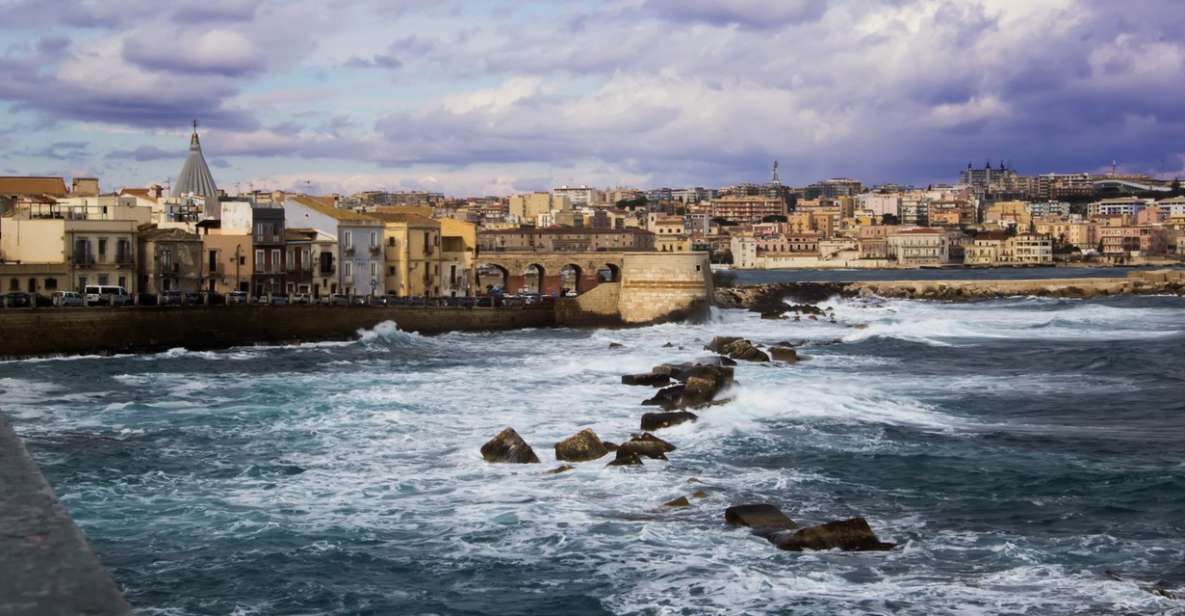
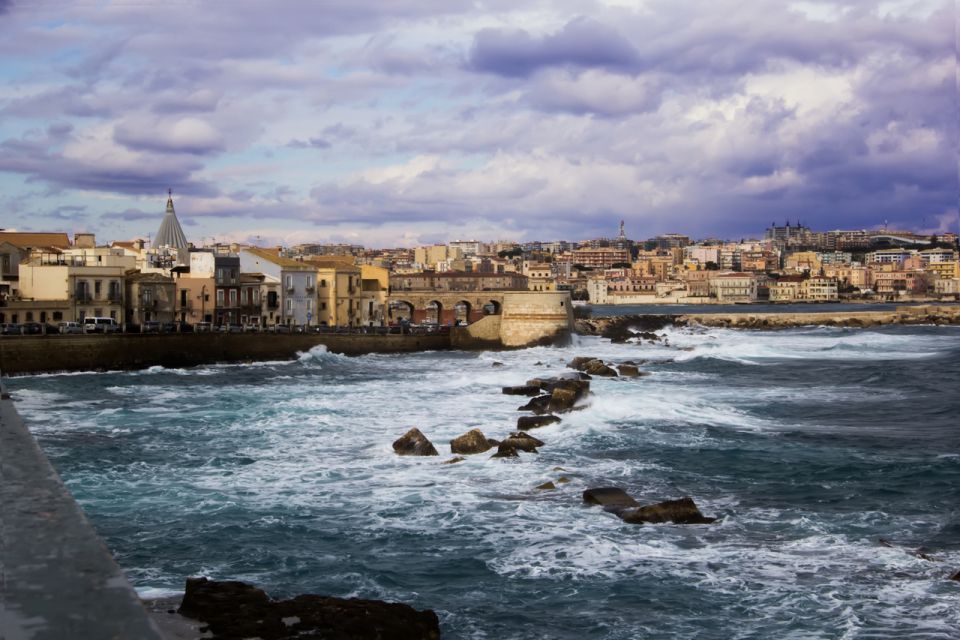
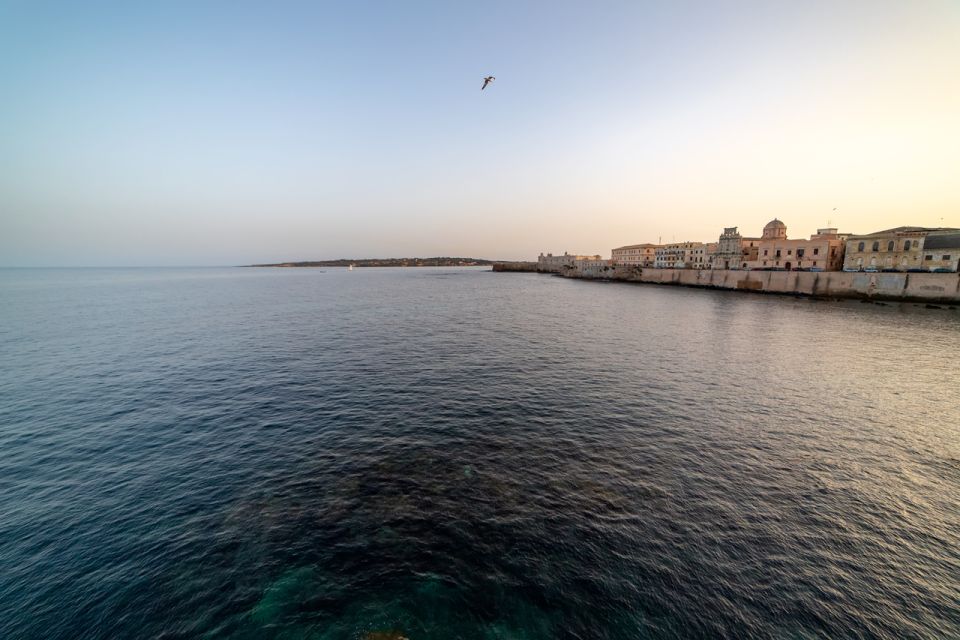
Ortigia can feel like you blink and suddenly you’re somewhere else: one turn brings a cathedral front, another gives you salt-air views and ancient stone. This tour works because it acts like a map you can follow on foot, with a guide tying each stop to a story. You’ll cover the major points in a compact loop, then end where the myth lands in the real world at the Fountain of Arethusa.
At $29 per person, the value is mostly in what you’re paying for: a live local guide and a guided walking format, not a big bundle of museum entry. You’re not just seeing pretty places—you’re learning what to look for as you pass, from Greek temple layout to the way later faith and power left their mark in the same spaces.
The pace is straightforward: short guided segments at each key location, then you’re back outside again. That makes it a good match for visitors who want the highlights fast, but still want the “why” behind them.
You can also read our reviews of more walking tours in Syracuse

Starting at the Temple of Apollo: the oldest Greek temple feeling
Your tour begins at Largo XXV Luglio, 7, with the practical meeting spot being the area under the pomegranate tree in front of the Temple of Apollo at the roundabout where Corso Matteotti starts. Look for the guide with a badge. Aim to arrive about 10 minutes early so you’re not rushing before you even start.
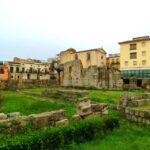
The Temple of Apollo is a strong first stop because it anchors Ortigia in the Greek era immediately. You’re not starting at a random viewpoint; you start at a landmark many people come to Syracuse for in the first place. And as the tour begins, you’ll get context that helps you read the site better—what makes it historically important, and how it shaped the identity of the area long before the modern streets took over.
This is one of those starts that gives you momentum. Once you understand you’re standing on the Greek layer of the city, the rest of the walk starts to click: plazas, fountains, and churches begin to look like chapters in the same book.
Piazza Archimede and the Fountain of Diana with Arethusa’s myth
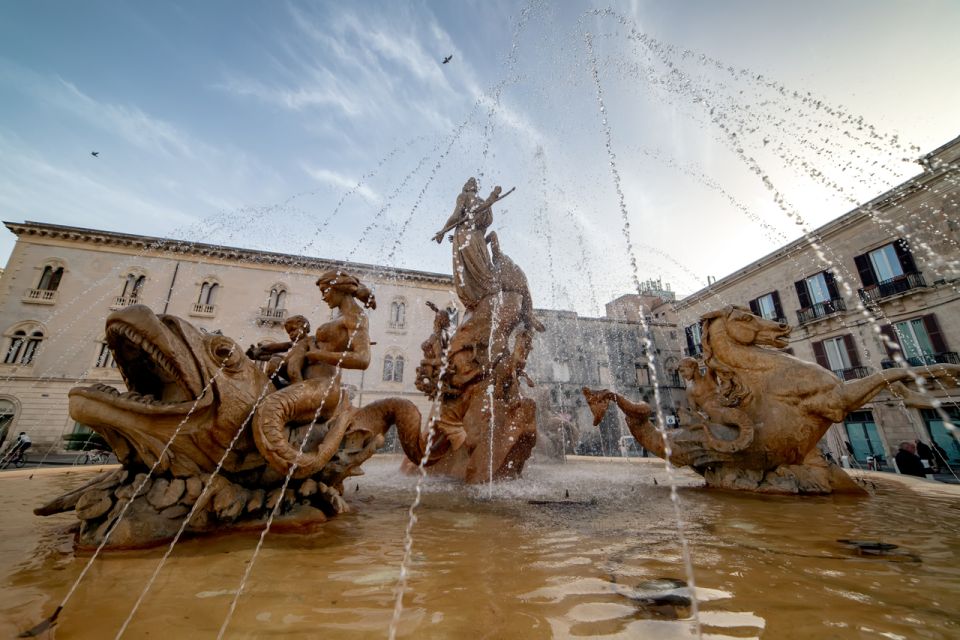
From the Temple of Apollo you move toward Piazza Archimede, where the Fountain of Diana comes into view. This is where the tour shifts gears from archaeology to storytelling—because the fountain isn’t just decorative. It’s tied to the myth of Arethusa.
Here’s the myth setup you’re meant to remember: Arethusa is a nymph associated with the water, and the fountain’s imagery connects her story to Artemis. The guide helps you make sense of what you’re seeing at the moment described in the legend, when Arethusa is transformed into a fountain. Even if you don’t consider yourself a mythology person, this kind of stop works well because it gives you a picture to attach to the sculpture and setting.
Why this stop matters for your experience: Ortigia has a way of repeating themes—water, power, gods, and later religious layers. The guide’s explanation at Piazza Archimede gives you a framework, so the fountain and the next sites feel linked rather than like a checklist.
Piazza Duomo: marble details and a Cathedral visit (with a small ticket catch)
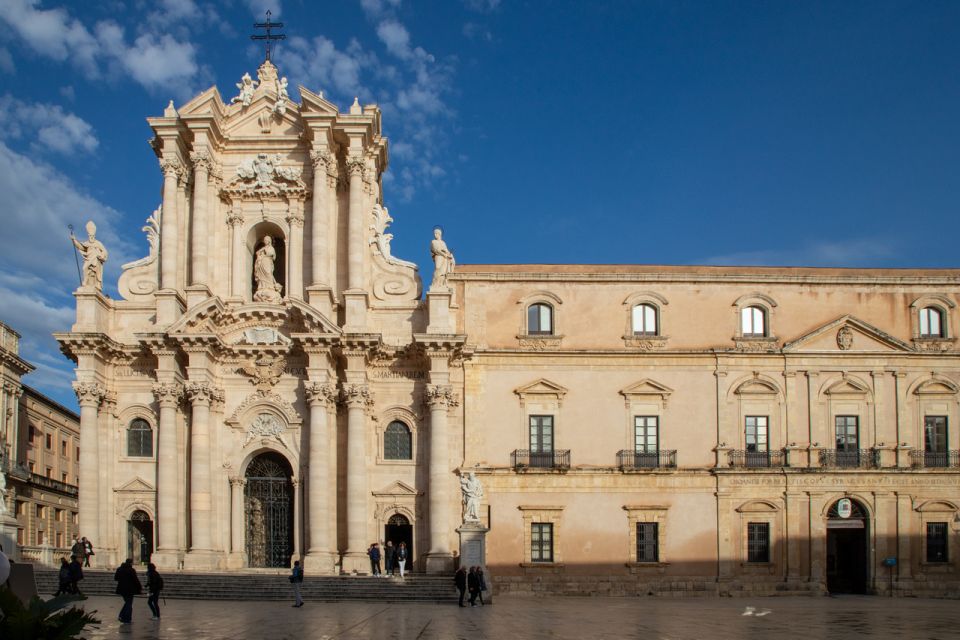
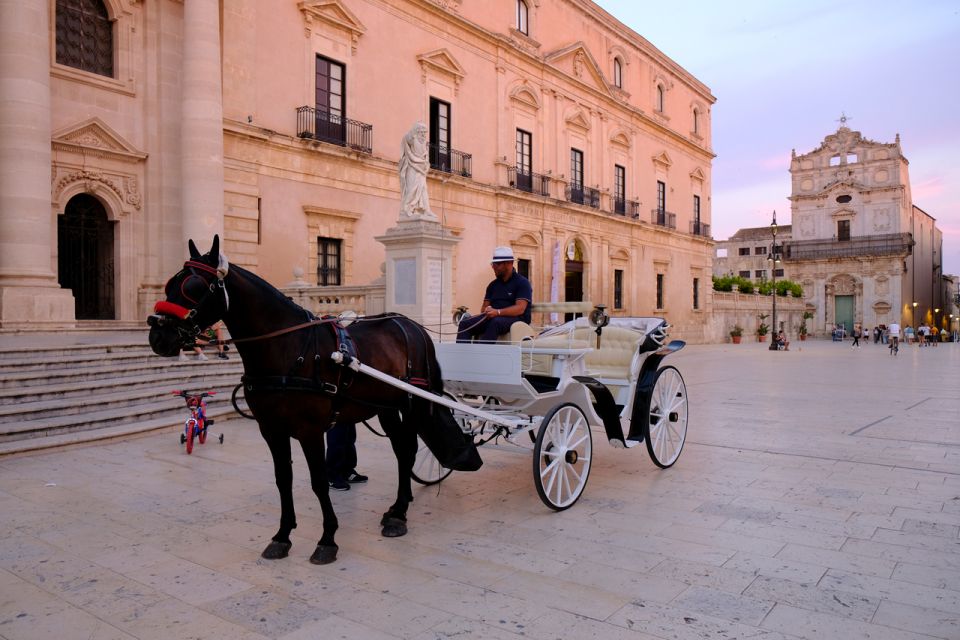
Next is Piazza Duomo, one of Italy’s most beautiful squares, and a major social stage for Syracuse. You’ll hear that the founders of the city from Corinth settled here, which gives the square an origin story beyond what your eyes alone can tell you. It’s a good place to slow down for a minute and look around: this is where the city’s layers become visible all at once.
The tour highlights the marble work in and around the square and points you toward the Syracuse Cathedral. The Cathedral visit is part of the experience, but here’s the practical note: entry ticket to the Syracuse Cathedral is not included in the tour price. That means you should be ready to pay on site if you want inside access.
This stop is valuable because it’s both visual and instructive. From a walking-tour standpoint, Piazza Duomo is also the best place to catch your breath—open square, big architectural shapes, and enough time to absorb what makes the space feel important in everyday life, not just in history books.
The Fountain of Arethusa by the sea: where the story becomes real
The tour ends at the Fountain of Arethusa, a freshwater spring located a few meters from the sea. That detail matters, because it’s the type of fact that turns a myth into something you can almost test with your eyes and imagination.
The guide connects the spring to the love story between Arethusa and Alphaeus. You’re not just told a legend; you’re brought to the physical spot where the legend’s “logic” makes sense. A spring so close to the sea is exactly the kind of thing people in the ancient world would explain with a story, and that’s the point of the ending: you leave Ortigia understanding why this water feature carried meaning for centuries.
This is also a nice final step because it’s a different feel from the temples and cathedral facades. Instead of stone-heavy monument viewing, you get a water-and-air moment that feels local and lived-in. It’s the sort of stop that helps your whole walk stick in your memory.
You can also read our reviews of more guided tours in Syracuse




Price and value: what $29 buys you (and what it doesn’t)
For $29 per person, you’re getting a walking tour and a live guide over about 2 hours. You’re not paying for meals, and you’re not paying for entry to the Syracuse Cathedral. That’s not a downside—it just helps you plan.
Here’s how I’d think about value in a practical way:
- If you’re the kind of person who wants context while you walk, the guide fee is usually worth it, especially in Ortigia where different eras overlap.
- If you’d rather wander on your own and only want photos, you might decide you could skip a guided format and just hit the main sights. But you’d be giving up the myth-based interpretation that makes the stops connect.
One more planning tip: the tour includes guided segments at each stop (Temple of Apollo, Piazza Archimede, Piazza Duomo/Cathedral area, and finally the Arethusa spring). Visits to monuments can change based on holidays and/or opening hours, so don’t build the rest of your day so tightly that any schedule shift ruins your plans.
Practical tips: where to meet, what to wear, and how to hear
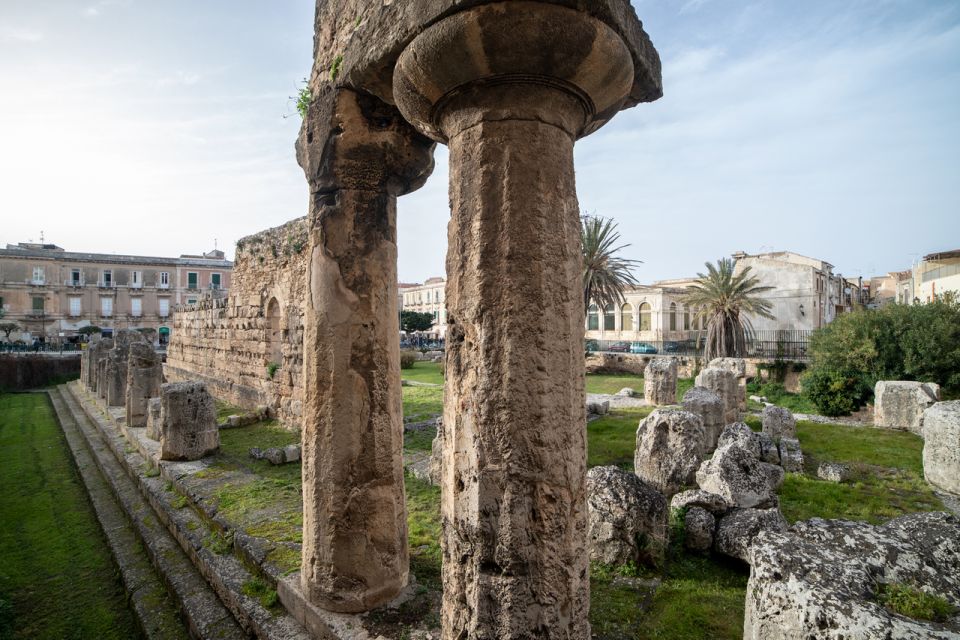
Meeting point clarity saves stress. The tour starts at Largo XXV Luglio, 7, and you should look for the guide with a badge under the pomegranate tree in front of the Temple of Apollo at the roundabout where Corso Matteotti starts. Showing up 10 minutes early is strongly recommended because you want time to find your group before you’re asked to move.
Listening: the tour supports headset use. You can bring your own headset, or buy a disposable one on site for €1. In hot weather and narrow streets, having clear audio helps you keep the flow—especially during explanations you don’t want to miss.
Dress code: because the tour includes access connected to places of worship, you’ll need to respect a dress code. If you’re unsure, bring something that covers shoulders and knees, just in case. It’s the kind of small prep that keeps you from getting turned away at the wrong moment.
Language: tours are offered in English and Italian. The tour could also be conducted simultaneously in both languages, which can affect pace if you’re trying to follow along closely at every stop.
Who this Ortigia tour is best for
This one suits you if:
- You want the highlights of Ortigia without spending your whole day sorting out what to see first
- You enjoy myth explanations as much as you enjoy architecture
- You’re visiting Syracuse with limited time and want a structured 2-hour walk
It’s also a good fit for first-timers who want orientation. Ortigia can be tricky to read if you arrive cold; this tour helps you understand the “story order” the city is presenting.
If you’re the type who hates group walking schedules, you might prefer a self-guided loop. But if you like having someone point out what matters while you move, you’ll likely appreciate how the tour builds connections from stop to stop.
Should you book? My quick call
I’d book this guided highlights walk if your priority is to see Ortigia’s main sights—Temple of Apollo, Piazza Archimede, Piazza Duomo, and the Fountain of Arethusa—and you want the myths and meaning behind them. The price feels fair for a guided 2-hour structure, especially since you’re not paying extra for the guide portion.
I’d think twice if you dislike any kind of schedule variability or you strongly prefer to avoid places of worship where dress code rules apply. Also, if you don’t want to deal with on-site payments, remember that Syracuse Cathedral entry ticket is not included.
FAQ
Where does the Ortigia guided walking tour start?
The meeting point is Largo XXV Luglio, 7. Look for the guide with a badge under the pomegranate tree in front of the Temple of Apollo at the roundabout where Corso Matteotti starts.
How long is the tour?
The tour lasts 2 hours.
What are the main stops on the itinerary?
You’ll start at the Temple of Apollo, then visit Piazza Archimede (Fountain of Diana), go on to Piazza Duomo (Syracuse Cathedral), and finish at the Fountain of Arethusa.
What is included in the price?
The price includes the walking tour and a guide.
Is entry to the Syracuse Cathedral included?
No. Entry ticket to the Syracuse Cathedral is not included, and tickets must be paid for on site.
What languages are available?
The guide offers English and Italian. The tour could be conducted simultaneously in Italian and English.
Do I need a headset?
Not required, but you can use your own headset. You can also purchase a disposable one on site for €1.
Is there a dress code?
Yes. You’ll need to respect a dress code to access places of worship.
Can the visit order or monument access change?
Yes. Visits to monuments may be subject to change based on holidays and/or opening hours.
What’s the cancellation policy?
There is free cancellation. You can cancel up to 24 hours in advance for a full refund.