REVIEW · SICILY
Half-Day Cooking Class with Lunch in Baglio Florio
Book on Viator →Operated by Adamo Bio · Bookable on Viator
Sicily tastes better when you cook it. This half-day class at Baglio Florio is built around Sicilian cooking rooted in Mediterranean diet values, with zero-kilometer ingredients and short stories behind each dish. You’ll learn how local producers and traditional methods show up on the plate, not just the how-to of recipes.
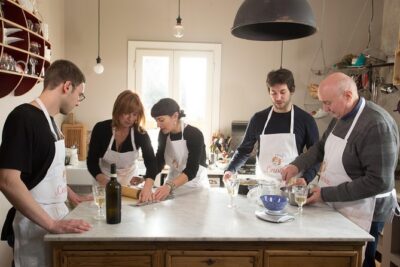
Two things I especially like: you get hands-on cooking (not a sit-and-watch demo), and you finish with lunch plus wine that’s matched to what you made. It’s also capped at a small group size (max 20), which makes the pace feel relaxed and practical rather than rushed.
One consideration: you’re responsible for getting to the meeting point, since private transportation isn’t included. Also, the class runs only in good weather, so plan a little flexibility.
In This Review
- Key highlights to know
- Baglio Florio cooking class: what the half-day is really like
- Your hands-on menu: fresh pasta, caponata, fried tomatoes, cassatelle
- Fresh pasta: the foundation dish
- Eggplant caponata: sweet and sour vegetables
- Fried dried tomatoes: crunchy, aromatic, and surprisingly delicate
- Cassatelle dessert: ricotta with chocolate and sweetness
- Zero-kilometer ingredients: why the sourcing matters here
- Cooking stories and dish origins: learning that sticks
- Wine that actually matches your meal
- Small group pace, relaxed atmosphere, and English comfort
- Value check: is $96.23 worth it?
- Timing and meeting point: how to plan your day
- Who this cooking class suits best
- Should you book Half-Day Cooking Class with Lunch at Baglio Florio?
- FAQ
- What is the duration of the Half-Day Cooking Class with Lunch in Baglio Florio?
- Where does the class meet, and where does it end?
- What time does the cooking class start?
- How many people are in the group?
- Is the class offered in English?
- What’s included in the price?
- What dishes are in the sample menu?
- Does the tour require good weather?
- What is the cancellation policy?
Key highlights to know
- Fresh pasta + Sicilian favorites: you’ll cook a full menu, not just one dish
- Zero-kilometer approach: recipes rely on local ingredients from regional producers
- Origins and anecdotes for each course: you get context while you cook
- Wine paired with your food: you taste what matches the dishes you make
- All-in lunch: bottled water, soda, coffee/tea, and alcoholic beverages are included
- Small group size: maximum of 20 travelers, with an English-speaking setup
Baglio Florio cooking class: what the half-day is really like
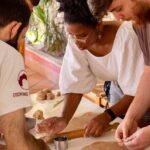
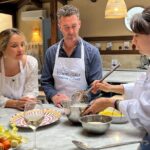
This experience is designed for real learning in a short time. You’re there for about 4 hours, starting at 11:00am, and you’ll leave having made (and eaten) multiple parts of a traditional Sicilian meal. The setting at Baglio Florio gives it a farm-and-table feel, which matters in Sicily—because food culture is tied to place.
What makes the experience work for most travelers is the combination of structure and freedom. You’ll get guidance on techniques, then you’ll move through different dishes that share Sicilian themes: vegetables, bold sweet-and-sour flavors, and comfort-food desserts. The goal isn’t to turn you into a chef. It’s to help you understand why these dishes are built the way they are.
The cooking method is also clear-minded: it respects the culinary tradition of the area and emphasizes local sourcing. That means you’re not just making food that tastes good—you’re making food that reflects the way Sicilians cook and eat.
You can also read our reviews of more cooking classes in Sicily
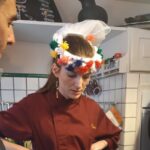
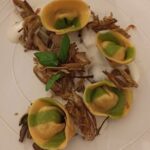
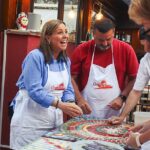
Your hands-on menu: fresh pasta, caponata, fried tomatoes, cassatelle
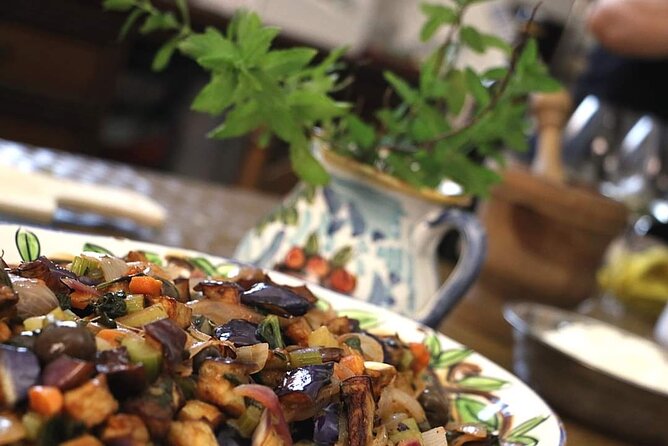
The class centers on a sample menu that’s very “Sicily,” with a nice mix of savory and sweet. Here’s what you’ll be working on, and what it means for your plate.
Fresh pasta: the foundation dish
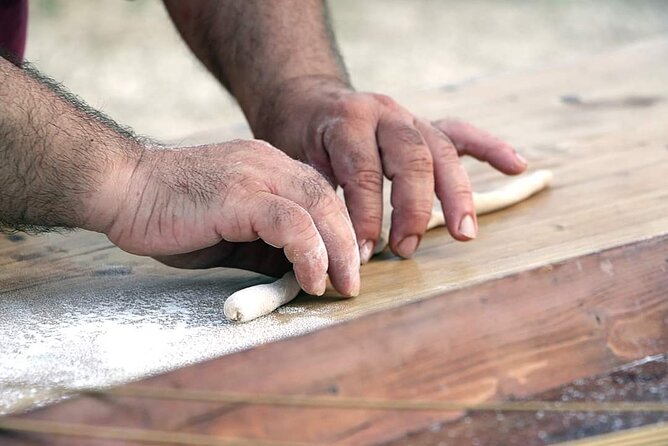
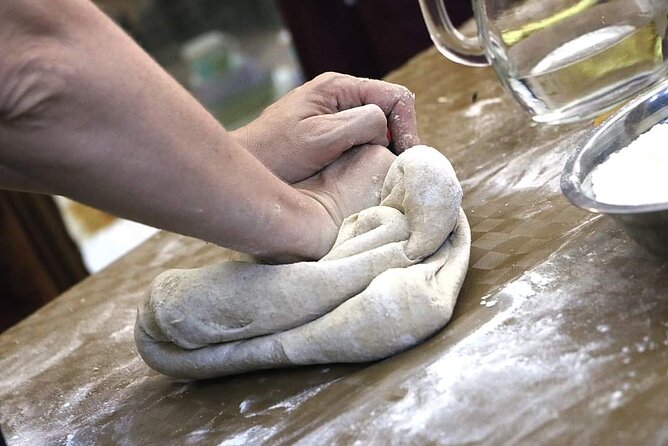
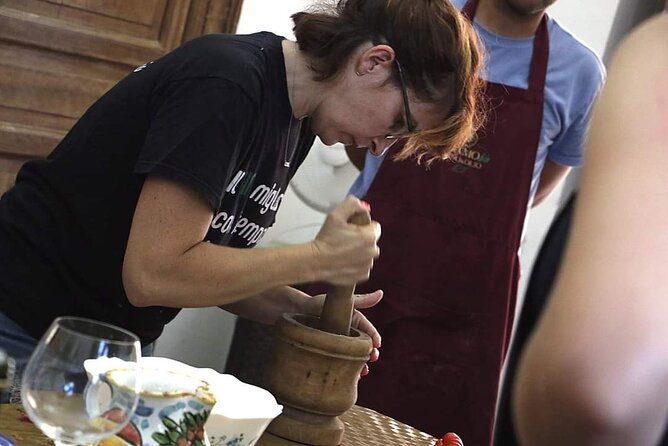
First up is fresh pasta. In a short cooking class, pasta is a smart choice because it teaches core technique quickly—handling dough, understanding texture, and seeing how a simple base becomes something special once you add the right elements. Even if you’ve made pasta before, you’ll likely appreciate how this class frames it as part of everyday Mediterranean food culture, not as a fancy hobby.
Eggplant caponata: sweet and sour vegetables
Next is eggplant caponata, one of the most iconic Sicilian dishes out there. What you’ll notice in the description is the flavor logic: it’s a typical sweet-and-sour style made with wine vinegar and sugar. That balance is a big deal in Mediterranean cooking—sweetness and acidity play off each other instead of fighting.
For you, that’s useful because it explains why caponata feels so addictive: it hits more than one note. And when you’re cooking it yourself, it’s easier to remember the “why” than if you’d only read a recipe later.
Fried dried tomatoes: crunchy, aromatic, and surprisingly delicate
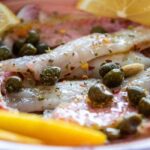
Then comes fried dried tomatoes, which sound simple but are actually one of those Sicilian ideas that makes you go, okay, I get it. These are prepared with a filling of breadcrumbs, almonds, garlic, and lemon, then fried.
This is a great course in a cooking class because it teaches you about texture and flavor layering:
- the crunch from frying
- the nutty depth from almonds
- the brightness from lemon
- the savory comfort from breadcrumbs and garlic
If you enjoy food that’s bold but not heavy, this is the course that often steals the show.
You can also read our reviews of more tours and experiences in Sicily




Cassatelle dessert: ricotta with chocolate and sweetness
For dessert, you’ll make cassatelle, a typical Sicilian treat filled with ricotta, sugar, and chocolates. Ricotta-based desserts tend to feel creamy and comforting, and this one adds sweetness and chocolate notes in a way that’s very “island dessert table.”
Even better: dessert is where the class lets you finish on something satisfying after a meal that’s been working with vinegar, frying, and vegetables. It ties the whole menu together.
Zero-kilometer ingredients: why the sourcing matters here
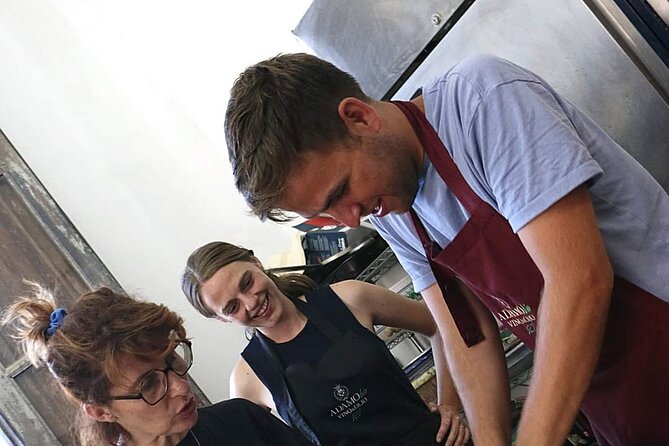
The class doesn’t just say local sourcing as a marketing line. It frames the recipes as part of the area’s culinary tradition, using zero kilometer raw materials and relying on producers who do the work. That matters because it changes how you think about flavor.
In practical terms, local ingredients usually mean:
- you’re cooking with produce that’s at home in that region’s seasonal rhythm
- the dish is being taught as it would realistically be made there
- you’re more likely to understand which ingredients are essential, not interchangeable
Even if you’re not a food-nerd, you’ll probably feel it in the end result—especially in vegetable dishes like caponata, where the flavor balance lives or dies based on quality.
Cooking stories and dish origins: learning that sticks

One of the details I like about this class is that you’re not only taught technique. You’re also told the origin and anecdotes linked to each individual dish. That turns the menu into something you can place, rather than a random list of recipes.
You can think of it like this: when you know what a dish represents—why it’s built a certain way—you remember it. Later, when you see something similar in a shop or on a menu, you’ll understand what you’re looking at and why it tastes the way it does.
This is also where an English-speaking format helps. If you’re not fluent in Italian (and most visitors aren’t), having clear explanations matters. You’ll get the “story” piece without guessing.
Wine that actually matches your meal
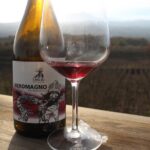
After you cook, you’ll taste the dishes you created and sip the wine best suited to the dish. That pairing style is more meaningful than a random pour, because it’s linked to the flavors you just worked with.
You’re dealing with contrast on the menu:
- sweet-and-sour caponata
- fried, crunchy, lemony stuffed tomatoes
- creamy ricotta and chocolate dessert
So the point of matching the wine isn’t sophistication for its own sake. It’s about making the flavors cooperate on your tongue instead of competing. And since the wine is part of the lunch experience, it feels like a natural finish, not an add-on.
Small group pace, relaxed atmosphere, and English comfort
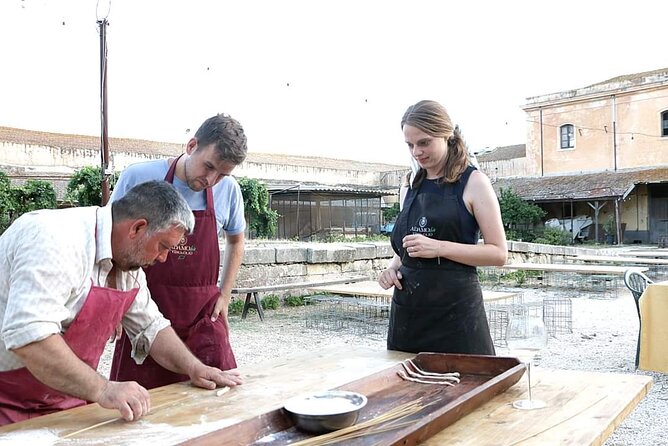
This class is set for a maximum of 20 travelers. That group size is a sweet spot: large enough to feel social, small enough to avoid that chaotic “line up and hope” feeling. The cooking portion benefits from that. You can ask questions and keep moving without constant waiting.
The class is offered in English, and that’s a big practical win. When you’re learning how to shape pasta or balance sweet-and-sour flavors, you want your instructions clear the first time.
Based on what’s been shared about the experience, the overall vibe lands on relaxed rather than intense. That matters if you’re on vacation and don’t want a class that feels like a school exam.
Value check: is $96.23 worth it?
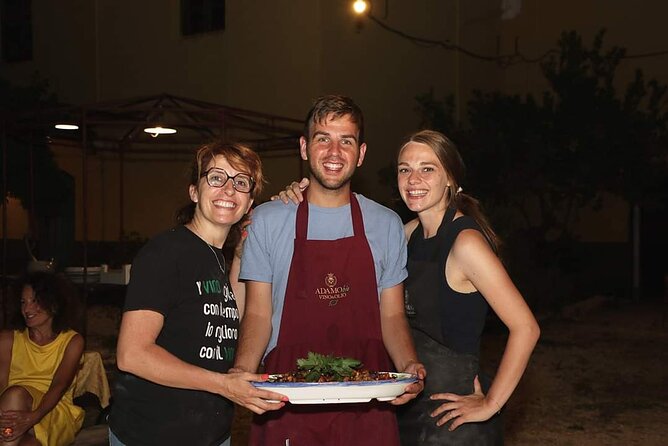
At $96.23 per person for about 4 hours, this can look pricey—until you count what’s included.
You’re getting:
- lunch (the dishes you cook and taste)
- bottled water and soda
- alcoholic beverages
- coffee and/or tea
- English instruction
- a hands-on cooking session built around a full Sicilian menu
If you’re the type of traveler who spends heavily on tours but hates “just a snack and a photo,” this is closer to a full meal experience with instruction. In other words, you’re paying for the class time plus the food and drinks, not just the kitchen access.
Also, with free cancellation available up to 24 hours before the start time, you can book with less stress—especially since the class depends on good weather.
One small note: private transportation isn’t included, so you’ll want to factor in your own travel to the meeting point. If you’re already nearby in the area, that cost stays small.
Timing and meeting point: how to plan your day
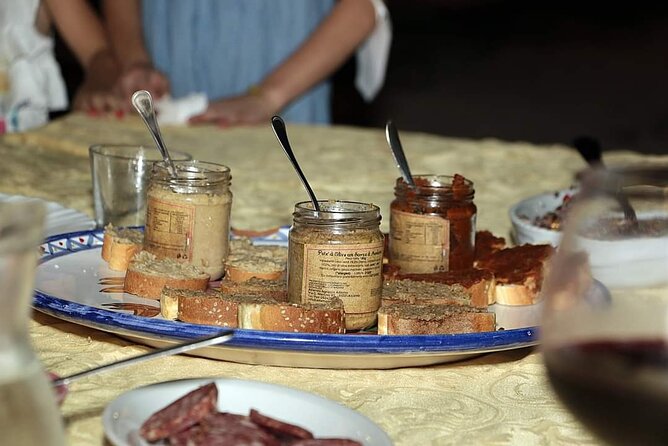
The start time is 11:00am at Baglio Florio, Contrada Vivignato, 91013, Calatafimi-Segesta (TP), Italy. The activity ends back at the meeting point, so you can keep your schedule simple afterward.
For your day planning, treat this like a true half-day block: once you arrive, you’ll be cooking, tasting, and drinking as part of lunch. That means it’s usually best to avoid stacking a big activity right before it.
If you like a relaxed itinerary, this timing works well because it gives you time to explore something in the afternoon after the meal. If you like to pack your day tightly, plan buffer time for getting there and settling in.
Who this cooking class suits best
I think this is a strong pick if you want:
- a real meal as part of the tour, not just tasting
- a food experience with context (origins and anecdotes)
- a small group setup with English support
- a practical Sicilian menu with both savory and dessert
It’s also a good choice for food lovers who want a Mediterranean-style approach—vegetable-forward, flavor-balanced, and grounded in local tradition.
If you’re traveling with dietary restrictions, the menu here is very specific (pasta, eggplant caponata, fried dried tomatoes, cassatelle with ricotta and chocolate). Since no substitutions are listed in the data, you might want to confirm details before you book.
Should you book Half-Day Cooking Class with Lunch at Baglio Florio?
I’d book it if you’re excited by hands-on cooking and want to eat what you made, with wine included. The menu is focused and varied, and the class is structured around local ingredients and traditional flavors, which makes it feel authentic rather than generic. The small group size (max 20) also supports the relaxed vibe many people value here.
Skip it only if you’re looking for a cooking class that’s more about experimentation than tradition, or if you’re expecting transportation to be handled for you. Otherwise, at this price point, with lunch and drinks included, it’s a solid value for a half-day in western Sicily—especially if you want to leave with both skills and a full plate’s worth of food memories.
FAQ
What is the duration of the Half-Day Cooking Class with Lunch in Baglio Florio?
It runs for approximately 4 hours.
Where does the class meet, and where does it end?
It starts at Baglio Florio, Contrada Vivignato, 91013, Calatafimi-Segesta TP, Italy, and ends back at the same meeting point.
What time does the cooking class start?
The start time is 11:00am.
How many people are in the group?
The maximum group size is 20 travelers.
Is the class offered in English?
Yes, it’s offered in English.
What’s included in the price?
Lunch is included, along with bottled water, soda/pop, alcoholic beverages, and coffee and/or tea.
What dishes are in the sample menu?
The menu includes fresh pasta, eggplant caponata, fried dried tomatoes (with a filling of breadcrumbs, almonds, garlic, and lemon), and cassatelle (ricotta, sugar, and chocolates).
Does the tour require good weather?
Yes. It requires good weather. If it’s canceled due to poor weather, you’ll be offered a different date or a full refund.
What is the cancellation policy?
You can cancel for a full refund up to 24 hours before the experience’s start time. If you cancel less than 24 hours before, the amount you paid is not refunded.