REVIEW · SICILY
Cannoli Cooking Class in Taormina
Book on Viator →Operated by Porta Messina Restaurant Cooking Class · Bookable on Viator
Cannoli dough time is pure fun. This class at Porta Messina in Taormina turns a Sicilian dessert into real skills, with hands-on steps from shell dough to frying. I like that the instruction is in English, so you can actually follow each move, not just watch.
You also finish with a proper tasting and a certificate, plus complimentary coffee, tea, and soft drinks. One possible drawback: the meeting spot is in a busy old-town area, and it can be easy to arrive a little late if you’re not sure where Porta Messina is—so give yourself extra time.
In This Review
- Key Cannoli Class Takeaways (Before You Go)
- Why This Cannoli Class Is A Smart Taormina Activity
- Porta Messina: Where the Class Starts (and How to Find It)
- The Hands-On Flow: Dough to Shells
- Ricotta and Cream Filling: What You’re Really Learning
- Frying the Cannoli Shells: The Part You’ll Remember
- Filling and Tasting: Eat the Proof
- Drinks, Recipes, and What You Take Home
- Price and Value: Is $78.64 Worth It?
- Who Should Book This Class (and Who Might Skip It)
- Practical Tips to Make Your Morning Go Smoothly
- Should You Book the Cannoli Cooking Class in Taormina?
- FAQ
- How long is the cannoli cooking class?
- Where is the meeting point in Taormina?
- Is the class offered in English?
- What’s included at the end of the class?
- How big is the class?
- What is the cancellation policy?
Key Cannoli Class Takeaways (Before You Go)
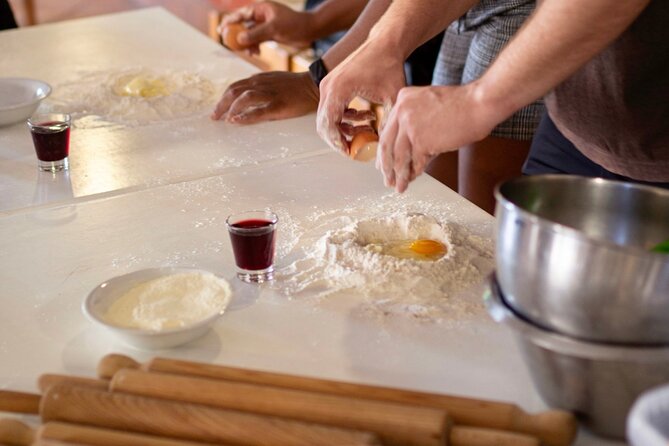
- Hands-on from start to finish: you make dough, prepare cream/ricotta, fry shells, and fill them.
- English instruction is built in, which makes it friendly for international groups.
- Small class feel with a maximum of 40 people, so the chef can keep an eye on you.
- You leave with proof and plenty to eat: tasting at the end plus a certificate.
- Real-chef personality matters: instructors like Carmelo, Francesca, Chef Jackie, Maurizio, and Marcelo are repeatedly praised for clear, funny, patient teaching.
Why This Cannoli Class Is A Smart Taormina Activity
Taormina can be scenic, hilly, and busy. A cooking class is different. You’re not just moving through places—you’re making something you’ll understand later when you taste it again.
This cannoli class is also a great value choice for Sicily, because you get the whole process, not a single step or a quick demo. You’ll work dough, mix the filling (including ricotta/cream), fry the shells, and then eat what you made. It’s hands-on time that feels like a real Italian afternoon plan—short enough to fit your itinerary, but complete enough to feel satisfying.
And if you’re traveling with a partner or family, the structure helps. Everyone can participate. Even if you’re not a kitchen person, you’re guided step-by-step by a professional chef, and you finish with results you can be proud of.
You can also read our reviews of more cooking classes in Sicily

Porta Messina: Where the Class Starts (and How to Find It)
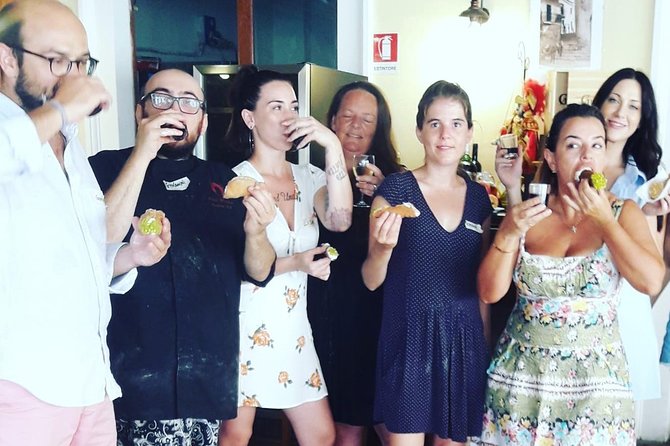
The class runs through Porta Messina Restaurant Cooking Class. You meet at Largo giove serapide, 4, 98039 Taormina ME, Italy, with the activity ending back at the meeting point.
Start time is 10:00 am, and the class is about 1 hour 30 minutes. Because it’s held at a restaurant location (not in a random workshop), it helps to arrive early enough to settle in—especially in Taormina, where lanes and turns can make you think you’re there when you’re still two blocks off.
A small practical note: you’ll use a mobile ticket. Save it on your phone before you leave and keep it ready on arrival. It’s one less thing to sort out when you’re hungry and the class is about to start.
The Hands-On Flow: Dough to Shells
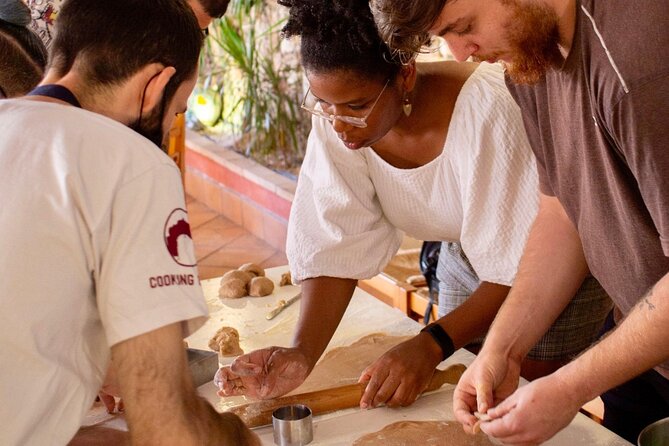
Your cannoli-making starts with the dough for the shells. This is the part where a lot of classes either stop early or keep you in observation mode. Here, you’re expected to work.
You’ll learn how the dough should come together, how it’s handled, and how it becomes the shell you’ll fry. This is also where the chef’s tips really matter, because cannoli are picky about details. The goal isn’t just to shape something. It’s to shape something that fries properly and holds up when you fill it.
One specific tip that came up in feedback: sealing the shell well is key. People noted that using egg white at the edges matters—if you skip that step, shells can stick or misbehave while frying. That’s exactly the kind of practical detail you want in a class like this, because it’s hard to pick up from photos or a recipe alone.
What I like about this segment is that it gives you a physical understanding of cannoli. When you later eat one, you’ll taste the difference between a shell that’s been handled with care and one that’s been rushed.
Ricotta and Cream Filling: What You’re Really Learning
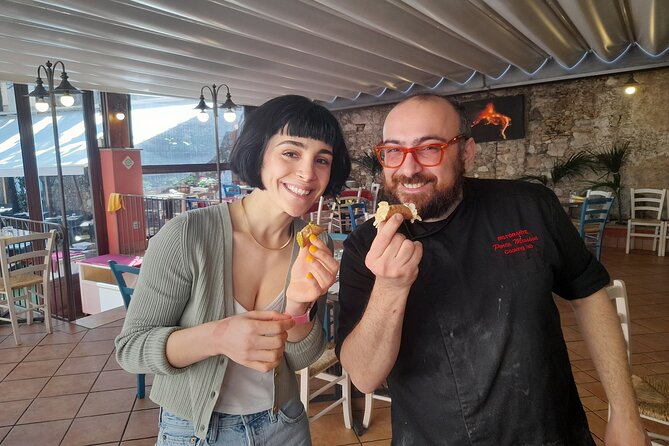
Next comes the filling work, built around cream and ricotta. This part is usually the comfort zone for many people—rich, smooth, and forgiving compared with dough. But it still benefits from professional guidance.
You’re not just mixing. You learn how to work the filling so it has the right texture and is ready for piping or spooning into your shells. And because cannoli filling is the heart of the dessert, this is where your final cannoli quality jumps fast when you get the technique right.
Several instructors have been mentioned positively in feedback—Francesca, Carmelo, Maurizio, Marcelo, and Chef Jackie among them. While you can’t count on the exact same chef every time, the consistent theme is that they teach clearly and stay patient as people figure out the mechanics of the filling and piping.
If you want a class that teaches you enough to try again later at home, this is the chunk that makes the biggest difference.
Frying the Cannoli Shells: The Part You’ll Remember
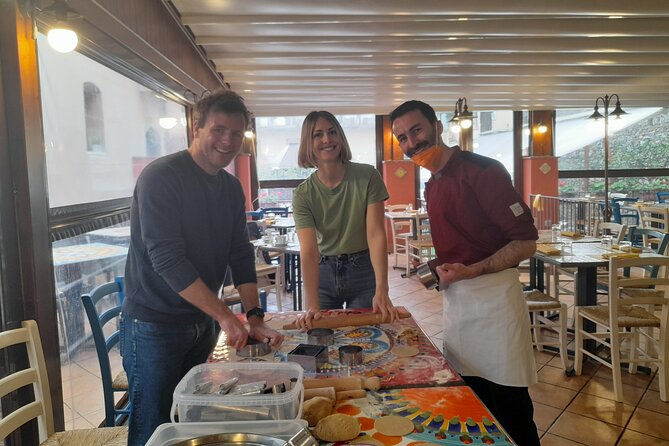
Frying is where the class turns from cooking to performance. You watch how the shells are fried and then you get to participate. The chef and kitchen team guide the process so the shells come out correctly—golden and crisp, not pale or uneven.
This is also the part where timing matters. Frying isn’t something you can learn well by reading about it. In class, you’re guided through what to look for and what to do next. It helps that the experience happens at a real restaurant kitchen, not a demonstration stage.
One reason this section gets such strong praise is that it creates a payoff moment. Once you see shells frying and then you hold the finished results, the whole process makes sense. You’re not waiting for the dessert at the end like a traditional tour. The action keeps moving.
You can also read our reviews of more tours and experiences in Sicily
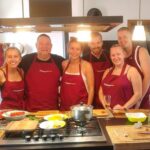


Filling and Tasting: Eat the Proof
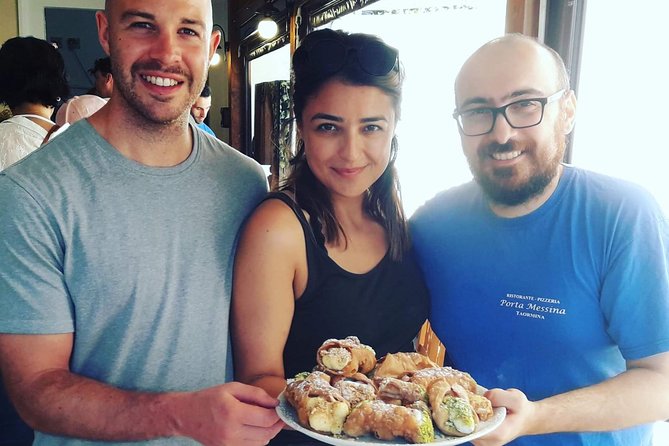
Once shells are ready, it’s time to fill them. This is where you finally get to enjoy what you’ve worked on. And the best part: the tasting isn’t an afterthought. It’s a real finish to the class.
You’ll eat the cannoli you made. Some groups also report receiving extras like wine and limoncello as part of the meal-style finish, while everyone should expect the included coffee, tea, and soft drinks. Either way, this end portion matters because it turns the class into an actual shared food experience, not just a cooking workout.
You’ll also receive a certificate after completing the course. It’s simple, but it adds to that I actually did this feeling—especially if you’re traveling with kids, teens, or a group celebrating something small.
Drinks, Recipes, and What You Take Home
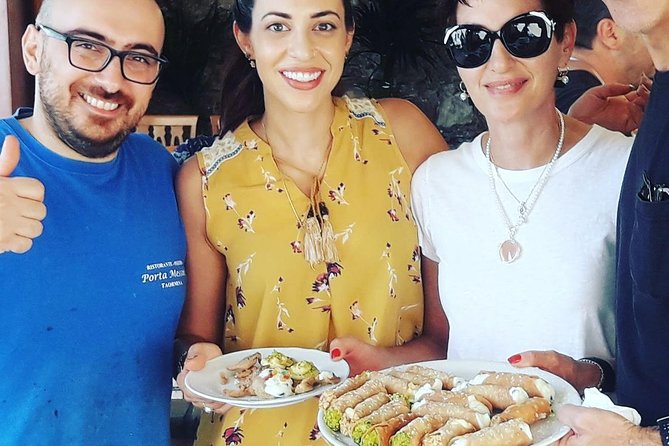
At minimum, you’ll get complimentary coffee, tea, and soft drinks. That’s a nice built-in perk in Taormina, where mornings can start cool and turn warm quickly.
A number of feedback comments also mention additional drinks at the end—like wine or limoncello—and extra abundance of cannoli you can eat for a while after. While those aren’t guaranteed across every date, the consistent included vibe is: you’ll finish with more than a tiny taste.
Another thing you might be happy to hear: multiple instructors are noted for sharing recipes afterward (often by email). That’s a practical bonus. A lot of cooking classes give you a warm memory but no usable follow-through. If you can get the recipe, you’ll be able to recreate the cannoli at home using the same logic you learned in the kitchen.
Price and Value: Is $78.64 Worth It?
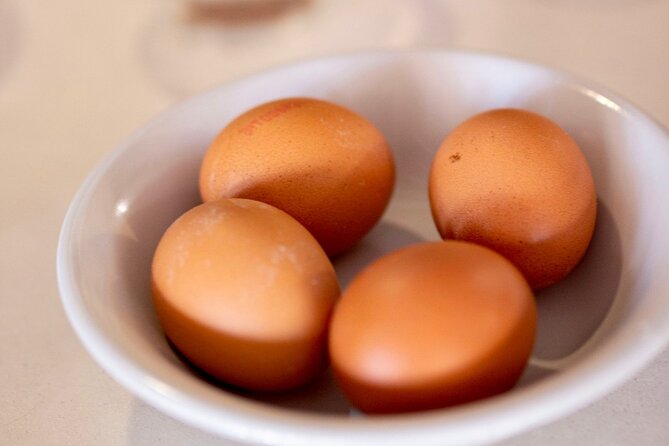
At $78.64 per person for about 1 hour 30 minutes, this isn’t a cheap activity. But it also isn’t just a ticket for a sweet smell in the air.
Here’s the value math I’d use:
- You’re paying for hands-on instruction from a professional chef.
- You’re learning the full dessert workflow: dough, ricotta/cream filling, frying, and filling.
- You’re not leaving empty-handed. You eat your cannoli, you receive a certificate, and you get coffee/tea/soft drinks.
Compared with buying cannoli from a café, this is more expensive—but it’s also more meaningful. You’re buying a skill you can repeat. And you’re likely to eat more than you would at a quick stop, since many groups end up with a lot of cannoli by the end of the session.
One more value point: booking patterns suggest this class is popular, with an average booking lead time of 28 days. If you want a specific day (or you’re traveling in peak season), it’s smart to reserve early.
Who Should Book This Class (and Who Might Skip It)
This cannoli class is especially well-suited for:
- Families who want a structured activity where kids and adults both get hands-on tasks.
- Couples looking for a date idea that’s active and not just scenic.
- Food lovers who want an authentic Sicilian skill, not a generic tourist workshop.
It may not be ideal for:
- People who hate fried foods, since frying is part of the process.
- Anyone who wants a sit-back-and-watch-only experience. This one is active by design.
If you’re visiting Taormina during a rainy spell, this is the kind of indoor plan that keeps your trip moving without sacrificing fun.
Practical Tips to Make Your Morning Go Smoothly
Here are a few things that can make or break your first 10 minutes:
- Arrive a bit early to get your bearings at Largo giove serapide, 4.
- Bring your confirmation on your phone and keep your mobile ticket ready.
- Expect to get messy. Even if chefs are careful, cannoli-making involves dough and filling.
- Wear comfortable shoes. You’ll be standing and moving around in a kitchen environment.
And one more small mindset shift: go in ready to learn. The chefs (like Francesca, Carmelo, Maurizio, Marcelo, and Chef Jackie, per feedback) tend to focus on clear instructions and patient support. If you treat it like a lesson, you’ll get a better result—and you’ll enjoy the tasting more because you know what you did right.
Should You Book the Cannoli Cooking Class in Taormina?
If you want a memorable Sicily moment that isn’t just a photo stop, book it. This is a hands-on class with professional instruction, a complete process from dough to filled cannoli, and an ending that includes coffee/tea/soft drinks plus tasting and a certificate.
I’d especially recommend it if you’re traveling with family or you’re the type who likes learning a practical skill you can repeat. It’s also a smart choice when Taormina weather turns gray, because your time stays productive and fun indoors.
The main reason to hesitate is logistics: make sure you can find Porta Messina at Largo giove serapide, 4 and arrive early. If you do that, you’re set up for a sweet, hands-on morning that feels very Italian.
FAQ
How long is the cannoli cooking class?
It runs for about 1 hour 30 minutes.
Where is the meeting point in Taormina?
The meeting point is Largo giove serapide, 4, 98039 Taormina ME, Italy, at Porta Messina Restaurant Cooking Class.
Is the class offered in English?
Yes, the class is offered in English.
What’s included at the end of the class?
You’ll have a cannoli tasting, plus complimentary coffee, tea, and soft drinks, and you receive a certificate.
How big is the class?
The maximum group size is 40 travelers.
What is the cancellation policy?
You can cancel for a full refund up to 24 hours before the experience start time (local time). Free cancellation is available under that window. After that, the amount paid is not refunded.