REVIEW · SICILY
Palermo in 2 hours Main monuments and historic markets
Book on Viator →Operated by Palermo a Piedi - Walking Tour · Bookable on Viator
Palermo can feel chaotic fast. This tight, guided route turns the city’s big monuments, squares, and markets into a clear story of Sicily’s mix of cultures. You get street-food energy plus major landmarks like Teatro Massimo and Palermo Cathedral, with myths and legends threaded in.
Two things I’d count on right away: the tour focuses on the parts that help you make sense of Palermo, not just check boxes, and the licensed guide brings it to life with anecdotes and practical context (including how locals think and talk about the city). One possible drawback: some stops require extra tickets, and you’ll also want to plan around the fact that food and drinks aren’t included.
In This Review
- Key highlights you’ll feel on this walk
- A fast route that teaches you how Palermo “works”
- Teatro Massimo: Italy’s biggest opera house, minus the fuss
- Opera dei Pupi and Mimmo Cuticchio: Palermo’s dramatic past in miniature
- Piazza Pretoria: the fountain that steals the show
- Piazza Olivella and Sant’Ignazio: Baroque church energy and a plague legend
- Cape Market (Capo) and a short street-food tasting: your shortcut to local life
- Palermo Cathedral: UNESCO status in Arab-Norman style
- The Cassaro: walking Palermo’s oldest spine of palaces and churches
- The guide factor: why this tour tends to earn top ratings
- Price and value: $23.26 for a guided “starter pack”
- Who this walking tour suits best (and who should choose differently)
- Should you book Palermo in 2 hours Main monuments and historic markets?
- FAQ
- How long is the tour?
- Where does the tour start?
- Where does the tour end?
- What time does the tour begin?
- Is the tour ticket mobile?
- What’s included in the price?
- What is not included?
- Is the tour suitable for most travelers?
- What’s the group size limit?
- What’s the cancellation policy?
- Is good weather required?
Key highlights you’ll feel on this walk
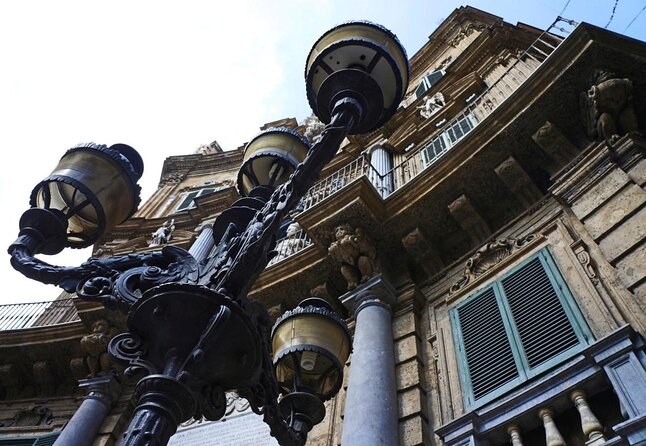
- Teatro Massimo in a quick stop at Italy’s largest opera house
- Opera dei Pupi puppet theater with UNESCO heritage ties and Palermo’s long dramatic tradition
- Piazza Pretoria and its famous Renaissance fountain—square sight to start your photos
- Piazza Olivella: Sant’Ignazio’s Baroque showpiece and Santa Rosalia’s plague legend
- Cape Market (Capo) with a short street-food tasting stop
- Palermo Cathedral entry in Arab-Norman style at a UNESCO-listed site
A fast route that teaches you how Palermo “works”
Palermo isn’t a one-style city. It’s layered. One minute you’re staring up at theater architecture, the next you’re walking through street corners tied to religion, commerce, and old legends. What makes this tour useful is the pacing: in about two hours you’re nudged into the right neighborhoods and the right landmarks so you can explore afterward with less wandering and more understanding.
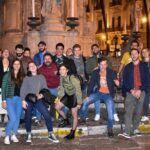
Also, this is the kind of small-group walk that tends to stay lively. The tour runs with a maximum of 20 people, so you can ask questions without shouting. And since it’s a walking format with a guide who covers both monuments and markets, you’re not stuck choosing between history and the real-day-to-day city vibe.
One more practical note: the schedule is around 10:30 am and is listed at 2 hours, but some guides may take longer depending on questions and the day’s flow—so I’d mentally budget a bit of breathing room.
You can also read our reviews of more historical tours in Sicily
Teatro Massimo: Italy’s biggest opera house, minus the fuss
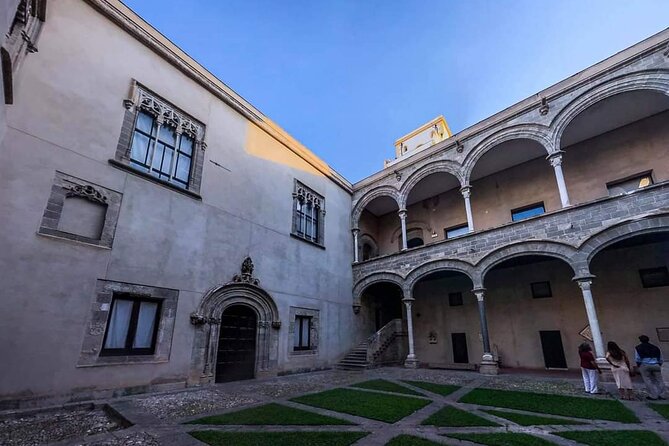
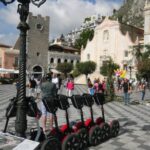
You start with Teatro Massimo, the largest opera house in Italy. Even if opera isn’t your hobby, the building is worth it. It’s the kind of landmark that shows Palermo’s ambition and taste, and the guide’s job here is to help you see the theater as more than a pretty façade.
This is a “look-and-learn” stop—short on purpose. You get a chance to orient yourself and understand why this kind of cultural monument matters in a city shaped by many rulers and many identities. If you’re planning to come back later for a performance, this stop helps you understand what you’re actually looking at.
Cost heads-up: admission isn’t included for this stop. If you want to go inside beyond the quick viewing, you’ll likely need separate tickets.
Opera dei Pupi and Mimmo Cuticchio: Palermo’s dramatic past in miniature
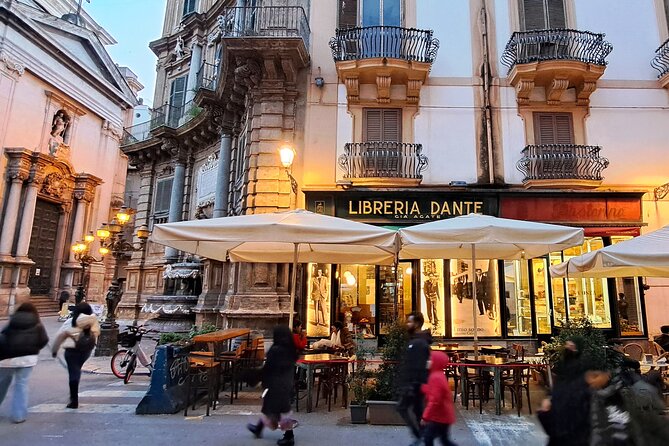
Next up is Teatro dell’Opera dei Pupi, tied to Mimmo Cuticchio and the tradition of Palermo puppet theater that dates back to around 1800. This is one of those cultural things that doesn’t feel “museum-still.” The puppets and stories come from a long local storytelling practice, and the UNESCO connection is the clue that this isn’t just quirky entertainment—it’s heritage.
What I like about placing this early is contrast. Teatro Massimo is grand and formal. Opera dei Pupi is theatrical but more hands-on, more folk in its feel. Together, they show two sides of the same Palermo habit: telling stories loudly, with style.
As with the opera house stop, admission isn’t included here either, so treat this as an introduction stop unless you choose to pay for extra access separately.
Piazza Pretoria: the fountain that steals the show
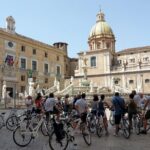
Piazza Pretoria is a photo stop, but it’s also a lesson in civic power. The square is known for a monumental Renaissance fountain, placed right in front of the Palazzo delle Aquile, the historic seat of civic administration. That combination—beauty + authority—is exactly the kind of detail that makes squares matter in Palermo.
This stop includes admission for the fountain area. If you want a “wow, okay, I get it now” moment, this is the one. You’ll see why people can get excited about fountains here. It’s not just water. It’s a statement.
If you dislike crowds around big landmarks, aim for the exact time the guide schedules, because squares like this can move fast when you’re there with a group.
Piazza Olivella and Sant’Ignazio: Baroque church energy and a plague legend
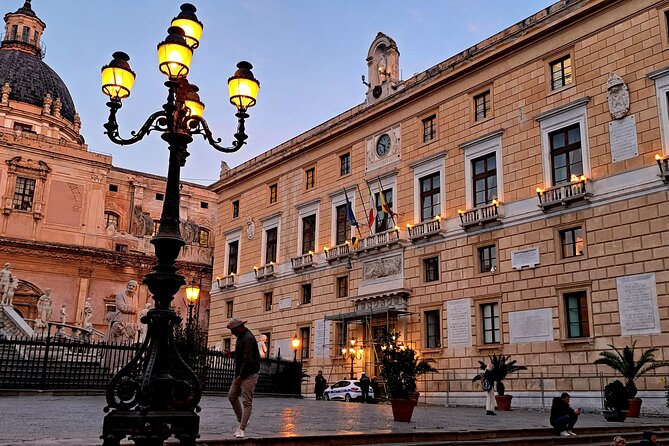
From Piazza Pretoria you continue toward Piazza Olivella. Here you get a cluster of meaning in a small space: the Regional Archaeological Museum, the church of Sant’Ignazio, and the nearby birthplace of Santa Rosalia, Palermo’s patron saint.
Santa Rosalia is proclaimed patroness by popular acclaim for freeing the city from the plague. That story matters because it explains why religious devotion in Palermo can feel personal and local, not distant. You’re not just hearing a name—you’re learning why the city reveres her.
Sant’Ignazio is described as one of the most sumptuous Baroque temples in Palermo. That fits with how Palermo handles faith: it’s often dramatic, often visual, sometimes emotional. Even if you’re not a Baroque superfan, you’ll likely appreciate the craftsmanship once you’re standing in front of it.
Cost-wise, the information provided says this area’s church stop is free. Still, keep in mind that you might see museum areas or other entrances that are not automatically covered—so if you want to go deeper, plan to add tickets later.
You can also read our reviews of more tours and experiences in Sicily

Cape Market (Capo) and a short street-food tasting: your shortcut to local life
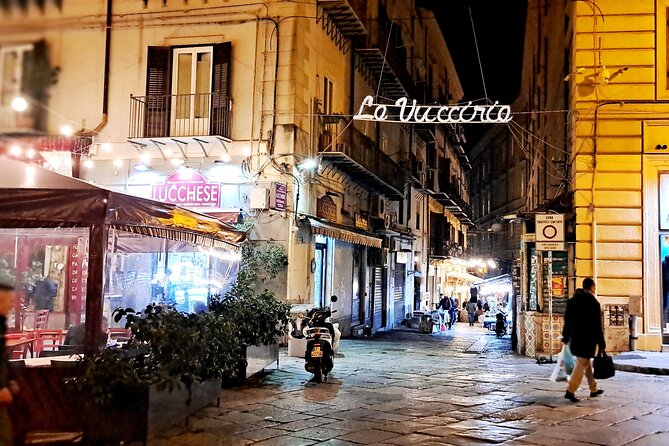
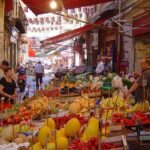
Now comes the part most people actually remember later: walking through Palermo’s market atmosphere. The tour includes crossing the Cape Market (Capo) and includes a short stop for free street-food tasting.
This is a smart way to do markets on a limited time schedule. You’re not stuck trying to guess what to order, and you’re not watching from the sidewalk. You get enough taste to understand the city’s food logic—what’s common, what locals reach for, and how street food is treated as real daily culture.
If you have food preferences or allergies, you’ll want to be cautious. The tour data doesn’t list what the tasting includes, and it also notes that food and beverages aren’t included beyond that short tasting. So treat the tasting as a sampler, not a full meal plan.
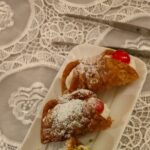
One more small win: the guide’s history stops you from seeing market life as only “shopping.” You’ll understand why certain foods, sweets, and customs show up where they do—especially when the guide ties the myths and legends of Sicily to daily habits, including secret recipes for Sicilian desserts.
Palermo Cathedral: UNESCO status in Arab-Norman style
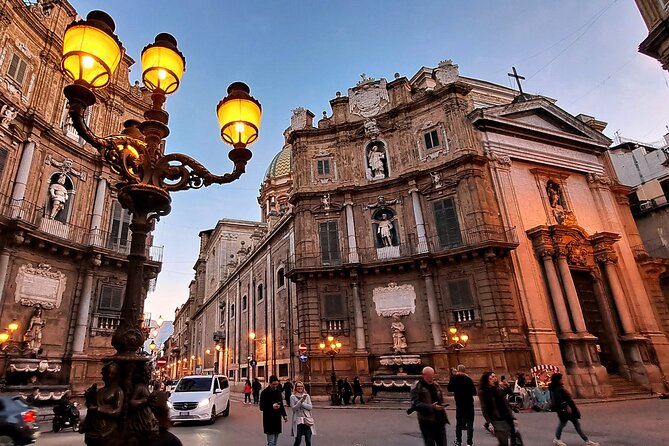
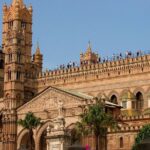
The tour includes Cathedral entrance, and it’s the centerpiece for good reason. Palermo Cathedral is a UNESCO heritage site described in Arab-Norman style. That blend is a big part of why Palermo is unique—Sicily’s rulers and cultures overlapped, and the buildings carry those layers forward.
In a short walking tour, a cathedral can either be rushed past or used as a teaching tool. Here, it’s placed after the markets and squares so your head is already full of culture and local stories. That makes the cathedral feel less like a separate attraction and more like the religious and artistic anchor of the city.
Timing matters with cathedrals. If you want clear photos, be ready for slow moments inside and follow the guide’s pacing. You’ll probably spend enough time to admire key features, but this isn’t designed as a long independent museum session.
The Cassaro: walking Palermo’s oldest spine of palaces and churches
After the cathedral-focused segment, you’ll also get the ancient Cassaro area—the oldest street in Palermo, lined with palaces, churches, and convents. This is one of those details that sounds like trivia until you walk it and realize the street layout is basically the city’s timeline.
The Cassaro acts like a backbone. It helps you understand why Palermo’s highlights feel connected. Even if you don’t have time to stop inside every building, you get the sense of continuity—one era’s power passing into the next, sometimes in architecture, sometimes in street life.
This stop is also where the guide’s legend-and-history approach helps. The Cassaro isn’t just old. It’s associated with stories like the mysterious sect of the Beati Paoli, and with recurring themes such as patron saints and local belief.
The guide factor: why this tour tends to earn top ratings
The strongest, most repeated theme in the feedback is the guide. Names that show up include Maurizio and Fabrizio, and the common thread is a lively style: not dry, not lecture-y, and full of small details that make Palermo feel understandable.
I especially like when a guide does three things:
- Connects what you see to what came before.
- Gives you useful street-level pointers for the rest of your trip.
- Keeps the conversation moving, with anecdotes that feel like Sicily, not a textbook.
In the feedback, the guide style is described as engaging and passionate, with plenty of historical explanations mixed with personal observations about the city’s present. One guide also shared practical pointers on topics like how to haggle properly with local merchants, which is exactly the kind of thing that can make a trip smoother once you leave the tour route.
If you’re the type who likes to learn and also enjoy the walk, this is the tour format that usually clicks.
Price and value: $23.26 for a guided “starter pack”
At $23.26 per person, this tour is priced like a real deal if you consider what’s included. You’re getting a licensed professional guide, market coverage through Cape Market, a short free street-food tasting, and Cathedral entrance.
What’s not included is also important. Tickets for other stops—like Teatro Massimo and Teatro dell’Opera dei Pupi—aren’t included, and food and beverages aren’t included beyond that tasting. So your true cost depends on whether you want to add extra paid entrances at those monuments.
Here’s how I’d judge value: this tour gives you a guided map of meaning. You’re not only seeing major sites; you’re learning how myths, patronage, and culture connect to what’s on the street. If you’re short on time in Palermo, that kind of orientation can save hours of guesswork later.
If you already plan to buy multiple museum or monument tickets on your own, you might still pay extra—just not for everything.
Who this walking tour suits best (and who should choose differently)
This tour is ideal if you:
- want a first-day introduction to Palermo without committing to a huge day of sightseeing,
- enjoy stories and local context as much as monuments,
- want market time plus cathedral time in a single loop,
- like small-group walks with room for questions.
It may be less ideal if you:
- want long, slow museum browsing (this is a short route),
- hate walking or packed schedules,
- expect everything to be fully included ticket-wise (some entrances aren’t included).
If you’re visiting in a hurry or you want a smart starting point before you explore on your own, this is a good “get your bearings” option.
Should you book Palermo in 2 hours Main monuments and historic markets?
I’d book it if you want the fastest route to understanding Palermo’s vibe: theaters, squares, legends, markets, and a UNESCO-listed cathedral. The included cathedral entrance and the market crossing with a free street-food tasting make it more than a postcard walk.
Also, the tour’s reputation leans heavily on guide quality—especially the engaging, opinionated-but-helpful style from guides like Maurizio and Fabrizio. That matters because in a short time window, you need someone to steer you toward what’s worth noticing.
The main reason to hesitate is the ticket mix. Not everything is included, and food beyond the tasting is on you. If that works for your budget and appetite, this tour is a strong way to kick off a Palermo stay.
FAQ
How long is the tour?
The tour is listed at about 2 hours.
Where does the tour start?
It starts at Via Cavour, 131, 90133 Palermo PA, Italy.
Where does the tour end?
It ends at Palermo Cathedral, on Via Vittorio Emanuele.
What time does the tour begin?
The start time listed is 10:30 am.
Is the tour ticket mobile?
Yes, the tour offers a mobile ticket.
What’s included in the price?
Included are a licensed professional guide, crossing the Cape Market, a short stop for free street food tasting, and Cathedral entrance.
What is not included?
Not included are food and beverages, and any tickets for entrances to palaces, churches, and museums.
Is the tour suitable for most travelers?
The tour states that most travelers can participate.
What’s the group size limit?
The tour has a maximum of 20 travelers.
What’s the cancellation policy?
You can cancel for a full refund up to 24 hours before the experience starts. Free cancellation is available.
Is good weather required?
Yes. This experience requires good weather, and if it’s canceled due to poor weather, you’ll be offered a different date or a full refund.