REVIEW · SICILY
Palermo, a tour of unique monuments and colorful markets
Book on Viator →Operated by Palermo Tour · Bookable on Viator
Palermo’s center tells stories fast. You’ll move from Teatro Massimo to the markets with a guide who explains how legends, architecture, and everyday Sicilian life connect. I love that the tour is packed with vivid context, not just stone-and-sign facts.
I especially like the pace: a smart 3 hours that keeps you walking between major sights without feeling rushed. The small group size (up to 20) also makes it easier to ask questions and get practical advice on what to do next.
One thing to consider: the Cathedral of Palermo stop depends on whether there are religious services, and the operator notes the experience requires good weather.
In This Review
- Key highlights to look for
- Teatro Massimo Start: Florio Glamour, Plus That Ghost Story
- Piazza Olivella and Teatro dell’Opera dei Pupi: Baroque Meets Puppet Opera
- Piazza Massimo and the Belle Époque Feel of the Center
- Capo Market and Street Food Time: Arab Roots, Local Taste
- City Walls, a City Gate, and the Beati Paoli Legend
- Cathedral of Palermo (UNESCO): Norman-Arab Style and the Tombs to Look For
- Via Vittorio Emanuele, Piazza Pretoria, and Quattro Canti: The Center’s Best Finale
- Value, Group Size, and the Kind of Guide You Want in Palermo
- Should You Book This Palermo Monuments and Markets Tour?
- FAQ
- How long is the Palermo tour?
- Where do I meet, and where does the tour end?
- Is there a free stop for street food at the markets?
- Is Cathedral of Palermo entry included?
- How large are the groups?
- What if the weather is bad or I need to cancel?
Key highlights to look for
- Teatro Massimo ghost legend, tied to Palermo’s Florio-era glamour
- Capo market time for classic Palermo street food in an Arab-origin area
- UNESCO Cathedral of Palermo in Norman-Arab style, with royal tombs to spot
- Fontana della Vergogna stop near Ballarò and Vucciria markets
- Beati Paoli locations and the story of a secretive justice legend
- Quattro Canti and Piazza Pretoria to wrap the whole center with strong visual payoff
Teatro Massimo Start: Florio Glamour, Plus That Ghost Story
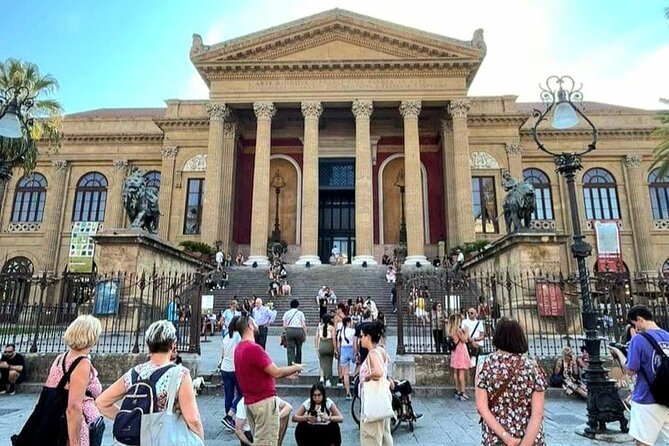
I like tours that start with a big anchor point, and Palermo does that right off the bat at Piazza Giuseppe Verdi, near Teatro Massimo. From there, you get your bearings fast and you can feel why this city became a showcase for power and culture. The guide frames Teatro Massimo not just as a landmark, but as a symbol of the Palermo connected to the Florios—plus the mysterious legend of its ghost.
That ghost story matters because it gives you a lens for everything that follows. Instead of treating the city as a checklist, you start noticing themes: how different rulers left marks, how neighborhoods developed, and how ordinary people turned those spaces into daily routines. It’s the difference between seeing buildings and reading a place.
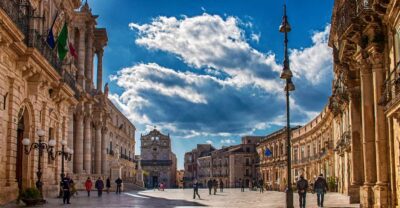
You’ll also hear about the larger Palermo “belle époque” atmosphere around this area, with the Florios as the story thread. Even if you know nothing about them now, the explanation is straightforward and grounded in what you can see in front of you—squares, facades, and the street rhythm that funnels you toward the older market quarters.
Practical note: the tour runs about 3 hours, starting at 10:30 am and ending around Quattro Canti. That timing is handy for a first half-day walk, especially if you want the afternoon free for museums, more food, or a slower wander.
You can also read our reviews of more tours and experiences in Sicily.

Piazza Olivella and Teatro dell’Opera dei Pupi: Baroque Meets Puppet Opera
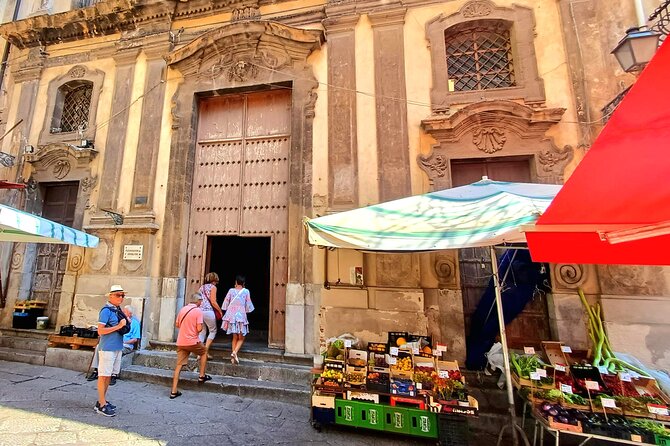
Before you hit the markets, you pass through baroque Palermo’s softer side. The stop at Piazza Olivella brings you to the church of Sant’Ignazio and the National Archaeological Museum area. It’s a good moment to reset your eyes: square geometry, church details, and the sense that Palermo’s layers sit on top of each other.
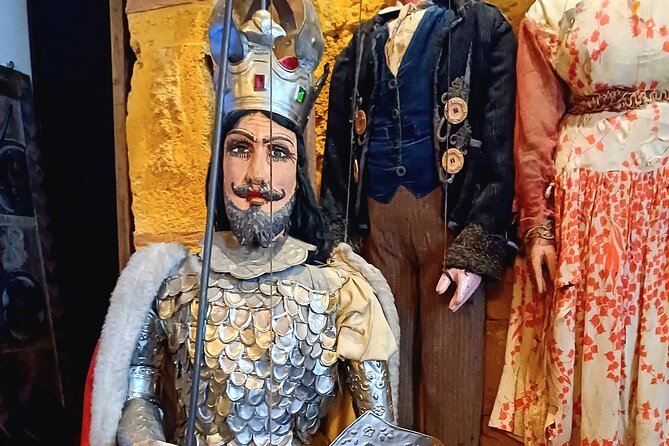
Then comes Teatro dell’Opera dei Pupi, the famous puppet opera theatre with UNESCO heritage status. This is one of those stops that changes how you think about culture here. Palermo isn’t just grand cathedrals and palaces; it also has a long tradition of performance and storytelling, and the guide makes that connection in a way that feels natural—not forced.
Why I like this part of the tour: it keeps variety early. You get a quick taste of baroque elegance and then jump into a distinctly local art form. It’s also a smart strategy for energy. After walking among markets later, you’ll be glad you started with something calmer and more narrative.
If you’re the type who usually skips “theatre” stops, don’t. Puppet opera is part of Palermo’s identity, and you’ll get the background that helps you see why this UNESCO site matters.
Piazza Massimo and the Belle Époque Feel of the Center
You’ll also spend time at Piazza Giuseppe Verdi (Piazza Massimo), with an overview of the square where the largest opera house in Italy stands. This is where the tour slows slightly into explanation mode. The guide ties the story to Palermo’s stronger social and economic moments, especially those connected to the Florio family.
Even if you mainly care about photos, this stop helps you frame what you’re capturing. It’s not just Teatro Massimo as a standalone building; it’s Teatro Massimo as a centerpiece of a wider city story—money, taste, ambition, and the kind of public life that makes cities feel alive even when you’re just walking through.
This also sets you up for the next jump: from grand monuments to crowded streets. You’ll go from a square tied to status to market lanes where people come for everyday food, conversation, and shopping. That contrast is one of Palermo’s best lessons.
Capo Market and Street Food Time: Arab Roots, Local Taste
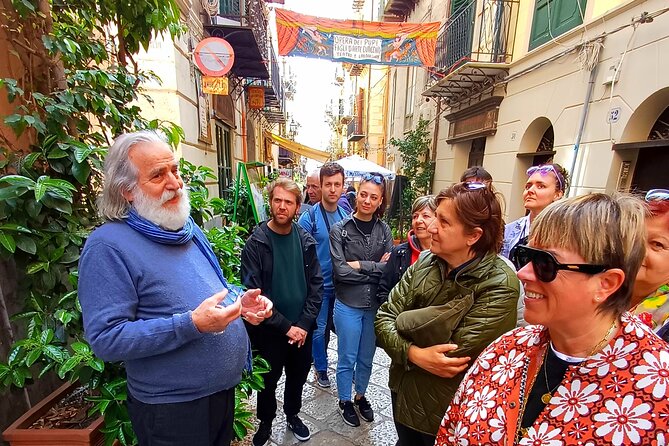
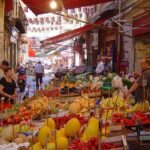
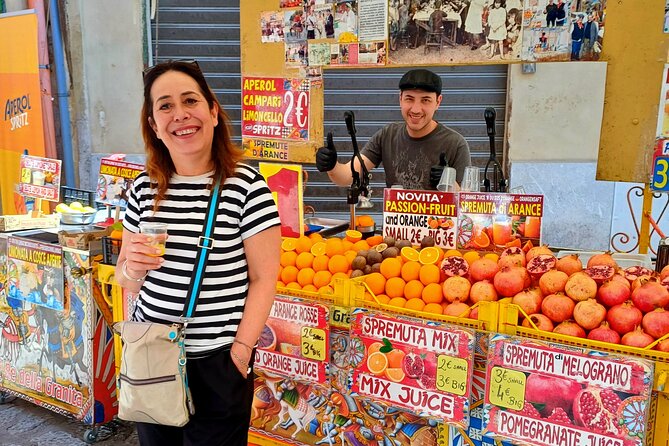
The heart of this experience is the Capo Street Market, described as an ancient Arab market area. You get about 25 minutes there, with a free stop built in so you can taste Palermo street food. This is the part of the tour where you should lean into being a little patient—market time works best when you let it flow.
The “Arab origin” detail isn’t trivia. It helps you understand why the market layout and neighborhood feel the way they do. Instead of seeing random stalls, you start noticing how places evolve from older city patterns. The guide’s commentary keeps the market from becoming just background while you eat.
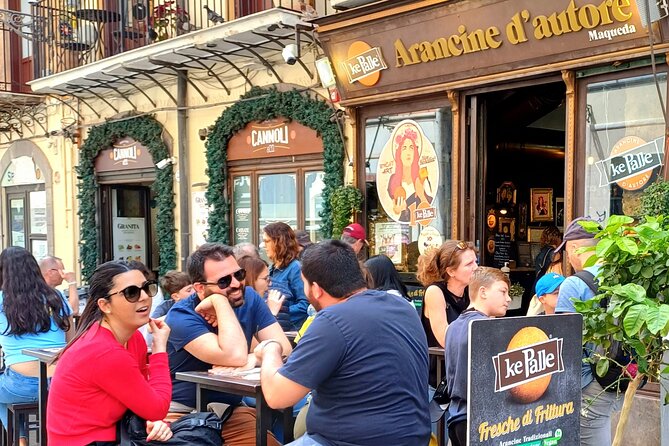
What makes this stop valuable is the combination of guidance and freedom. You get enough context to know what you’re looking at, but you’re not trapped in a single tasting program. You can choose what to try, and you can step back from the busiest spots if you want a clearer view for a photo.
Also, your route brings you close to the markets of Ballarò and Vucciria, with the Fontana della Vergogna appearing near them. That fountain is a visual punctuation mark in the middle of the market world. You see it with the sense of where you are heading next: from food and daily life back to story-rich monuments.
If you’re a first-timer to Palermo, this is the stop that makes the city feel real. Monuments are impressive, but markets explain how people actually live here.
City Walls, a City Gate, and the Beati Paoli Legend
After the markets, the tour shifts into older Palermo’s defensive and mysterious side. You’ll pass the Mura, Bastione e Porta Carini—part of the ancient walls built in Palermo in the 1500s, plus one of the city’s older gates that helps you enter the Capo market. Seeing walls and a gate in the middle of a walking tour is a useful reminder: this city was once much more about control and protection than it is today.
Then you get the Grotta dei Beati Paoli stop. This is where the guide brings in the legend of a secret sect known as the Beati Paoli, described here as avenging wrongs suffered by poor people in past centuries. Whether you treat it as folklore or as a way to understand social tensions, it still works because it connects to why people tell certain stories and how they keep them alive.
I like that these sections aren’t just “spooky add-ons.” They give the city a psychology. Palermo’s architecture and neighborhoods make more sense when you understand that people feared threats, but also created narratives to explain injustice and survival.
This portion is also brief, which is good. It keeps the pace moving, and it means you’re not stuck listening for too long when the next visual highlights are waiting.

Cathedral of Palermo (UNESCO): Norman-Arab Style and the Tombs to Look For
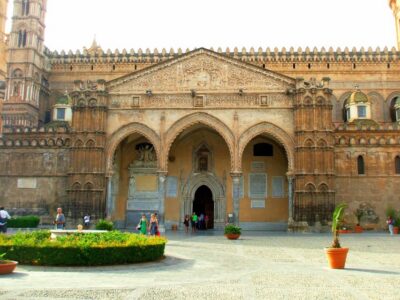
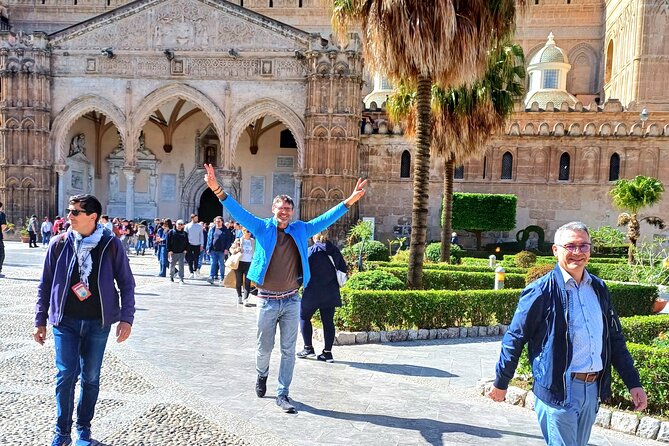
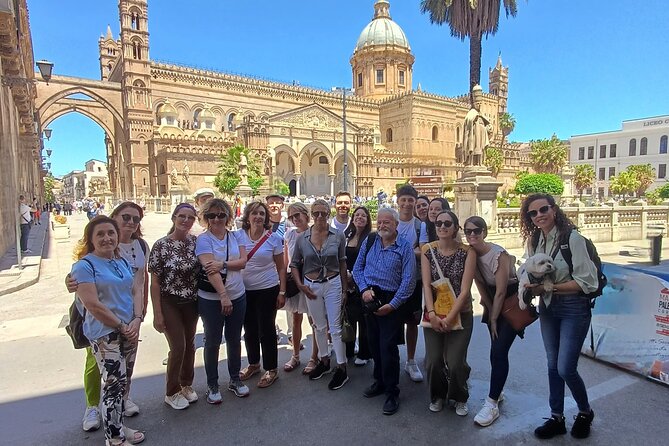
The Cathedral of Palermo is the major spiritual and historical anchor of the tour. It’s a UNESCO heritage site, built in Norman Arab style in 1185, and it’s described as the place where the kingdom of Sicily was born. That’s big-picture context, but what I value is how the guide points you toward what to notice when you’re standing there.
You’ll also hear what the cathedral holds: tombs of the first kings of Sicily. Even if you don’t read every inscription, knowing you’re looking at royal resting places helps you slow down. The building becomes more than a pretty exterior; it becomes part of the official origin story of the kingdom.
Important timing note: you get free entry to the Cathedral if there are no religious services. So if you arrive and things are closed or limited, don’t be surprised. It’s still a strong stop because the tour is designed to keep moving through the center—but your visit inside depends on what’s happening that day.
This is also a good place to ask questions. A good guide can translate architecture into human meaning: why the style looks the way it does and how the mix of influences is tied to Palermo’s role as a crossroads. With a certified guide leading the experience, you should feel comfortable stopping mid-walk and asking for clarification.
Via Vittorio Emanuele, Piazza Pretoria, and Quattro Canti: The Center’s Best Finale
Once you’re out of the cathedral focus, the tour turns toward the city’s classic “center postcard” zones. Via Vittorio Emanuele is highlighted as the oldest street in Palermo, rich with monuments, art, and history. Even if you only get a short stop there, the guide helps you understand it as a main spine of the city—so you see it as movement and connection, not just a street.
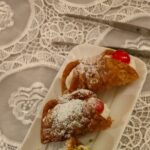
Then comes Piazza Pretoria, with its extraordinary Renaissance fountain surrounded by historic buildings. This stop gives you a breather from tight market lanes. It’s also where the story reaches into food culture again: the convent of Santa Caterina is mentioned as a place where many of the most famous Sicilian desserts were born. That’s a great example of how this tour keeps looping back to daily life, not only royal power and sacred sites.
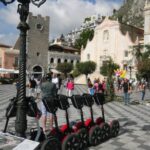
Finally, you end at Piazza dei Quattro Canti, the scenic central square full of symbols. Quattro Canti is the kind of place where the city seems designed for symmetry and interpretation—four corners, layered meaning, and a layout that makes it easy to orient yourself for the rest of your day. Ending here is a smart choice. By the time you reach it, your brain has connected enough dots that you can walk away with a better understanding of where things are.
If you want a clean ending that sets you up for your next stop—whether that’s more food, a second museum, or simply wandering without a plan—this is a strong finish.
Value, Group Size, and the Kind of Guide You Want in Palermo
At $34.83 per person for about 3 hours, this tour sits in a reasonable range for a guided highlights walk in a dense historic center. What helps the value is what’s included: a professional, authorized, certified guide; free entry to the cathedral when it’s available; and assistance and information for further visits, transport, and gastronomy.
That last piece matters more than people think. Palermo is a city where you can easily waste time if you’re guessing. A guide who can point you toward logical next steps and food areas saves energy and money. The experience is also capped at 20 travelers, which keeps the group from becoming a moving wall of bodies. In practice, that makes it easier to hear the stories and to ask for recommendations.
Also, the tour uses a mobile ticket. That’s a small thing, but it reduces friction when you’re moving from stop to stop.
One more reality check: good weather is required. Palermo’s center can be lovely under sun, but if it’s rainy, things can become less pleasant fast. The tour notes that if it’s canceled due to poor weather, you’ll be offered a different date or a full refund—so you’re not stuck with a sunk cost.
Should You Book This Palermo Monuments and Markets Tour?
Book this if you want a 3-hour plan that gives you both the headline monuments and the everyday Palermo feel. I’d pick it for first-timers who want context for Teatro Massimo, the UNESCO Cathedral, and the old-market streets—and who also want real street food time at Capo.
Skip it if you’re only interested in long, sit-down museum visits or if you hate walking in mixed weather. Because the experience depends on good conditions and because the cathedral entry can vary with services, it’s best for travelers who are flexible.
If you want a day in Palermo that’s guided, readable, and good value—this is a strong way to get oriented fast and still end with actual local flavor.
FAQ
How long is the Palermo tour?
It lasts about 3 hours.
Where do I meet, and where does the tour end?
You start at Piazza Giuseppe Verdi and the tour ends at Quattro Canti.
Is there a free stop for street food at the markets?
Yes. The tour includes a free stop to taste Palermo street food during the Capo Street Market portion.
Is Cathedral of Palermo entry included?
Free entry to the Cathedral of Palermo is included if there are no religious services.
How large are the groups?
The tour has a maximum of 20 travelers.
What if the weather is bad or I need to cancel?
The experience requires good weather. If it’s canceled due to poor weather, you’ll be offered a different date or a full refund. You can cancel for free up to 24 hours in advance for a full refund.