REVIEW · SICILY
WalkingTour CATANIA – discovering the city of lava with a licensed guide
Book on Viator →Operated by GuidingSicily · Bookable on Viator
Catania runs on lava, and so does this walk. You’ll start at the Piazza del Duomo and follow a licensed guide through the city’s big sights, with stories that connect lava stone building, Baroque rebuilding, and daily street life.
Two things I really like: first, the small group size (max 15) keeps the pace calm and questions easy. Second, the tour mixes monuments with food culture—especially the stop around the local fish market, where you get a feel for how Catania eats and shops, not just what it used to be.
One consideration: weather matters. This is a good-weather walk, and on top of that, Ursino Castle’s entry fee is not included. So if you want to go inside, budget for that extra ticket.
In This Review
- Key highlights I’d plan around
- Piazza del Duomo: the lava-elephant gateway to Catania
- Palazzo degli Elefanti: town hall, elephant details, and why it matters
- A’ Piscaria fish market: where the tour gets real-food practical
- Ursino Castle: lava filled the moat, and basalt still shows
- Via dei Crociferi: Baroque facades rebuilt after 1693
- Piazza Università: lava-pebble courtyards and Sicily’s oldest university feel
- Price and value: why $24.19 works for a first-time Catania visit
- What group size and guide style mean for your day
- Who should book this walk (and who might skip it)
- Should you book this Catania walking tour?
- FAQ
- How long is the WalkingTour CATANIA, and what time does it start?
- What is the price per person?
- Where do I meet the guide, and where does the tour end?
- Is the tour offered in English, and how many people are in the group?
- Is Ursino Castle admission included?
- What happens if the weather is bad, or if I need to cancel?
Key highlights I’d plan around
- Piazza del Duomo as your starting point, right at the lava-stone heart of Catania’s story
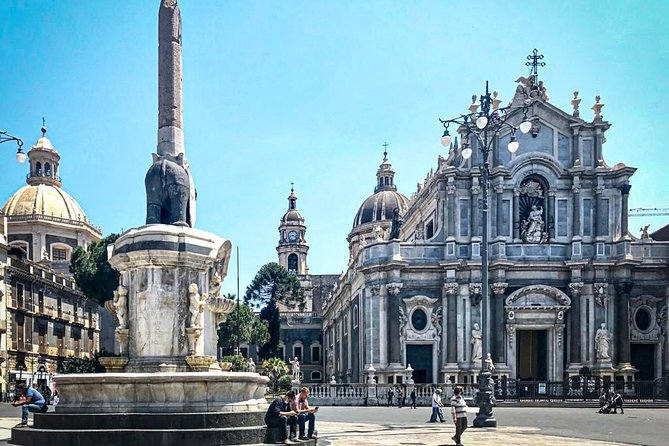
- Liotru the lava elephant fountain (with the obelisk on top) and the symbolism people actually talk about
- A’ Piscaria fish market stop, centered on daily local shopping for fish, cheeses, cured meats, and fruit
- Ursino Castle’s moat filled by a 17th-century lava flow, with black basalt still visible
- Via dei Crociferi after the 1693 earthquake, where Baroque facades rebuilt the skyline
- Piazza Università and university courtyards on lava pebbles, a cool detail that makes the past physical
Piazza del Duomo: the lava-elephant gateway to Catania
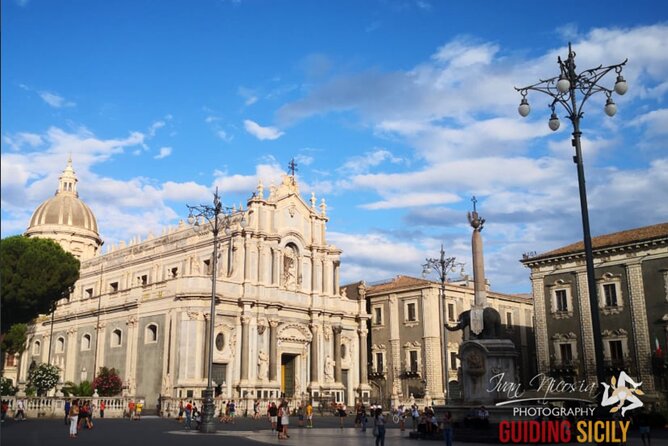
Your tour kicks off at Piazza del Duomo, meeting at the GS (GuidingSicily) infopoint in the square. If you’ve ever stood in a pretty Italian piazza and wondered why it feels so alive, you’ll get the answer fast. Catania has a way of turning geology into architecture and everyday life, and the guide sets that tone from minute one.
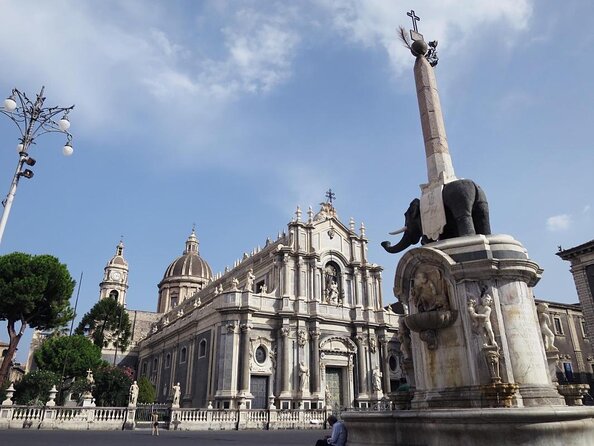
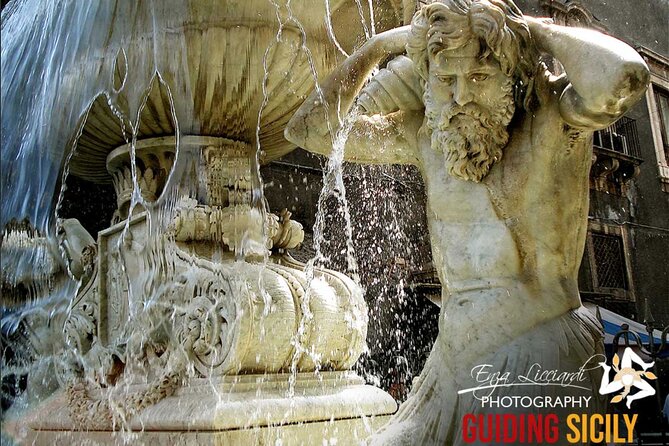
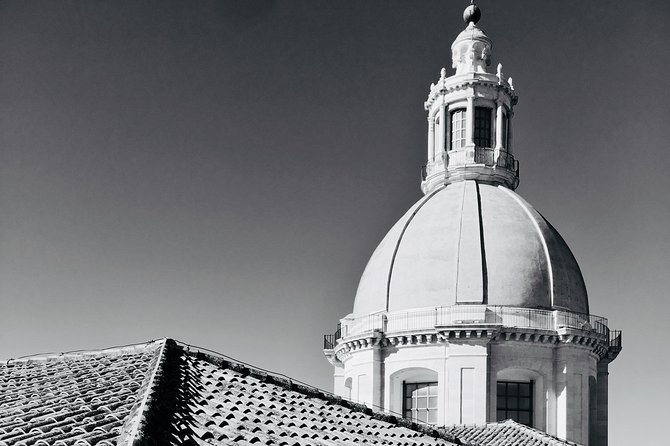
Here you’ll see the Duomo, which is Norman in origin but Baroque in appearance—a combo that reflects how often this city has been rebuilt and reshaped. The square is also where the story gets symbolic. Look for Palazzo degli Elefanti (the town hall) and the famous fountain featuring Liotru, a lava-stone elephant topped by an obelisk. Even if you only catch quick glimpses at first, these details help you read the city later.
If you choose the morning timing, you’ll also spend time near the historic fish market area. That matters because it quickly anchors the tour in real Catania, not just postcard views. This stop is about orientation: where to look, what to notice, and how lava connects to the way people live here today.
You can also read our reviews of more guided tours in Sicily


Palazzo degli Elefanti: town hall, elephant details, and why it matters
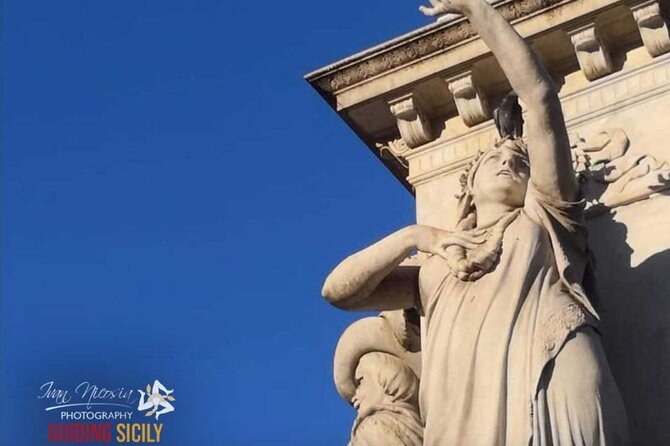
From the Duomo square, you move to Palazzo degli Elefanti, Catania’s town hall. It’s nicknamed that way because of the elephant representations in the gables above the balconies on the noble floor. It’s one of those architectural touches that feels both official and oddly playful—like the city can’t resist stamping its identity on the civic buildings.
This portion of the walk is short, but it’s useful. You’re not just checking a landmark box. You’re learning the pattern: Catania repeats its themes—lava, survival, power, and identity—through sculpture, street layout, and the way major buildings face the public.
A’ Piscaria fish market: where the tour gets real-food practical
Next comes A’ Piscaria Mercato del Pesce, the fish market right by the Duomo area. It’s held every day, and it’s not a museum-style stop. You’re walking through a place where local food is traded and where you can spot the variety that makes Sicilian cooking work—fresh fish, cured meats, cheeses, fruits, and vegetables all show up in the same busy orbit.
The reason I like this stop so much is simple: it gives you a “how to shop and eat” lens. A good guide doesn’t just point at stalls. They help you understand what locals grab, what kinds of products show up here, and how the market fits into daily rhythms. In past groups, guides like Giuseppe and Enza have been especially good at turning this into a lively, explanatory break rather than a rushed look-see.
One note: you don’t need to buy anything to enjoy it. But if you’re the type who likes tasting later, this is a smart place to learn what to seek out. The market stop also makes the rest of the walk easier—because you’re seeing the city as a system, not a list of monuments.
Ursino Castle: lava filled the moat, and basalt still shows
If you want one stop that feels slightly dramatic, it’s Ursino Castle. It’s a Swabian castle that once overlooked the sea, but a 17th-century lava flow changed the scene by filling the moat. The result is visible in the stone character of the area—especially the black basalt that you can still see today.
You’ll spend about 20 minutes here. The castle’s exterior and setting are the main focus, and the tour clarifies one important detail: admission isn’t included. So treat this as a guided orientation stop unless you plan to add the ticket on your own.
From a value perspective, this is a great inclusion even with the extra ticket possibility. Why? It explains how the city’s volcanic geography didn’t just cause problems—it also reshaped defenses, buildings, and urban edges. And because Catania’s lava story runs through the rest of the route (church facades, courtyards, monuments), this stop helps you connect the dots in your head.
Via dei Crociferi: Baroque facades rebuilt after 1693
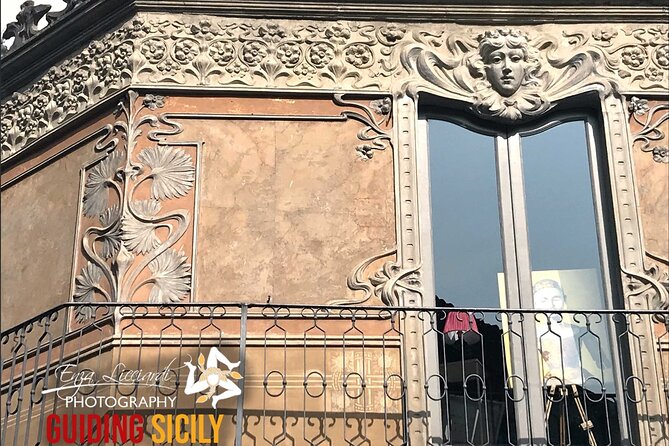
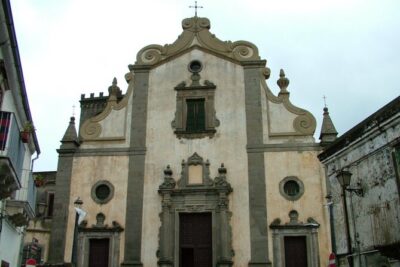
Now you walk along Via dei Crociferi, known for its chain of churches and monasteries. This street can feel like a steady parade of facades, but the guide grounds the beauty in history: most of the Baroque architecture here dates to rebuilding efforts after the devastating earthquake of 1693.
That historical link matters. Without it, Baroque can look like just decorative overload. With it, you see resilience in plaster and stone. Each facade becomes a marker of recovery—how communities returned, rebuilt, and made a new skyline from the rubble.
This stretch is also a nice mental break from the market energy. You’re slower here, noticing details. And if you’re traveling with family or friends who love architecture, this is one of the most rewarding sections because it’s visual and story-driven at the same time.
You can also read our reviews of more city tours in Sicily




Piazza Università: lava-pebble courtyards and Sicily’s oldest university feel
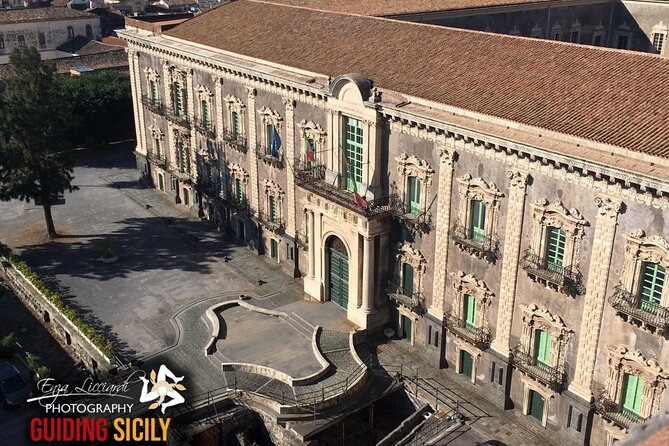
The tour closes around Piazza Università, where Palazzo del Rettorato encloses a courtyard paved with lava pebbles—a small detail, but it’s exactly the kind that makes the city feel tactile. You’re standing in a courtyard that has hosted generations of students, and the lava underfoot is a constant reminder that the ground itself is part of the campus identity.
In front of that complex you’ll also see Palazzo di San Giuliano, another university-related seat. It was formerly home to one of the most powerful and richest families in Sicily. That contrast—education on one side, social power on the other—adds depth to the square.
The guide also shares the date that makes this place feel serious: the university setting traces back to 1434. Even if you’re not a “university history” person, this stop gives you a grounded view of how long Catania’s civic life has run. The walk ends back at the meeting point, so you’re not left figuring out how to get home after you’ve finished the story.
Price and value: why $24.19 works for a first-time Catania visit
At $24.19 per person for a 2 to 3 hour small-group walk, this is one of those prices that makes sense if you’re visiting Catania for the first time and want your bearings fast.
Here’s what you’re paying for, beyond basic sightseeing:
- Licensed guidance with official authorization
- A route that hits big landmarks efficiently (Duomo square, town hall, market area, Ursino Castle area, Baroque street, university square)
- Clear explanations in English
- Most stops are free admission, so you’re not getting nickel-and-dimed at each point
The only clear “watch-out” is Ursino Castle admission not included. Still, you’ll learn why it matters, and you can decide on the spot if you want to spend the extra money to go inside.
In practical terms, you’ll save time. You could DIY some of this with a map, sure. But a licensed guide helps you understand what you’re seeing as you walk, which is the whole point of spending time in central Catania instead of just passing through.
What group size and guide style mean for your day
This experience caps at 15 travelers, which I love because it keeps the tour from turning into a slow-moving blob. You’ll have chances to ask questions, and it’s easier for the guide to manage pacing.
Guide style varies, but the overall pattern in the stories you’ll hear is consistent: local knowledge, clear explanations, and a sense of humor. In past departures, names like Titianna, Maria Luisa, Giuseppe, and Alicia have come up as guides who connect city history to day-to-day Sicilian life. Some have also been particularly attentive to comfort on hot days—finding shade and building in breaks—so if you’re visiting in warmer weather, that’s reassuring.
If you’re sensitive to sound, you might want to consider bringing earphones. One participant noted the guide was a bit hard to hear at times. With a little audio support, you’ll catch every key detail without straining.
Who should book this walk (and who might skip it)
This tour is a strong fit if you:
- Want a first intro to Catania that combines monuments with local food culture
- Prefer an easy walking route in central areas rather than long transit days
- Like your history explained in a human way—how people rebuilt after disasters, and how lava shaped city identity
I’d rethink if you:
- Only care about one specific museum-type attraction (since it’s a guided walk with some free stops and one castle ticket not included)
- Are in a tight time window and can’t spare 2 to 3 hours for a relaxed pace
- Are traveling during uncertain weather, since the tour requires good conditions
Should you book this Catania walking tour?
I think it’s a yes for most visitors—especially if you’re landing in Catania wanting immediate context. The route is efficient. You’ll hit the Duomo square, learn the symbols like Liotru, get a real-feeling stop at A’ Piscaria, and then move into Baroque streets and university courtyards where lava is not just a backdrop.
If you’re the type who loves stories tied to place, this is your kind of tour. If you want to move fast and just take photos, you might find it more satisfying to pair this with extra time afterward in the areas you loved most.
Book it when you can line up good weather. And if Ursino Castle is on your must-do list, plan a little extra budget for the entrance since that part isn’t included.
FAQ
How long is the WalkingTour CATANIA, and what time does it start?
It lasts about 2 to 3 hours and the start time is 10:30 am.
What is the price per person?
The price is $24.19 per person.
Where do I meet the guide, and where does the tour end?
You meet at Piazza del Duomo, 95100 Catania CT, Italy, and the tour ends back at the meeting point.
Is the tour offered in English, and how many people are in the group?
Yes, it is offered in English, and the tour has a maximum of 15 travelers.
Is Ursino Castle admission included?
No. Ursino Castle admission is not included, while the other listed stops are free.
What happens if the weather is bad, or if I need to cancel?
The tour requires good weather. If it is canceled due to poor weather, you’ll be offered a different date or a full refund. You can cancel for a full refund up to 24 hours in advance of the experience start time. Service animals are allowed.