REVIEW · SICILY
Guided tour of the salt pans of Trapani and the Salt Museum
Book on Viator →Operated by Saline Culcasi - Riselva del Mare - Museo · Bookable on Viator
White salt has a whole second life.
I like this tour because you step into the salt pans landscape first, following the perimeter walk where the colors shift between white salt, gray clay, pink tanks, and mirror-like water. I also love that the trip continues into the Museo del Sale, set inside an ancient baglio, where you see how this industry worked for generations. It’s the kind of experience that turns a simple ingredient into a place—and a job—worth paying attention to.
The main consideration is getting there. The meeting point is in Paceco (not central Trapani), and you’ll likely want a taxi or car so you don’t scramble for transport.
In This Review
- Key highlights at a glance
- Salt Pans and the Museo del Sale: What Makes This Experience Work
- Meeting in Paceco: The Logistics That Matter More Than You Think
- Walking the WWF Salt Reserve: A Colorful, Not-Too-Strenuous Stroll
- Getting Hands-On With Salt: What You’ll Actually Do Outdoors
- Museo del Sale in an Ancient Baglio: The 1400s Mill Angle
- English-Language Touring: How to Set Your Expectations
- Timing, Weather, and What to Wear for a 1h15 Visit
- The Value Question: Is $21.77 a Fair Deal?
- Who Should Book This Salt Pan Tour (and Who Might Not)
- Should You Book This Tour?
- FAQ
- How long is the guided salt pans and salt museum tour?
- Where does the tour start?
- Is the tour offered in English?
- Are admission tickets included?
- Is this a private tour or group tour?
- Is it suitable for most travelers?
- What if the weather is bad?
- What’s the cancelation window?
Key highlights at a glance
- WWF reserve salt pans: a guided walk through protected natural areas with birds and salt-making sites
- Hands-on salt gathering: collect salt yourself and watch how sea water becomes salt
- Ancient baglio museum: the Museo del Sale is housed in historic buildings, not a generic exhibit
- 1400s mill and family stories: you learn the human side of salt production, not just the science
- Short, efficient pacing: about 1 hour 15 minutes total, with most time spent outdoors
Salt Pans and the Museo del Sale: What Makes This Experience Work
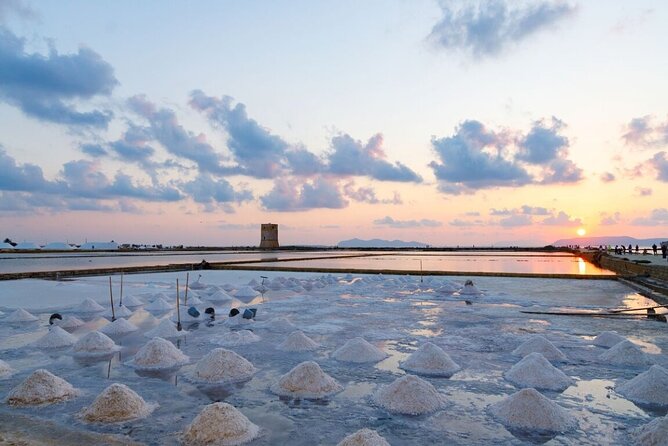
Trapani’s salt pans aren’t a theme park. They are working salt beds—still tied to the sea—wrapped in a landscape that looks almost unreal at certain light angles. This tour gives you just enough time outdoors to understand the place, without feeling like you’re on a long hike.
The format is also smart: walk first, museum second. You start by seeing the tanks, channels, and natural textures that make salt production possible. Then you go inside and connect those visual clues to the tools and stories that kept the process running over time.
And yes, you’ll probably end up paying more attention to the salt on your table back home. Not because it becomes precious, but because you finally understand what it takes to produce something that’s usually taken for granted.
You can also read our reviews of more guided tours in Sicily


Meeting in Paceco: The Logistics That Matter More Than You Think

This experience starts and ends at the meeting point in Via Salina Chiusa, 1, Paceco. That sounds simple, until you realize the salt pans are not right in the center of Trapani. One review specifically flagged that the drive from downtown Trapani can be about 15 minutes, and the extra transport cost can surprise you if you’re relying on ad-hoc plans.
If you’re staying in Trapani and you don’t have a car, I’d plan your ride ahead of time. Have a taxi option lined up for the return, especially if your visit is scheduled later in the day. If you do have a car, you’re in a much easier spot to keep the experience smooth.
Also note that this tour is private in the sense that it’s only your group. That can reduce the chaos of big-bus logistics, but it also means you don’t want to miss the meeting time and hope someone can adapt on the fly.
Walking the WWF Salt Reserve: A Colorful, Not-Too-Strenuous Stroll
Stop 1 takes you into the Riserva Naturale Saline di Trapani e Paceco. The walk follows the perimeter of the salt pan area, where you get those striking contrasts: white salt, blue sea, gray clay, and pink-toned tanks. It’s not one static view. The colors change as you move, and the water often reflects the sky like a mirror.
You’ll also be in a protected setting with salt pan habitats where birds and plants are part of the scene. That matters because it changes how you experience the salt flats. You’re not just looking at an industrial surface; you’re walking through an environment with rules, protection, and living things beyond the tanks.
The pace is designed to work for all age groups, and the whole outdoor portion is about 50 minutes. It’s long enough to feel like you learned something, but short enough that you won’t feel trapped in the heat or sun.
Getting Hands-On With Salt: What You’ll Actually Do Outdoors
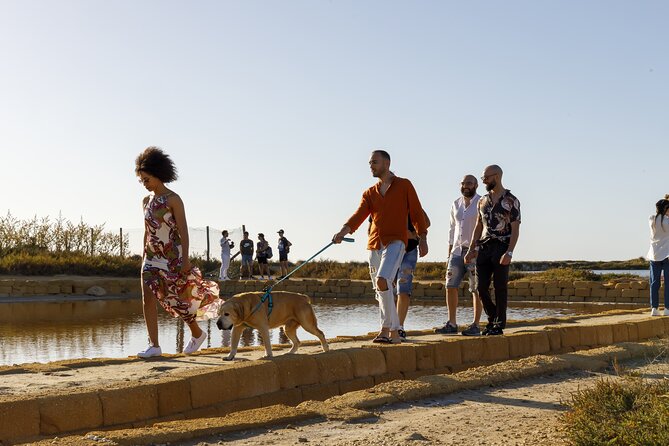
One of the best parts of the outdoor section is that it’s not all staring. You can collect salt with your hands, which turns the production story from abstract into physical reality. You see the stages step by step and learn how sea water transforms into the salt that’s familiar on grocery shelves.
That hands-on moment is more than a gimmick. Salt-making is about patience and repeated processes, not a quick trick. When you touch the product and watch where it comes from, the whole production chain clicks into place.
You’ll also notice the “why” behind what you’re seeing. The walk takes you to areas where water collects and behaves like a reflective surface. That helps you understand how evaporation and conditions shape the final result. Even if you don’t remember every term, you’ll remember the logic—water goes in, conditions do the work, and salt remains.
Museo del Sale in an Ancient Baglio: The 1400s Mill Angle

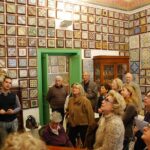
Stop 2 is the Museo del Sale, housed inside an ancient baglio. This is a big difference from museums that feel like they were built yesterday. Here, the setting supports the subject, so the history feels grounded rather than staged.
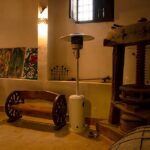
You’ll get a guided visit that includes the ancient mill dating to the 1400s. That’s the kind of detail that makes salt feel less like a commodity and more like a long-running technology. You also get the story of the family who ran the salt pan for generations, which adds a human layer to the equipment and process.
If you’re the type who likes seeing how people lived and worked, you’ll appreciate this part. It’s not just about how salt is produced; it’s about who depended on it and how operations stayed alive over time.
Some visits include a small salt tasting alongside the museum and saltworks experience. If that’s offered during your time slot, take it seriously. Comparing flavors from different salts is one of those small moments that makes the whole tour stick.
You can also read our reviews of more museum experiences in Sicily


English-Language Touring: How to Set Your Expectations
The tour is offered in English, and that’s a real plus if you’re visiting without Italian. You should expect explanations that are clear enough to follow throughout the walk and museum portion.
One thing to keep in mind: English accuracy can vary when a tour uses multiple guides or switches between languages during the visit. In this case, the experience is described as guided, and the English part is supported. Still, if you’re sensitive to hearing details in a second language, arrive with the attitude that you’re there for the bigger picture as well as the facts.
Timing, Weather, and What to Wear for a 1h15 Visit
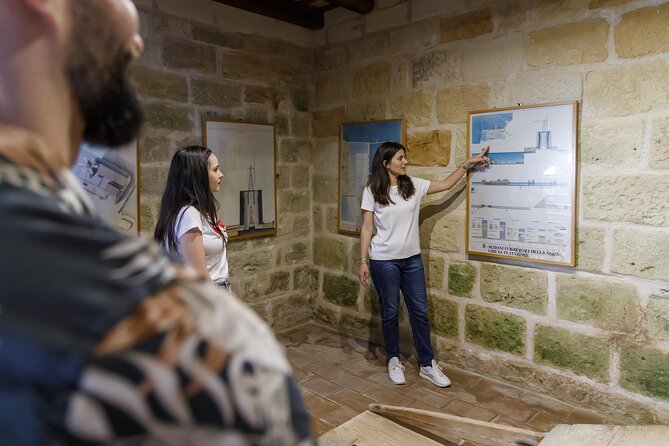
This is a short trip—about 1 hour 15 minutes total—so timing matters. You’re outdoors for the longer chunk (about 50 minutes), then inside for the museum (about 25 minutes). That means you’ll want weather-friendly clothing and footwear.
The operator requires good weather for the experience. If conditions aren’t right, you should expect either a different date or a full refund option. Practically: check conditions the morning of your tour, and don’t book if you already know you’ll be stressed about rain or sudden wind.
In terms of what to wear, think simple: comfortable walking shoes and layers you can handle if the temperature shifts. The salt pans can be bright, so if you bring sunglasses and sunscreen, you’ll thank yourself later.
The Value Question: Is $21.77 a Fair Deal?
At about $21.77 per person for roughly 1 hour 15 minutes, this tour sits in the “small money, big meaning” category. The ticket includes admission for both the salt pan portion and the museum portion. So you’re paying for guided time and access, not just entry to a building and a map.
You’re also getting two different learning styles in one package: visuals and motion outdoors, then story and artifacts indoors. That’s a lot to pack into 75 minutes, and it’s why it tends to feel worth it even for people who didn’t expect to care about salt.
One more value angle: you’re seeing a working process in a place that still functions. Many museum tours teach history, but here you see how the real environment supports the real product. That gives the visit a practical edge.
Who Should Book This Salt Pan Tour (and Who Might Not)
This tour fits best if you want an experience that feels authentic and specific. You’ll enjoy it if you like:
- outdoor walks that are scenic and readable
- learning how everyday products are made
- history tied to real work, tools, and families
You’ll also likely enjoy it if you’re visiting with kids or mixed ages, since the experience is designed for all age groups and isn’t overly strenuous.
If you hate group meeting points or you rely on public transport with little flexibility, this might not be the easiest fit. The salt pan location is outside central Trapani, and the trip may require a taxi or car to keep things smooth.
Finally, if you only want an indoor museum experience, you may find the outdoor portion the more meaningful part—and that might not match what you were hoping for.
Should You Book This Tour?
Yes, if you want a focused, low-cost way to understand Trapani beyond beaches and viewpoints. The mix of salt pans in a protected reserve plus the Museo del Sale in an ancient baglio makes it more memorable than a quick museum stop alone.
Book it especially if you can handle a short outdoor walk and you’re willing to plan transport to Paceco. If you’re flexible on timing, consider choosing a later slot for better light—those reflective water moments can look stunning.
If you want more of a city walking experience in Trapani itself, you might feel like this is slightly out of the way. But if your goal is to see how Sicily’s salt culture actually works, this is a strong use of your time.
FAQ
How long is the guided salt pans and salt museum tour?
It runs for about 1 hour 15 minutes total, with approximately 50 minutes for the salt pans walk and about 25 minutes for the museum visit.
Where does the tour start?
The meeting point is at Via Salina Chiusa, 1, 91027 Paceco TP, Italy.
Is the tour offered in English?
Yes. The experience is offered in English.
Are admission tickets included?
Yes. Admission tickets are included for both the salt pan walk and the Museo del Sale portion.
Is this a private tour or group tour?
It’s private in the sense that only your group participates.
Is it suitable for most travelers?
Most travelers can participate. Service animals are allowed too.
What if the weather is bad?
The experience requires good weather. If it’s canceled due to poor weather, you’ll be offered a different date or a full refund.
What’s the cancelation window?
You can cancel for a full refund up to 24 hours before the experience starts. If you cancel less than 24 hours in advance, the amount paid is not refunded.