REVIEW · SICILY
Palermo Street Food tour: art, history and ancient markets
Book on Viator →Operated by Palermo a Piedi - Walking Tour · Bookable on Viator
Palermo tastes better on foot. I love how this tour ties street food to major landmarks like Teatro Massimo, the Cathedral, and Quattro Canti, all in a compact 3-hour walk.
I also like the guiding style: Palermo locals such as Fabrizio or Maurizio bring clear history, quick jokes, and food advice that makes the markets feel easy.
The trade-off is that you’re walking and snacking for about three hours, and the tastings lean fried, so go easy if heavy snacks and lots of steps aren’t your plan.
In This Review
- Key highlights you’ll feel right away
- Why this Palermo street food walk works
- Starting at Piazza Olivella and getting your bearings fast
- Capo Street Market: your first taste in an Arab-origin setting
- Dainotti’s da Arianna: the friggitoria stop you’ll remember
- Teatro Massimo: seeing the big opera house between bites
- Cathedral of Palermo: UNESCO Arab-Norman and art you can’t ignore
- Quattro Canti: the octagonal square that teaches you the city
- Piazza Olivella and Sant’Ignazio: where religious power meets museum walls
- Via Vittorio Emanuele (Cassaro): the oldest street vibe
- Teatro dell’Opera dei Pupi: puppet theatre with UNESCO weight
- What you’ll actually eat: classic Palermo street food, portioned for a 3-hour walk
- Price and value: what $49.77 buys in Palermo’s center
- Who should book this tour (and who might skip it)
- Should you book this Palermo street food tour?
- FAQ
- How long is the Palermo Street Food tour?
- Where does the tour start and end?
- What street food tastings are included?
- Is a drink included?
- Is the Cathedral of Palermo included, and do I need tickets?
- What if the weather is bad?
Key highlights you’ll feel right away
- Capo Street Market (via Porta Carini and via Bandiera) for an Arab-origin food market atmosphere
- Dainotti’s da Arianna at a top friggitoria, recognized in Palermo street-food competitions
- UNESCO Arab-Norman stops, including the Cathedral of Palermo
- Quattro Canti (Ottagono del Sole / Teatro del Sole), a dramatic octagonal square at the city’s main crossroads
- Teatro dell’Opera dei Pupi tradition tied to Mimmo Cuticchio and UNESCO status
- A route that ends near Quattro Canti, handy if you’re connecting to a cruise day
Why this Palermo street food walk works
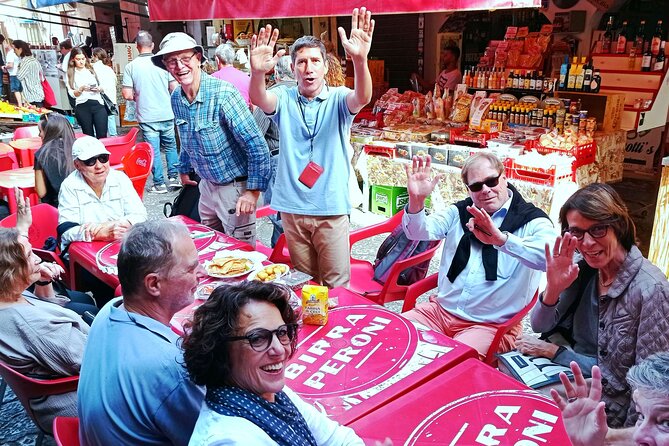
Palermo can feel like a lot at once. You’ve got history under every stone, and food everywhere you look. This tour is smart because it gives you both in a tight loop, so your time in the historic center doesn’t turn into aimless wandering.
You’ll start in the area of Piazza Olivella, then move through central Palermo on foot. The route hits big sights (cathedral, Quattro Canti, Teatro Massimo area) while also keeping the focus on what you’re eating and why Palermo cooks the way it does. That pairing is the main value here: you’re not just tasting food, you’re learning the city’s layers in between bites.
You can also read our reviews of more food & drink experiences in Sicily
Starting at Piazza Olivella and getting your bearings fast
The meeting point is Piazza Olivella (90133 Palermo). That’s a good place to begin because you’re already in the thick of Palermo’s historic core, close to the zone where markets like Ballarò and Vucciria are known to be. From here, the walk feels like it’s building momentum right away.
Early on, you’ll encounter Piazza Olivella’s standout presence: the church of Sant’Ignazio and the former Convento linked with the Archaeological Museum. Even if you’re not planning to spend time inside museums, this kind of stop helps you understand the city’s mix of religious power, art, and everyday life.
Timing matters too. The tour starts at 10:30 am and runs about 3 hours, which is long enough to feel like a real experience but short enough that you’ll still have energy afterward to explore on your own.
Capo Street Market: your first taste in an Arab-origin setting
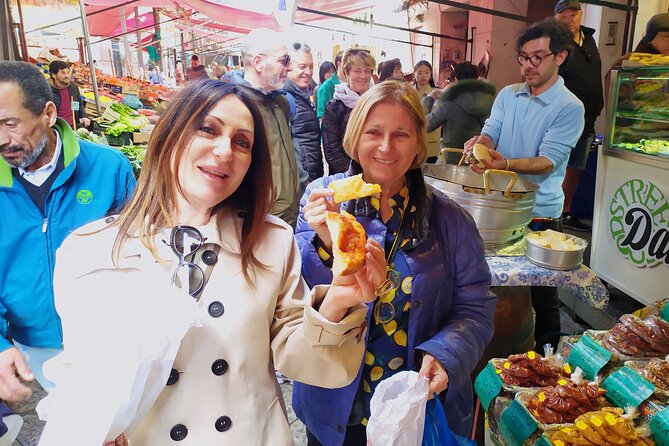
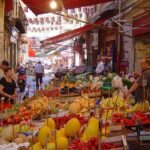
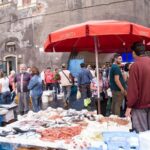
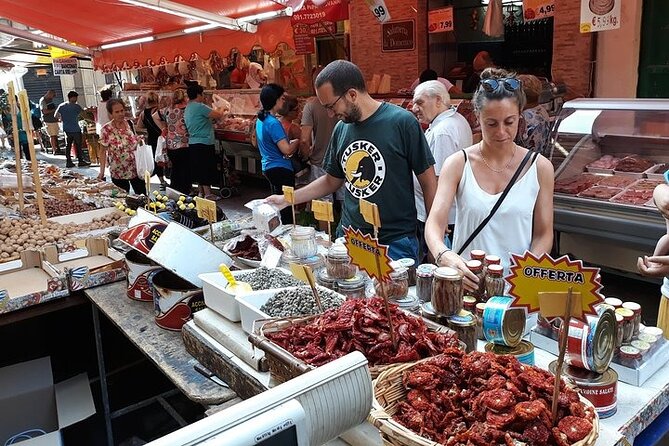
Capo Street Market is one of those places that changes the whole mood of a city. Here, you’ll be walking the market corridors along via Porta Carini and via Bandiera, where the market tradition is described as Arab-origin and takes place daily.
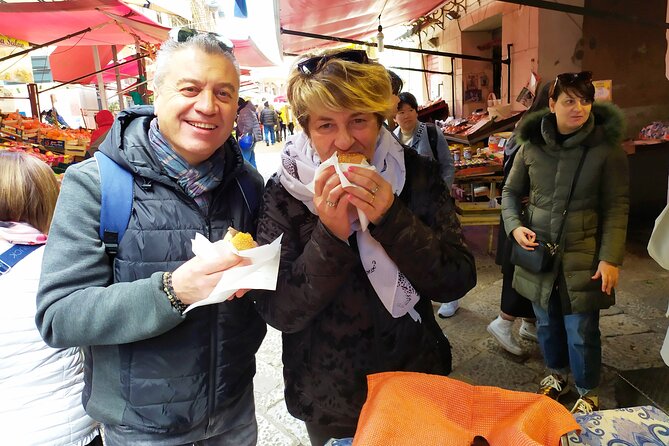
This is where the tour earns its “street food” label. Instead of making you hunt for stalls yourself, the guide brings you to the kind of places locals actually use. The goal is simple: you get a real Palermo market moment without getting lost.
If you’re picky about where you eat, this stop still works. The tastings are guided, so you’re less likely to waste time on spots that don’t live up to the hype. The only consideration is comfort: market areas can be crowded and loud, so keep your pace steady and plan for sensory overload.
Dainotti’s da Arianna: the friggitoria stop you’ll remember
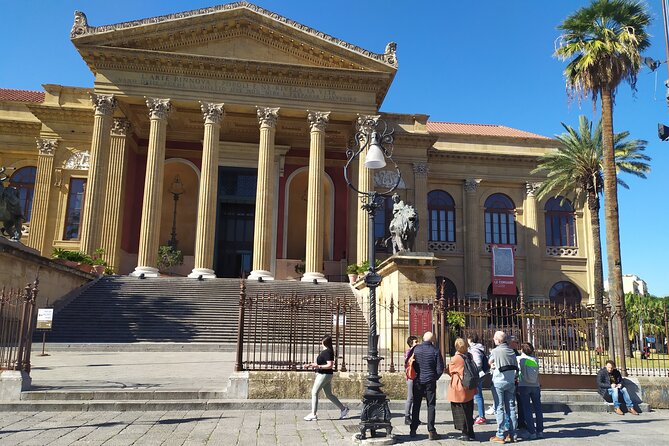
Next you’ll hit Dainotti’s da Arianna, a friggitoria known for being one of Palermo’s best fryers. It’s also noted as a recent winner in a competition among the city’s street-food bests, organized by the TV program Quattrorestaurants.
This matters because Palermo’s fried snacks aren’t random. Panelle and crocchè, for example, are part of a whole food culture built on technique and repeat orders. Having a guide bring you to a place like this removes the guesswork.
Practically, you get about 45 minutes at this stop. That’s long enough to eat without rushing and long enough to ask questions. And based on guide feedback from past guests, the best part isn’t only the food—it’s how the guide talks through what you’re tasting and how to keep going afterward without overdoing it.
Teatro Massimo: seeing the big opera house between bites
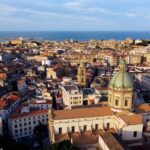
One stop is at the largest opera house in Italy, which is Teatro Massimo. You’ll pause here as part of the historic-center walk, which is a clever rhythm shift: food, then architecture, then food again.
Palermo has a way of surprising you. You can be in market lanes one minute, then surrounded by monumental scale the next. That contrast helps you connect the city’s everyday hustle to the public art and status symbols that shaped its streets.
You don’t need to be an opera fan for this to work. Even if you’re only passing through, Teatro Massimo gives you a clear visual marker for Palermo’s 19th-century grandeur.
You can also read our reviews of more tours and experiences in Sicily
Cathedral of Palermo: UNESCO Arab-Norman and art you can’t ignore
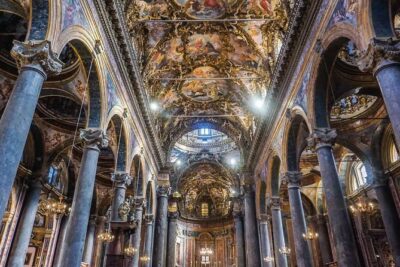
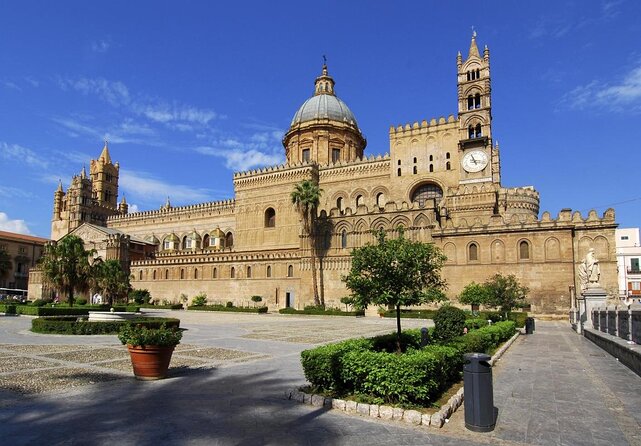
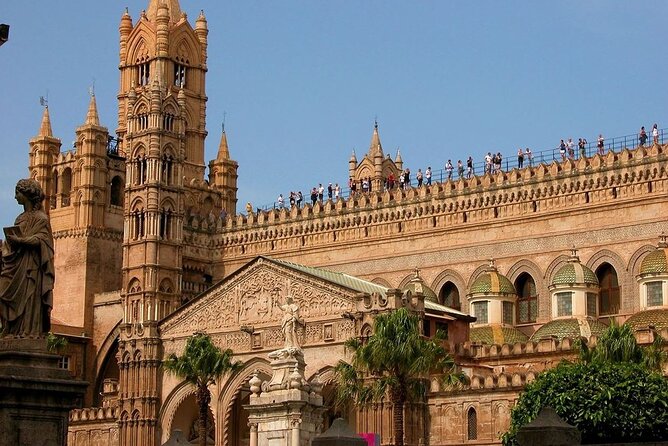
The Cathedral of Palermo stop is a highlight for a reason. It’s the main Catholic place of worship in Palermo and the archbishopric of the metropolitan archdiocese. Built in the 12th century, it sits in the broader UNESCO Arab-Norman itinerary theme, along with the Cathedral of Monreale and the Cathedral of Cefalù (listed as part of that UNESCO designation since 2015).
What I like about this stop is that you’re not treated like you’re just ticking off a box. You’re learning how a place that looks like “cathedral” also carries the weight of Palermo’s past connections and political shifts.
There’s also a practical note: this stop is marked as admission free, and the tour includes the cathedral visit. You won’t need extra museum-style budgeting just to see the cathedral as part of the experience.
Quattro Canti: the octagonal square that teaches you the city
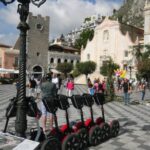
Quattro Canti is the octagonal square at the intersection of Palermo’s two main thoroughfares: via Maqueda and the Cassaro (today, Via Vittorio Emanuele). It was built in the early 1600s and is also called Ottagono del Sole or Teatro del Sole, tied to its dramatic visual identity.
Even if you don’t memorize the details, this is where your mental map clicks into place. The guide’s job here is to help you see the geometry and symbolism, not only photograph the architecture.
You’ll spend about 10 minutes at Quattro Canti. That’s enough time to take in the layout, understand why it’s such a core meeting point in Palermo, and get ready for the next stretch of the Cassaro corridor.
Piazza Olivella and Sant’Ignazio: where religious power meets museum walls
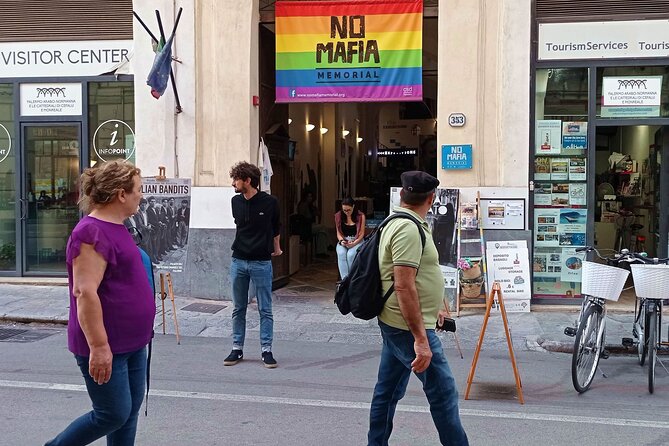
Back near the Piazza Olivella area, you’ll focus on Sant’Ignazio and the former Convento connected to the Archaeological Museum. The stop is listed as free, so you’re not paying extra to connect the dots between the city’s religious spaces and its curated collections.
This works best when you approach it like a clue hunt. The guide can help you notice how Palermo’s institutions blend practical life with art and archaeology, rather than treating these as separate worlds.
If you’re the type who loves detail—inscriptions, facades, and small symbols—this stop will reward your attention. If you’re tired from walking, it’s still fine because the pacing stays short and purposeful.
Via Vittorio Emanuele (Cassaro): the oldest street vibe
The tour continues along Via Vittorio Emanuele, which follows the ancient Cassaro line—the oldest street in Palermo, lined with palaces, churches, and convents. This is one of those stretches where history becomes a street-level experience.
You’re not expected to “do” the street as a museum. You’re meant to walk it with context. That’s why the guide matters so much here: the same buildings feel different when you understand what role they played and why this corridor mattered.
This part of the tour is also where your energy needs to stay steady. The walk is ongoing, not just a series of stop-and-start photos. Bring water, keep moving, and save your big “look up at everything” moments for when the group naturally slows.
Teatro dell’Opera dei Pupi: puppet theatre with UNESCO weight
Another culturally big stop is the Teatro dell’Opera dei Pupi by Mimmo Cuticchio. The puppetry tradition of Opera dei Pupi is described as typical of Palermo dating back to 1800, and it carries UNESCO heritage status.
Even if you’re not sure what you’ll see or how long the pause is, the value is in understanding the tradition’s place in Palermo identity. It’s performance art that grew up here, not imported for tourists. A guide can help you see why these marionette stories matter to local memory.
If you’re traveling with kids or teens, this is often the part that feels most fun without becoming childish. It’s theatre with personality, and it pairs well with the rest of the tour’s art-and-history focus.
What you’ll actually eat: classic Palermo street food, portioned for a 3-hour walk
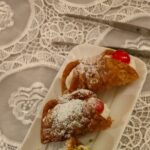
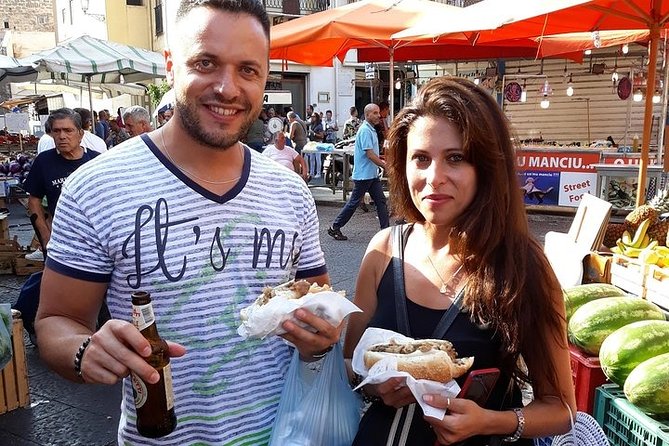
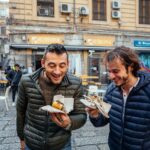
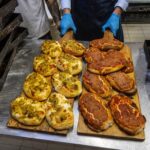
The tasting portion is built around Palermo staples. Included items are panelle, crocchè, sfincione, arancina (listed as arancina/arancini-style fried rice balls depending on wording), and cannolo. The tour description also references meusa as one of the famous street foods you may encounter in Palermo.
A drink of your choice—water, cola, or beer—is included. That’s helpful because tasting can get intense fast, especially in warm weather.
Here’s my practical advice: pace your bites. Panelle and crocchè are fried chickpea-and-potato favorites, sfincione is a rich Palermo-style pizza with toppings, and arancina adds another fried snack layer. Cannolo is sweet and filling, so plan to save it for when you’re ready to slow down a bit.
If you don’t eat certain foods, the tour includes multiple options but your exact selection depends on what’s offered at each stop. I’d go in prepared to ask the guide what’s most important for you (and what you’d skip).
Price and value: what $49.77 buys in Palermo’s center
At $49.77 per person, you’re paying for three things that are hard to replicate on your own.
First, you’re paying for a guided walk through major landmarks—Teatro Massimo area, the Cathedral, Quattro Canti, and the historic Cassaro corridor—so you don’t miss the “why” behind what you’re seeing. Second, you’re paying for a structured market experience at Capo Street Market and a high-end friggitoria stop at Dainotti’s da Arianna. Third, you’re paying for multiple tastings, with a drink included.
The group size is capped at 16, which usually helps keep the experience smooth at market stops. Also, the tour runs about 3 hours, so it’s an efficient way to pack in food plus monuments without dedicating a full day.
You do want to budget separately only for museum admission fees (these aren’t included). Most of the key stops are marked as admission free in the plan, but the safer mindset is: if there’s a museum fee beyond the cathedral context, it’s not covered.
Who should book this tour (and who might skip it)
This tour is a strong match for you if you want a guided overview of Palermo’s historic center with food that feels local. It’s also great if you like learning through real places—markets, iconic squares, and performance culture—rather than only sitting in front of plaques.
I’d think twice if you’re sensitive to fried foods. The included tastings are heavy on frying and richness. Also, since it requires good weather, don’t plan it as your one-and-only activity if you’re expecting rain for most of your day.
If you’re on a cruise day, it’s also worth noting that there’s a meeting at 10:00 with cruise passengers, and the tour ends about a 20-minute walk from the port. That can reduce the usual scramble to get back on time.
Should you book this Palermo street food tour?
Yes, if you want a guided mix of street food and major historic sights in one 3-hour chunk. The best reason to book is the pairing: you taste your way through Palermo while the guide gives you context that makes the city feel understandable, not just pretty.
If you love food, history, and city walking, this is a solid value. If you dislike fried snacks or you’re planning around weather risk, consider whether you can handle the snack pace and the walk length.
In short: this is the kind of tour that helps Palermo stick in your head, one market bite and one landmark at a time.
FAQ
How long is the Palermo Street Food tour?
It’s about 3 hours.
Where does the tour start and end?
The tour starts at Piazza Olivella, Palermo, and ends at Quattro Canti (Piazza Vigliena), Palermo.
What street food tastings are included?
The included tastings are panelle, crocchè, sfincione, arancina, and cannolo.
Is a drink included?
Yes. A drink of your choice is included: water, cola, or beer.
Is the Cathedral of Palermo included, and do I need tickets?
The tour includes the Cathedral visit, and the cathedral stop is listed as admission free. Museum admission fees are not included.
What if the weather is bad?
This experience requires good weather. If it’s canceled due to poor weather, you’ll be offered a different date or a full refund.