REVIEW · PALERMO
Palermo Walking Tour with Audio and Written Guide by a Local
Book on Viator →Operated by Walking Cap · Bookable on Viator
Palermo can feel like a puzzle at first glance, but this walk turns the pieces into a story. I like the audio guide that you can pause and replay at your own speed, and I also like how the route is built around Google Maps so you don’t keep second-guessing where to go next. The one thing to keep in mind is that several major stops require extra paid admission tickets, so your total cost depends on what you choose to enter.
This is a long, satisfying day: about 6 to 7 hours, starting at Church of Saint John of the Hermits and ending at the majolica museum area. You’ll get practical tips for monuments and local food ideas, plus the guide comes in multiple languages and works through your phone. If you hate doing tech steps (like activating the audio), you may find it less appealing than a classic walking tour with a person on the street.
In This Review
- Key highlights before you go
- How the day is paced (and why 6–7 hours is the sweet spot)
- Before you start: phone, internet, and the audio activation reality
- Starting point: Chiesa di San Giovanni degli Eremiti (the opening chapter)
- Norman Palace underground layers (and why the ticket is worth planning)
- Palermo Cathedral: Byzantine, Islamic, Latin, plus Santa Rosalia
- Teatro Massimo: big opera energy in a walkable city
- Quattro Canti and Piazza Pretoria: the geometry of Palermo
- La Vucciria market: where Palermo gets loud (in the best way)
- La Kalsa neighborhood: the streets keep their older accent
- Palazzo Abatellis: Gothic meets Renaissance manners
- Museo Delle Maioliche Stanze Al Genio: the tile-lover’s finale
- Tickets and value: how the low base price can change
- Languages, maps, and why the route feels efficient
- Who this walk suits best (and who might not love it)
- Should you book this Palermo walking tour?
- FAQ
- How much does the Palermo walking tour cost?
- How long does the tour take?
- Is this a live guided tour or self-guided?
- What languages are available for the guide?
- Are monument tickets included?
- Do I need a smartphone to use the guide?
- Is free cancellation available?
Key highlights before you go

- Audio that feels flexible: you can listen through speakers or headphones, and you control the pace.
- Google Maps routing: the guide is tied to directions so the order makes sense.
- Arab-Norman contrasts: churches, palaces, and the cathedral connect Byzantine, Islamic, and Latin influences.
- City-center landmarks without rushing: you hit big names like the Teatro Massimo and Piazza Pretoria with time to breathe.
- A market stop that adds real Palermo texture: La Vucciria is built into the route, not a random detour.
- Majolica finishes the day: the museum collection is a dedicated, memorable end-point for tile lovers.
How the day is paced (and why 6–7 hours is the sweet spot)
This is designed for a full half-day to a full day walk. You’re looking at roughly 6 to 7 hours, with breaks built in through the suggested time at key stops, so you’re not sprinting between monuments.
What makes it work for real travel is that it’s self-paced. You can linger when something catches your eye, then move on before your legs complain too loudly. That flexibility is especially useful in Palermo, where streets can be quick to change from grand squares to narrow lanes.
You can also read our reviews of more walking tours in Palermo
Before you start: phone, internet, and the audio activation reality
This experience depends on your smartphone with internet access. You’ll receive activation details in your voucher, and you’ll need to follow them to get the audio running.
Plan to have a charged phone and a reliable signal. If you rely on offline maps only, you might still be fine for directions, but the audio portion needs that connection. Also, you’ll hear the guide through your phone speakers or headphones, so bring whichever setup you prefer.
If you want the easiest experience possible, read the activation instructions carefully before leaving your hotel. One common complaint is that some people found the system required connecting to a website with a password for the audio, which can feel like extra steps when you just want to start walking.
Starting point: Chiesa di San Giovanni degli Eremiti (the opening chapter)
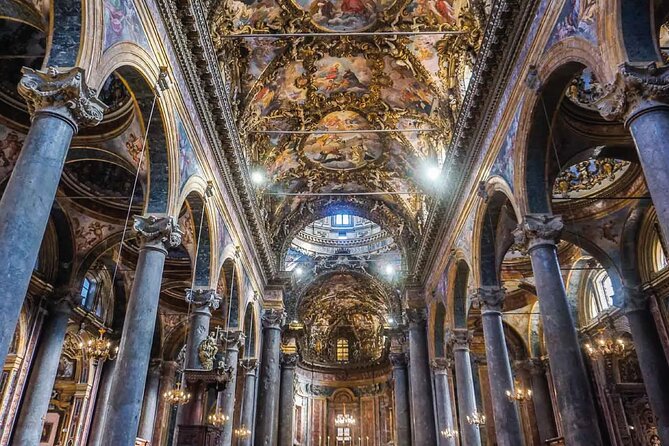
Your walk begins at Church of Saint John of the Hermits. This isn’t just a pretty stop—it’s part of the UNESCO itinerary Arab-Norman Palermo. You’ll be stepping into layers: religious use over centuries, starting with a monastery dedicated to Saint Hermes, then shifting during Muslim rule when the site functioned as a mosque, and later moving into Benedictine control.
The church’s story also connects to power in a very Palermo way: the abbot served as the King’s confessor. Take a moment here to look beyond the quick photo. This is where the “why Palermo looks the way it does” theme starts to click.
You’ll have about 25 minutes allocated. Admission for this stop isn’t included, so if you want to go inside, budget for the €7 ticket.
Norman Palace underground layers (and why the ticket is worth planning)
Next comes the Norman Palace, also called the Royal Palace. This is described as the oldest royal palace in Europe, and it sits on older foundations going back to the Punic-Roman period.
What I find most compelling is that you can visit underground areas where remains of the first Punic settlements are still visible. That’s not a small bonus. It’s the kind of continuity that makes Palermo feel like a city built over time, not replaced by time.
You’ll get about 2 hours here, which is important because palace visits can take longer than expected if you’re reading and not speed-running. Admission isn’t included, so plan for the €17 ticket if you want full value from this stop.
Palermo Cathedral: Byzantine, Islamic, Latin, plus Santa Rosalia
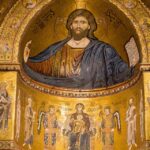
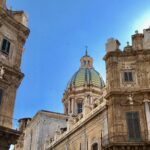
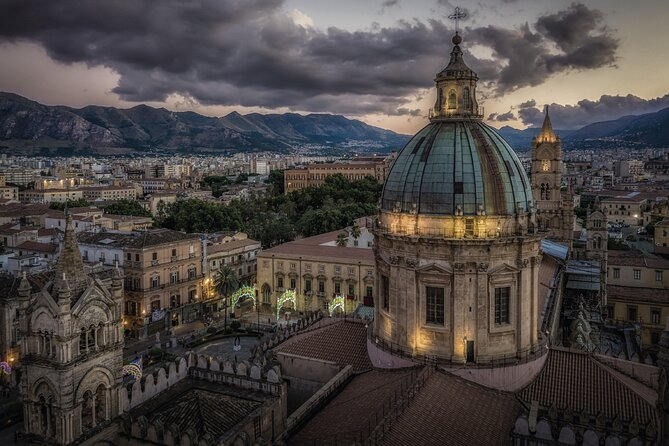
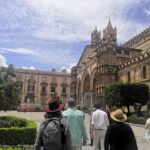
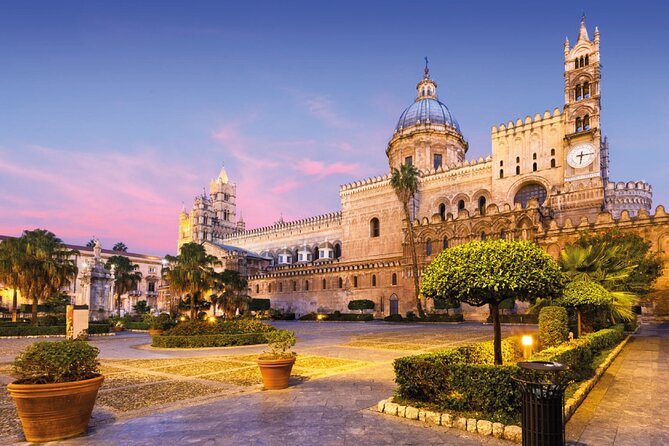
Then it’s on to Cattedrale di Palermo. This cathedral is recognized as a UNESCO World Heritage Site, and it combines Byzantine, Islamic, and Latin elements. It’s also a living church, so it works as both a cultural stop and an active place of worship.
You also get the city’s central spiritual thread. The cathedral includes the Diocesan Museum and a chapel tied to the relics of Santa Rosalia, Palermo’s patron saint. It also houses the tombs of the Norman kings.
This stop has about 25 minutes, and the key point for your planning: admission here is listed as free. That makes it one of the best value moments in the whole route. It’s also the part where you’ll likely want to slow down just enough to catch details without sacrificing the rest of your day.
You can also read our reviews of more guided tours in Palermo

Teatro Massimo: big opera energy in a walkable city
From the cathedral area, you head toward Teatro Massimo. This is the largest opera house in Italy and the third in Europe, designed by Giovanni Battista Filippo Basile.
Even if you’re not an opera fanatic, the building’s scale matters. It sits at the border between old Palermo and the city’s later expansion to the north, so it’s a physical clue to how Palermo grew beyond its historic core.
You’ll have about 1 hour here. Admission isn’t included, listed as a €12 ticket. If your budget is tight, you can still appreciate the outside presence, but if you want the interior experience, that extra ticket is part of the deal.
Quattro Canti and Piazza Pretoria: the geometry of Palermo
Two of the most visually addictive squares in Palermo come next.
First: Quattro Canti (Piazza Villena), the intersection where the new Via Maqueda meets the Via Vittorio Emanuele (also called the Cassaro). This crossing divided the city into four districts called Mandamenti. The layout is the kind of city planning trick that feels almost theatrical once you see it in place.
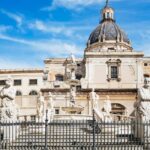
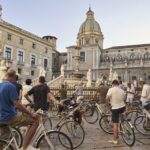
Next: Piazza Pretoria, known to locals as Piazza della Vergogna, linked to the fountain in the center. The fountain is the headline, but the real payoff for your walk is that you get a breather in a space designed for lingering.
Both of these stops are listed with short time windows—about 15 minutes each—and both have free admission. In practice, this is where you check your bearings, take photos, and reset your legs before the more active parts of the day.
La Vucciria market: where Palermo gets loud (in the best way)
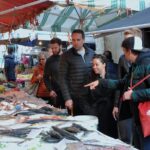
Now comes a must-do atmosphere stop: La Vucciria. The guide frames it as a historic market area and points out why it’s famous: it’s part of the Loggia district and located between Via Roma, Piazza San Domenico, and Via Vittorio Emanuele.
It also has a story behind its name, tied to the French word boucherie meaning butcher’s shop. That kind of linguistic clue is more useful than you’d think. It helps you remember that markets in Palermo weren’t created for tourists. They grew from daily life.
You’ll have about 25 minutes here. Admission is free. I suggest treating this like a sensory pause, not a shopping mission. If you see something you want to try, great. If not, still watch how the place works—where people cluster, how vendors call out, and how the streets flex around the market core.
La Kalsa neighborhood: the streets keep their older accent
From the market area, you move into La Kalsa, one of Palermo’s oldest neighborhoods dating back to the period of Islamic domination. The guide notes it still carries an oriental atmosphere, helped along by Arab-Norman style monuments.
This is a great segment when you want your walking day to feel like more than checklist sightseeing. The streets here can shift in character quickly, so keep your eyes up for architectural details and your head on a swivel for street life.
You’ll have about 15 minutes. Admission is listed as free, and that fits: this part is about atmosphere and easy wandering rather than paid-entry stops.
One practical note from real route experience: the guidance can sometimes send you down smaller lanes and alleys that you might not choose yourself. If you’re sensitive to trash or uneven pavement, take your time, keep headphones off if needed for street awareness, and choose your comfort level.
Palazzo Abatellis: Gothic meets Renaissance manners
Next is Palazzo Abatellis, located in Piazza Magione. This is described as a prestigious example of Gothic and Renaissance architecture, built in the 15th century for Francesco Abatellis.
You’ll also get a sense of architectural “translation” across time: designed by Matteo Carnilivari, it blends Gothic elements with Renaissance influences. The building doesn’t just sit there—it shows how Palermo absorbed different styles across generations.
You’ll have about 1 hour at this stop, and admission is listed as not included. If you want to enter, you’ll likely pay on-site (the amount isn’t listed for this specific stop in your info), so mentally flag it as a possible extra cost.
Museo Delle Maioliche Stanze Al Genio: the tile-lover’s finale
Your walk ends at Rooms at the Museum of majolica Genius at Via Giuseppe Garibaldi, 11. This is a dedicated stop for majolica fans: a private collection spread across eight rooms.
The collection is organized by era and geographical origin, with tiles produced mainly in Campania and Sicily between the 15th and 19th centuries. The guide highlights that many of these majolica tiles were used for floors in noble and bourgeois homes.
You get about 1 hour here, and admission is listed as not included. Even if you’re not a tile obsessive, this is a smart finishing point because it gives you something tactile and focused after a day of mixed architecture and streetscape.
It’s also a good ending psychologically. Instead of feeling like you’re sprinting to “the last stop,” you finish with something that can be enjoyed slowly.
Tickets and value: how the low base price can change
The price is $7.21 per person, which is genuinely affordable for a structured audio and text guide that covers a big chunk of central Palermo. The catch is that several featured monuments require extra tickets.
From the info you have:
- Chiesa degli Eremiti: €7 (not included)
- Palazzo dei Normanni / Norman Palace: €17 (not included)
- Teatro Massimo: €12 (not included)
Other stops like the Cathedral and Quattro Canti / Piazza Pretoria / La Vucciria / La Kalsa are listed with free admission. Two additional paid-entry possibilities are marked as not included: Palazzo Abatellis and Museo delle Maioliche Stanze Al Genio.
So the value equation is simple. If you go inside the big-ticket highlights (especially the Norman Palace) you’ll pay more—but you’ll also see more of what the guide is designed around. If you’re okay with a lighter museum plan and you focus on exteriors plus free spaces, this can stay a bargain.
My practical advice: decide early which paid interiors matter to you. That way you’re not stuck doing mental math halfway through your day.
Languages, maps, and why the route feels efficient
This guide is available in English, Spanish, Italian, German, and French, with both audio and written text. That matters because Palermo is full of place names you’ll remember only if you can pronounce them or recognize them instantly on signs.
You also get text and audio “tips” for monuments, history, and curiosities. Those little extras make the stops stick. The Google Maps connection is a big reason this feels efficient: you’re not stuck hunting for the next landmark.
There’s also a built-in restaurant angle. The guide includes best advice for local restaurant choices with authentic food. You don’t need this if you already have a plan, but if you’re winging lunch, it’s a helpful nudge.
Who this walk suits best (and who might not love it)
This is ideal if you like:
- walking at your own speed
- learning through short audio explanations instead of long lectures
- seeing a concentrated set of Palermo highlights without booking a live guide
It can also work well as a backup plan if your schedule shifts, since you’re not waiting on a meeting time for a group.
It may be less satisfying if:
- you prefer zero-tech experiences
- you hate web logins or password-based activation steps
- you don’t plan to enter the paid monuments, since then it can feel close to a DIY walk with audio added
Should you book this Palermo walking tour?
Book it if you want a structured day that still lets you roam. The route connects major Arab-Norman and city-center landmarks with a market stop and a thoughtful museum ending, and the audio system is comfortable because you control when you listen and how you replay it.
Skip it (or at least reconsider) if you’d rather do Palermo strictly on your own. The core sights are walkable, and some people find the setup not worth paying for if they’d simply use free maps and quick online reading.
If you do book, bring a charged phone, read the activation instructions before you start, and pick your paid-entry targets ahead of time. That turns this into a strong value day rather than a budgeting surprise.
FAQ
How much does the Palermo walking tour cost?
It costs $7.21 per person.
How long does the tour take?
The duration is approximately 6 to 7 hours.
Is this a live guided tour or self-guided?
It’s a self-guided experience using a digital guide with audio and written content.
What languages are available for the guide?
The guide includes audio and text in English, Spanish, Italian, German, and French.
Are monument tickets included?
No. Tickets are not included for Chiesa degli Eremiti (€7), Palazzo dei Normanni (€17), and Teatro Massimo (€12). Some other stops are listed as free, but Palazzo Abatellis and the majolica museum are also marked as not included.
Do I need a smartphone to use the guide?
Yes. You’ll need a smartphone with internet connection to use the digital guide, and the activation details are provided in your voucher.
Is free cancellation available?
Yes. You can cancel for a full refund up to 24 hours in advance, with free cancellation allowed as described by the policy.