REVIEW · CATANIA
Catania Walking Tour with Audio and Written Guide by a Local
Book on Viator →Operated by Walking Cap · Bookable on Viator
Your phone becomes your Catania guide. This self-guided walk strings together the city’s best-known landmarks with an audio-and-text guide you can use whenever you want, from Ursino Castle to the Benedictine Monastery. It’s priced low enough that you can treat it as “orientation + stories,” not a big museum day.
What I like most: the guide mixes major stops with short, satisfying moments so you never feel stuck in one place too long. You’ll also get practical extras—especially the local restaurant advice—so your walk turns into better meal choices, not just sightseeing.
The only real catch is practical: you need a smartphone with internet, and headphones aren’t included. So come ready to listen through your phone’s speakers or bring earbuds if you prefer quieter history.
In This Review
- Quick reasons this Catania guide is worth your time
- How the Catania self-guided audio walk really works
- Price and value: $7.83 for stories across the historic center
- Ursino Castle: lava-stone walls and a fortress shaped by the sea
- Pescheria fish market and Fontana dell’Amenano: quick stops with real atmosphere
- Piazza del Duomo and Sant’Agata Cathedral: the epic center after the 1693 earthquake
- Piazza Università and its four bronze legends
- Beneath Piazza Stesicoro: your optional Anfiteatro Romano stop
- Via dei Crociferi: cinematic street vibes and then the monastery finale
- Timing, listening setup, and practical tips to make this feel effortless
- Should you book the Catania walking tour with audio and written guide?
- FAQ
- Is this tour self-guided or led by an in-person guide?
- What’s included with the digital guide?
- Which languages are available?
- Do I need internet on my smartphone?
- Are headphones included?
- Is the Anfiteatro Romano ticket included?
- Are the other stops free to visit?
- Where does the experience start and end?
- How long should I plan for the walk?
- Can I cancel for a full refund?
Quick reasons this Catania guide is worth your time

- Flexible pacing: start and stop when it suits you, then keep wandering with Google Maps.
- 9 highlights, mostly free entry: you’ll hit castles, squares, churches, and a monastery without paying for everything.
- Audio plus written help: listen in multiple languages and still have text for tricky moments.
- Restaurant tips built in: the guide isn’t only “look up and read,” it helps you eat well afterward.
- Clear upgrade path: the Roman theatre (Anfiteatro Romano) is optional—ticket not included, but the choice is yours.
How the Catania self-guided audio walk really works
This is not an in-person walking tour. Instead, you follow a route with a digital audio-guide and written guide in several languages, using your own smartphone. The stops are short and timed, so you get structure without the stress of keeping up with a group.
You’ll want to plan it like this: arrive at the first location, activate the guide exactly as your voucher instructs, then move at a pace that feels comfortable. Because the format is self-guided, you can linger where you care and breeze through what doesn’t grab you. The guide also connects with Google Maps, which is helpful in Catania’s historic center where streets twist and squares appear like stage sets.
One more thing I appreciate: the audio can play through your phone speakers. If you want to keep it private or just block street noise, you may use headphones you bring yourself, since headphones are not included.
For a quick snapshot of what you’re buying: the guide is available in English (and other languages), costs $7.83, and covers around 3 to 4 hours at a walking pace that doesn’t rush you.
You can also read our reviews of more walking tours in Catania



Price and value: $7.83 for stories across the historic center
At $7.83, this is the kind of price that makes sense for a city like Catania. You’re not paying for a ticketed museum experience—you’re paying for guided context at outdoor landmarks you’d otherwise skim.
Here’s where the value shows up. The guide includes audio and text, plus tips for monuments, history, and curiosities. It also gives you restaurant recommendations that point you toward authentic local food rather than the safest tourist-trap menu you can find near a big square.
If you’re trying to get oriented fast, this works. You’ll see the key sights in one route: castle, fish market, fountain, the cathedral area, the university square legends, a Roman theatre option, the famous baroque street, and the monastery. And because most stops are free (only the Roman theatre costs extra), you avoid the “surprise add-ons” feeling.
There’s also a practical reliability factor: the experience averages 4.5 out of 5, and 90% of people who rated it would recommend it. That’s not a guarantee, but it’s a good sign that the content and flow land well for real-world use.
Ursino Castle: lava-stone walls and a fortress shaped by the sea

You start at Ursino Castle in Piazza Federico di Svevia (21). This is a smart first stop because it sets the tone: Catania’s volcanic landscape isn’t just scenery—it’s part of the city’s defensive history and architecture.
The castle’s name has uncertain origins, but the setting is clear. When it was built, it stood closer to the sea, protected by a moat and additional defensive works. Look at the outer wall: it’s built from well-squared, regularly arranged lava stone blocks. The inner wall is described as more irregular, which gives you a sense of how construction evolved.
Even if you don’t spend a lot of time here, you get two useful things for the rest of the walk. First, you understand why so much in Catania feels built from volcanic material—lava isn’t just decoration. Second, you get a sense of the city’s long struggle to defend itself, especially during centuries when the coastline and hazards weren’t exactly friendly.
Entry here is free, and the stop is listed as about 1 hour. That’s enough time to absorb what you can, then move on without feeling like you left something major behind.
Pescheria fish market and Fontana dell’Amenano: quick stops with real atmosphere

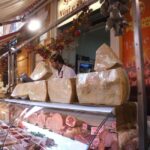
Right after the castle, you head into the center’s daily-life zone at A’ Piscaria Mercato del Pesce, the famous fish market. It’s near Piazza del Duomo and the Fontana dell’Amenano, so it sits perfectly between the “big sights” and the quieter corners where Catania feels lived-in.
In local terms, people call it Piscarìa, from the Sicilian dialect. That little language detail matters because it helps you hear the city the way locals do. Even if you don’t buy anything, the market is a great place to reset your brain from medieval stone to something immediate and local.
The stop is short—about 20 minutes—which is exactly right for this kind of place. You’ll get the vibe without getting stuck standing around when you’d rather keep walking.
Then you move to Fontana dell’Amenano, created in 1867 by sculptor Tito Angelini. It’s made of Carrara marble, and the fountain is dedicated to the Amenano, the underground river that runs beneath the city of Etna. This is one of those moments where a small landmark adds a huge “how the city works” layer. Catania isn’t only built on the surface—it’s built under it too.
Expect a brief stop here (about 10 minutes). The trick is to take it as a story break, not a photo marathon.
Piazza del Duomo and Sant’Agata Cathedral: the epic center after the 1693 earthquake
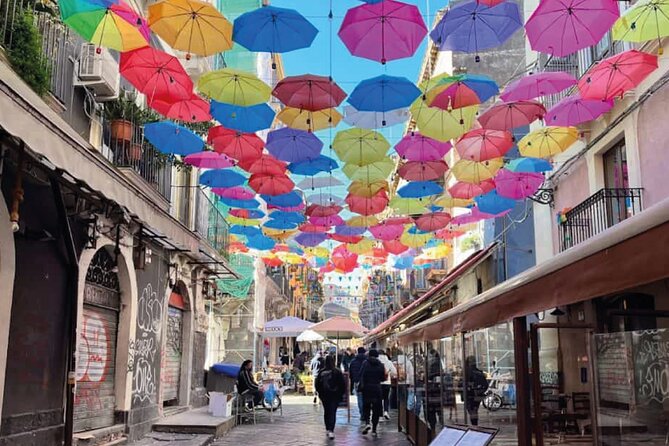
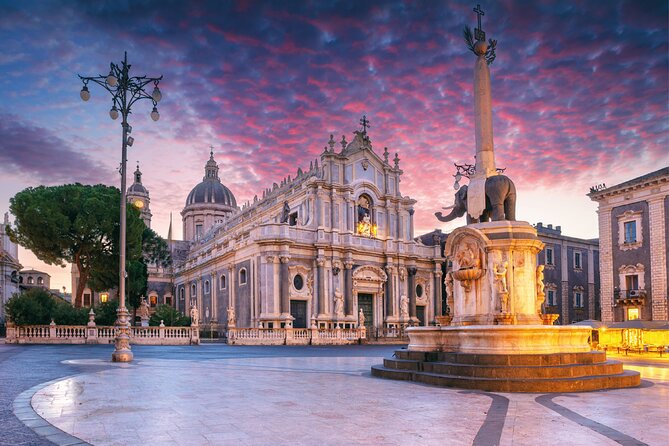
Next is Piazza del Duomo, the heart of Catania’s historic core. It’s the kind of square where you can feel the city’s rhythms: architecture, religion, and civic life all share the same stage.
The guide gives you a clear anchor point: the Cathedral of Sant’Agata, Catania’s patron saint. This is Baroque architecture, built in 1090 on the remains of an ancient Roman temple dedicated to Jupiter. Then, in 1693, a major earthquake destroyed much of the city, and the cathedral was rebuilt.
That rebuilding story is important. When you’re standing there, you’re not just looking at one era—you’re standing on layers. The cathedral’s architecture reflects survival and recovery, and it helps explain why so many buildings in Catania carry multiple time periods at once.
You’ll spend about 20 minutes at the cathedral and around 20 minutes at the square. If you want to get more out of it, don’t rush the details. Baroque can turn into visual noise if you treat it like wallpaper. Instead, pick one area to focus on—front facade, side details, or interior if you have time—and let the rest become background.
You can also read our reviews of more guided tours in Catania




Piazza Università and its four bronze legends
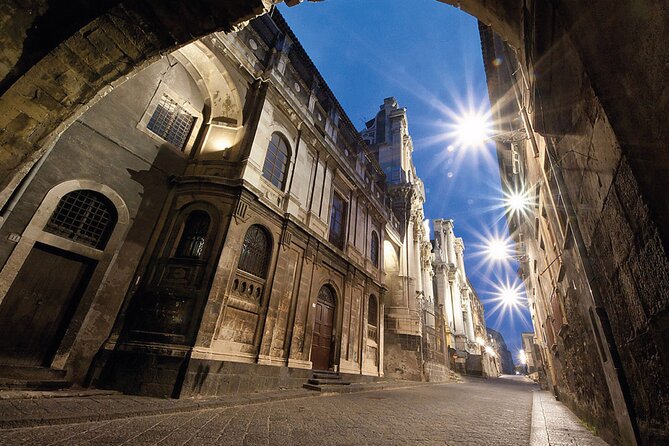
From the cathedral area, you head to Piazza Università, named for the Palazzo degli Studi (also known as Palazzo Università). The square’s star feature is unusual and fun: four bronze lampposts at the corners, each representing figures from popular Catania legends.
This is where the guide’s “curiosities” angle shines, because it turns a small plaza into an easy story lesson. You’ll meet:
- the young Gammazita
- sailor Cola Pesce, known for underwater skills
- the brothers Anfinomo and Anapia
- the paladin Uzeta
The stop is brief—around 10 minutes—but it’s memorable because it’s specific. Instead of general history, you get local folklore you can actually remember later when you see something similar in town.
If you like legends tied to places, you’ll enjoy this stop a lot. If you prefer only big monuments, it might feel small. Either way, it’s a good breather after the cathedral intensity.
Beneath Piazza Stesicoro: your optional Anfiteatro Romano stop

Now you reach Anfiteatro Romano, an archaeological site beneath Piazza Stesicoro. It dates to the 1st century BC, and it has been affected over time by both Etna’s eruptions and seismic events. That combination is exactly what makes it feel distinct to Catania—you’re dealing with a city shaped by geology, not just politics.
One practical note: the guide says you won’t enter it as part of this walk, but you can visit it on your own if you want. The ticket is not included, and the cost listed is 4€.
This optional stop is useful because you can tailor your day. If you’re an archaeology fan, you’ll probably want to add it. If you’re more into architecture and streets, you can skip and still have a complete highlight walk.
The time suggestion here is about 25 minutes. Use that time for either the theatre visit or simply extra wandering around Piazza Stesicoro—Catania squares often reward slow attention.
Via dei Crociferi: cinematic street vibes and then the monastery finale
After the Roman theatre choice, you step onto Via dei Crociferi, one of Catania’s oldest and most evocative streets in the historic center. It’s known for extraordinary beauty and has even been used as a film set, thanks to that cinematic feel.
This is a great walking stretch. It’s short—about 10 minutes—so you won’t feel stuck in transit. You’ll get a sense of Catania’s baroque street style, with buildings that feel made for a slow pace and close-looking.
Then the route ends at the Benedictine Monastery of San Nicolo l’Arena at Piazza Dante Alighieri (32). This is a strong landing point because it brings you back into “sacred and serious” territory, with a monastery that has mattered for centuries. It became especially important in the 18th century, when it’s described as grand, with rich rooms and noble origins of the monks.
The stop is listed as 30 minutes, and that duration feels right. Monastery sites often look similar at first glance until you slow down. Here, the guide’s historical context helps you notice why the place was such a reference point.
The experience end point is San Nicolò l’Arena, but the guide also tells you you can decide your ending point based on how you use it. That means you can finish here, or if you’re still buzzing from the day, you can turn the final stretch into extra wandering with Google Maps.
Timing, listening setup, and practical tips to make this feel effortless
Plan for 3 to 4 hours total, including the short stops. The listed durations per location add up to a walk that’s paced for attention, not speed. I like that balance because you’re not forced into a rigid “see everything” sprint.
You’ll be using a digital guide, so the biggest practical factor is your phone setup:
- You need a smartphone with internet connection to use the guide.
- The audio can play through your phone speakers, but headphones aren’t included.
- The guide connects with Google Maps, which helps you keep your bearings.
Also, do yourself a favor: arrive at the start location on purpose. One caution from real-world use is that Ursino Castle isn’t always the easiest place to stumble into from wherever you are already standing. I’d treat the starting point like an appointment—get there first, then begin the guide fresh.
Group size is capped at 104, but since this is self-guided, you’re mostly dealing with pedestrian traffic, not being in a tight moving crowd. Still, Catania squares can get busy around popular times, so leaving some slack in your day helps.
Should you book the Catania walking tour with audio and written guide?
I’d book it if you want a smart, low-cost way to learn the city without tying yourself to a group schedule. The audio + written format is helpful if you like to listen while walking, and the restaurant advice can genuinely improve your next meal. The route also makes sense: it hits castle, market, fountain, cathedral area, folklore lampposts, a Roman theatre option, a famous street, and a monastery finale.
Skip it only if you strongly prefer an in-person guide or if you know your phone setup isn’t reliable for internet access and audio. For a lot of people, that smartphone requirement is totally manageable, and the payoff is clear: you get context everywhere you stop, for a price that doesn’t hurt.
FAQ
Is this tour self-guided or led by an in-person guide?
It’s self-guided. You use the digital audio-guide and written guide on your smartphone rather than having a guide walk with you.
What’s included with the digital guide?
You get a digital guide to visit the city on your own, including audio and text, tips for monuments and history, best advice for local restaurants with authentic food, and Google Maps connectivity.
Which languages are available?
The audio-guide and text are available in English, Spanish, Italian, German, and French.
Do I need internet on my smartphone?
Yes. You’ll need a smartphone with an internet connection to use the digital guide.
Are headphones included?
No. You’ll listen through your phone’s speakers, or you can use headphones if you have them.
Is the Anfiteatro Romano ticket included?
No. The Anfiteatro Romano ticket is not included and is listed as 4€.
Are the other stops free to visit?
The stops listed in the route are marked as admission ticket free, except for the Anfiteatro Romano.
Where does the experience start and end?
It starts at Ursino Castle, Piazza Federico di Svevia, 21, 95121 Catania CT, Italy, and it ends at the Benedictine Monastery of San Nicolò l’Arena, Piazza Dante Alighieri, 32, 95124 Catania CT, Italy.
How long should I plan for the walk?
Plan for about 3 to 4 hours.
Can I cancel for a full refund?
Yes. You can cancel up to 24 hours in advance for a full refund.