REVIEW · CATANIA
Syracuse, Ortigia and Noto walking tour from Catania
Book on Viator →Operated by EtnaTribe · Bookable on Viator
Syracuse feels like ancient stage sets. This Catania tour lines up Greek and Roman ruins with Ortigia’s old-island streets, plus Noto’s baroque façades for one long, satisfying day. It’s the kind of itinerary that makes a place feel connected, not scattered.
I really like two things here. First, the group stays small (maximum 8), which helps the guide keep the pace and answer questions without a crowd crushing the conversation. Second, the big-ticket stop in Syracuse, the Parco Archeologico della Neapolis, includes the entrance ticket, so you spend less time figuring out logistics and more time looking.
One possible drawback: you’ll walk a fair bit, and the narration can be lighter in the largest sites. If you need constant, hands-on guiding at every stop, this may feel more like transport plus highlights than a fully guided museum experience.
In This Review
- Key Highlights You Can Count On
- Syracuse, Ortigia and Noto in One Day: What You Really Get
- Price and Logistics: Why $129.45 Can Make Sense
- From Catania to Neapolis: Pickup, Small Group, and Pace
- Parco Archeologico della Neapolis: Cordari to the Ear of Dionysius
- Fonte Aretusa and the Syracuse Cathedral Area: Ortygia’s Core Mood
- Ortigia Market to Piazza Duomo: Apollo and the Sacred Center
- Noto’s Golden Baroque: Cattedrale di San Nicolò Stops
- Who This Tour Fits Best (and Who Should Skip It)
- Should You Book This Syracuse, Ortigia and Noto Tour?
- FAQ
- What time does the tour start, and how long is it?
- Is hotel pickup included in Catania?
- What’s included in the ticket price?
- Do I need tickets for stops like Fonte Aretusa and the Ortigia/Noto sights?
- Is the tour suitable for people with walking problems?
- Can I cancel and get a full refund?
- Is there an infant option?
Key Highlights You Can Count On

- Small group size (up to 8) keeps the day feeling calm and personal
- Included Neapolis admission saves time and hassle at the main ruin complex
- Ortigia is the heart of Syracuse for old streets, scenic views, and landmark churches
- Guides like Salvatore, Nando, and Lori are repeatedly praised for clear explanations and great energy
- Photo time + free time are built in, so you’re not stuck rushing between corners
Syracuse, Ortigia and Noto in One Day: What You Really Get
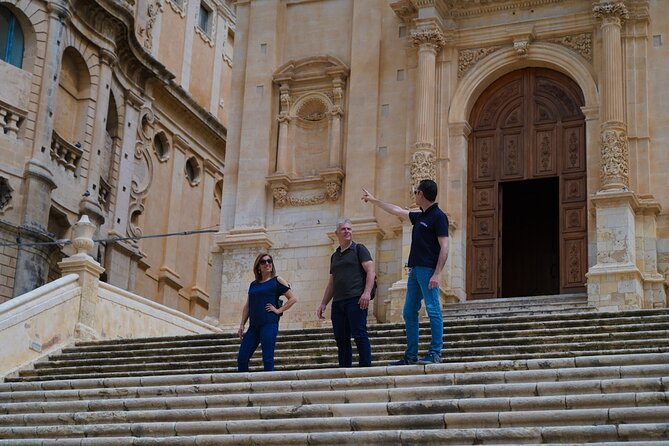
This is a classic east-sicily day plan: start with heavy history, then slow down for sea-level charm, then end in a town designed to look gorgeous in sunlight.
In Syracuse (and especially the Neapolis archaeological area), you see the arc of Greek and Roman power in stone. In Ortigia, you get the lived-in side of the city: narrow streets, viewpoints, and a waterfront that makes you pause without trying. Then Noto arrives like a change of costume—golden limestone, baroque curves, and church façades that look almost sculpted.
The biggest practical win is how the day is structured. You’re not stuck trying to organize three different self-guided trips. You’re driven between zones, dropped off, and guided through the highlights so you know where to look.
You can also read our reviews of more walking tours in Catania



Price and Logistics: Why $129.45 Can Make Sense
At $129.45 per person for about 8 hours, you’re paying for more than a bus ride. The cost includes the return shuttle service, a multilingual guide, and the entrance ticket to the Archeological Park of Neapolis in Syracuse.
That combination matters because Neapolis is the hardest part to do well on your own. You need the right time window, entrance access, and the right context to connect the ruins (the Ear of Dionysius is much more fun when someone explains what you’re seeing). Add to that hotel pickup in Catania, and the value equation improves quickly if you don’t want to battle public transport plus multiple ticket lines.
Also, the guide-led format helps you avoid the most common self-guided mistake in this region: walking through impressive stone but missing why it matters.
From Catania to Neapolis: Pickup, Small Group, and Pace
The tour starts at 8:45 am with pickup and drop-off at your hotel in Catania. A return shuttle is included, so you’re not left planning the ride back after a long day.
The maximum group size is 8 travelers, and that shows in how the day feels. Reviews repeatedly point to zero stress timing, with guides keeping things organized while still leaving breathing room for photos and short walks.
One more practical note: this day is long and active. Even with a good van driver, you’ll still move between stops on foot. Bring sunscreen, water, and comfortable shoes. If you’re tall, the step-free boarding won’t matter much. If you’re shorter or have knee concerns, plan for a little extra effort getting in and out of the vehicle.
Parco Archeologico della Neapolis: Cordari to the Ear of Dionysius
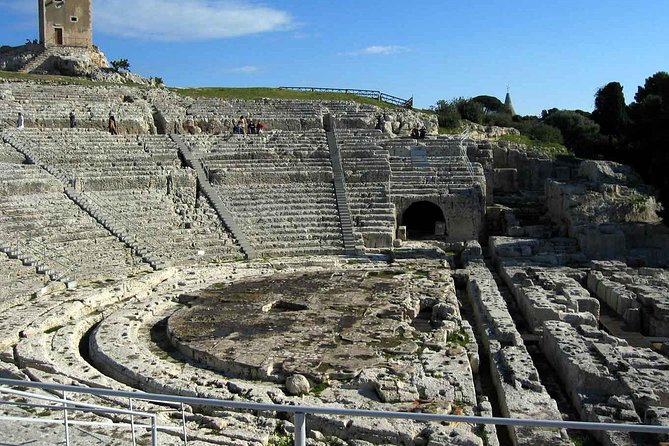
Your main Syracuse block is the Parco Archeologico della Neapolis, with about 1 hour on site and admission included. This is where the tour earns its keep.
You’ll be shown key sights such as:
- the Grotta of Cordari
- the Ara Ierone (the altar area)
- the Latomie (quarries with dramatic historical weight)
- the Necropoli (necropolis area)
- the Anfiteatro (amphitheater)
- the Ear of Dionisio (the famous acoustics spot)
- the theater area and a cave stop
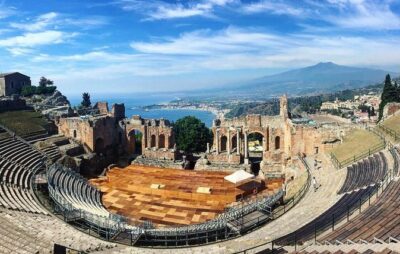
Even if you’ve read about ancient amphitheaters, this park hits differently in person. The stone shapes and the layout help you understand how the Greeks and Romans built for performance, power, and gathering. And the Ear of Dionysius is one of those places that sounds like a gimmick until you’re standing there and realize why it became famous.
What to watch for: the amount of guidance inside the park can vary. The tour includes entry, but the listing also notes that a tourist guide within the park is not included (on request). In plain terms, you might get a strong highlight walkthrough, then more self-paced time. If you want extra narration in the park itself, ask your guide on the spot so you get the level of explanation you’re hoping for.
Fonte Aretusa and the Syracuse Cathedral Area: Ortygia’s Core Mood
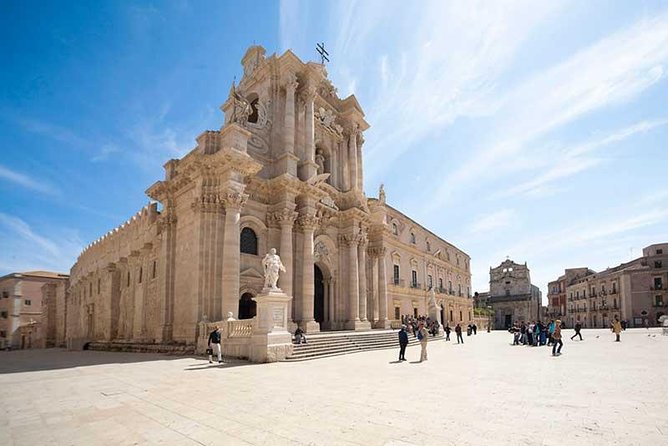
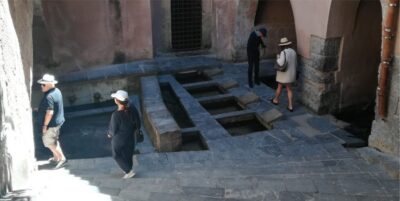
Next, the day shifts from ruin scale to island scale. You’ll stop at Fonte Aretusa for about 10 minutes. Admission is free here, and the short timing works because you’re not just ticking a box. You’re getting a quick reset in a place that feels like water has shaped the history and the mood.
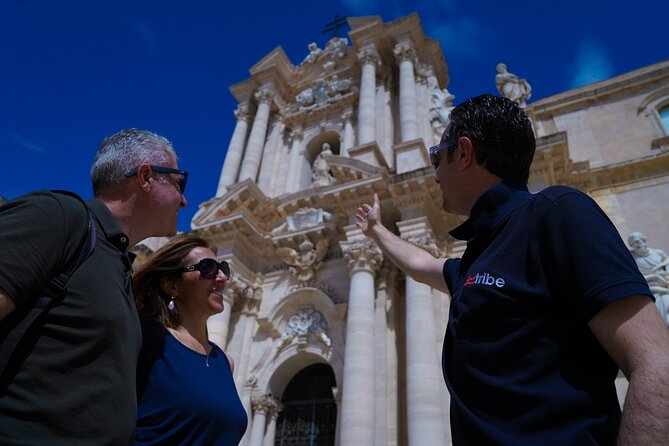
Then you head toward the Syracuse Cathedral area in Ortigia for about 15 minutes, with admission included. Ortigia is the old center of Syracuse, and it’s where you get that feeling of walking through layers—sea-front life, religious landmarks, and streets that squeeze your pace down to a more thoughtful stroll.
If your brain tends to get overwhelmed by ancient sites, this segment is a good balance. The forms are still historic, but they’re part of daily life, not just monuments in isolation.






Ortigia Market to Piazza Duomo: Apollo and the Sacred Center
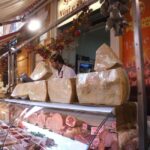
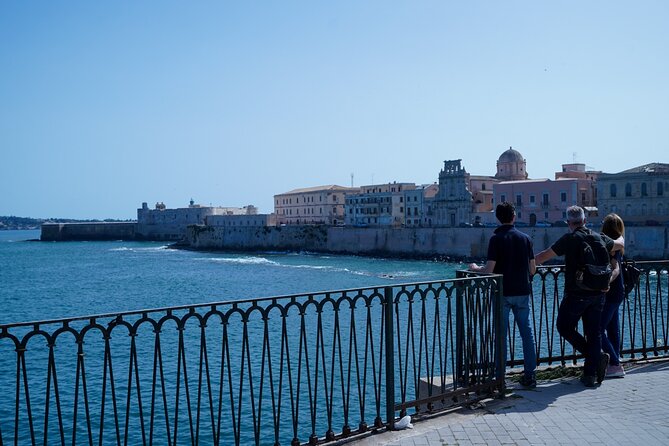
Ortigia doesn’t just look good; it’s a place you can feel. You’ll walk through Mercato di Ortigia for about 15 minutes (free admission). This stop is more about street atmosphere than a single must-see building. It’s where you get a feel for local rhythms: narrow lanes, quick conversations, and the sense that the island is still working.
From there, you’ll reach Piazza Duomo (about 10 minutes, free admission). This is the kind of square that helps you re-orient after a series of churches and side streets. It’s also a helpful pause point if your day is running long.
Then comes Temple of Apollo (Tempio di Apollo) for about 15 minutes. It’s free admission, and it’s a strong anchor for the Ortigia story. You’re moving from civic and market life into sacred architecture, and the guide context helps connect the dots between what Greeks built and what later eras adapted.
Noto’s Golden Baroque: Cattedrale di San Nicolò Stops
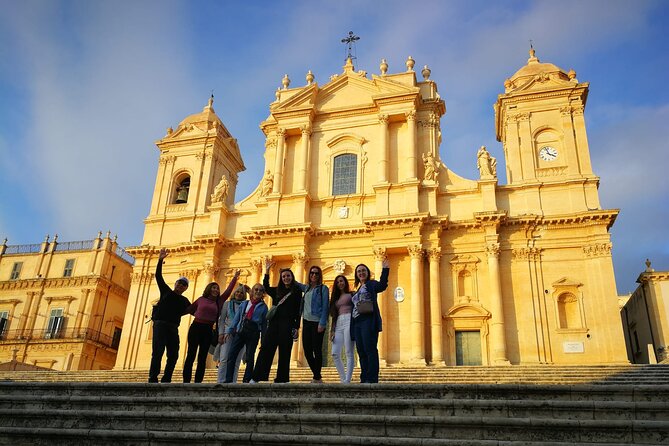
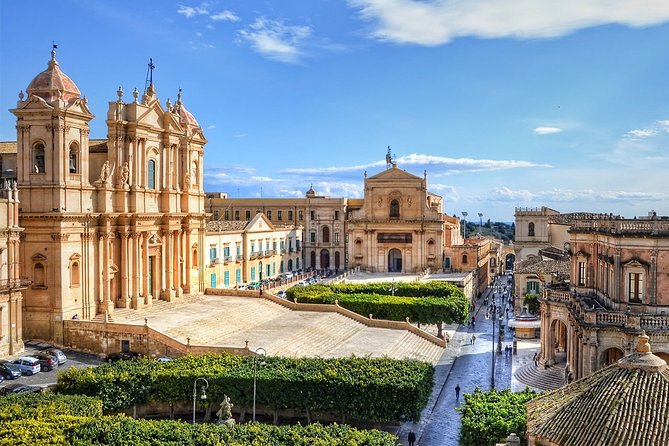
After Syracuse and Ortigia, the tour ends in Noto, known for its golden baroque look. The day’s final segment is where the light matters. Noto often photographs best in clearer daylight, and the tour timing is built for that.
You’ll have multiple stops in Noto, including time at Cattedrale di San Nicolò (about 15 minutes, free admission). The church area is the kind of site where baroque design doesn’t feel decorative—it feels structural, like everything is meant to direct your gaze and your posture.
One thing I like about ending here: it feels like a release valve after heavy ruins. You’re still looking at history, but it’s history you can approach with your eyes. The façades and church forms are made for wandering and noticing details.
Also, Noto is compact enough that even a short stop can still give you a satisfying sense of place. If your photos are your thing, this end section is a good place to slow down and take your time.
Who This Tour Fits Best (and Who Should Skip It)
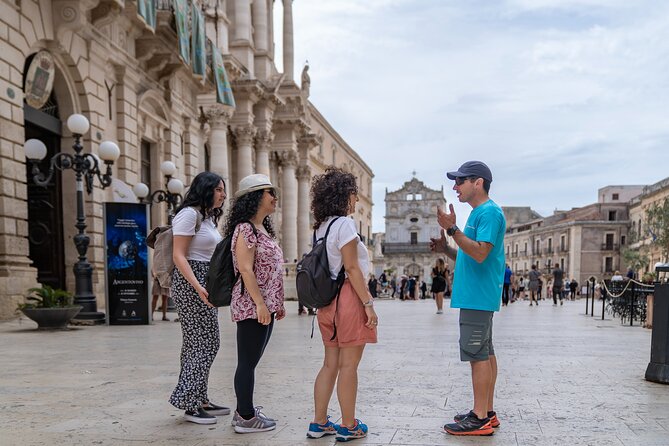
This tour is a strong match if you want a one-day route that feels efficient without feeling frantic. The small group, the included Neapolis admission, and the guide-led context make it easy for first-timers.
It’s also a good choice if you like history but hate doing the “figuring it out” part. The tour format means you can spend your energy on viewing and listening, not solving transport puzzles.
Skip it or reconsider if:
- you have walking limitations (this is not recommended for travelers with walking problems)
- you need constant narration in every single site (some parts may be more self-guided than others)
- you’re sensitive to translation and mixed-language group delivery (there can be language juggling depending on who’s booked)
Should You Book This Syracuse, Ortigia and Noto Tour?
If you want one day that hits the region’s three biggest “wow” zones—Neapolis ruins, Ortigia streets, and Noto baroque—this is a smart bet. The value improves because admission to the Neapolis park is included, pickup and return transport are handled, and guides such as Salvatore, Nando, and Lori/Lory earn top marks for making the day flow.
Book it if you’re ready for a full day on your feet and you’ll enjoy a mix of guided stops plus short independent wandering. Pass if you’re looking for a slow, museum-style experience with minimal walking and maximum in-depth guiding inside every single venue.
FAQ
What time does the tour start, and how long is it?
It starts at 8:45 am and runs for about 8 hours (approx.).
Is hotel pickup included in Catania?
Yes. The tour offers pickup and drop-off at your hotel in Catania.
What’s included in the ticket price?
Your price includes the return shuttle, a multilingual guide, and the entrance ticket to the Archeological Park of Neapolis in Syracuse.
Do I need tickets for stops like Fonte Aretusa and the Ortigia/Noto sights?
Some stops are listed as free admission, including Fonte Aretusa, Mercato di Ortigia, Piazza Duomo, Temple of Apollo, and Cattedrale di San Nicolò.
Is the tour suitable for people with walking problems?
No. It’s not recommended for travelers with walking problems.
Can I cancel and get a full refund?
Yes. Free cancellation is available up to 24 hours before the experience’s start time for a full refund.
Is there an infant option?
There is an infant price, and a baby seat is included.