REVIEW · CATANIA
Catania: City Highlights Walking Tour
Book on GetYourGuide →Operated by Kemedia · Bookable on GetYourGuide
Catania feels made for walking, and this city highlights tour is a fast, smart way to start. In just two hours, you’ll follow a professional guide through key squares and historic streets while learning how the city grew over centuries.
I especially like that you focus on real landmarks, not just random photo stops—Ursino Castle is a true anchor point. Another win is the mix of major civic sites and everyday corners, including the Pescheria fish market area.
One thing to consider: it’s a walking route in the center, and while it’s listed as wheelchair accessible, it’s also marked as not suitable for people with mobility impairments. If you need step-free and low-walking days, you’ll want to ask before booking.
In This Review
- Key things to look forward to on this Catania highlights walk
- A solid intro to Catania’s center in just 2 hours
- Meeting at Via Erasmo Merletta 3: plan your start, then just go
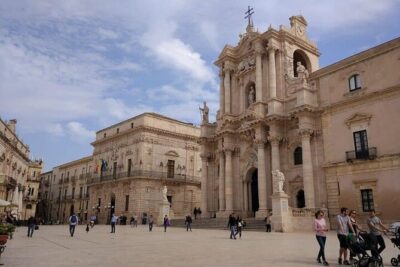
- Duomo Square: your first big orientation moment
- Pescheria fish market area: see Catania in daily use
- Castello Ursino: the castle stop that anchors the whole walk
- Via Crociferi and the Greek-era street references
- Piazza Stesicoro: a plaza pause with a city rhythm
- Piazza San Francesco and via Teatro Greco: history felt in the streets
- Piazza Università and the scalinata Alessi moment
- Piazza Vincenzo Bellini Theatre: admire the landmark, then move on
- Piazza Dante and via Gesuiti: finish the loop with recognizable city cues
- Piazza San Placido and the return to Via Erasmo Merletta 3
- What the local guide actually does for you
- Price and value: how $14 stacks up for a guided walking tour
- When this walk makes the most sense for you
- Should you book this Catania highlights walking tour?
- FAQ
- How long is the Catania City Highlights Walking Tour?
- How much does the tour cost?
- What’s included in the price?
- Are entrance fees included?
- Where does the tour start and end?
- What languages is the live guide available in?
- Is it wheelchair accessible?
- What should I bring?
Key things to look forward to on this Catania highlights walk
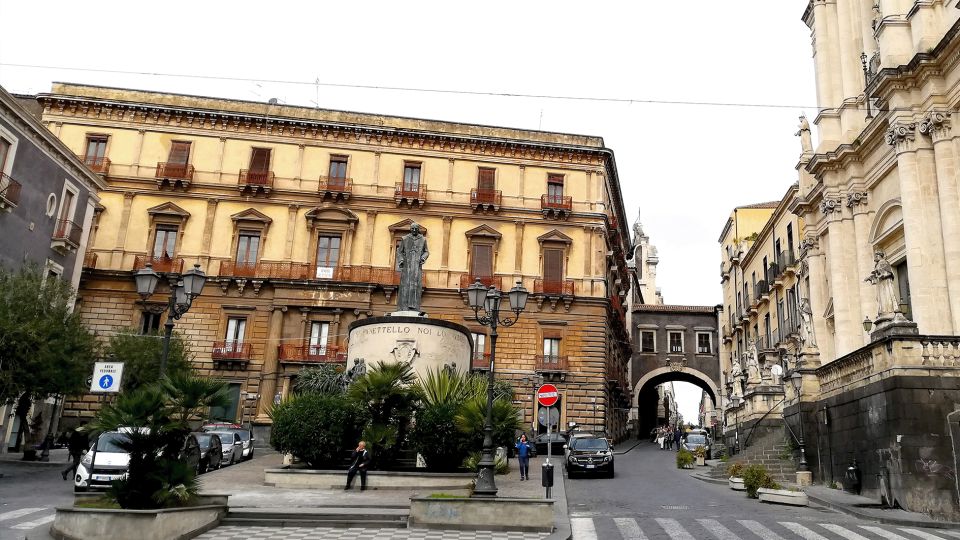
- Ursino Castle, a big centerpiece you’ll get to see and understand in context
- Duomo Square as your quick orientation point for Catania’s center
- Pescheria, where the city’s market energy shows up right on the route
- Piazza Vincenzo Bellini Theatre, a standout stop tied to Catania’s identity
- Greek-colonization era references (the 8th century B.C.) that put the streets in perspective
- A route that strings together major plazas like piazza Università and piazza Dante for an easy 2-hour loop
A solid intro to Catania’s center in just 2 hours

If you only have a short time in Catania, this tour gives you a clean overview you can build on later. You’re not stuck moving between far-flung attractions. Instead, the route stays in the city center and keeps you walking through the places that shape the look and feel of Catania.
The best part is the way the guide connects what you’re seeing with why it matters. The city’s monuments are described as centuries old and still standing, with references back to the Greek colonization of Catania in the 8th century B.C. That kind of context makes even familiar-looking squares feel more purposeful.
At $14 per person for a 2-hour guided walk with a live local guide, you’re buying time-saving direction and interpretation. You also get a structured route you can follow without needing a map app and guesswork.
You can also read our reviews of more walking tours in Catania



Meeting at Via Erasmo Merletta 3: plan your start, then just go
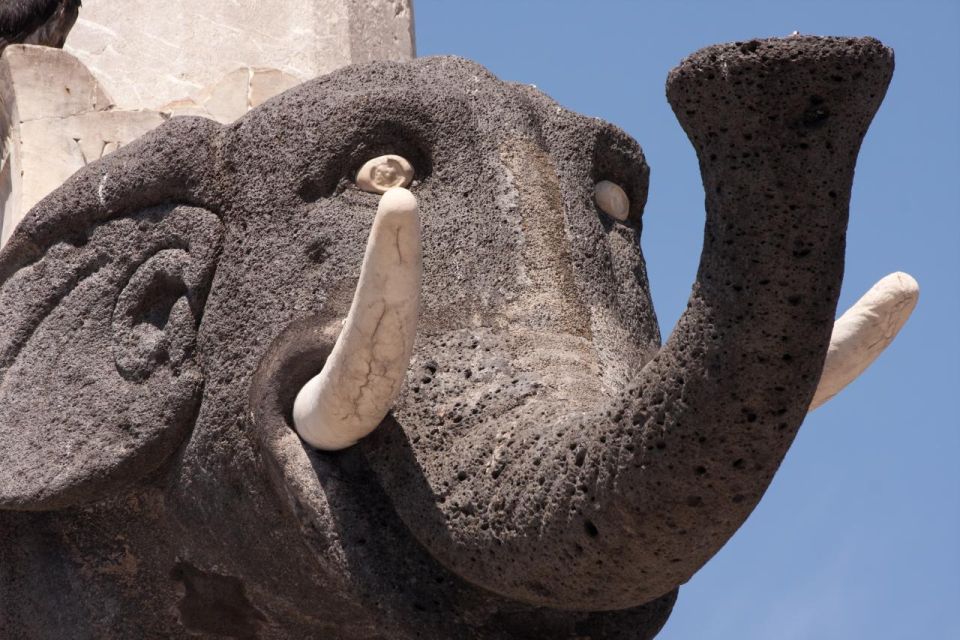
The tour begins at Via Erasmo Merletta, 3. Plan to arrive a little early so you can meet your guide without rushing. This kind of city walk works best when you’re not sprinting to catch the group.
Because the tour is designed around walking, your day will go more smoothly if you treat this as your “foundation” stop. Once you’ve walked the core squares and street corridors, you’ll have an easier time finding your bearings the next time you wander on your own.
Practical note: you’ll want comfortable shoes and comfortable clothes. Even in good weather, you’ll cover enough ground that footwear matters. Also, the tour is live-guided in English and Italian, so you can choose the language that matches you best.
Duomo Square: your first big orientation moment

Your walk kicks off at Duomo Square. Think of this as your visual starting line for Catania’s center. You’ll get a guided introduction to what the square represents and how it fits into the broader city layout.
In a good walking tour, the first stop does two things: it sets the tone and it helps you “read” the rest of the route. By the time you move toward markets and castles, you’ll already understand what to look for—important monuments, major plaza shapes, and the street lines that connect key areas.
This is also a helpful moment for questions. If you’re new to Catania, ask the guide what’s worth revisiting later after the walk. The guide’s job isn’t just to point—it’s to help you connect.
Pescheria fish market area: see Catania in daily use
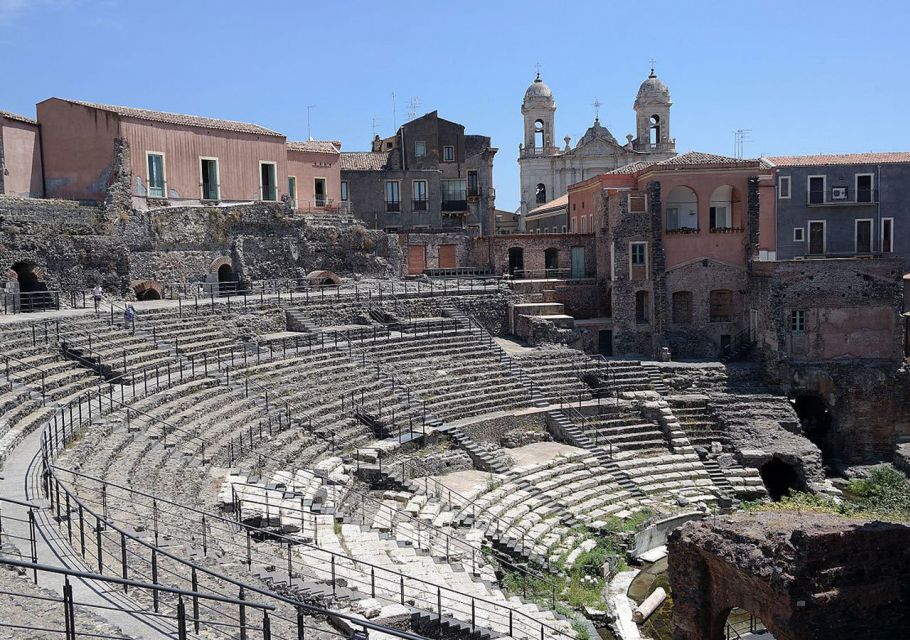
Next comes the Catania Fish Market. Even if you don’t buy anything, the market setting helps you understand the city beyond monuments. This is the side of Sicily that’s active, social, and tied to everyday routines.
Expect a guided look at the market area for about 10 minutes. That short timing is a smart choice in a two-hour tour—it gives you enough time to notice the rhythm of the place without turning the day into a long detour.
If you’re doing this tour early in your trip, the market stop is a big advantage. You’ll learn what kind of “center” Catania has—civic spaces plus everyday local life in the same neighborhood. It’s a reminder that historic cities work because people still use them.
Castello Ursino: the castle stop that anchors the whole walk
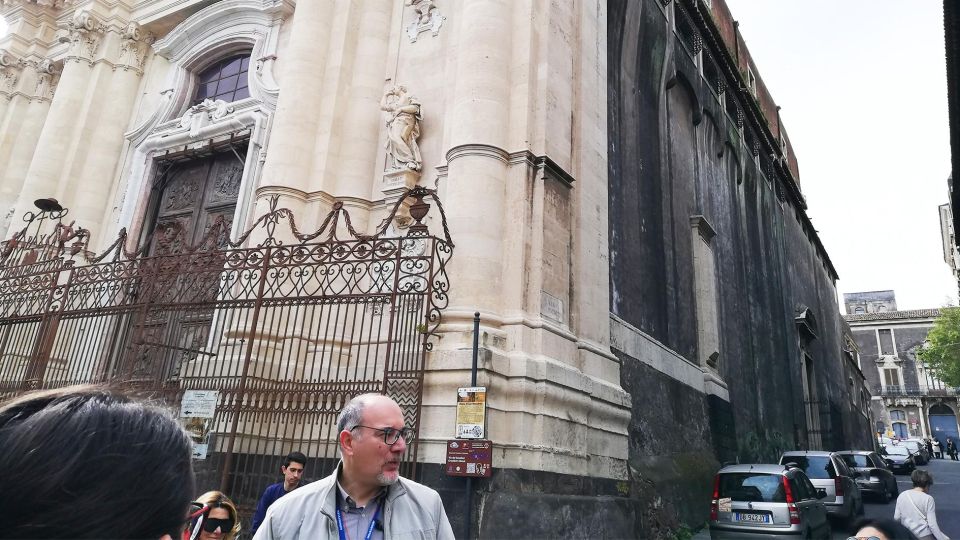
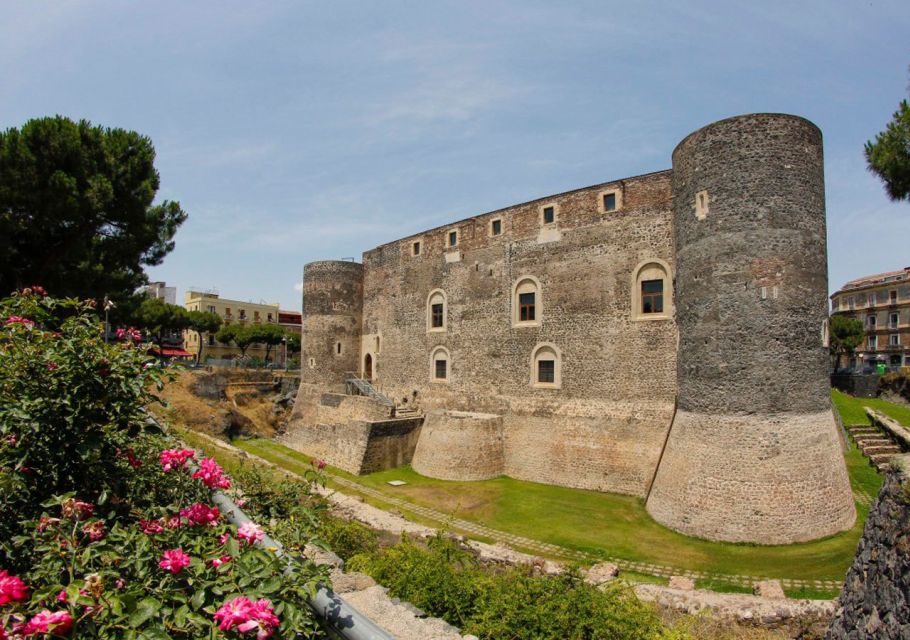
One of the highlights is Ursino Castle. A castle is an easy landmark to love because it’s dramatic and easy to locate, but the real value here is the guided context. You’re not just admiring the exterior—you’re learning how the city’s story is written through long-lasting structures.
The tour includes a 10-minute guided visit here, which fits well within a walking route. It’s long enough for you to take in the main features and absorb the guide’s explanation, but short enough that you keep momentum across multiple plazas.
If you want a quick way to understand Catania’s layers, start thinking of Ursino Castle as a fixed point. The rest of the walk—streets, theaters, university squares—becomes easier to interpret once you’ve seen a major long-standing landmark.
You can also read our reviews of more city tours in Catania


Via Crociferi and the Greek-era street references
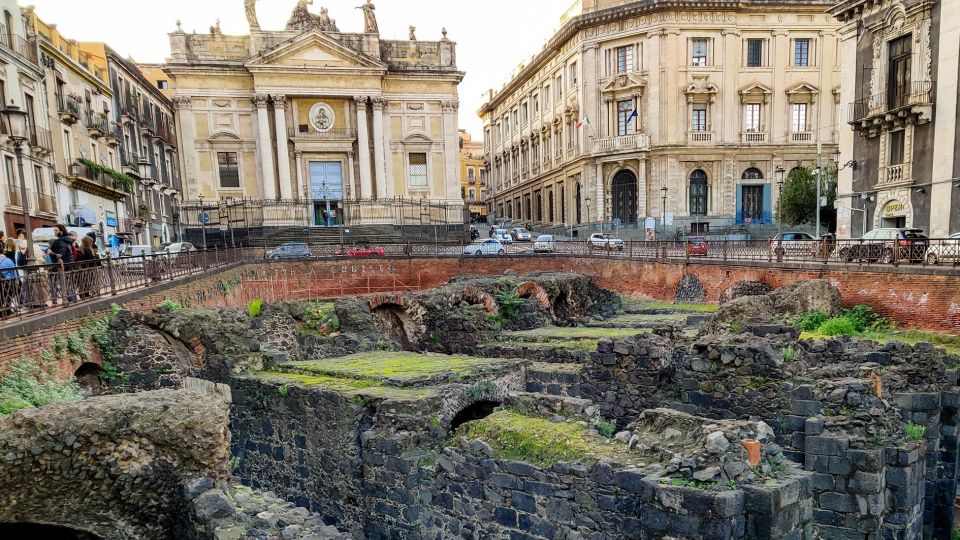
From the castle area, the tour moves through via Crociferi. This is the kind of street stop that makes the city feel real. You’re seeing how monuments relate to everyday corridors, not just isolated sights.
You’ll also encounter more historically framed elements on the route, including references to the 8th-century B.C. Greek colonization era. That matters because it changes how you view the street network. Instead of thinking only in terms of what’s pretty today, you start noticing how locations may reflect older urban patterns.
If you like history, this portion is where the walk becomes more than a photo loop. The guide is shaping your attention—so you’re not simply passing by.
Piazza Stesicoro: a plaza pause with a city rhythm
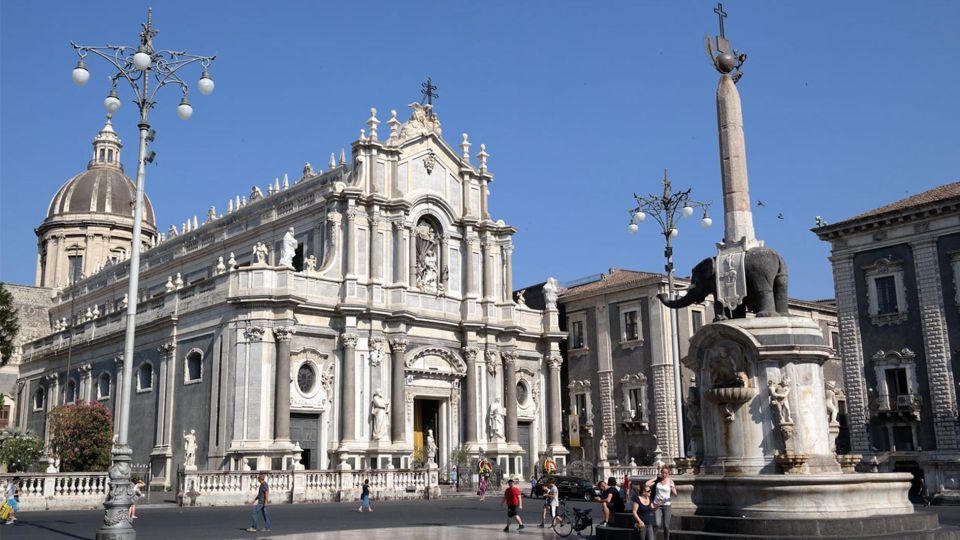
Next is Piazza Stesicoro, another plaza stop built for a quick reset. Plazas are where walking tours start to click, because they give you a break from continuous movement and a chance to regroup.
In a short tour, you don’t want long, slow sightseeing delays. The plaza format keeps things efficient: you get a focused view, a bit of context, and then you’re back on your feet.
This also helps you “feel” the city. Even without going inside major buildings, you can sense where people congregate and how the streets funnel into open space.
Piazza San Francesco and via Teatro Greco: history felt in the streets
The route also includes piazza San Francesco and via Teatro Greco. This combination is useful because it blends plaza visibility with a street path tied to an important cultural setting.
Even though this walk is only 2 hours, it doesn’t treat history like trivia. The guide’s job is to keep connecting what you see to Catania’s timeline—especially the early foundations tied to the ancient Greek presence.
If you want to walk away with something more lasting than a list of names, pay attention to how each stop relates to the next. That’s how you build mental maps, and that’s how you’ll explore better later.
Piazza Università and the scalinata Alessi moment
You’ll reach piazza Università, which is one of the key civic squares on the walk. This is also where the tour becomes visually satisfying. You’re in a major open space, and the guide’s commentary helps you understand why it’s a central part of Catania’s layout.
The walk also references scalinata Alessi, which is exactly the kind of feature you don’t want to rush past. Stairs and monumental steps add a real sense of scale. They’re also part of why this tour may not work for everyone with mobility limitations, even if it’s labeled wheelchair accessible.
Still, for most people, this is a great “pause and look” section. Take the time to orient yourself, notice building lines around the square, and check where the route goes next.
Piazza Vincenzo Bellini Theatre: admire the landmark, then move on
A highlight stop is piazza Vincenzo Bellini and the Piazza Vincenzo Bellini Theatre area. This is one of those moments where the city’s identity shows through architecture and naming.
It’s a short guided stop, so don’t expect a long, inside-the-building experience. But you’ll come away with a clearer idea of how Catania presents itself—through cultural landmarks as well as public squares.
If you like cultural geography—how names, institutions, and architecture connect—this stop delivers. It’s also a nice contrast to the market experience earlier in the route.
Piazza Dante and via Gesuiti: finish the loop with recognizable city cues
As the walk continues, you’ll pass piazza Dante and via Gesuiti. These stops are valuable because they help you close the loop on what you’ve already learned. By this point, you’ve seen major squares, a major historic landmark, and the market-side energy. Now the route ties it together with additional civic and street cues.
This section is a good time to absorb the guide’s big-picture messages. You’re likely to notice themes: monuments that still stand, plazas that structure daily life, and streets that connect neighborhoods like chapters.
Piazza San Placido and the return to Via Erasmo Merletta 3
The walk includes piazza San Placido, and then you return to Via Erasmo Merletta, 3. Ending where you started is practical. It keeps navigation simple, especially if you’re continuing your day with dinner plans or another activity.
Use the final minutes to get your bearings for what comes next. If you’ve been listening to the guide’s connections between ancient roots and present-day street life, the city should feel less confusing by now. That’s a big reason a structured highlights walk is such a good first move.
What the local guide actually does for you
The tour’s biggest strength is the live guide. You’re not just handed a generic route. The guide focuses on Catania’s history and culture, emphasizing monuments built centuries ago that are still standing.
You’ll also hear how Catania’s story connects to the Greek colonization period (8th century B.C.), which helps you understand why certain kinds of urban features are where they are. Even if you don’t memorize every detail, the effect is real: you start looking at the city with context.
A practical tip: during each stop, choose one question. For example, ask how the square functions today or what the significance of a landmark is. Guides typically share quick, useful explanations when you prompt them.
Price and value: how $14 stacks up for a guided walking tour
At $14 per person for a 2-hour guided walk, this is one of the more budget-friendly ways to get local interpretation in a major Italian city. You’re paying for direction, storytelling, and an organized route rather than spending your time figuring out connections on your own.
Two cost notes to keep you honest:
- Entrance fees are not included, so if any landmark you want requires a ticket, you’ll pay separately.
- You’re buying a guided experience, not transport. Pickup and drop-off aren’t included, so plan your own way to Via Erasmo Merletta, 3.
Still, for most visitors, the price is fair for what you get: a compact loop through key highlights with a professional, local perspective.
When this walk makes the most sense for you
This tour fits well if you:
- Have limited time and want an efficient overview of Catania
- Like history but don’t want a slow, museum-style schedule
- Prefer walking routes where you can ask questions and adjust on the fly
- Want a practical first day activity you can build on later
It may not be the best match if you need very limited walking or step-free access. The tour is marked wheelchair accessible, but it’s also not suitable for people with mobility impairments, so assume there may be movement challenges along the route (especially with features like monumental steps on the walk).
Should you book this Catania highlights walking tour?
If you want a low-cost, local-guided loop through Catania’s most recognizable areas, I’d say this is an easy yes. The combination of Ursino Castle, major plazas, and the Piazza Vincenzo Bellini Theatre area gives you variety without turning the day into a marathon. For the money, you’re getting structure, context, and smart pacing.
If you’re the type who hates walking on stone streets or needs careful mobility planning, then read the route expectations closely and consider asking Kemedia directly about practical access for your needs. Otherwise, this is exactly the kind of tour that helps you make the most of a short stay in Sicily.
FAQ
How long is the Catania City Highlights Walking Tour?
The tour lasts 2 hours.
How much does the tour cost?
It costs $14 per person.
What’s included in the price?
The tour includes a local guide.
Are entrance fees included?
No. Entrance fees are not included.
Where does the tour start and end?
You meet at Via Erasmo Merletta, 3 and you return there at the end.
What languages is the live guide available in?
The guide is available in English and Italian.
Is it wheelchair accessible?
It is listed as wheelchair accessible, but it is also marked as not suitable for people with mobility impairments. If you have mobility needs, it’s worth checking what the walking route involves before you go.
What should I bring?
Bring comfortable shoes and comfortable clothes.