REVIEW · PALERMO
Custom Private Tours of Sicily
Book on Viator →Operated by Best Things to Do in Sicily · Bookable on Viator
Sicily gets simpler when it’s organized. This 10-day custom private route covers the island’s big-name UNESCO stops and the smaller, more human moments, all with private transport and the ability to tweak plans as you go. You’ll start in Palermo, then work your way through places like Monreale, Erice, Cefalù, Ragusa Ibla, Syracuse/Ortigia, Mount Etna, and Taormina.
I especially love two things about how this tour is built. First, the day-by-day structure is strong, but it’s still customizable, so you’re not stuck with a rigid script. Second, you spend real time with local guides and local food, from Palermo street snacks to wine tastings and a hands-on cooking class in Taormina.
The main drawback to plan for: the itinerary includes lots of guided sights, but entrance tickets to museums, churches, and archaeological areas are not included, and accommodations can add cost if you book them separately.
In This Review
- Key highlights that make this Sicily tour work
- Why a private custom Sicily route feels less stressful
- Palermo airport pickup, then a food-and-art day in the historic center
- Monreale’s gold mosaics: the cathedral stop that feels worth the detour
- Erice hilltop streets and the optional Marsala salt-and-wine day
- Caccamo and the off-the-beaten-track feeling before Cefalù beach time
- Valle dei Templi in the morning: walking among ruins with context
- Ragusa Ibla and Val di Noto Baroque without the rushed feel
- Modica by vintage Fiat 500, then Noto’s Stone Garden
- Syracuse’s Ortigia: Greek remains in town-center walking time
- Mount Etna crater edge walk, then Taormina base life
- Taormina cooking class with a local chef: market shopping to four-course lunch
- Price and logistics: what $4,070 per person really buys
- Who should book this private Sicily tour from Palermo
- Should you book Custom Private Tours of Sicily?
- FAQ
- What does the 10-day Sicily tour cover?
- Are airport transfers included?
- Do you get local guides?
- Are entrance tickets included?
- Can the itinerary be customized?
- Are accommodations included?
- Is wine tasting included?
- What food experiences are part of the tour?
- Is there a cooking class in the itinerary?
- Can I cancel for a full refund?
Key highlights that make this Sicily tour work
- Private, English-speaking local guides for the key walks and sights
- Airport transfers are guaranteed (Palermo to start, Catania to end)
- Food-forward days, including street food, granita breaks, and a chef-led cooking class
- Wine tastings can be included, with expert sommeliers/enologists
- UNESCO sites across the island, not just a coastal loop
Why a private custom Sicily route feels less stressful
Sicily is spread out, and the hardest part for most visitors is logistics: where to sleep, which sites to do in what order, and how to fit in drives without losing your whole day to transit. This tour is designed to take that weight off your shoulders with private transportation and guided time where it matters most.
You also get real flexibility. If your group wants to slow down, switch a pacing choice, or swap in an optional experience, the tour is set up as a private plan rather than a one-size schedule. That’s a big deal if you’re traveling as a couple, with family, or with friends who don’t all move at the same speed.
You can also read our reviews of more private tours in Palermo
Palermo airport pickup, then a food-and-art day in the historic center
Your trip starts with a guaranteed arrival transfer from Palermo’s airport (PMO) into Palermo, about 24 miles away. Even if your flight lands at an inconvenient hour, the transport is handled, and you check in and then have the rest of the day free.
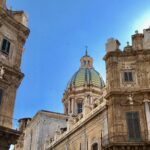
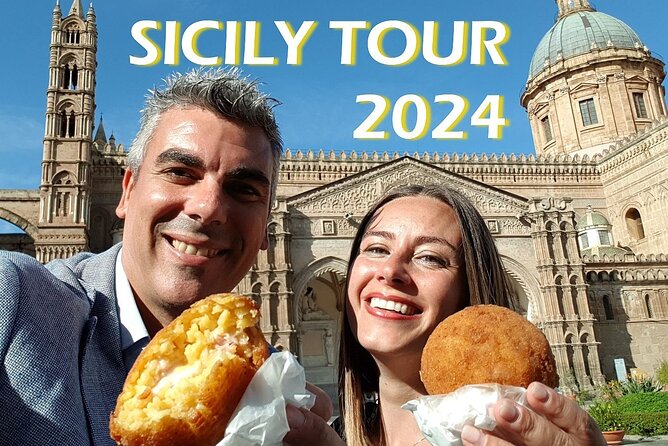
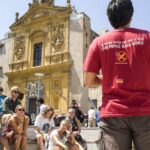
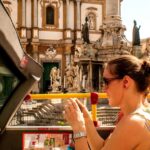
Day 2 is where Palermo clicks. You meet an English-speaking local guide and do a guided walking tour of the historic center, hitting landmarks like Palermo Cathedral, Quattro Canti, the Fountain of Shame, and Teatro Massimo (noted for its film connection to The Godfather III). The walk matters, because Palermo is one of those cities where details are the story—street layouts, façade textures, and how neighborhoods connect.
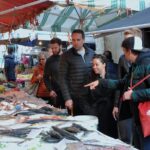
Then it turns into food time. The tour specifically leans into open-air markets and street food, and I like that approach because it’s not just scenery—it’s how people actually live. If your group has ever rushed past meals while trying to “see everything,” you’ll appreciate this pacing.
Monreale’s gold mosaics: the cathedral stop that feels worth the detour
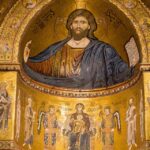
After lunch, you head to Monreale, a short ride from Palermo. The big reason to come is the Norman Cathedral of Monreale (12th century), famous for Byzantine-style mosaics made with gold tesserae. The highlight people remember is the Christ Pantocrator, with its dramatic presence and a clever sense of perspective.
This is one of the tour’s “pause and look” moments. You’re not just checking a building off your list. You’re getting guided context for why the art is so special—and why Monreale is one of Sicily’s most satisfying cultural stops.
Erice hilltop streets and the optional Marsala salt-and-wine day
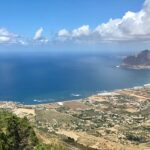
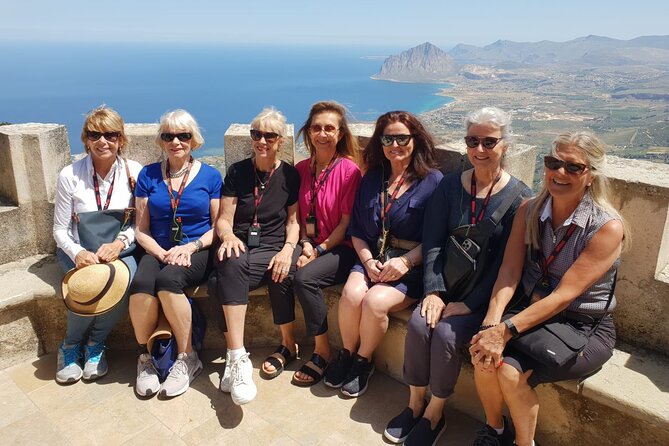
On Day 3, the tour heads to Erice, in the western portion of Sicily. You go up to Erice around 750 meters above sea level for views toward the Egadian Islands and Trapani. Then you walk through narrow cobblestone streets toward the cathedral area and the ancient Trapani gate.
Lunch is built in as part of the experience, and it’s described as a well-known village restaurant with seafood and traditional Sicilian dishes. That matters because Erice is the kind of place where a good meal is part of the whole atmosphere, not an afterthought.
After that, you get optional paths. One option is the salt road from Erice to Marsala, which is a strange and memorable mix of salt flats, windmills pumping water, and sea salt fields that can look almost unreal. If you’re a wine person, Marsala also brings a chance for a winery visit (including the historic Florio name) and a tasting.
There’s also a request option tied to a chef’s home in Erice, featuring learning traditional recipes and sharing lunch with olive oil and local flavors. If your group likes “meet locals through food” energy, this is the kind of add-on that can transform a great itinerary into a personal one.
Caccamo and the off-the-beaten-track feeling before Cefalù beach time
Day 4 starts with Caccamo, a medieval town that the itinerary positions as less touristy. You visit the Caccamo Castle, a Norman fortress from the 12th century. The point of this stop isn’t just the architecture—it’s the views: you can look toward Rosamarina Lake and, on clear days, out toward the Mediterranean.
A detail worth noting: the castle is described as never successfully conquered. That kind of “built to last” history changes how you look at fortresses. You stop seeing them as dead stone and start thinking about how power and geography shaped everything.
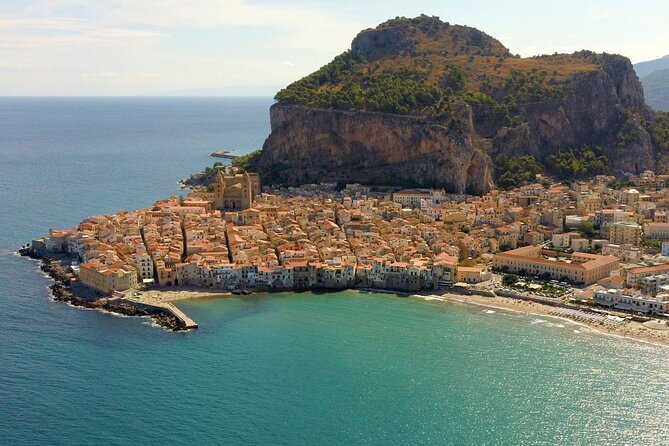
Then you switch coasts and check in to Cefalù, your base for one night. Cefalù has that postcard shape—promontory, sea views, medieval streets—and the tour gives you real downtime after check-in. You can do beach time or stroll handicraft shops. There’s also an optional guided visit where you’d see the cathedral built in 1131, tied to the Arab-Norman itinerary and UNESCO listing.
Valle dei Templi in the morning: walking among ruins with context
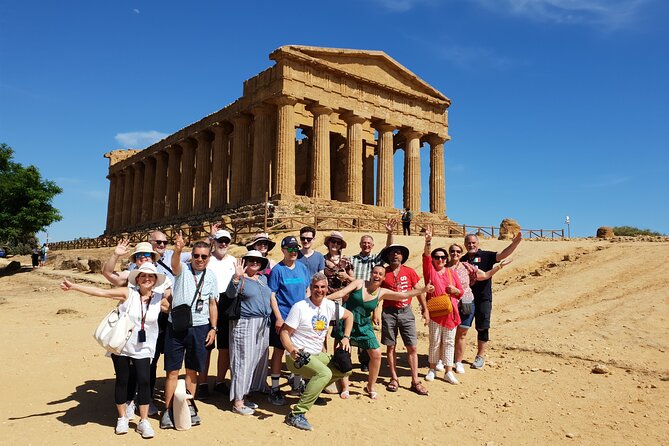
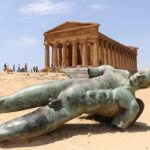
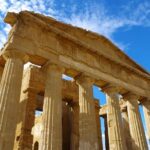
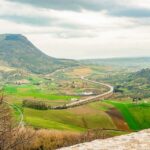
Day 5 begins with a cross-island drive to the Valley of the Temples, a UNESCO site and one of Sicily’s most important archaeological areas. You get a guided walking tour through the ruins and their pagan-god focus, with a route that includes major structures and the setting—olive trees and almond groves around ancient stones.
One temple gets singled out for a reason: the Temple of Concordia. It’s described as one of the best-preserved Greek temples in Sicily and one of the best outside Greece. This is the kind of guided stop where context matters, because you’re not only looking at columns—you’re understanding what you’re looking at and why it survived.
One practical note: entrance tickets for archaeological areas are not included. So if you’re budgeting, you’ll want to add those costs on top of the tour price.
Ragusa Ibla and Val di Noto Baroque without the rushed feel
After Valle dei Templi, you move to Ragusa Ibla, another UNESCO site, and check in for the night. Ragusa Ibla is known for its baroque architecture style connected to the Val di Noto Baroque region, created after the devastating earthquake in 1693.
The optional guided visit is where this town becomes more than a photo stop. You explore narrow cobbled streets with churches and palaces from the 17th and 18th centuries, including stone capitals with detailed craftsmanship. You also get the “why” behind the town’s layout: it’s a place rebuilt with intention.
This day tends to feel more human than big-site tourism days. It’s the kind of evening where you can wander after dinner and still feel like you’re in the middle of the city, not at a timed attraction.
Modica by vintage Fiat 500, then Noto’s Stone Garden
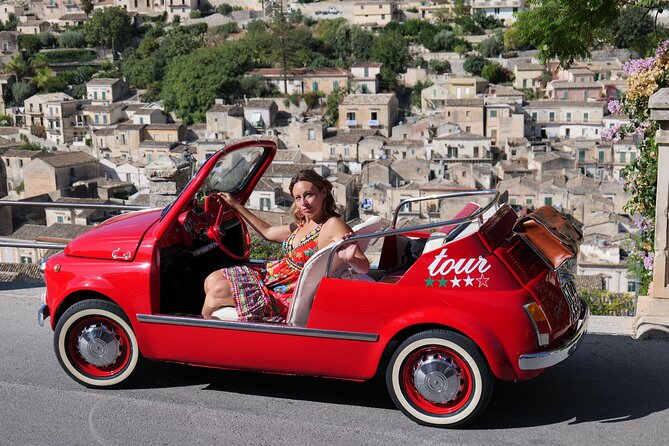
Day 6 is a fun shift: you transfer to Modica and start with viewpoint time over the historic center. Then you ride in a vintage Fiat 500 (late 60s or early 70s), which the tour frames as a playful way to explore Modica’s narrow streets. The itinerary also references cathedral-of-Saint-George area and other highlights, with expert local drivers.
Then you head to Noto, another UNESCO stop tied to the 1693 earthquake rebuild. The tour’s description calls Noto the Stone Garden, and it’s easy to see why from the architecture—yellow limestone buildings, stairways, and balconies with animal and mythological details.
Noto also gets a practical food suggestion: stop for granita. It’s one of those small moments that makes a day feel “Sicily,” not just “Sicily on a map.”
Syracuse’s Ortigia: Greek remains in town-center walking time
In the afternoon of Day 6, you reach Syracuse and check in in Ortigia, the historic center on an island-like area separated from the mainland by a narrow canal and bridge. You’re positioned right where you want to be: close to the walking core.
Day 7 is a guided walking tour with a clear focus on Syracuse’s layered past. You’ll see remains of the Greek era, including the Temple of Apollo and the Temple of Athena, which is incorporated into the Cathedral. The tour also highlights Syracuse’s white limestone buildings and the way Greek and Christian layers sit close together.
There are two optional afternoon add-ons that can change the whole tone of the day:
- Archaeological park time, including the Greek theater and the Ear of Dionysus
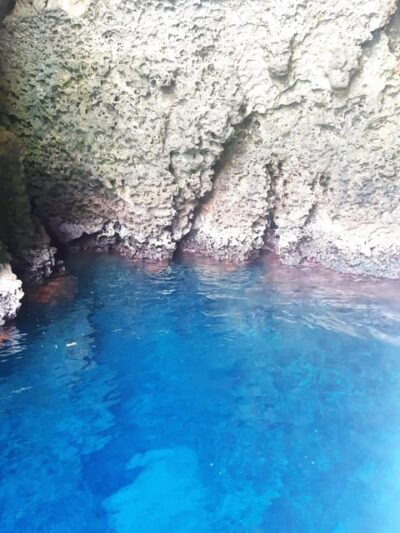
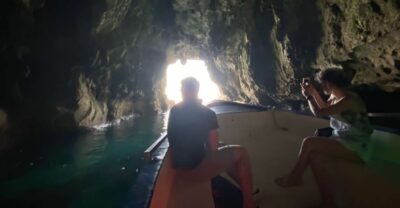
- A private boat tour along Ortigia’s coastline and the Plemmirio Nature Reserve
If your group likes a change of pace after walking, the boat option is an easy win.
Mount Etna crater edge walk, then Taormina base life
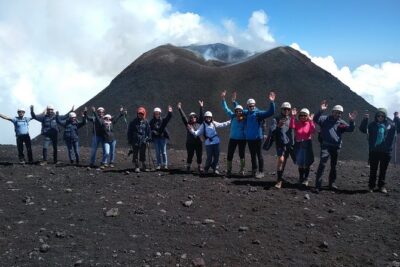
Day 8 begins with Mount Etna. You head to Rifugio Sapienza around 1900 meters altitude, then do an easy trail along the edge of an extinguished crater and see remnants of previous lava flows. The tour explicitly reminds you to wear sport shoes and bring a wind jacket, which is exactly the kind of practical detail that prevents discomfort on Etna.
Etna is the highest active volcano in Europe, and the tour frames it as UNESCO-listed with activities also possible at lower altitudes. You then add a winery stop for lunch at a historical winery, with the idea that Etna’s slopes are also wine country.
After that you continue to Taormina, your base for the next two nights. You check in and have the rest of the day at leisure. The tour offers two style choices:
- Stay near Corso Umberto, described as a charming pedestrian street
- Or stay by the sea near Isola Bella, noted as the best beach in Taormina
Taormina nights tend to be for strolling and easy dining, and this itinerary leaves room for that instead of stacking another guided schedule right away.
Taormina cooking class with a local chef: market shopping to four-course lunch
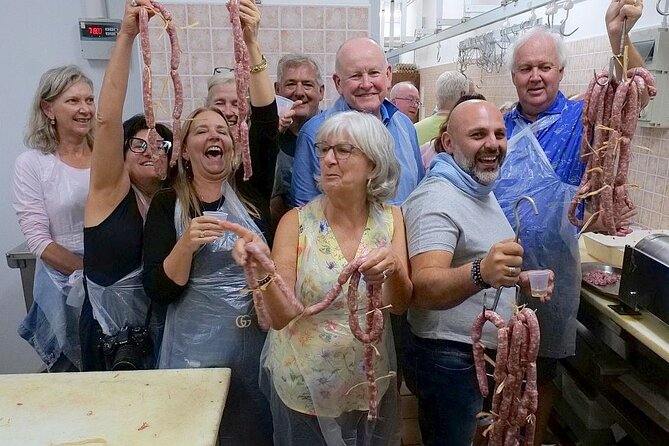
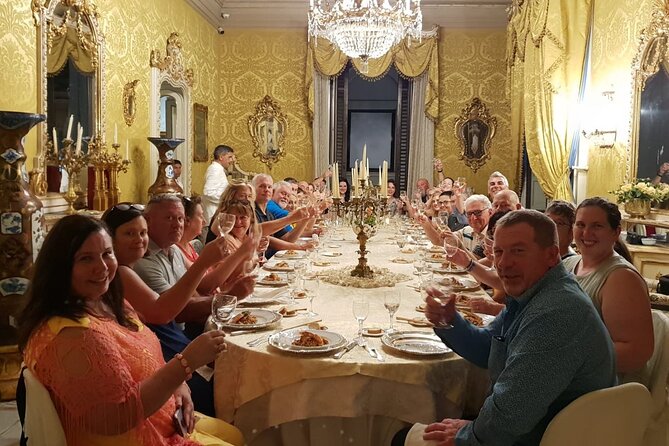
On Day 9, you meet a young local English-speaking chef near Porta Messina. The cook’s day starts in the local market, where you buy ingredients and learn how to choose produce and fish. Then you move to the chef’s home for a hands-on cooking class and share the four-course Sicilian menu you prepare.
The lesson runs 9:30 am to 3:00 pm, and it’s noted as not private—so you’ll likely share the experience with others in the same class. Still, the structure is what makes it feel valuable: you’re doing more than tasting. You’re learning the work behind the flavors.
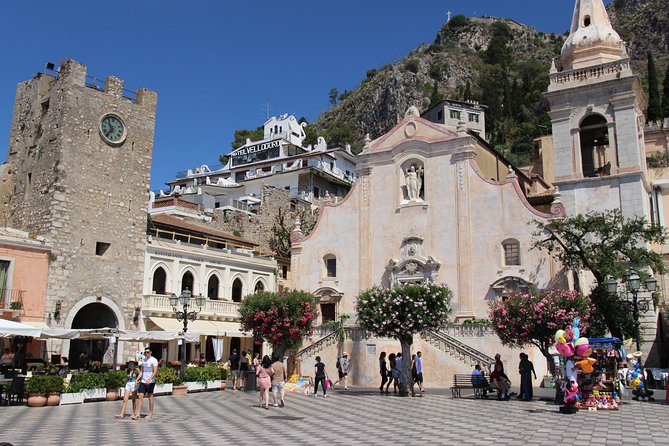
You’ll also have time later to explore Taormina on your own. There’s an optional guided visit that can include highlights like the ancient Greek Theater from the 2nd century BC.
Price and logistics: what $4,070 per person really buys
The headline price—$4,070.05 per person—sounds steep until you match it to what the itinerary is doing. This tour includes private transportation, an air-conditioned vehicle, English-speaking local guides, bottled water, snacks, and multiple breakfasts. It also includes all fees and taxes tied to the tour services.
Food is another major part of the value. The tour build-in snack and tasting opportunities around classic Sicilian favorites like cannoli, arancine, almond pastries, granita, street food, sea-food, and figs. Wine tastings are also described as possible, with expert enologists/sommeliers who can join the winery visits.
But here’s the tradeoff you should plan for: entrance tickets to archaeological sites, museums, churches, and similar places are not included. Also, accommodations are not included in the standard package, even though the provider says they can book hotels for an additional fee. So your “all-in” trip cost depends on what hotel level you choose and how many paid entries you’ll add.
Another small consideration: the itinerary is full. You’ll be driving across long distances, and you’ll do guided walking tours and at least one crater-edge walk. This is best if your group is comfortable with a busy rhythm, not if you want a slow, sit-everywhere vacation.
Who should book this private Sicily tour from Palermo
I’d point this tour toward you if:
- You want expert guidance but still want to control pacing with customization
- You hate the stress of coordinating guides, transport, and sight order
- You’re food-focused (street snacks, wine, and a cooking class)
- Your group includes people who would prefer someone else handling the driving plan
I would not choose it if:
- You’re on a strict budget and want only self-guided sights
- You prefer to choose every meal with zero structure
- Your group wants very low walking time or minimal day-to-day driving
One more reason this tour can feel especially “right”: the human side shows up in the feedback. The names Rosella and Gianca appear as the planning team, and Rita Cremi comes up as a tour leader who gives extra attention and care. That kind of service pattern matters when a schedule is tight.
Should you book Custom Private Tours of Sicily?
If you’re the type who hates planning friction and wants Sicily handled in a grown-up way, this is a strong pick. You get a private plan, airport transfers, English-speaking local guides, lots of guided walking, and multiple food-and-wine experiences, including the Taormina cooking class.
Before you book, do two practical things:
First, ask for a clear estimate of entrance-ticket costs for the specific days you’ll visit. Second, decide what you want for hotels, since accommodations are not included in the base price. If those two numbers don’t surprise you, the rest of the trip feels built to deliver value without you worrying about the details every day.
FAQ
What does the 10-day Sicily tour cover?
The route includes Palermo, Monreale, Erice (with optional Marsala and winery time), Caccamo, Cefalù, the Valley of the Temples, Ragusa Ibla (with optional guided visit), Modica, Noto, Syracuse/Ortigia, Mount Etna, and Taormina, with departure from Catania.
Are airport transfers included?
Yes. The tour includes guaranteed transportation from Palermo airport (PMO) to Palermo on arrival, and guaranteed transportation from Taormina to Catania airport (CTA) for departure.
Do you get local guides?
Yes. The tour includes English-speaking local guides for guided portions of the experience (other languages are available on request).
Are entrance tickets included?
No. Entrance tickets to archaeological sites, museums, churches, and similar places are not included.
Can the itinerary be customized?
Yes. The tour is private and fully customizable to your needs, including itinerary changes and scheduling adjustments.
Are accommodations included?
No. Accommodations are not included, but booking help is available for an additional fee (the provider will suggest ideally located hotels).
Is wine tasting included?
Wine tastings can be included, and alcoholic beverages may be part of winery visits with expert enologists/sommeliers accompanying you.
What food experiences are part of the tour?
You’ll have snacks and food opportunities throughout, including traditional items such as cannoli, arancine, almond pastries, granita, street food, sea-food, and figs. You’ll also have breakfasts included and optional custom meal planning.
Is there a cooking class in the itinerary?
Yes. In Taormina you’ll meet a local chef, shop for ingredients at the local market, take part in a hands-on cooking class, and enjoy a four-course Sicilian menu. The class runs 9:30 am to 3:00 pm and is not private.
Can I cancel for a full refund?
Yes. The tour offers free cancellation, with a full refund if you cancel up to 24 hours before the experience’s start time. If you cancel less than 24 hours before, the amount is not refunded.