REVIEW · CATANIA
Mount Etna: Ascent to 2800m by 4×4
Book on GetYourGuide →Operated by ALTERNATIVETNA · Bookable on GetYourGuide
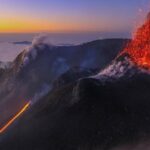
Etna feels close enough to touch. This 2.5-hour 4×4 ascent up Mount Etna takes you into the crater zone around 2800m, then adds short walks for panoramic views. You get both the science talk and the big “how is this even real” volcanic scenery.
I love that the 4×4 bus gets you high fast, including a stop at the astrophysical observatory area of Pizzi Deneri (2810m). I also love the guide-led part: a licensed volcanologist talks you through what you’re seeing, including the 2002 eruption crater area that you’ll reach near the end.
One drawback to plan for: it can be cold at altitude, and the crater viewpoints feel exposed. Bring proper hiking shoes and follow the safety instructions closely, especially near rim edges.
In This Review
- Key things you’ll notice on this Etna 4×4 tour
- 4×4 up to Pizzi Deneri (2810m) from Piano Provenzana
- The hike to 2805m–2865m and the Valle del Bove view
- The 2200m descent and the 2002 eruption crater edge walk
- Why the volcanologist guide actually changes the experience
- What to bring and how to dress for crater altitude
- Who this Mount Etna 4×4 tour is best for
- Price and value: is $100 for 2.5 hours worth it?
- Should you book the Etna 4×4 ascent to 2800m?
- FAQ
- Where does the tour meet?
- How long is the Mount Etna ascent by 4×4?
- How high do you go on the tour?
- What do you see from the higher viewpoint?
- What happens after the descent to 2200m?
- Is transportation included?
- Is there a guide?
- Is the tour suitable for everyone?
- What should I bring?
- What’s the cancellation and booking flexibility?
Key things you’ll notice on this Etna 4×4 tour
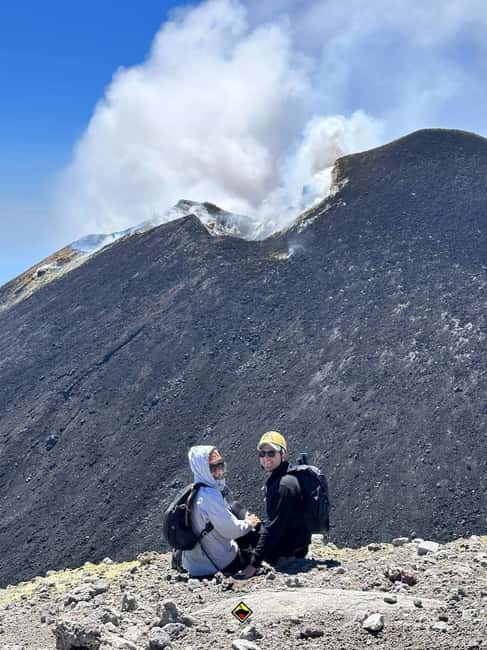
- Pizzi Deneri (2810m) access by vehicle, not a full-day grind
- Short hikes at altitude timed for views, not exhaustion
- Valle del Bove viewpoint beneath the northeast crater from higher ground
- 2002 eruption crater rim with a walk of about 20 minutes
- Volcanologist commentary that ties the scenery to what Etna is doing now
4×4 up to Pizzi Deneri (2810m) from Piano Provenzana
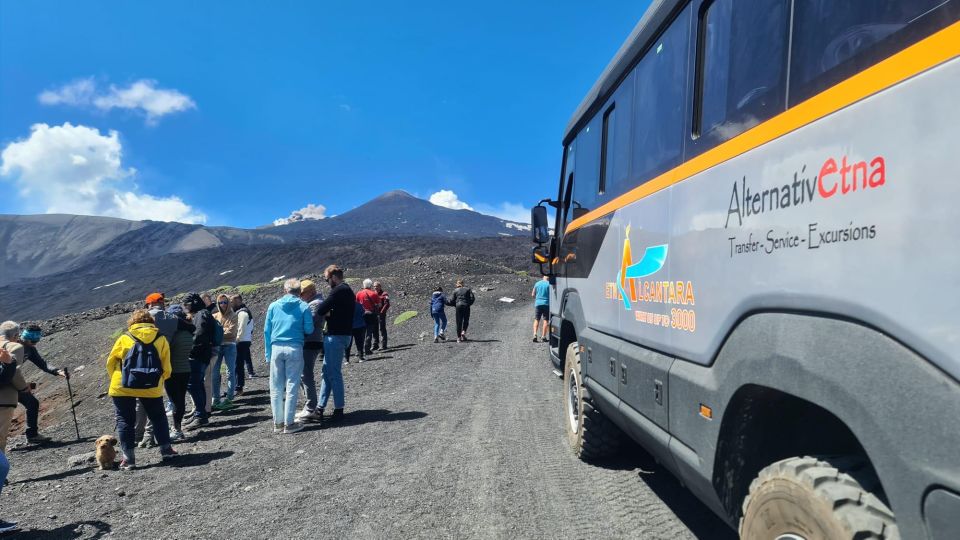
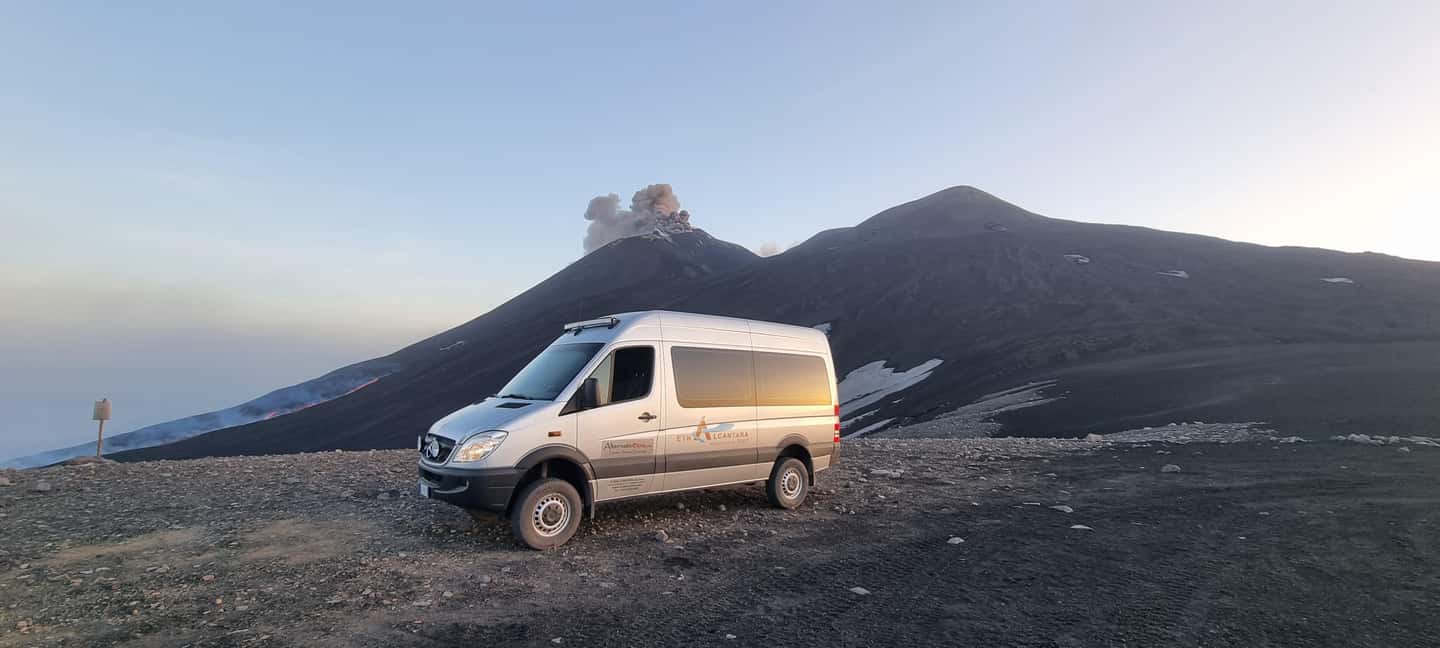
The day starts on the north side of Mount Etna in Piano Provenzana. You’ll meet at the Alternativetna office, then board a comfortable 4×4 bus and head up an unpaved road toward the astrophysical observatory area of Pizzi Deneri at 2810m.
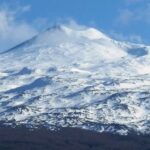
This is one of the smartest ways to do Etna if your goal is maximum volcanic views with minimum time wasted. You’re not stuck on the lower, smoother parts where everything looks similar. Instead, the vehicle takes you into a zone where the ground shows its history: old craters, dark lava surfaces, and that almost moon-like feel that makes Etna so famous.
On the way up, expect sweeping vistas that open up as the altitude climbs. On a clear day, you can see out toward the sea, which gives your brain an easy reference point: ocean on one side, volcanic chaos above the other. That contrast is part of the magic.
Practical tip: when you’re higher up, wind can change everything. Even when the morning is mild, the ride and stops at elevation can feel sharp and chilly.
You can also read our reviews of more tours and experiences in Catania.

The hike to 2805m–2865m and the Valle del Bove view
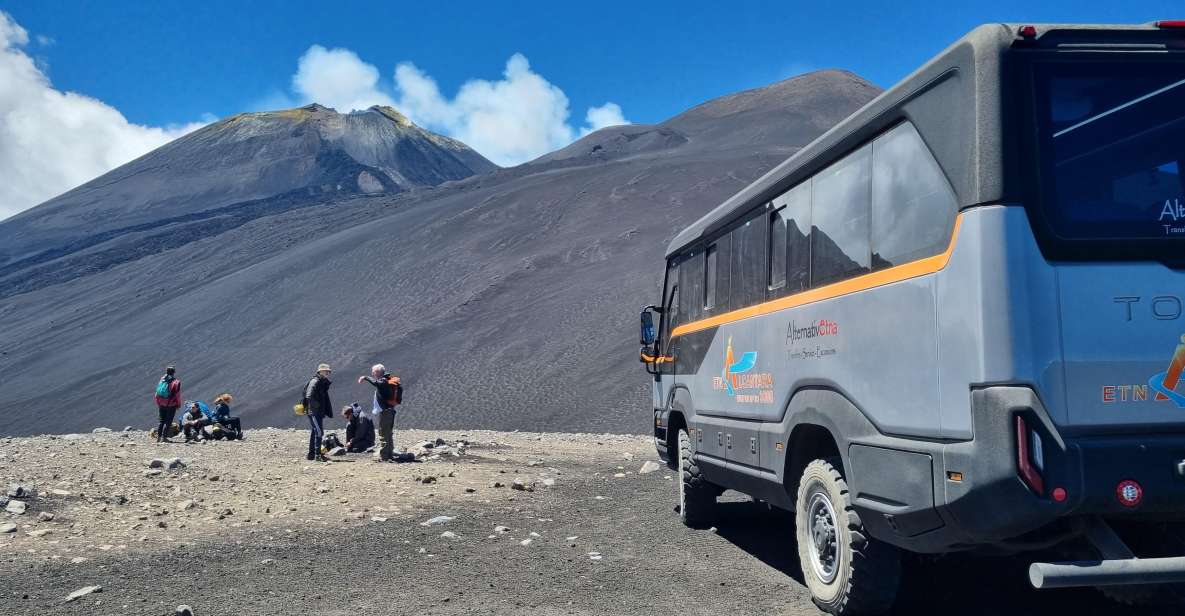
Once you’re near about 2805m, you’ll step out for a short trek up to roughly 2865m. The exact top altitude can depend on current volcanic activity, so the day isn’t treated like a fixed checklist. The payoff is what you’re walking toward: a high viewing point over the Valle del Bove, sitting beneath the northeast crater.
This part is short, but it matters. At these elevations, the terrain turns into something you have to see in person to believe—lava fields under your feet, craters around you, and a wide horizon that makes the scale of the volcano feel real.
It’s also a great stretch for your photos. From that higher viewpoint, you’re in position to look outward across Sicily’s coastline, then back down over Etna’s own structure. You’re basically seeing the volcano and its surrounding world in the same frame.
What I’d watch for: footing. Even though the hike isn’t long, you’re on volcanic ground, which can be uneven. Wear the hiking shoes you brought for that reason, not sneakers you don’t care about. And if the air is cold enough for cloud cover, it doesn’t ruin the experience—it changes the mood. One of the most memorable things people describe is walking among craters with clouds around.
The 2200m descent and the 2002 eruption crater edge walk
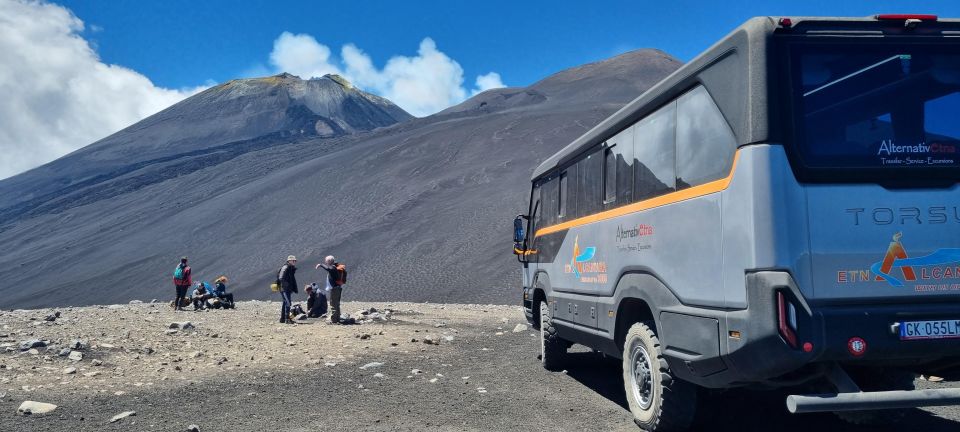
After the higher viewpoint time, you’ll return to the bus and descend to around 2200m. Then the tour adds a second walk: about 20 minutes to reach the edge of a crater left over from the 2002 eruption.
This is where Etna shifts from “big views” to “hands-on understanding.” Standing closer to the crater rim gives you a different perspective than looking from afar. You can connect the volcanologist’s explanation to the physical shape of what’s left behind—edges, slopes, and the way the ground looks altered by eruption material and time.
It also feels more intense. The rim areas can feel close and exposed, which is why paying attention to the guide’s safety guidance matters. If you’re traveling with kids, this is the moment where you’ll want to be extra strict about staying with the group and staying well back from the edge.
When the sky is clear, the crater edge views are dramatic. When it’s overcast or windy, the experience still works—just treat it like a weather-and-visibility day. The volcano doesn’t care about our schedule, so you should be ready for conditions at altitude.
Why the volcanologist guide actually changes the experience
A big part of the value here is the guide. This tour includes a licensed volcanological guide, and the best moments are when they connect what you’re seeing with how Etna works.
People often mention how clear and patient the explanations are—especially guides such as Giuseppe and Flavio. That matters because the terrain can look random if you’re just taking pictures. The guide helps you read it: why certain craters are shaped the way they are, what you’re looking at when you see the older eruption marks, and what the 2002 eruption site represents in the bigger Etna story.
Even better, the guide isn’t only talking history. You’re on active terrain, and part of the day is shaped by real conditions. The walk up toward 2865m can vary depending on current volcanic activity, so the guide’s role is partly safety and partly interpretation.
If you like science but don’t want a lecture, this is a good format: short vehicle rides, focused viewpoints, and explanations tied to where you stand. That’s the sweet spot for most people.
What to bring and how to dress for crater altitude
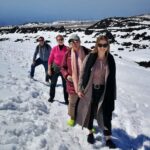
You’re going high fast, and you should dress for colder air than you expect. The tour materials suggest sunglasses, hiking shoes, a daypack, and hiking pants. Reviews also point out that conditions can turn quickly at elevation, including snow starting while people were up there.
So I’d build your clothing plan like this:
- A warm layer you can actually move in
- Something that blocks wind (even a light shell helps)
- Sunglasses for glare, especially when the sky is bright
- Shoes with grip for uneven volcanic ground
Also, bring a daypack because you’ll want a place for layers and water. You won’t want to shove everything into pockets while you’re walking near rim areas.
Photo note: shooting through cold air can make everything look crisp, even when visibility isn’t perfect. If you’re photographing the coastline and craters together, hold still for a second at each stop so your camera locks focus and exposure.
Who this Mount Etna 4×4 tour is best for
This tour fits people who want Etna’s highlights without committing to a long hike. You get altitude and multiple viewpoint stops in about 2.5 hours, with 4×4 transport doing the heavy lifting.
It’s also a solid choice if mobility is limited. One reviewer specifically noted that the bus up to around 2800m worked well for someone who wasn’t very mobile, which is a useful signal. You’ll still do short walks, though.
Who should reconsider:
- Pregnant women
- People with back problems
- People with heart problems
- People with high blood pressure
- Babies under 1 year
- People over 95 years
And a practical note for families: there’s a real safety element at crater rims. One review called out the importance of safety awareness near the edges, so if you’re bringing children, make sure you can keep them close and calm during the rim walk.
Wheelchair accessibility is listed, which is great. That said, because there are short treks at altitude and crater-edge walking involved, you should expect that the easiest parts are the vehicle rides, and the walking parts may be harder depending on the surface and conditions.
Price and value: is $100 for 2.5 hours worth it?
At about $100 per person for a 2.5-hour experience, the value comes from three things you don’t get for free on your own: altitude access, professional guidance, and structured timing.
Here’s why that matters:
- Altitude without slogging: the 4×4 bus carries you up toward Pizzi Deneri (2810m) and lets you reach crater-region viewpoints quickly.
- A volcanologist guide: you’re not just looking at rocks. You’re getting explanations that help you understand what you’re seeing, including the 2002 eruption area.
- Two different hike moments: a short trek near 2865m for Valle del Bove views, then another walk around 20 minutes to a crater edge from 2002.
You also avoid the downside of tours that drag on too long. Some people choose this precisely because it’s shorter than longer Etna hiking days, while still delivering the main sights: crater scenery, coastline views, and the 2002 eruption rim.
If you want a full-day Etna mission with lots of walking, you’ll want a different format. But if your priority is big Etna moments in a manageable time window, this price makes sense.
Should you book the Etna 4×4 ascent to 2800m?
I’d book it if you want an Etna day that’s structured, guided, and not too punishing on time or stamina. The combination of a volcanologist explanation, quick access up to around 2800m, and viewpoint walks near 2865m and at the 2002 eruption crater rim is a strong “best hits” mix.
Skip it (or choose something gentler) if you’re dealing with medical limitations like heart issues, high blood pressure, or significant back problems. And if you’re bringing kids, plan to treat the crater rim walk with extra seriousness—this isn’t a place for wandering.
If you love real-world science and you also want dramatic views without overcommitting to a long hike, this is the kind of Etna tour that makes your Sicily trip feel complete.
FAQ
Where does the tour meet?
The meeting point is at the Alternativetna office.
How long is the Mount Etna ascent by 4×4?
The duration is 2.5 hours.
How high do you go on the tour?
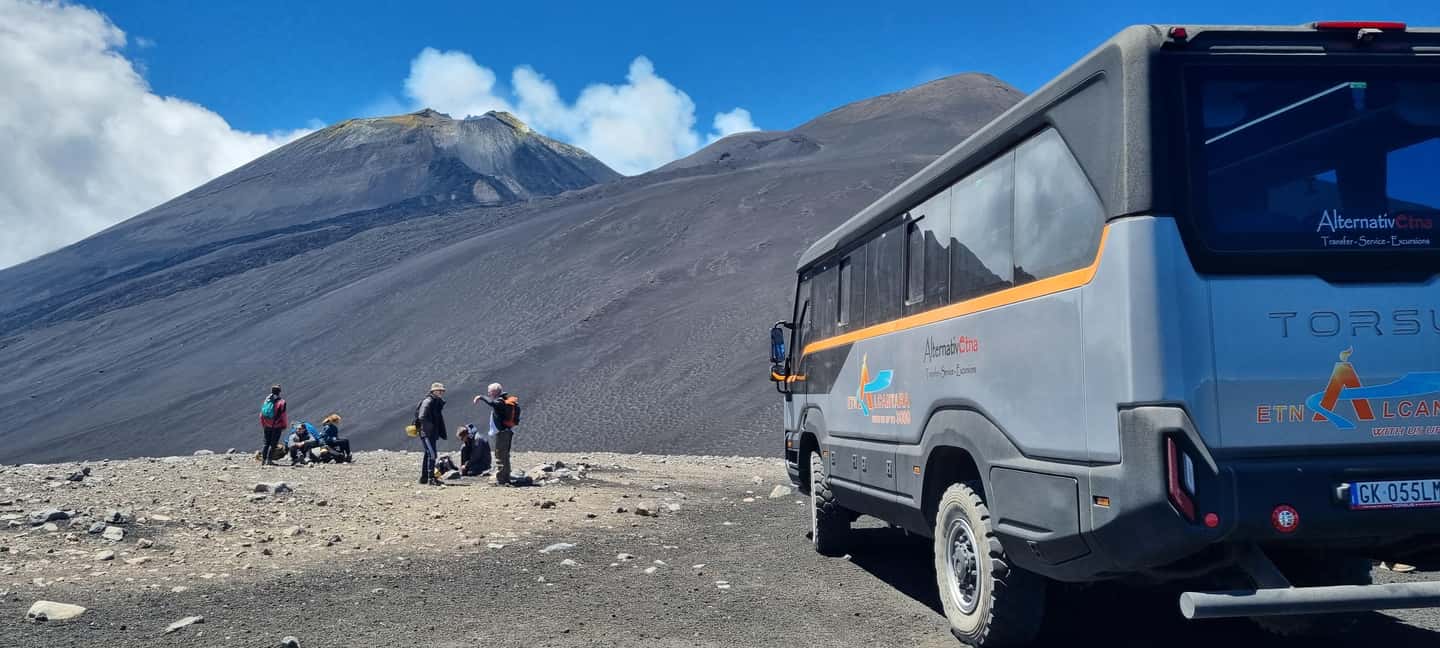
The 4×4 takes you up to the highest area reachable by the vehicle around 2800m (Pizzi Deneri is at 2810m). Then you do a short trek up to about 2865m, depending on volcanic activity.
What do you see from the higher viewpoint?
You get views over the Valle del Bove beneath the northeast crater, plus sweeping panoramas toward the Sicilian coastline.
What happens after the descent to 2200m?
You descend to about 2200m, then take a short trek of around 20 minutes to reach the edge of the crater from the 2002 eruption.
Is transportation included?
Yes. The tour includes round-trip transportation by 4×4 bus.
Is there a guide?
Yes. A licensed volcanological guide leads the tour. Languages listed are English and Italian.
Is the tour suitable for everyone?
No. It is not suitable for pregnant women, people with back problems, people with heart problems, people with high blood pressure, babies under 1 year, or people over 95 years.
What should I bring?
Bring sunglasses, hiking shoes, a daypack, and hiking pants.
What’s the cancellation and booking flexibility?
Free cancellation is available up to 24 hours in advance for a full refund, and you can reserve now and pay later.