REVIEW · SICILY
Pantalica nature history and archeology
Book on Viator →Operated by Gregorio Chiarenza · Bookable on Viator
Few places mix tombs and orchids like this. This walk in Sicily’s Pantalica UNESCO reserve pairs Europe’s largest rock-tomb necropolis with hands-on plant lore you’ll actually remember. The one catch: it depends on the day and weather, and you’ll be on your feet for a short but real hike (max 5 km total), with optional swims and cave visits only if conditions cooperate.
I also like how the pacing stays friendly. It’s built for different fitness levels, capped at 12 people, and the walking route is kept to a manageable length. A possible drawback is that the experience expects good weather—if it’s canceled for poor conditions, you’ll need to reschedule or get a refund.
In This Review
- Key highlights to look for
- Pantalica in 3 hours: what this tour really feels like
- Price and value: why $85.97 can make sense
- Where you start: Piazza San Sebastiano in Ferla
- The route in plain English: short walk, big time periods
- Stop 1: the necropolis with 5,000 cave tombs
- Stop 2: San Micidiario and San Nicolicchio rock churches
- Stop 3: the Anaktoron, or prince’s palace (12th century BC)
- Stop 4: the Greek trench and the story of work and defense
- Stop 5: Ciccio Pecora narrow-gauge railway history
- Stop 6: botanical walks and plant uses you can repeat later
- A note on feeling confident outdoors
- Optional highlights if weather permits
- What to bring so the day feels easy
- Who this tour fits best (and who might want something else)
- The practical side: group size, tickets, and pacing
- Should you book Pantalica with Gregorio?
- FAQ
- How long is the Pantalica nature history and archeology tour?
- Where does the tour start?
- What time does the tour begin?
- What’s the walking distance?
- What is included in the price?
- What archaeological sites will we visit?
- Do we see nature and plants too?
- Is swimming or a karst cave visit guaranteed?
- Is the tour weather dependent?
- How large is the group?
Key highlights to look for
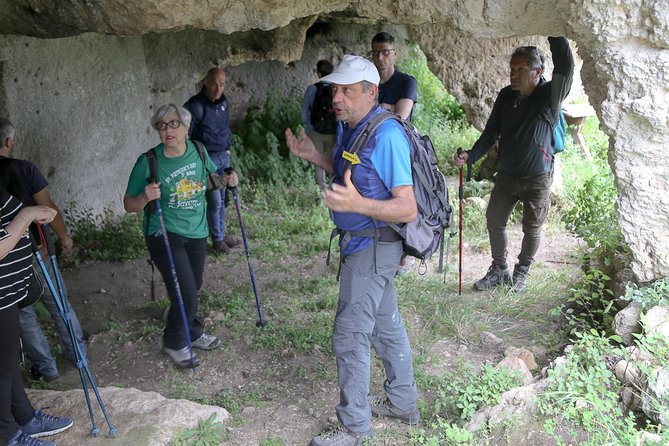
- 5,000 artificial cave tombs make Pantalica the continent’s biggest necropolis of this type
- Byzantine rock churches at San Micidiario and San Nicolicchio, linked to early centuries in the area
- Anaktoron (prince’s palace) showing local power from the 12th century BC
- Iblea endemic plants and orchids, with notes on medicinal and toxic uses
- Calcinara by the Anapo River, with an optional swim if the weather allows
- Gregorio Chiarenza’s guiding style, mixing history, nature, and practical pacing in one walk
Pantalica in 3 hours: what this tour really feels like
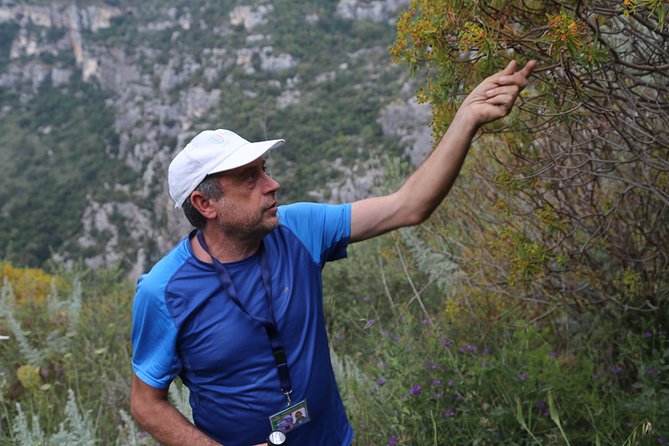
This is the kind of outing that makes you look at a landscape differently. You start with dramatic limestone-and-ridge country around the Anapo River and Calcinara tributary, and you quickly realize you’re not just “walking in nature.” You’re moving through layered time: prehistoric burial culture, medieval villages and churches, and later traces like a narrow-gauge railway that ran until the last century.
The total walking distance is kept to a maximum of about 5 kilometers, and the whole experience lasts around 3 hours. That means you’re getting a focused hit of archaeology plus ecology, without turning it into a day-long endurance test.
The guide here is Gregorio Chiarenza. Based on his approach, you should expect explanations that connect dots fast: why the site is important, what to look for in the plants, and how to read the rock features without needing a degree in ancient history. It’s one of the reasons this tour works for families and also for people who want more than a quick photo stop.
You can also read our reviews of more historical tours in Sicily



Price and value: why $85.97 can make sense
At $85.97 per person, this is not a “grab-and-go” activity. But you’re paying for a small group size (maximum 12 travelers), a guide who covers both archaeology and botany, and an experience that’s carefully limited in walking distance so you actually absorb what you see.
If you’re the type who likes meaningful stops—necropolis details, specific church sites, and plant uses—this can feel like good value. If you only want scenery with minimal walking and minimal talking, you might prefer a longer scenic hike on your own. Here, the content is part of the product.
Where you start: Piazza San Sebastiano in Ferla
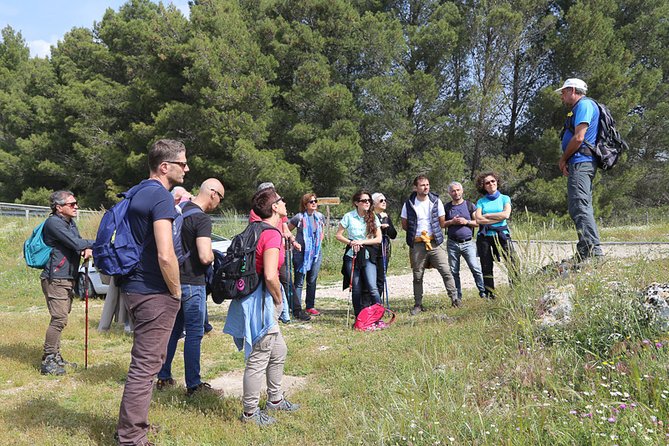
The meeting point is Piazza San Sebastiano, 96010 Ferla (SR), Italy, with a 9:30 am start. The tour ends back at the meeting point.
Why it matters: starting on time makes a difference in a reserve like Pantalica. You’ll want daylight for rock tombs, church carvings, and any optional water time in Calcinara. If you’re traveling from elsewhere in Sicily, plan to arrive early enough to settle and use the restroom before the hike begins.
The route in plain English: short walk, big time periods
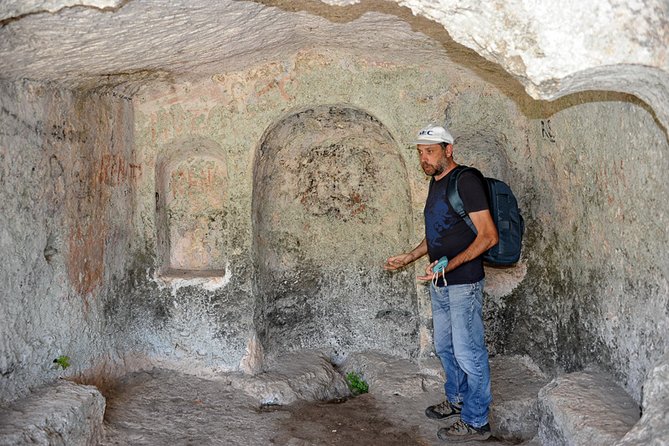
The tour is structured as a walk through a long timeline. You’ll go from around the 12th century BC era all the way to more recent times. That sounds like a lot for three hours, but the stops are chosen so you see the “anchors”: the big necropolis, key religious sites carved into rock, the prince’s power base, and a few hints of later life tied to transport and farming.
Routes vary in difficulty, and there’s enough flexibility that you’re not locked into one single strain of walking. On request, trekking poles are included, which is a nice safety net if the ground is uneven or if you’re not into constant stepping over rocks.
Stop 1: the necropolis with 5,000 cave tombs
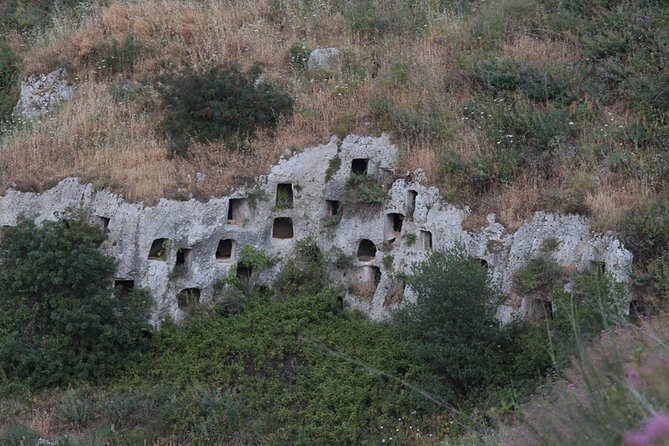
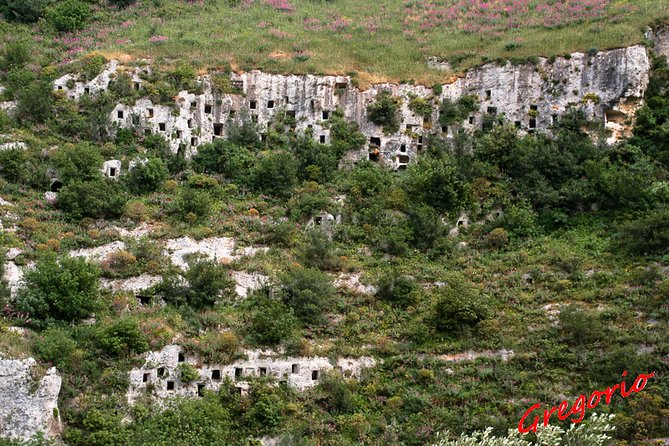
Your first big “wow” is the Pantalica necropolis, often described as Europe’s largest final bronze necropolis. This is where you understand the scale.
You’ll see 5,000 artificial cave tombs, carved into the rock. It’s not one single tomb you visit—it’s a whole burial landscape. The effect is odd in a good way: part of you wants to count, but another part realizes the real lesson is how people used the terrain itself as a cemetery.
Practical tip: wear shoes with good grip. Even on a short route, the ground can be rocky, and you’ll be moving among areas where footing matters more than speed.

Stop 2: San Micidiario and San Nicolicchio rock churches
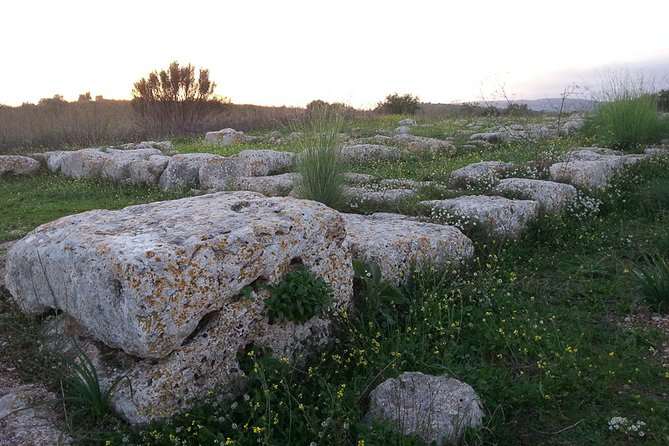
Next comes the Byzantine layer. You’ll visit the villages of San Micidiario and San Nicolicchio, including rock churches associated with early centuries (the churches are described as 4th-century).
This is one of the most satisfying contrasts in the tour. You go from burial spaces and prehistoric architecture to religious spaces literally cut into the same kinds of rocks. It helps you see continuity and change in how communities used this place.
If you like architecture you can read with your eyes—things like carved openings, rock-cut forms, and how buildings relate to the slopes—these stops should click quickly.
Stop 3: the Anaktoron, or prince’s palace (12th century BC)
After the churches, you shift to political power. You’ll visit the Anaktoron, described as the prince’s palace, seat of local power in the 12th century BC.
Here’s why I think this stop matters for non-experts: it’s easy to think “ancient people just buried their dead and disappeared.” The Anaktoron makes the area feel organized and hierarchical. Even if you don’t know the technical terms, the site is presented as a center of control, not just a scenic ruin.
Stop 4: the Greek trench and the story of work and defense
You’ll also see remains of a Greek trench. The phrase trench sounds simple, but in a place like Pantalica it signals practical engineering: people changing the land to solve a problem—protection, boundary, or movement.
This stop is a good reminder that history here isn’t only about big monuments. It’s also about how people shaped the ground for everyday survival.
Stop 5: Ciccio Pecora narrow-gauge railway history
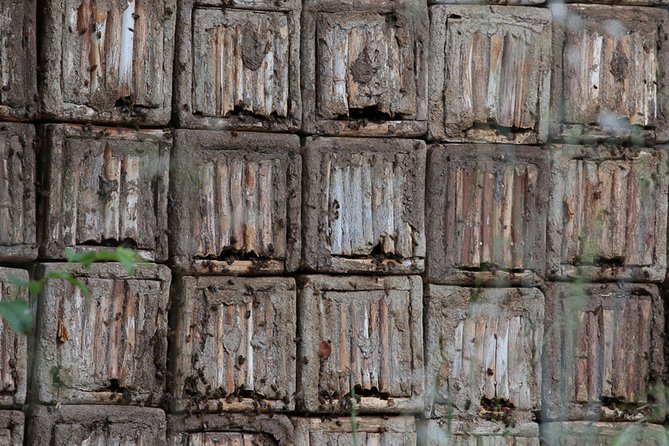
One of the more human-feeling moments is the narrow-gauge railway called Ciccio Pecora, which was in operation until the last century.
You’re still in “history,” but it stops being only ancient. Seeing a reference to an actual working system (even if you’re only seeing remains/signs) helps you understand the reserve as a living area, not a museum frozen in time.
Stop 6: botanical walks and plant uses you can repeat later
The nature side isn’t treated like background scenery. You’ll encounter Iblea endemic flora and spontaneous orchids, plus plants typical of Mediterranean scrub.
The tour also includes a theme that’s especially memorable: for each plant you’ll hear about therapeutic, officinal, phytoalimurgical, and toxic uses. Even if you’re not planning to use plants medicinally, the explanation gives you a real sense of how people historically interacted with the local environment.
Some specific nature details mentioned include:
- the oriental plane tree
- the very rare Macrostigma Trout (named in the tour description as a noteworthy fauna element)
If you’re the type who likes learning the “why” behind a place—how biodiversity and human knowledge overlap—this botanical portion is one of the main strengths.
A note on feeling confident outdoors
This is a reserve with multiple possible routes and a maximum of five kilometers total walking. Still, you’ll be on uneven terrain at least some of the time. If you want an easier day, ask about trekking poles when you book (they’re available on request). If you hate cold water or strong current, keep your swimsuit decision flexible until you see whether Calcinara is swimmable.
Optional highlights if weather permits
This tour is weather-dependent. If conditions are good, you can get a couple extras:
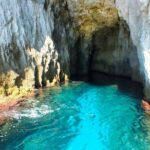
- Swim in Calcinara’s cool waters
The description flags it as optional and tied to weather. If you’re visiting in warmer months, that can turn the hike from interesting to memorable.
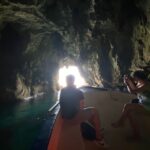
- Visit an active karst cave in the area
Also tied to weather. If it’s part of your day, you’ll get a different kind of “Sicily geology” feeling—rock, water, and underground shaping.
If the weather doesn’t cooperate, don’t assume you’ll lose the tour itself. What you lose is the added water and cave elements, and the guide will likely keep the core archaeology-and-botany plan intact.
What to bring so the day feels easy
You only walk about 5 km, but in a reserve, it’s not the same as strolling in a park. Bring:
- sturdy shoes with grip
- sun protection (even with trees, the limestone holds heat)
- a light layer for shade and breezes
- a refillable water bottle
- swim gear only if the day looks right for it
Also: pack a mindset that you’ll stop a lot. The best parts here take time—looking closely at rock-cut tombs, checking plant details, and listening for how the guide connects the dots.
Who this tour fits best (and who might want something else)
This is a strong choice if you want a blend of archaeology and nature without a punishing hike. The group size is small, the walking distance is capped, and the guide is set up to explain both the human story and the ecology story.
It’s also a good option for families, since the route is described as suitable for different difficulty levels.
You might choose a different kind of tour if:
- you want lots of free time to wander on your own
- you prefer purely scenic hiking with minimal history stops
- you’re visiting in unpredictable weather and really want the swim/cave extras
The practical side: group size, tickets, and pacing
You’ll be in a group of up to 12 travelers, which helps with both safety and conversation. You’ll use a mobile ticket.
Since confirmation is received within 48 hours of booking (subject to availability), you can line this up with other Sicily plans without needing a long wait.
And because it’s a walking-focused experience, service animals are allowed, and most people can participate. If you have specific mobility concerns, it’s worth asking directly so the route choice matches what you can handle comfortably.
Should you book Pantalica with Gregorio?
I’d book it if you want three things in one morning:
1) the scale of the rock-tomb necropolis
2) the “how people lived and worshiped here” feeling from rock churches and the Anaktoron
3) a nature portion that teaches real plant details, not just a few quick names
It’s also a good bet if you like your history guided by someone who can talk about rocks and plants in the same breath. Gregorio Chiarenza’s style is described as both expert and easy to follow, with humor that keeps the day light while still hitting the important details.
If you’re chasing a completely stress-free day with zero walking and zero talking, this may be too structured. But if you enjoy short walks with meaningful stops, Pantalica is one of those Sicily experiences that tends to stick in your head long after you leave the reserve.
FAQ
How long is the Pantalica nature history and archeology tour?
It runs for about 3 hours.
Where does the tour start?
It starts at Piazza San Sebastiano, 96010 Ferla (SR), Italy.
What time does the tour begin?
The start time is 9:30 am.
What’s the walking distance?
The walking route has a maximum length of 5 kilometers.
What is included in the price?
The tour includes trekking poles on request and uses a mobile ticket. Breakfast is not included.
What archaeological sites will we visit?
You’ll visit highlights such as the largest final bronze necropolis with 5,000 artificial cave tombs, the Byzantine villages of San Micidiario and San Nicolicchio (with 4th-century rock churches), the Anaktoron (prince’s palace), remains of a Greek trench, and the Ciccio Pecora narrow-gauge railway area.
Do we see nature and plants too?
Yes. You’ll encounter Iblea endemic flora, spontaneous orchids, and Mediterranean scrub plants, with explanations of therapeutic, officinal, phytoalimurgical, and toxic uses.
Is swimming or a karst cave visit guaranteed?
No. If the weather permits, you can bathe in the cool waters of Calcinara and visit an active karst cave.
Is the tour weather dependent?
Yes. The experience requires good weather. If it’s canceled due to poor weather, you’ll be offered a different date or a full refund.
How large is the group?
The tour has a maximum of 12 travelers. Confirmation is received within 48 hours of booking, subject to availability.