REVIEW · SICILY
Underground Catania
Book on Viator →Operated by Etna 'Ngeniousa · Bookable on Viator
Underground Catania turns the city inside out. You’ll walk where Roman bath rooms, sacred and profane layers, and lava caves sit under the street noise. I love that the tour is built around small-group access and guided storytelling by specialists like Oreste, Maria, and Mathilde.
Two things I really like: you get the kind of context that makes Catania make sense fast, and you visit underground spaces that are hard to find (and hard to understand) on your own.
One drawback to plan for: parts of the route move through narrow underground areas, so if you’re sensitive to close spaces or slower pacing, go in expecting a more thoughtful walk than a quick sightseeing sprint.
In This Review
- Key things to know before you go
- Underground Catania: What you’re really paying for
- Price and timing: 2–3 hours that fit a full day
- Meeting point in Catania’s heart: Piazza del Duomo
- Your underground route, stop by stop
- Stop 1: Terme Achilliane under the Duomo area
- Stop 2: Basilica Cattedrale di Sant’Agata—sacred and profane layers
- Stop 3: A Putia dell’Ostello and the Amenano underground river
- Stop 4: Chiesa di San Gaetano alle Grotte in a lava flow cave
- How the guide changes the experience (Oreste, Maria, Mathilde)
- The underground vibe: what to expect under Catania
- Tour size and the private vs small-group question
- What kind of traveler should book this?
- Should you book Underground Catania?
- FAQ
- How long is the Underground Catania tour?
- How much does it cost?
- What language is the tour offered in?
- Where do you meet, and where does the tour end?
- What group size should I expect?
- Are any admissions included?
- What is the cancellation window?
Key things to know before you go
- Max 8 people means you get time for questions and a calmer pace.
- English-only guided tour with expert archaeology framing.
- Tickets are included for multiple underground stops, which helps value.
- Four underground highlights connect Roman engineering, Sicily’s disasters, and early Christian tradition.
- Near the Duomo area so it fits well into a day of central Catania sightseeing.
- Service animals allowed and the meeting point is by public transit.
Underground Catania: What you’re really paying for
This isn’t a generic “check a box” walking tour. You’re paying for access to the layers of Catania you usually can’t see from street level—and for a guide who can explain why the underground exists in the first place. The price is $96.79 per person for about 2 to 3 hours, and the way it’s structured makes sense: multiple sites have entry included, and the guide time is tight enough to keep the story coherent.
The value shows up in two ways. First, the tour bundles entrance costs across different underground locations, so you’re not piecing together tickets and opening hours yourself. Second, the pacing is designed around explanation, not just photos. At stops under the cathedral area, and inside reused lava caves, it helps to have someone translate the visible stone into a timeline you can actually hold in your head.
If you’ve only got one day in Catania, this is also a smart energy move. You get a break from the heat by spending real time underground, without giving up learning.
You can also read our reviews of more tours and experiences in Sicily.



Price and timing: 2–3 hours that fit a full day
The tour runs about 2 to 3 hours. That matters because you can usually slot it before or after a surface sightseeing session around the cathedral and central streets. Start point is Piazza del Duomo, 7, and the tour ends at Piazza Stesicoro.
You’ll do four main stops, each with a set time range:
- Terme Achilliane (about 20 minutes)
- Basilica Cattedrale di Sant’Agata (about 20 minutes)
- A Putia dell’Ostello (about 10 minutes)
- Chiesa di San Gaetano alle Grotte (about 20 minutes)
So yes, there’s a rhythm. But it’s not a “rush and run.” Guides on this experience are praised for being attentive and flexible—one reviewer noted the guide adjusted timing for their needs, and another loved how the pacing still allowed time to look closely.
Meeting point in Catania’s heart: Piazza del Duomo
Your start is right in the center: Piazza del Duomo, 7. Expect to begin in a lively area where people come and go around the cathedral complex. This is helpful because you’re not dependent on a long taxi ride or complicated transit planning just to begin the tour.
End point is Piazza Stesicoro. That’s a good placement because it drops you back into an area with more options for a meal and a final evening stroll. It also means you’re not stuck far from where you’ll want to grab food or drinks after.
Your underground route, stop by stop
Stop 1: Terme Achilliane under the Duomo area
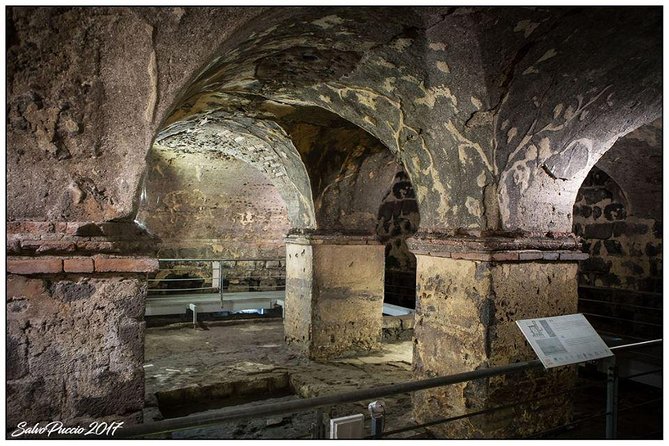
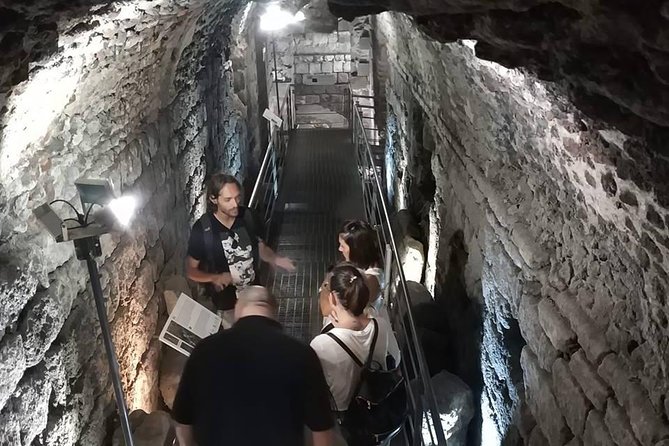
Terme Achilliane is a Vast thermal complex dating to the III–IV century AD. The key detail: this complex originally spread into the area around Piazza Duomo. The part you can access now is located just below the cathedral.
What you’ll like here is the engineering. You’re looking at how Roman-era life supported itself—heat, water systems, and architectural rooms designed for daily use. Even though only a portion remains accessible, that’s part of the fascination. You get to see the surviving slice of something much bigger that once defined this neighborhood.
Practical note: this stop includes an admission ticket. Plan for a slightly longer pause than you might expect from a quick “ruins look.” It’s one of those locations where the guide’s framing turns stone blocks into a functioning world.






Stop 2: Basilica Cattedrale di Sant’Agata—sacred and profane layers
This is the heart of the city. The Basilica Cattedrale di Sant’Agata is described as both sacred and profane, shaped by the push and pull between Norman rigor and Baroque splendor. The big idea is that you’re not just looking at one building. You’re tracing a history of destruction, reconstruction, and devotion through centuries in Etna city.
A detail that makes this stop more than “standing in front of a façade”: the cathedral connects to the story of Liotru and Sant’Agata. In other words, the underground tour isn’t just random basement sightseeing. It’s about how Catania’s religious identity and volcanic reality stayed tied together over time.
This stop is about 20 minutes, and admission is free. So you’ll get a focused orientation: what to notice above ground before you walk below again.
Stop 3: A Putia dell’Ostello and the Amenano underground river
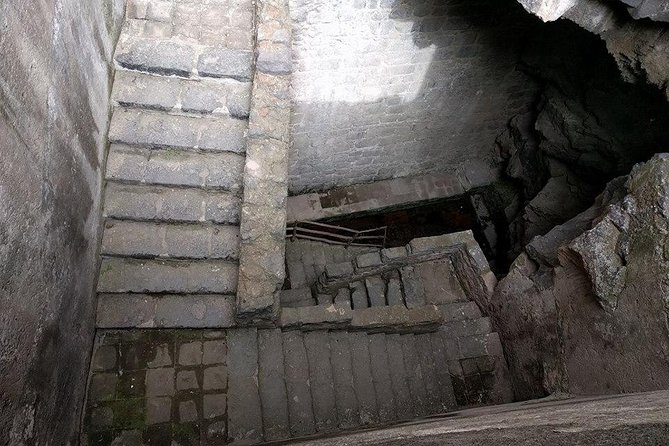
Stop three is short—about 10 minutes—but it’s the kind of stop that sticks with you. A Putia dell’Ostello takes you to an underground river called the Amenano. The river originally flowed to the surface and fed the Lake of Nicito.
Over the centuries, eruptions, earthquakes, and wars changed Catania’s urban planning and even its natural appearance. What’s left is the kind of water story you’d never guess just by looking at street maps. Here, you’ll visit a sliding cave where a branch of the river still flows.
This stop is the perfect bridge between “history lesson” and “wow moment.” A guide helps you understand that underground water routes weren’t just geography—they shaped where people built, how they survived, and what the city became after major disruptions.
Admission is included here too, so again, you’re getting ticket value for the time spent.
Stop 4: Chiesa di San Gaetano alle Grotte in a lava flow cave
If you want the emotional highlight, this is often the one. Chiesa di San Gaetano alle Grotte is built in an ancient lava flow cave. The cave was reused in Greek times as a cistern, then Romans adapted it as a catacomb and tomb space.
The tradition says it was the site of the first deposition of Saint Agatha. The story continues with a small church built very early—already by 262—so you’re standing in a place with layers of use across cultures.
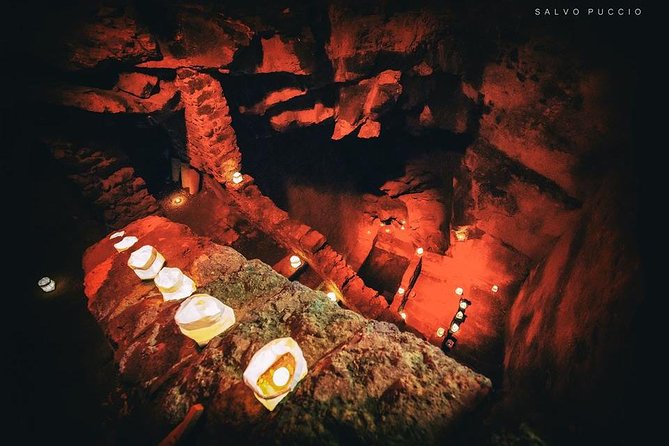
Today, the crypt preserves remains of ancient frescoes and decorations carved directly into living rock. That detail matters. You’re not just looking at a carved room. You’re seeing art and marks that survived because this environment is literally made of stone.
This stop includes an admission ticket and runs about 20 minutes. It’s also a great place to slow down. The guide can explain what you’re seeing, and you’ll likely want extra seconds to look at the carved surfaces carefully.
How the guide changes the experience (Oreste, Maria, Mathilde)
The tour leans heavily on archaeology storytelling. In reviews, guides like Oreste, Maria, and Mathilde get praised for making connections clear and answering questions with confidence.
That’s not a small thing. Underground sites are easy to misunderstand. From a distance, you might see stonework or cave walls and think it’s random. A good guide turns it into cause-and-effect: Roman engineering meets volcanic disruption, religious survival meets reconstruction, and the city grows upward because the past is literally under your feet.
I like tours where the guide doesn’t just recite dates. Here, the focus is on how and why Catania changed—especially under pressure from earthquakes and the 17th-century volcanic era. That context helps you see today’s layout as the end result of long-term adaptation.
The underground vibe: what to expect under Catania
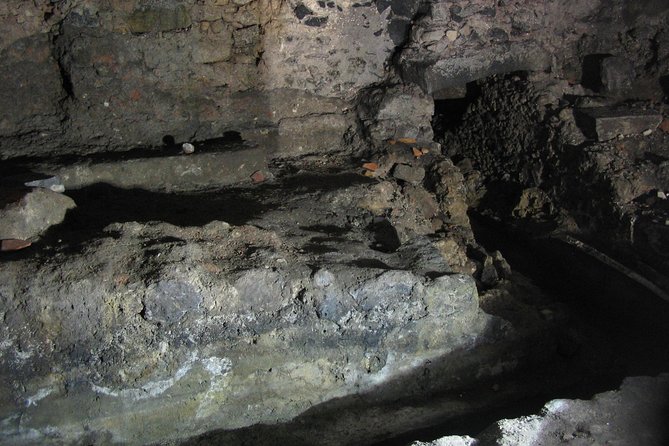
The “underground” part isn’t one single uniform experience. You’re moving between thermal rooms under the Duomo area, a water cave connected to the Amenano river, and lava-cave religious spaces with catacomb history. Each has its own feel.
Expect things like:
- Lower light underground, so rely on the guide’s pointing and explanations more than your own guessing.
- Tighter movement in cave-like areas, where the pace tends to be slower by design.
- A cooler break from the heat, which multiple people appreciated as a welcome shift during warmer days.
If you’re short on time or tired from surface walking, this is a strong option because the time underground is still productive. You don’t feel like you’re “waiting out the weather.” You’re actively learning while staying comfortable.
Tour size and the private vs small-group question
The experience is described as private for your group, but it also has a maximum of 8 travelers. That can create confusion if you’re expecting one party in a totally empty world.
Here’s my practical advice: if you care a lot about private-only logistics, confirm how the operator defines your format at booking time. The safe assumption based on the cap is that this stays small, but you might not always have a perfectly isolated guide-and-party setup.
On the upside, that cap helps explain why guides get consistent praise for Q&A and attentiveness.
What kind of traveler should book this?
Book Underground Catania if you:
- Want a strong orientation to Catania without spending your whole trip on volcano logistics.
- Like history that explains cause and effect, not just dates.
- Prefer learning in a smaller group with room to ask questions.
- Enjoy archaeology and geology connections—Roman thermal planning plus lava-cave reuse plus disaster-driven change.
If you’re the type who wants ultra-fast “big sights only” touring, this may feel too focused. It’s not a long list of surface landmarks. It’s a curated set of underground chapters, and it works best when you’re in the mood to pay attention.
Should you book Underground Catania?
Yes, I think it’s a smart booking for most first-time visitors to Catania—especially if you enjoy the “under the city” angle. The strongest reason is simple: you get multiple underground experiences in one short window, and several stops include entry costs. That’s real value for $96.79 when you factor in time, access, and guided interpretation.
The main reason to hesitate is comfort with confined underground movement and the fact that the format sits between private and small-group. If you’re clear on that beforehand, you’ll likely have a very satisfying, memorable afternoon.
FAQ
How long is the Underground Catania tour?
It typically lasts about 2 to 3 hours.
How much does it cost?
The price is $96.79 per person.
What language is the tour offered in?
The tour is offered in English.
Where do you meet, and where does the tour end?
Meet at Piazza del Duomo, 7, 95131 Catania CT, Italy. The tour ends at Piazza Stesicoro, 95100 Catania CT, Italy.
What group size should I expect?
The tour has a maximum of 8 travelers.
Are any admissions included?
Yes. Admission tickets are included for Terme Achilliane, A Putia dell’Ostello, and Chiesa di San Gaetano alle Grotte. Admission for the Basilica Cattedrale di Sant’Agata is free.
What is the cancellation window?
You can cancel for a full refund up to 24 hours in advance of the experience start time.