REVIEW · SICILY
Classical Ortigia Guided Group Tour
Book on Viator →Operated by Hermes Sicily Tourist guides group · Bookable on Viator
Syracuse makes sense fast. In about two hours, this guided stroll through Ortigia links Greek origins to Baroque landmarks using clear, walkable stops and photo-friendly pacing. I love how the guide, Eva, explains what you’re looking at—starting at the Temple of Apollo—so the city’s layers click into place. I also like the balance: big set-pieces like Piazza Duomo and the optional Syracuse Cathedral interior, plus smaller details that make Ortigia feel lived-in.
One drawback to plan for: it’s a mostly outdoor walking tour, so if weather turns or you’re sensitive to heat, the short format can feel a bit tight. Also, the cathedral interior is optional and costs 2 euros extra, so decide ahead of time if you want to go in.
In This Review
- Key highlights you’ll feel on the ground
- Ortigia in Two Hours: what this walk actually covers
- Temple of Apollo (Apollonion) to Palazzo Montalto: tracing the city’s layers
- Fontana di Diana and Piazza Archimede: myth meets street-level views
- Piazza Duomo and Syracuse Cathedral: Baroque on ancient Greek stone
- Chiesa di Santa Lucia alla Badia: Caravaggio’s painting stop
- Fonte Aretusa to Cala Rossa: papyrus plants and the sea air
- Giudecca district finale at Fish bar La Via Della Giudecca
- Price and value: where $30.12 fits, and what to budget for
- What to expect from the guide and the pacing (Eva’s style)
- Who this tour suits best (and who might not love it)
- Should you book Classical Ortigia Guided Group Tour?
- FAQ
- How long is the Classical Ortigia Guided Group Tour?
- Where does the tour start and end?
- Is the cathedral interior visit included?
- What language is the tour offered in?
- What is the group size limit?
- Are radio receivers provided?
Key highlights you’ll feel on the ground
- Eva’s explanations connect each stop to the next, so Ortigia reads like a story instead of a checklist
- Small group size (max 20) keeps the pace comfortable and leaves time for photos
- Radio receivers (when needed) help you hear the guide even when the group stretches
- Optional Syracuse Cathedral entry lets you choose between inside viewing or a quick coffee break
- Aretusa by the sea brings you to papyrus plants and the romantic myth tied to the spring
- Giudecca finale ends in the old Jewish quarter area, near Fish bar La Via Della Giudecca
Ortigia in Two Hours: what this walk actually covers
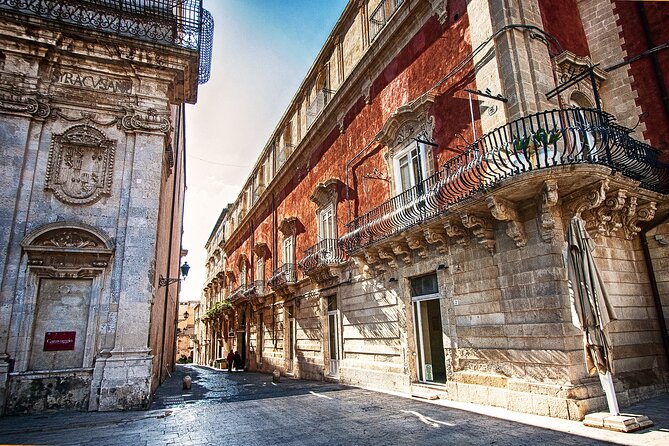
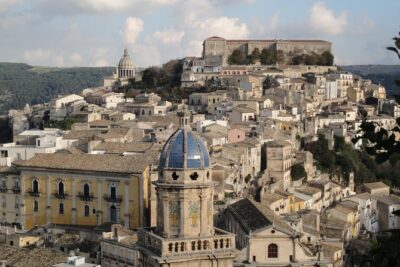
This tour is built for orientation. You don’t just see famous places—you learn how Ortigia’s Greek beginnings, medieval streets, and Baroque landmarks fit together along a route you can later repeat on your own.
The timing is practical: it runs around two hours, with short stays at each key stop. Many stops are free to enter. The only extra cost mentioned is the optional interior visit to Syracuse Cathedral (2 euros per person). That structure matters because it keeps the tour moving without turning every moment into a ticket line.
The tour starts at the Temple of Apollo (Apollonion) in Syracuse (96100). It ends at Piazza Archimede area near Archimede. Meeting in the right place also helps; you begin at a major landmark, so your “first impressions” are anchored.
You can also read our reviews of more guided tours in Sicily


Temple of Apollo (Apollonion) to Palazzo Montalto: tracing the city’s layers
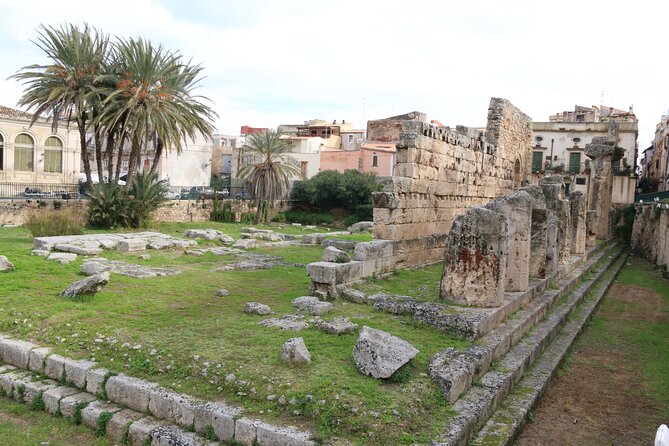
The first stop is the Temple of Apollo, where the guide sets the scene for the origins of the Greek city. You’ll hear what to notice about the temple dedicated to the god of light, and why it matters for understanding Ortigia overall. Even if you’ve passed by temples before, this stop gives you a simple “read” for the stone and the symbolism—light, power, and civic life.
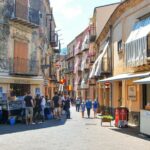
You then move into the alleys toward Palazzo Montalto. This is where Ortigia feels most like real neighborhoods. The route takes you through narrow streets and the ancient Spirduta district, then to the medieval Palazzo Montalto. Urban legends and medieval details are part of the pitch here, and that’s useful: it gives texture beyond dates and names.
A practical tip: with a walking tour, your best ally is eye-level attention. Don’t treat these early stops like a photo sprint. Pause long enough to look at the building edges, street shape, and how the alleys funnel you forward. That’s where the guide’s story connects best.
Fontana di Diana and Piazza Archimede: myth meets street-level views
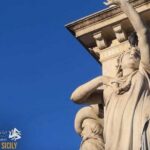
Next comes Piazza Archimede, where you reach the Fontana di Diana. This is a neoclassical fountain surrounded by the kind of suggestive buildings that make Ortigia feel theatrical even at normal street pace.
What I like here is the way a fountain becomes more than a photo point. You’ll learn how the square frames the scene and how Diana connects to the area’s legends. The tour keeps this stop short—about 10 minutes—so you get just enough to understand why the fountain is placed where it is, without losing momentum.
Then the tour continues through suggestive alleys that lead toward the heart of the historic center. This section is important because it teaches you the geography. You’ll start to recognize where the “center” is by feel, not just by map pins.
If you like taking pictures, bring your patience for this in-between walking time. The most photogenic corners often appear before you even reach the next official landmark.
Piazza Duomo and Syracuse Cathedral: Baroque on ancient Greek stone
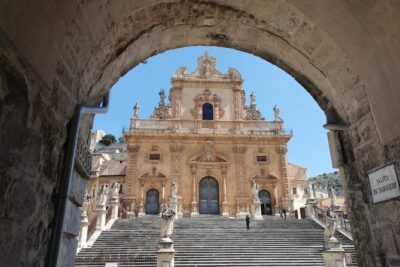
Piazza Duomo is the beating heart of Syracuse on this route. You admire the sumptuous square and the buildings around it—then you step into the key cathedral conversation.
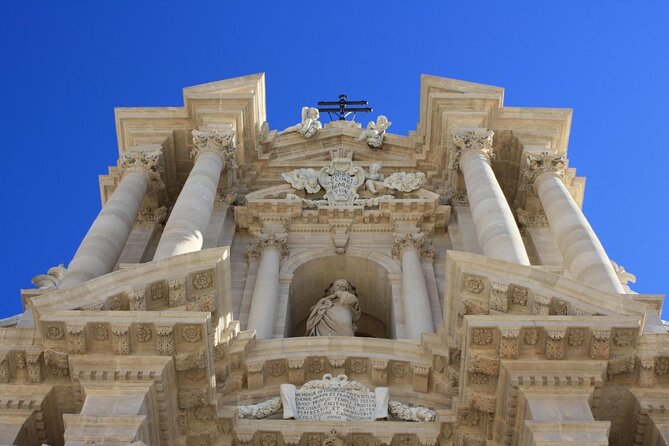
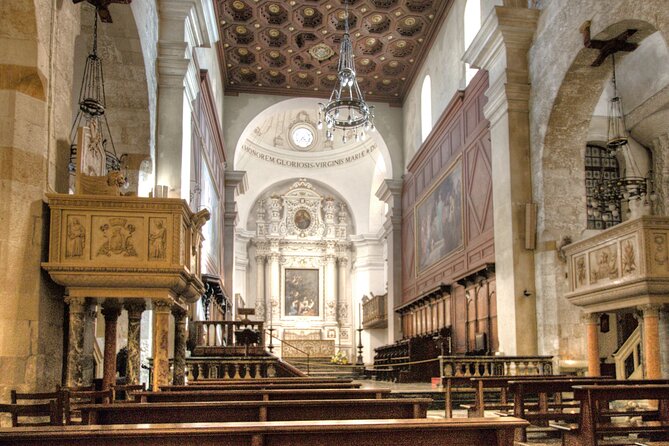
The Syracuse Cathedral stop focuses on something special: it’s a Baroque-style cathedral built on an ancient Greek temple. That’s the kind of fact that can sound abstract until your feet are in the space. Here, the guide helps you understand how one era ends and another takes over, so the mix feels logical rather than random.
Inside visit is optional. If there are no religious functions, you can visit the interior, but the entrance ticket is not included. The cost is 2 euros per person. If you prefer not to go in, you’ll get a short break for a coffee moment.
This is where you get to choose your travel style:
- If you want maximum atmosphere, take the optional interior visit when it’s available.
- If you’d rather keep the pace and avoid waiting, use the time for a quick reset outside.
Either way, you leave with a clearer sense of why this cathedral is so frequently highlighted. It isn’t just ornate; it’s layered.
Chiesa di Santa Lucia alla Badia: Caravaggio’s painting stop
After Piazza Duomo, the tour heads to Chiesa di Santa Lucia alla Badia. This is one of the stops that makes the tour feel “worth it” even if you’ve visited Ortigia for a day already.
The guide explains the important religious holiday connected to the church and points out the most important painting of Syracuse: a work by Caravaggio. Even if you don’t go hunting for extra art afterward, this gives you a strong anchor. Caravaggio is a familiar name to many visitors, but the tour helps you connect the name to a specific place and tradition you can recognize on-site.
This stop is around 15 minutes, and it’s paced so you can absorb the context without feeling shoved along. If you’re the kind of traveler who likes art, you’ll probably want to linger longer—but the group route keeps things moving so you can still reach the sea.



Fonte Aretusa to Cala Rossa: papyrus plants and the sea air
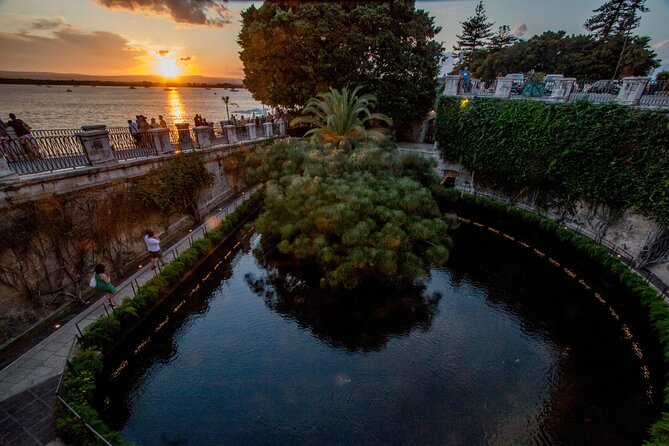
Then you shift toward the water. Leaving Piazza Duomo, you’ll reach Fonte Aretusa, the legendary spring by the sea. You’ll see papyrus plants and hear the romantic myth linked to the place.
This stop changes the mood. Up to now, you’ve been in stone-and-streets mode. At Aretusa, you get a sensory shift: the sea horizon and the living plants. The myth part also helps you “see” the area differently—like you’re not just looking at a pretty spot, but at a story people have attached to this exact shoreline.
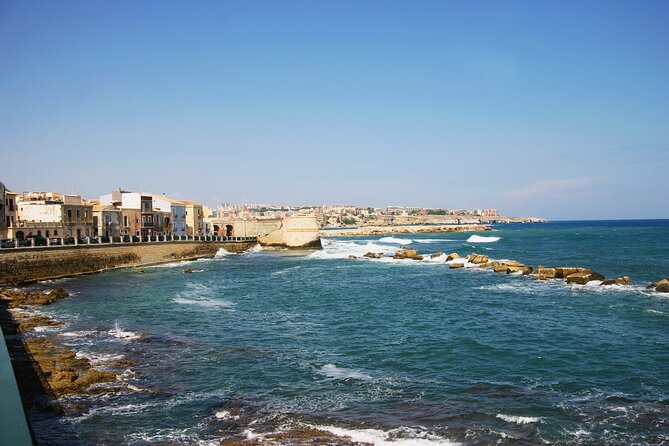
Next is the Lungomare di Levante Ortigia, crossing the island to the eastern promenade and the small beach of Cala Rossa. This portion is short—about 10 minutes—but it’s a smart finish-to-the-midgame. You’re not asked to commit to a long swim or long beach break. You’re simply given a taste of the coastline that makes Ortigia feel different from inland cities.
One practical note: promenade walking can be uneven or crowded depending on the time of day. Keep your footing game on and plan for brief photo pauses rather than sudden stops in the middle of foot traffic.
Giudecca district finale at Fish bar La Via Della Giudecca
The tour ends by crossing through the Giudecca district, identified on this route as the ancient Jewish quarter of Syracuse. It’s a meaningful closing stop because it shifts you from the water-and-squares highlights to a neighborhood feel—narrow, historic, and connected to how people lived.
The endpoint is at Fish bar La Via Della Giudecca. The tour information doesn’t say a meal is included, so treat it as a convenient landing spot. If you want a drink or a snack after the walk, this is a logical place to do it. If you’d rather head out immediately to explore on your own, you’ve got a spot that keeps you close to the historic center’s flow.
The best part about ending here is that it gives you options. After the guide’s route, you can continue wandering with your bearings—less lost, more free.
Price and value: where $30.12 fits, and what to budget for
At about $30.12 per person, this tour is priced like an efficient “orientation plus highlights” experience. You get roughly two hours of guided interpretation across major sights, in English, with a maximum group size of 20.
Radio receivers are included in the case of a large group. That’s not a small thing in Ortigia’s busy areas. When you can actually hear your guide without straining, you get better value out of every stop—especially when the tour is explaining the layered story behind temples and cathedrals.
The main extra expense to plan for is the cathedral interior ticket: 2 euros per person, optional. Since it’s optional, you can control your budget easily. If you’re curious about the interior and conditions allow entry, it’s a low add-on. If not, you’re not stuck—you still get the key cathedral context and an alternative short break.
My take: this is a good deal if you want meaning along with sightseeing. If you prefer to roam without structure, you might feel the stops are short. But if you like having someone connect dots, the price-to-time ratio works well.
What to expect from the guide and the pacing (Eva’s style)
The biggest “feel” difference on this tour is the guide’s ability to make quick stops land. Eva’s style, as reflected in the feedback, centers on in-depth historical perspective and clear, engaging explanations. That matters because this route is fast by design—each stop is about 10 to 20 minutes—so you don’t want generic talk.
The pacing is also built for real life. You get ample time to take photos and look around, without being rushed off a sight every few seconds. This is especially important at landmarks like Piazza Duomo and the fountain area, where it’s easy to lose track of time if you’re waiting for everyone.
You should also expect a route that blends major landmarks with smaller streets. That combination tends to make the city feel navigable afterward, which is exactly what you want from a short, guided walk.
Who this tour suits best (and who might not love it)
This tour is a strong fit if you:
- Want a guided route through Ortigia’s major points in about two hours
- Like learning how places connect across Greek, medieval, and Baroque eras
- Want English commentary with a guide you can clearly hear (radio receivers when needed)
- Prefer an optional add-on (cathedral interior) rather than guaranteed paid entry everywhere
You might be less thrilled if you:
- Want long museum-style time inside multiple buildings
- Are hoping for a beach day. You get coastal views and a small beach moment at Cala Rossa, but it’s brief
- Are traveling with very limited walking tolerance. It’s generally doable for most participants, but it’s still a walk between stops
Should you book Classical Ortigia Guided Group Tour?
If you’re short on time in Syracuse and you want Ortigia to “click,” I’d book it. You’ll get a compact route that hits the essentials: Temple of Apollo, the medieval Palazzo Montalto area, Fontana di Diana, Piazza Duomo, the cathedral’s layered story, Santa Lucia alla Badia with Caravaggio context, Fonte Aretusa and papyrus plants, the Cala Rossa promenade moment, and a Giudecca district landing.
The optional cathedral interior is the only meaningful extra cost, and it’s your call. Bring a camera, wear comfy walking shoes, and plan to treat the alleys as part of the experience—not just corridors between photos.
If weather looks iffy, keep an eye on the day-of conditions since the tour requires good weather. When it works, it’s one of the most practical ways to get oriented fast in Ortigia without turning your day into a checklist.
FAQ
How long is the Classical Ortigia Guided Group Tour?
The tour runs for about 2 hours.
Where does the tour start and end?
It starts at the Temple of Apollo (Apollonion), 96100 Syracuse. It ends near Piazza Archimede, 96100 Siracusa SR.
Is the cathedral interior visit included?
The cathedral interior is optional. The entrance ticket is not included and costs 2 euros per person.
What language is the tour offered in?
The tour is offered in English.
What is the group size limit?
This tour/activity has a maximum of 20 travelers.
Are radio receivers provided?
Radio guide receivers are provided in the case of a large group.