REVIEW · SICILY
Ancient Syracuse: private guided tour of the Neapolis archaeological park
Book on Viator →Operated by Hermes Sicily Tourist guides group · Bookable on Viator
Ancient Syracuse hits different when there’s a guide. This private tour of the Neapolis archaeological park helps you connect ruins that can look like scattered stone into a clear story of how Syracuse worked and why it mattered. You’ll get a close, walking-paced experience focused on the key monuments, with time to stop and ask questions as you go.
What I like most is the private pacing and the way your guide turns each site into something you can picture, not just read about. I also really like that the tour lines up practical highlights—Teatro Greco, the Ear of Dionysius, and the Roman amphitheater—so you’re not bouncing randomly across the park.
One thing to think about: the park entrance ticket isn’t included, so plan for ticket time and buy ahead if you want to avoid heat and lines. In the busiest months, the Greek theatre area can also be partly covered during performances, which affects what you’ll see.
In This Review
- Key points to know before you go
- Neapolis Park: the fast way to read Syracuse’s ruins
- Price and value: what $108.24 buys you
- Starting at Largo Anfiteatro and building your ancient map
- Stop 1 at Parco Archeologico della Neapolis: where the time goes
- Teatro Greco: the big Greek theatre and what seasonal coverings change
- Ear of Dionysius: legend, acoustics, and a quick win
- Ancient Greek stone quarries: the city’s building material story
- Anfiteatro Romano di Siracusa: gladiators, crowd space, and Roman reuse
- How to plan your day: tickets, heat, and comfort
- How private guiding changes what you notice
- Who this tour is best for (and who might want more time)
- Should you book this Neapolis guided tour?
- FAQ
- How long is the Ancient Syracuse private guided tour of the Neapolis archaeological park?
- Is the entrance ticket to Parco Archeologico della Neapolis included?
- Are the Teatro Greco, Ear of Dionysius, and Roman amphitheater tickets free?
- What’s the meeting point for the tour?
- Does the tour end at the same location?
- Is this a private tour?
- What language is the tour offered in?
- Will I be able to see Teatro Greco clearly during spring and summer?
- Do I need to bring comfortable shoes?
- What’s the cancellation policy?
- What if weather is bad?
Key points to know before you go
- Private walking tour means your group stays together and the guide can answer your questions in real time.
- Neapolis park is the main event, with the most time spent among the big ancient monuments.
- Teatro Greco is worth seeing, but seasonal coverings can limit how much of the seating you see.
- Ear of Dionysius is short but unforgettable, tied to Syracuse’s most famous legends.
- Roman amphitheater stop adds a different layer beyond Greek Syracuse.
- Expect walking, so comfortable shoes matter more than you might think in Sicilian summer heat.
Neapolis Park: the fast way to read Syracuse’s ruins
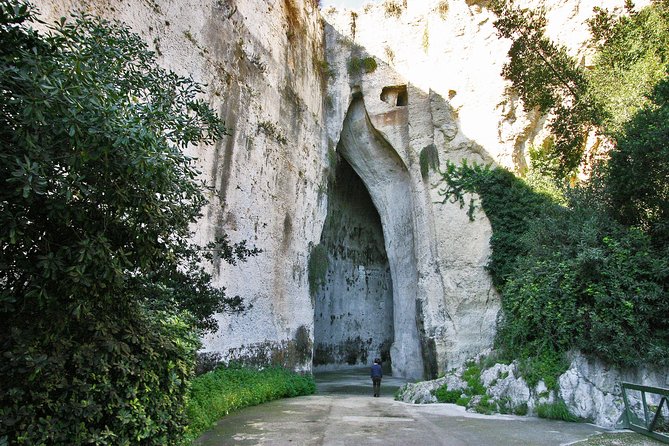
Neapolis (meaning the “new city”) is where a lot of ancient Syracuse chose to build in stone: theatres, quarries, and big civic spaces designed for crowds. Without help, it’s easy to look at one wall and wonder, Okay, but what happened here? A good guide gives you the map your brain needs—where you are, what the builders were trying to do, and how the city’s power shifted over time.
This tour is built around that idea: you walk the core areas and get context at each stop. It’s not trying to cover everything; it’s trying to help you understand the parts that matter most.
You can also read our reviews of more guided tours in Sicily


Price and value: what $108.24 buys you
At about $108.24 per person, this isn’t the cheapest way to see Neapolis. The value is in the format: a professional guide plus a private walking experience. That matters because Neapolis isn’t like a single monument you can quickly spot from the outside—most of the meaning comes from angles, layout, and details you only notice when someone points them out.
Also, the “free” stops in the schedule can help stretch your value. Even though the park admission ticket is separate, the other site visits on your walk (like the theatre, Ear of Dionysius, and the Roman amphitheater) are listed as admission free in the tour plan. Just keep in mind: the park entrance is still required for getting into the Neapolis archaeological area, unless you choose a tour option that includes tickets.
Starting at Largo Anfiteatro and building your ancient map
You meet at Largo Anfiteatro, 2, 96100 Siracusa SR, Italy, and the tour ends back there. Starting and finishing at the same point is practical when you’re trying to fit this into a bigger day—especially if you plan to combine Neapolis with a visit elsewhere in Syracuse.
From the start, the tour approach is about walking with purpose: you’re not just drifting from one attraction sign to another. Your guide’s job is to help you connect the dots—how the Greek world shaped public space, how later Roman life reused and reshaped it, and where the city’s stone resources came from.
Stop 1 at Parco Archeologico della Neapolis: where the time goes
This is the heart of the experience: Parco Archeologico della Neapolis, where you’ll spend around 2 hours seeing the main ancient monuments in the park. Admission tickets for the park are not included, so you’ll either need to buy ahead or be ready to purchase at the ticket office.
Why this stop is the most important: Neapolis is a network. The theatre isn’t isolated from the quarry story. The Roman amphitheater isn’t just a Roman replacement—it’s evidence of how the city kept reusing high-value locations and adapting old spaces to new tastes.
Practical tip: wear shoes you can trust. The whole plan is a walking tour, and Sicilian heat can turn “short strolls” into a test. Bring water, and if you’re visiting in summer, consider a small umbrella for shade.
Teatro Greco: the big Greek theatre and what seasonal coverings change
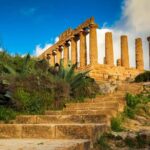
The Teatro Greco is one of the most important ancient Greek theatres in Sicily, and you’ll have about 40 minutes here. Admission is listed as free for this portion of the tour, but the important catch is visibility in warmer performance seasons.
During spring and summer, the theatre can be covered with temporary structures for staged performances, meaning you may only see part of the theatre seating from certain angles. If you’re coming because you want the classic, uncovered view, treat this as a heads-up rather than a surprise. The performances themselves can be part of what makes the theatre feel alive, but the structure can change the photo you expected.
Even with partial coverage, this is still a dramatic stop. A guided explanation helps you understand what makes an ancient Greek theatre different in design and purpose.
You can also read our reviews of more private tours in Sicily




Ear of Dionysius: legend, acoustics, and a quick win
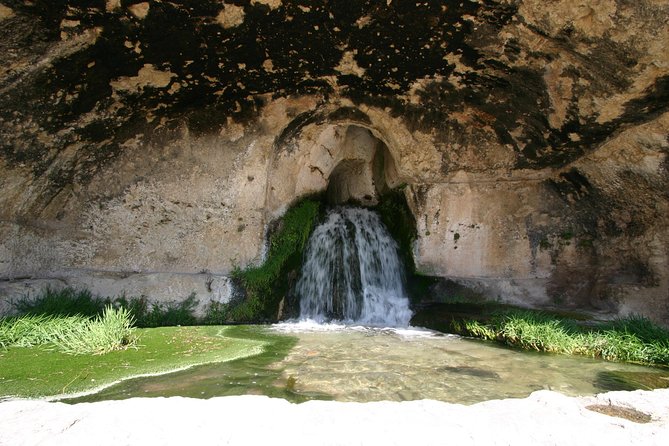
Next up is the Ear of Dionysius, a legendary Syracuse site tied to one of the city’s best-known tales. You’ll have about 15 minutes, and admission is listed as free for this segment.
This stop is short, but it tends to land because it gives you a strong sense of story and atmosphere. The name alone makes you curious, and the physical setting is the kind that helps you imagine how sound, hiding places, and power plays might have worked there. One detail that stands out from experience at this location is that the caves can have good acoustics—so even casual voices can sound surprisingly clear.
If you’re traveling with kids or anyone who gets bored easily, this is one of the better “high impact, low time” stops.
Ancient Greek stone quarries: the city’s building material story
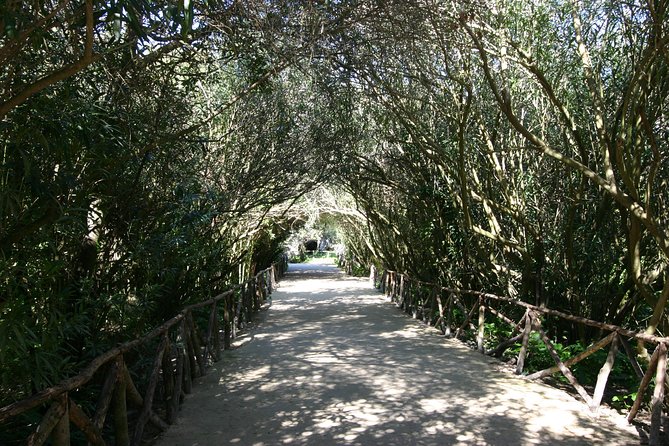
Your walk also includes the ancient Greek stone quarries. The schedule doesn’t give a set duration for this part, so expect it to be woven into the flow based on your guide’s pacing and the group’s questions.
Why quarries belong on this tour: you don’t just see Syracuse’s monuments—you get the context for how that stone was made available in the first place. When you connect the quarry setting to the theatre and amphitheater structures, the whole city starts to make more sense.
This is also a good mental pause. If the theatres and monuments feel like “big objects,” the quarries help explain the human work behind the skyline.
Anfiteatro Romano di Siracusa: gladiators, crowd space, and Roman reuse
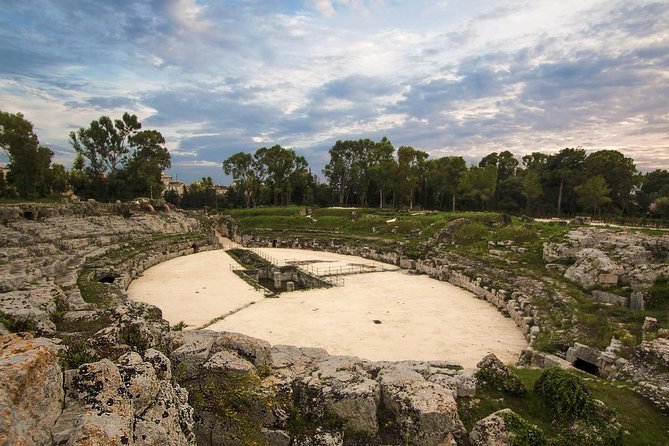
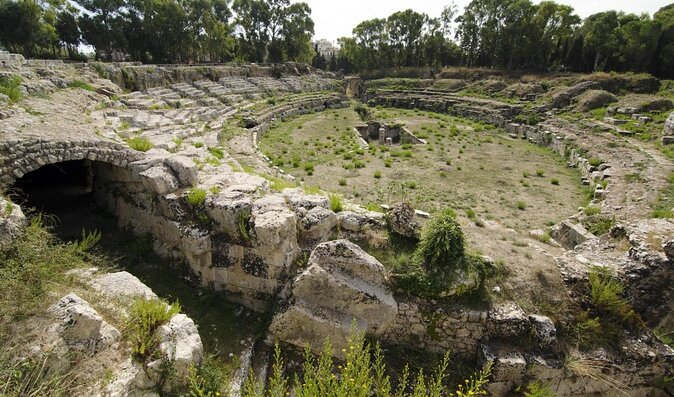
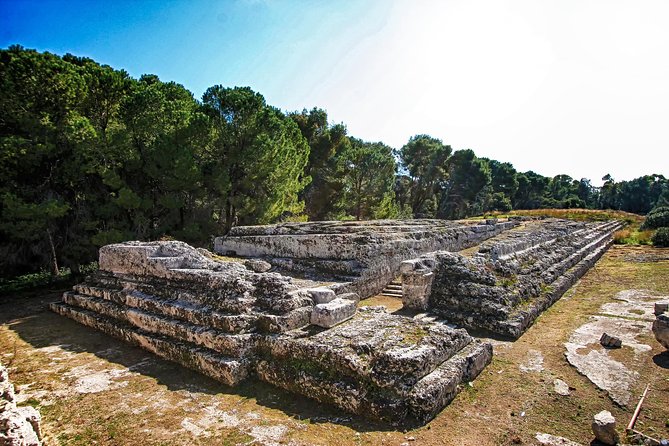
The tour wraps up with Anfiteatro Romano di Siracusa, with about 15 minutes here. Admission for this stop is also listed as free, and your guide shares what the amphitheater meant in Roman life, including stories tied to gladiators and public spectacle.
This is a smart counterbalance after the Greek-focused stops. You’ll see how the same general idea—space built for crowds—evolves across cultures. Even if the ruins are the ruins, the interpretation changes your view: you start noticing what the Romans kept, what they changed, and how later Syracuse expressed power through public spaces.
How to plan your day: tickets, heat, and comfort
Because the Neapolis park admission ticket is not included, you should treat ticket time as part of your day, not an afterthought. If you’re sensitive to heat or you don’t want to waste time standing around, buy the park ticket in advance if that option is available to you.
Also, arrive with your plan for the meeting point. The tour starts at Largo Anfiteatro, 2, and it ends there too. If you want the full benefit of a private tour, show up on time so your guide doesn’t have to adjust to a moving target.
A few comfort basics:
- Comfortable walking shoes are recommended for a reason.
- Bring water and sun protection in summer.
- If you want photos, plan to pause more often than you think—Ruins photography is mostly about angles and stopping time, not speed.
How private guiding changes what you notice
A private tour sounds simple, but it changes the experience in practical ways. Your guide can explain where to look, what to ignore, and what questions are worth asking. This matters at Neapolis because so many ruins are “part of a system.” You’ll understand the system faster with a person speaking directly to your moment on the ground.
The best part is how the guide pacing supports real curiosity. You can ask why something was built, how it was used, or what to look for in the stone. That’s especially helpful if you’re traveling with a 10-year-old interested in history, since the tour format supports questions without turning it into a lecture.
You may encounter guides such as Eva or Martina, both of whom are mentioned as excellent examples of how fluent and engaging the interpretation can be.
Who this tour is best for (and who might want more time)
This tour is ideal if you want:
- A focused walk through the most important Neapolis areas
- Strong interpretation instead of self-guided guesswork
- A practical time length that fits into a day in Syracuse
It’s also a good choice if you’re traveling in a group that wants a calm pace. Private doesn’t automatically mean slow, but it usually means you don’t have to fight a crowd for answers.
If you’re the type who loves lingering for hours in one area, you might feel the tour is a bit tight, especially since the Neapolis park portion is listed around 2 hours and the rest compresses into shorter stops. In that case, you could pair this with additional self-time in the park after your guided walk, if you’re up for it.
Should you book this Neapolis guided tour?
I’d book it if your main goal is to understand ancient Syracuse without playing archaeological detective all by yourself. The guide-led approach turns the ruins into a readable story, and the private format makes it easier to ask questions as you walk.
I would hesitate only if you hate ticket lines or you’re traveling at a time when the theatre area being partly covered would be a dealbreaker for your expectations. If that’s you, plan around the Neapolis ticket in advance and know that theatre visibility can change in performance season.
If you’re game for a structured walk with real context, this is one of the best ways to see Neapolis with less confusion and more “oh, that’s why.”
FAQ
How long is the Ancient Syracuse private guided tour of the Neapolis archaeological park?
The duration is listed as about 1 hour 30 minutes. The schedule also indicates around 2 hours at the Neapolis park, so expect a bit of variation depending on timing in the area.
Is the entrance ticket to Parco Archeologico della Neapolis included?
No. Admission tickets for the park are not included in this tour price. (There may be a Tour + Ticket option, but the standard plan described does not include the entry ticket.)
Are the Teatro Greco, Ear of Dionysius, and Roman amphitheater tickets free?
In the tour plan, those specific stops are listed as free for admission. The main park admission is still the separate requirement.
What’s the meeting point for the tour?
Meet at Largo Anfiteatro, 2, 96100 Siracusa SR, Italy.
Does the tour end at the same location?
Yes. The tour ends back at the meeting point.
Is this a private tour?
Yes. It’s a private walking tour, and only your group will participate.
What language is the tour offered in?
The tour is offered in English.
Will I be able to see Teatro Greco clearly during spring and summer?
During the performance season (usually spring and summer), the Greek theatre is covered and only partially visible.
Do I need to bring comfortable shoes?
Yes. Comfortable walking shoes are recommended since it’s a walking tour through archaeological areas.
What’s the cancellation policy?
Free cancellation is available up to 24 hours in advance for a full refund. If canceled less than 24 hours before the start time, the amount paid isn’t refunded.
What if weather is bad?
This experience requires good weather. If it’s canceled due to poor weather, you’ll be offered a different date or a full refund.