REVIEW · MOUNT ETNA
Etna: Craters of the 2002 Eruption Trekking Experience
Book on GetYourGuide →Operated by Guide Vulcanologiche Etna Nord · Bookable on GetYourGuide
Etna’s 2002 scars feel close up. This guided trek on Etna’s north side brings the science of eruptions to life, from forest paths and Piano Provenzana damage to crater edges you can actually look into.
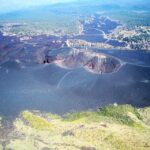
What makes it special is the mix of walkable volcanic features—lava streams, eruptive fractures, and big summit craters tied to the eruptions that reshaped this area.
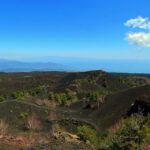
I like two things a lot: the near-up view from the eruptive theater toward the Calabrian Coast, and the way your guide points out formation details like Hornitos (small vents) and cinder-cone shapes as you hike.
This is also a more relaxed way to see Etna than slogging through big bus crowds.
One caution: the volcanic ground can be uneven and unstable, and walking near crater edges can bring dizziness for people who are sensitive—so plan with vertigo in mind.
In This Review
- Key highlights you’ll feel on this trek
- Why Etna’s north side and the 2002 craters still matter
- Meeting at Chiosco Bar Mareneve and timing the 3-hour window
- From the Piano Provenzana dirt road to the Hotel dell Betulle ruins
- Forest paths, lava streams, and eruptive fractures you can actually follow
- Hornitos and cinder cones: the best “walkable geology” section
- Summit crater edges and the sandy channel return
- What to bring for safety and comfort on volcanic ground
- Guide energy, humor, and pacing that keeps you feeling safe
- Who this trek is best for (and who should skip it)
- Value check: what you get for about $41 per person
- Should you book this Etna craters trek?
- FAQ
- How long is the Etna: Craters of the 2002 Eruption trek?
- Where do I meet for the tour?
- What does the tour include?
- What isn’t included in the price?
- How much are trekking shoes or snowshoes to rent on-site?
- Is the tour suitable for kids?
- Who should avoid this hike?
- What should I wear and bring?
- Are there any items that aren’t allowed?
- Can I cancel for a refund?
Key highlights you’ll feel on this trek
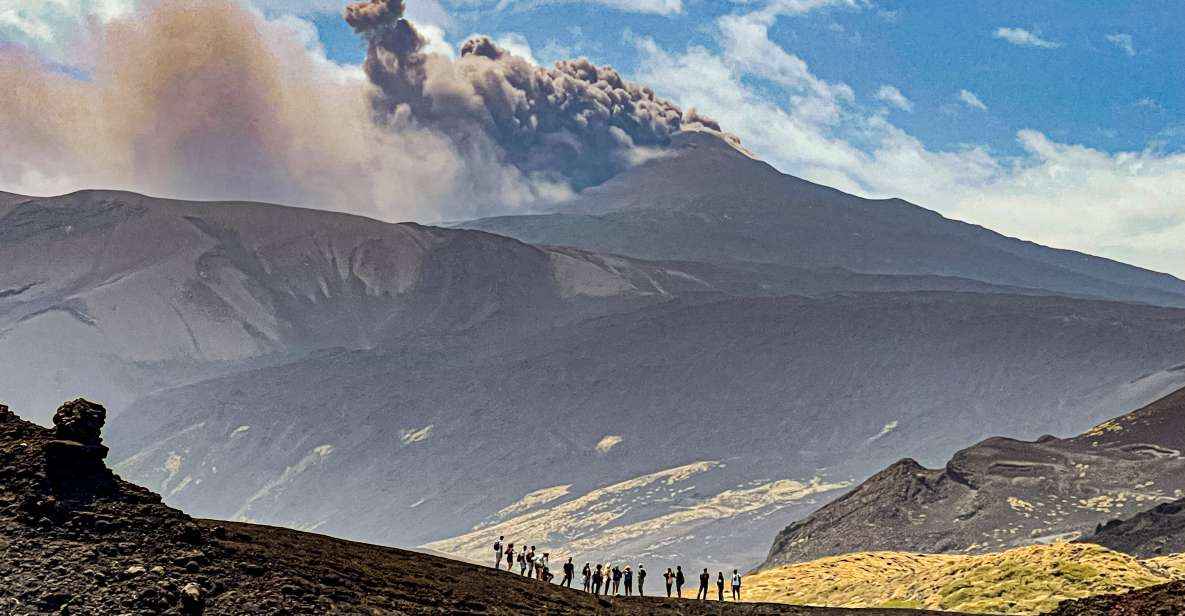
- 2002 eruption craters: see the scale of the event that destroyed Piano Provenzana
- A guided “read” of volcanic shapes: Hornitos, fractures, cinder cones, and more
- Forest-to-lava variety: you don’t just stare at rock; you move through it
- Views over the eruptive theater and Calabrian Coast when weather plays nice
- Smaller-group feel: the hike route is designed to keep you away from the largest tour swarms
Why Etna’s north side and the 2002 craters still matter
Etna is active in a way most volcano experiences can’t match. On this hike, you’re not studying fossils or distant history—you’re walking through terrain shaped by a recent, powerful event. The focus is the north side, where repeated eruptions left clear evidence, including the eruption that threatened the city of Linguaglossa.
The best part is how the walk turns “volcano talk” into something physical. Lava streams and eruptive fractures aren’t just scenery; your guide helps you read what they mean, then you move toward the crater zone where the story comes into focus. Even if you’ve seen Etna before, this kind of route gives you a different angle—closer, quieter, and more hands-on.
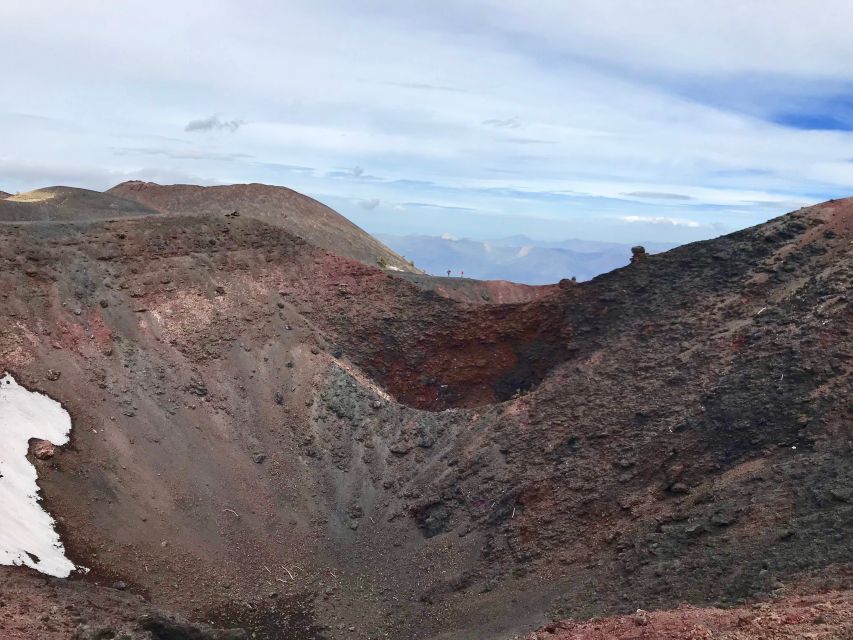
And yes, you’ll get that moment when you stand near the summit craters and look over the edge. It’s the kind of view that makes the science feel real, not abstract.
You can also read our reviews of more hiking tours in Mount Etna
Meeting at Chiosco Bar Mareneve and timing the 3-hour window
You meet at Chiosco Bar Mareneve, not Chiosco Bar Etna Nord (which is in the lower parking lot). The right spot is near the chairlift used by skiers in winter, and it’s the second house of the four present in the parking area.
The hike is listed as about 3 hours, but the real duration depends on pace and conditions. Expect stop-and-explain rhythm rather than nonstop walking. That’s a good thing here: Etna rewards attention, and volcanic terrain is easiest to understand when you pause.
One practical note: the trek requires a minimum of 4 participants. If you’re booking close to your trip dates, check starting times and availability so you don’t get stuck waiting for a group to fill.
From the Piano Provenzana dirt road to the Hotel dell Betulle ruins
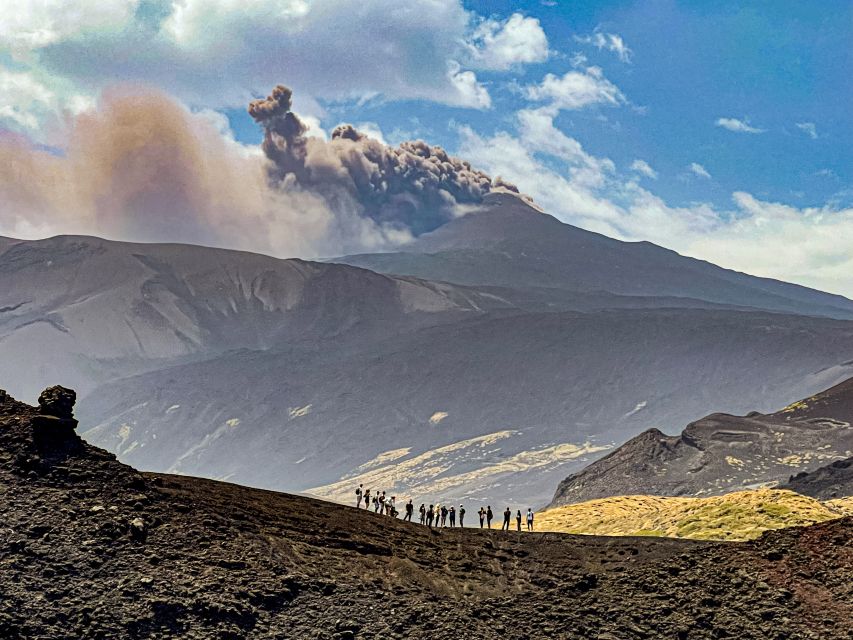
The route begins along a dirt road that leads from Piano Provenzana toward the summit craters. This is where the landscape starts teaching you, because the ground changes underfoot as the geology shifts from forested areas to more raw volcanic terrain.
About halfway through your early climb, you stop at the ruins of the Hotel dell Betulle. It’s the only visible structure remaining from the lava flow associated with the 2002 eruption. That makes this stop more than a photo moment: it’s a stark scale-check for how fast and forceful volcanic change can be.
What I like about starting with this kind of anchor is simple: it gives context before you start scanning details like fractures and vents. You’ll understand what you’re seeing later, because you’ve already been shown what changed and what survived.
Forest paths, lava streams, and eruptive fractures you can actually follow
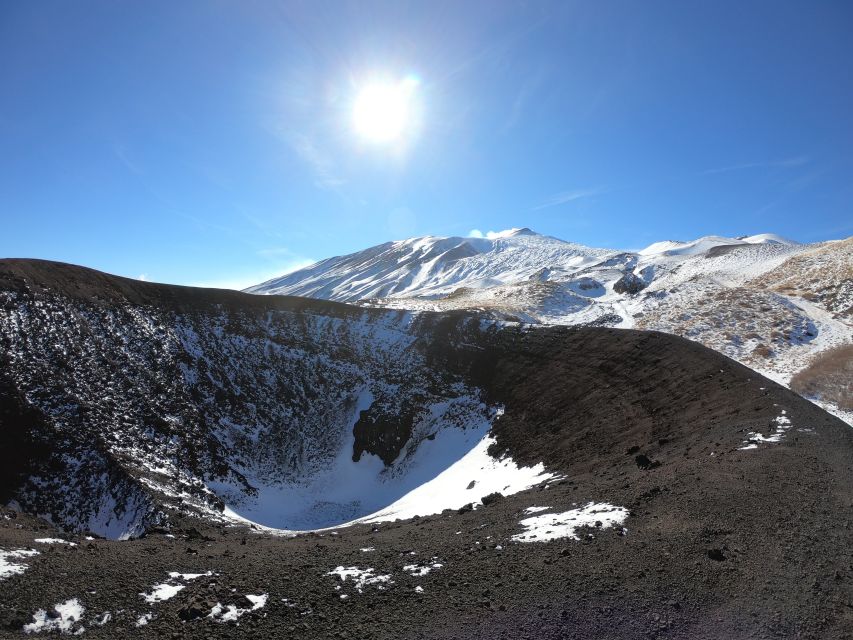
After you leave the initial road segment, your trek crosses forest areas, then transitions into zones shaped by flow and rupture. You’ll walk through eruptive fractures and stare at lava streams—things you might normally only see from far away on road viewpoints.
This is where the guide matters. A good guide doesn’t just name features; they connect them. As you walk, you’ll learn how the north side records multiple eruptive phases over time, with flank eruptions leaving especially visible evidence. The route is designed so you’re not passively watching rock—you’re tracing patterns.
One drawback to keep in mind: volcanic soil can be inconsistent and unstable. That means your pace is often slower than you expect, even on a “medium training” hike. It’s not about being slow—it’s about staying sure-footed.
If it’s windy, you’ll likely feel it in open crater or summit areas. In that case, a windbreaker isn’t a luxury; it’s your comfort and control tool.
Hornitos and cinder cones: the best “walkable geology” section
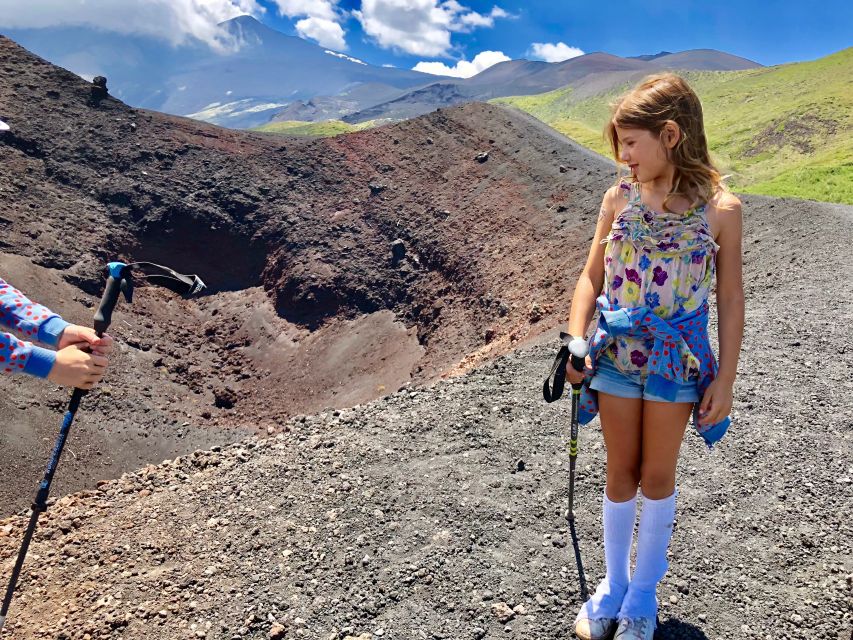
One of the most interesting parts of this trek is the focus on structures called Hornitos—small vents. The word points to something smaller than the big crater systems, and that’s the point: you’re seeing how eruptions vent in different ways, not just as one dramatic moment.
You’ll also go up along cinder cones. These are the stepped, crumbly-looking forms that help you picture how material built up as eruptions played out. Instead of treating them as generic hills, your guide helps you understand them as part of the eruption plumbing and depositional story.
This is also the section where you’ll feel the climb most. You’re not doing a technical hike, but you are climbing and walking over volcanic ground that can shift. If you get dizzy easily, pace yourself and keep your eyes on stable footing when you’re moving through steeper sections.
Summit crater edges and the sandy channel return
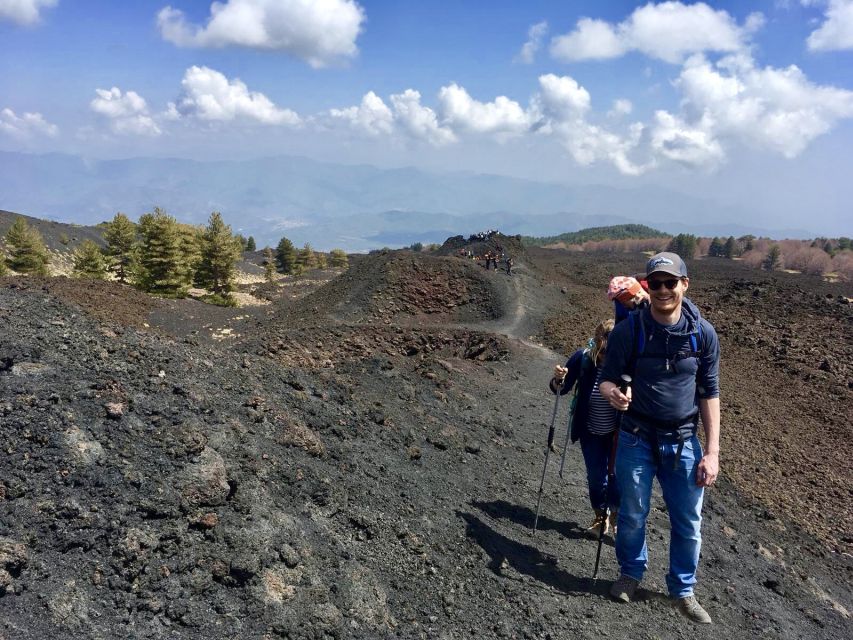
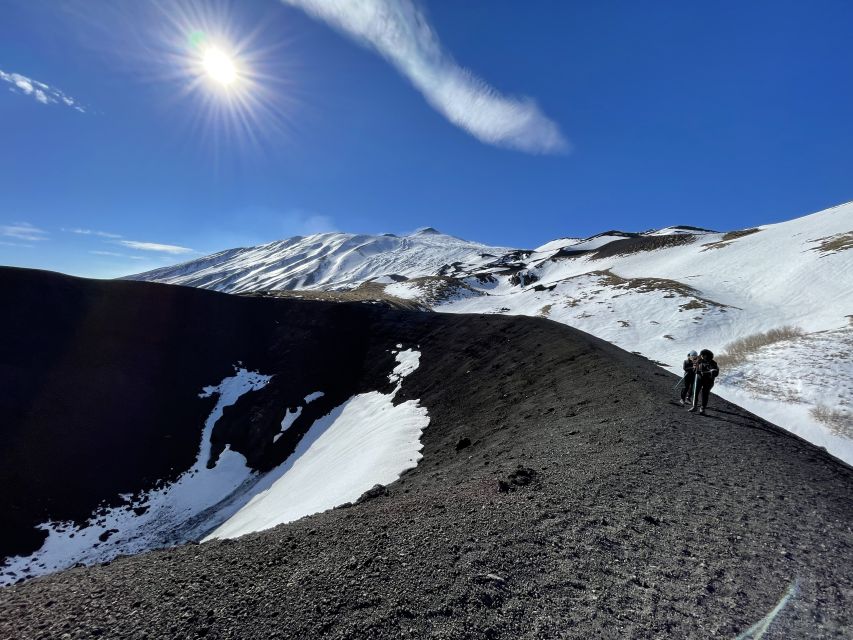
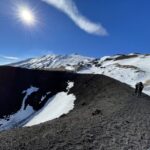
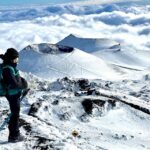
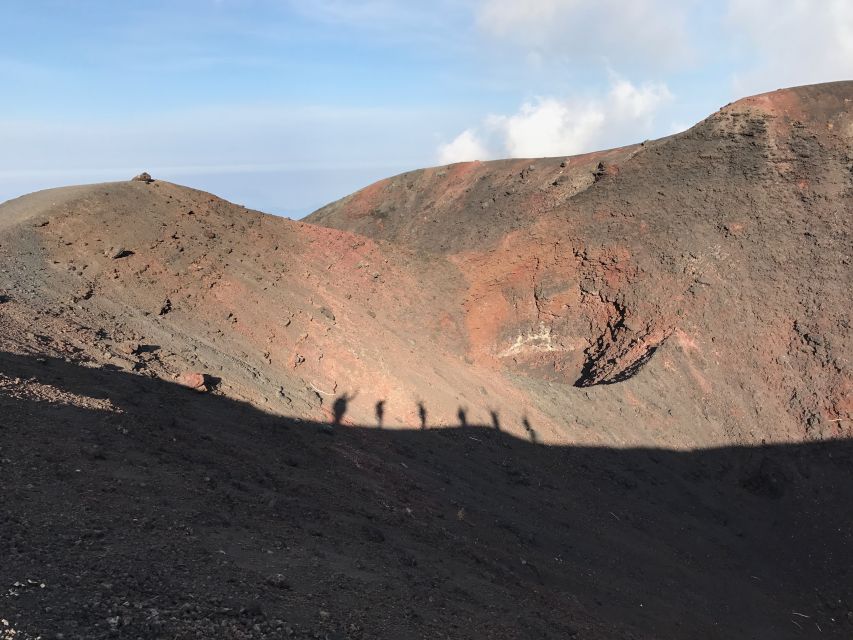
At the summit, you reach the craters and the kind of view that makes the whole trek click. You look over the edge of the crater system and take in the broader eruptive theater toward the coast.
This is also where the “don’t rush” rule becomes real. The route includes walking along crater edges, and that can cause dizziness for susceptible individuals. If you have any vertigo tendencies at heights, use extra care—and consider whether you want this kind of exposure in the first place.
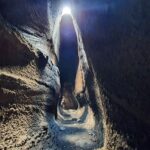
Then comes a practical design choice for the return: you go down inside a sandy channel back toward the starting point. The return route matters because sandy channels can feel loose underfoot. Good shoes help here, and you’ll appreciate the guide’s pace guidance when the footing gets slick-sandy.
What to bring for safety and comfort on volcanic ground
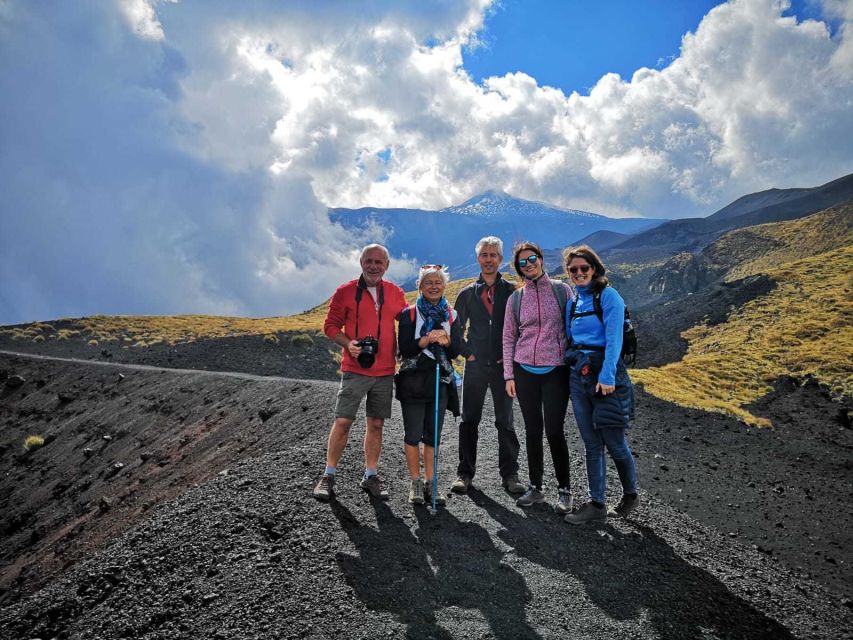
You’ll get the most out of this hike if you dress for wind, changing footing, and sun. Bring:
- Windbreaker (especially important at higher elevations)
- Sunglasses and sunscreen
- Water and snacks
- Hiking shoes with adequate grip
- Jacket and comfortable clothes suited to the season
- A daypack
Some items aren’t included and can make your hike smoother if you plan ahead. Trekking shoes can be rented on-site for €5 per pair at authorized rentals. If you’re hiking in winter months (December through March), snowshoes may be needed and are rented on-site for €12 per person.
Also, don’t show up with the wrong footwear. High-heeled shoes, sandals/flip-flops, skirts, slippers, and large bags/luggage are not allowed. And one safety point worth repeating: without adequate shoes, you’re not covered by insurance. That’s not a scare tactic; it’s just how the safety system works on uneven volcanic ground.
If you forget something small like a jacket, some guides have been known to help out with spare gear. Don’t bank on it—but it’s a nice reminder that good guides think ahead.
Guide energy, humor, and pacing that keeps you feeling safe
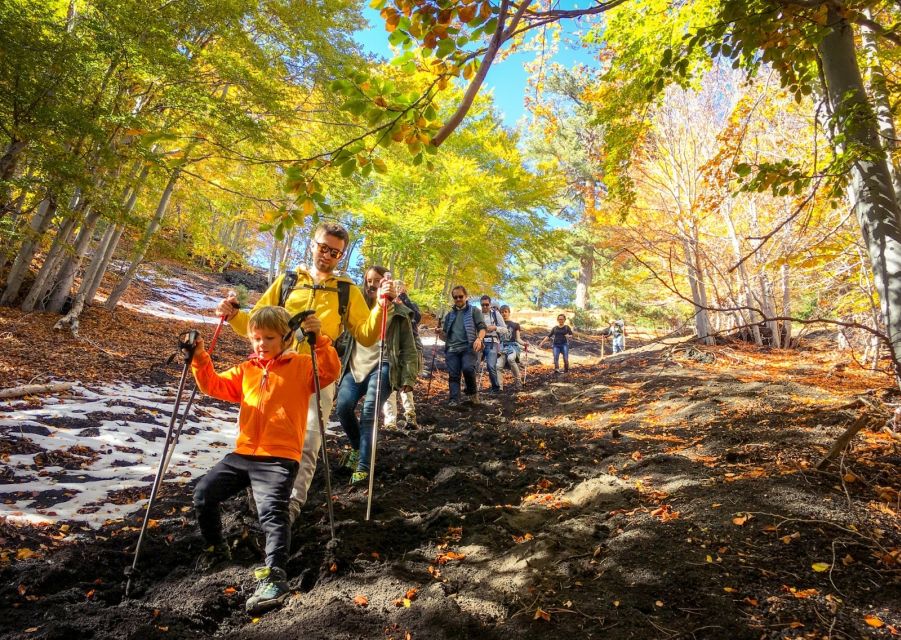
This is a live guided experience with an official volcano guide, offered in Italian, French, or English. The guides often blend scientific explanation with a lighter tone, which helps when you’re walking for hours in a place that can feel intense.
You may meet guides such as Daniele, Davide, Vincenzo, or Niko, and the common thread is clear: they focus on safety, keep the group moving at a workable pace, and explain what you’re seeing in a way that sticks. If you’re traveling at a slower speed, you can still make it—just expect it to be a steady, stop-and-learn style hike.
A key benefit: people tend to feel secure when the guide’s prepared. Having the right gear and a calm route approach makes a difference on lava terrain.
Who this trek is best for (and who should skip it)
This hike is reserved for hikers with medium training. You don’t need to be a mountain athlete, but you do need comfort walking on uneven, potentially unstable volcanic soil.
It’s not recommended for:
- Children under 6
- Pregnant women
- People with back problems, mobility impairments, heart problems, respiratory issues, epilepsy
- People afraid of heights or with vertigo
- People who may not handle the crater-edge walking well
If you want an educational excursion that shows you the products of major eruptions, this is a strong fit. If you’re nervous around heights or you get dizzy from edge exposure, be honest with yourself. This isn’t a gentle stroll, even if the time on paper is short.
One more “think ahead” detail: the route can vary, and guides can interrupt the excursion due to environmental, climatic, or volcanic conditions. That’s normal on an active mountain. Your best move is to dress so you can handle changing weather.
Value check: what you get for about $41 per person
At about $41 per person for roughly 3 hours, you’re paying for three things: an official volcano guide, insurance in case of accidents, and a route that takes you into the crater zone with education built in. That’s not just “a walk with someone talking”—it’s access to guided interpretation of specific volcanic forms tied to eruptions in recent years.
Your biggest extra costs are predictable:
- Parking ticket of €3 for the whole day (paid after the excursion)
- Trekking sticks not included
- Snacks and bottled water not included
- Shoes rental €5 if you need it
- Snowshoes €12 per person in winter months
- Gloves/hat not included in winter/spring/autumn
So is it worth it? For me, yes—if you show up prepared with shoes and weather gear. The value jumps because the guide isn’t giving generic Etna facts. You’re seeing the 2002 eruption footprint, stopping at the Hotel dell Betulle ruins, and walking through crater-edge terrain where the story becomes visual.
If you’re traveling without the right footwear or you’re skipping basic comfort items like a windbreaker, the “cheap hike” math can flip fast. Plan gear first, then book.
Should you book this Etna craters trek?
Book this trek if you want an active, guided way to understand Etna’s north side, especially the 2002 eruption impacts. You’ll get strong educational payoffs: lava streams, eruptive fractures, Hornitos, cinder cones, and summit crater views tied to real events like the destruction at Piano Provenzana and eruption effects near Linguaglossa.
Skip it if you’re likely to struggle with uneven footing or if crater-edge heights make you dizzy. Also skip if you don’t feel confident hiking on volcanic soil even with good shoes.
If you’re the kind of traveler who likes science you can see, and you want a route that feels away from the biggest crowds, this is a smart choice. Just come prepared—your comfort and insurance coverage depend on it.
FAQ
How long is the Etna: Craters of the 2002 Eruption trek?
It’s about 3 hours. Starting times depend on availability.
Where do I meet for the tour?
Meet at Chiosco Bar Mareneve (not Chiosco Bar Etna Nord). It’s near the winter chairlift, and it’s the second house among the four in the parking lot.
What does the tour include?
You get an official volcano guide and insurance in case of accidents.
What isn’t included in the price?
Trekking sticks, a parking ticket (€3), snacks, bottled water, trekking shoes rental (if needed), and cold-weather items like a windbreaker, gloves, or a hat (especially in winter/spring/autumn).
How much are trekking shoes or snowshoes to rent on-site?
Trekking shoes can be rented on-site for €5 per pair. Snowshoes are rented on-site for €12 per person during winter months (December, January, February, and March).
Is the tour suitable for kids?
It isn’t suitable for children under 6 years old.
Who should avoid this hike?
It’s not recommended for pregnant women, people with back problems, mobility impairments, heart problems, respiratory issues, epilepsy, or anyone afraid of heights or with vertigo.
What should I wear and bring?
Bring a windbreaker, sunglasses, sunscreen, water, snacks, hiking shoes, a jacket, comfortable clothes, and a daypack. The volcanic soil can be unstable, so good footwear is important.
Are there any items that aren’t allowed?
No high-heeled shoes, sandals/flip flops, baby strollers, luggage or large bags, skirts, or slippers.
Can I cancel for a refund?
Yes. You can cancel up to 24 hours in advance for a full refund.