REVIEW · SICILY
Etna Morning Tour (starting from Catania)
Book on Viator →Operated by Etnavic · Bookable on Viator
Etna has a way of making Sicily feel real fast. This Catania-based small-group morning tour mixes easy high-altitude walking, real volcanic sites, and a local tasting stop—without wasting time.
I especially like the lava-tube visit with provided helmets and flash lights, plus the way the route strings together multiple Etna viewpoints in a tight 5–6 hour window. The free tasting at Oro d’Etna also turns the drive back into a mini food break instead of a chore.
One heads-up: the crater hike includes a steep, narrow stretch, and it may not suit you if you have walking problems. There’s also no lunch or drinks included, so plan around that.
In This Review
- Key highlights if you want Etna, not a bus tour
- Why an Etna Morning Tour from Catania feels more personal than you’d expect
- Pickup and timing: what 5–6 hours really means for your day
- Catania seafront start and the Acitrezza lava stacks
- Stop 1: Craters Silvestri trek at about 2,000 m (and why it’s worth it)
- Stop 2: Inside the lava tube cave with helmets and flash lights
- Stop 3: Valle del Bove viewpoint break
- Stop 4: Colata Lavica 1992—seeing the flow edge near Zafferana Etnea
- Stop 5: Oro d’Etna farm tasting—free samples and real local flavors
- The guides: certified naturalistic experts who speak your language
- Price and value: is $102.84 a fair deal for Etna?
- Who should book this tour, and who should think twice
- Should you book the Etna Morning Tour from Catania?
- FAQ
- How long is the Etna Morning Tour from Catania?
- Where does pickup happen?
- Is pickup available from Taormina?
- What’s included during the tour?
- Does the tour include lunch or drinks?
- What group size should I expect?
- What language is the tour offered in?
- Is the tour cancellable?
Key highlights if you want Etna, not a bus tour
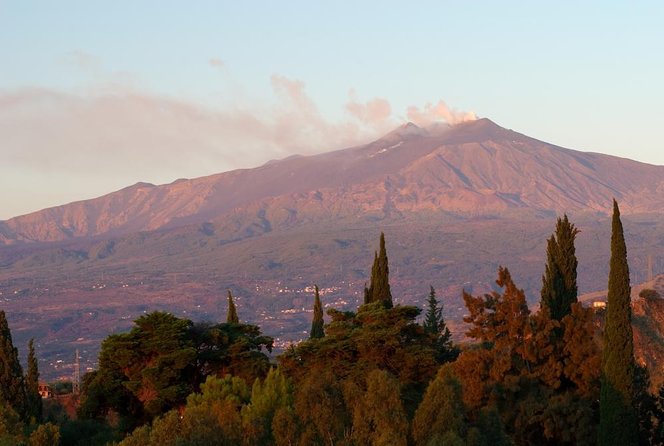
- Small-group limit (max 16) makes the day feel manageable and more conversational.
- Craters Silvestri trek: an easy-level hike at about 2,000 m, with big views if your legs are game.
- Lava tube time with helmets/flash lights so you actually see the cave, not just hear about it.
- Valle del Bove overlooks give you that huge volcanic “boiler” perspective.
- Colata Lavica 1992 stop takes you to the edge of a major lava flow.
- Oro d’Etna farm tasting is free and focuses on local products like honey, olive oil, pesto, wines, and liqueurs.
Why an Etna Morning Tour from Catania feels more personal than you’d expect
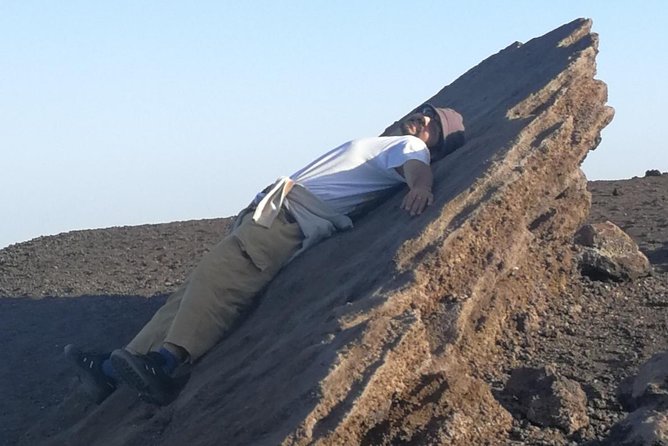
Mount Etna tours can fall into two buckets: big-group checkbox trips, or smaller outings where the guide can slow down and explain what you’re actually seeing. This one sits in the sweet spot. The tour caps at 16 people, and that size matters on Etna. You’re moving between viewpoints, climbing in short bursts, and stopping for questions—so fewer people means less crowding and more real conversation.
I also like how it starts from Catania and builds in scenic context early. Even before the hiking begins, you’re already getting your bearings: the route passes the seafront and you can spot the Acitrezza stacks, those jagged “pillows of lava” offshore.
Finally, you’re not stuck in a rigid schedule with long meals and extra waits. The format is designed to pack the volcanic highlights into about 5–6 hours, then send you back so you can use the rest of your Sicily day.
You can also read our reviews of more tours and experiences in Sicily
Pickup and timing: what 5–6 hours really means for your day
The tour includes air-conditioned vehicle transfers with a driver, and pickup is offered either at your lodging or at a pre-agreed meeting point in Catania. That’s a big deal if you don’t want to spend time triangulating bus stops and ticket counters before your climb.
A few practical notes based on what’s built into the experience:
- You should expect a full morning rhythm: car time between sites, short walking segments, and a cave visit that takes a bit of careful movement.
- Since the tour lasts around 5–6 hours, it’s usually easier to keep the rest of your day flexible—especially if you’re also doing other Sicilian plans later on.
- There’s no lunch or drinks included, so you may want to grab a light breakfast before pickup (or plan a solid meal back in Catania afterward).
One more timing advantage: the itinerary is designed so you can experience sites before they get too busy. That helps on Etna, where crowds plus heat and narrow paths can turn a good day into a slog.
Catania seafront start and the Acitrezza lava stacks
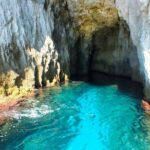
Before you’re even on the volcano, the tour gives you a quick visual story. Passing the Catania seafront, you can look out toward the Acitrezza stacks—islands/rock formations often described as pillows of lava. It’s the kind of detail that makes the rest of the day click, because you’re seeing volcanic features in multiple settings, not just on the mountain.
Why this works for you: it trains your eye. When you later reach the craters, the lava tube, and the flow stops, you’ll be able to connect shapes to processes. It’s easier to understand Etna when you’ve already started thinking in terms of eruptions, cooling, and layers.
Stop 1: Craters Silvestri trek at about 2,000 m (and why it’s worth it)
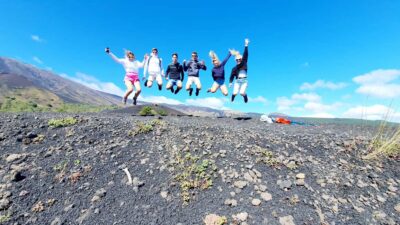
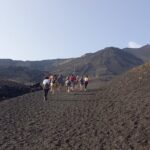
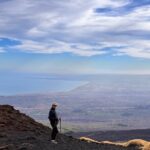
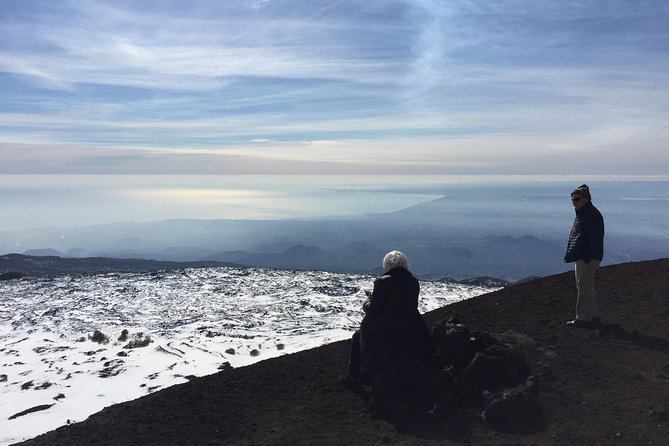
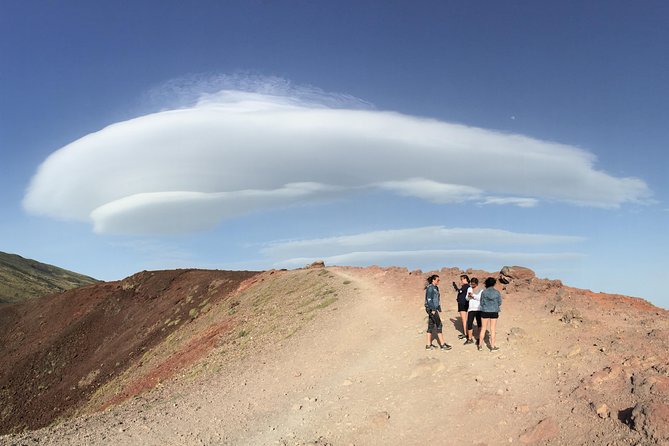
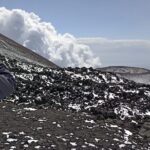
This is the hiking portion: Craters Silvestri of Mount Etna, around 2,000 m. The level is described as easy and suitable for anyone, but don’t treat that as a guarantee of comfort. The terrain includes at least one steep, narrow path. If you have mobility issues, you should weigh that carefully.
What makes it special is the setting. These are old, extinguished craters tied to the 1892 eruption. So you’re not walking on an active slope for long stretches—you’re exploring the landforms created during a historic event. That helps your brain. You can picture the scale of an eruption without needing to feel like you’re in danger.
Also: the guides provide walking aids. In practice, that means if you need a little extra support on the steeper segment, the guide may help with walking sticks.
Plan tip: wear proper footwear. Etna paths can be dusty and uneven even when they’re short. If you’re choosing between sandals and hiking shoes, pick the shoes.
Stop 2: Inside the lava tube cave with helmets and flash lights
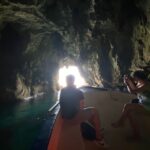
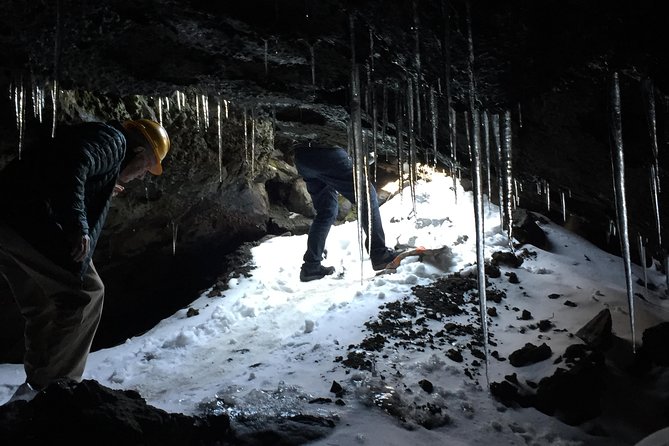
The highlight for a lot of people is the lava tube. This cave formed from older eruptions, and you’ll walk inside with provided helmets and flash lights.
This stop is valuable because it turns geology into something physical. On Etna, it’s easy to stare at scenery and feel like you’re looking at “cool rocks.” The lava tube forces you to move through the kind of space that only exists when molten material flowed and cooled in a specific way.
A practical note: cave time can mean cooler air and darker footing. The flash lights are provided, so you’re not stuck trying to read your phone screen in a dark passage—but you should still move slowly. Your guide can keep the group moving safely, and the small group size helps a lot here.
If you’re choosing between tours that only do viewpoints and tours that add cave access, this is the reason to pick the latter.
Stop 3: Valle del Bove viewpoint break
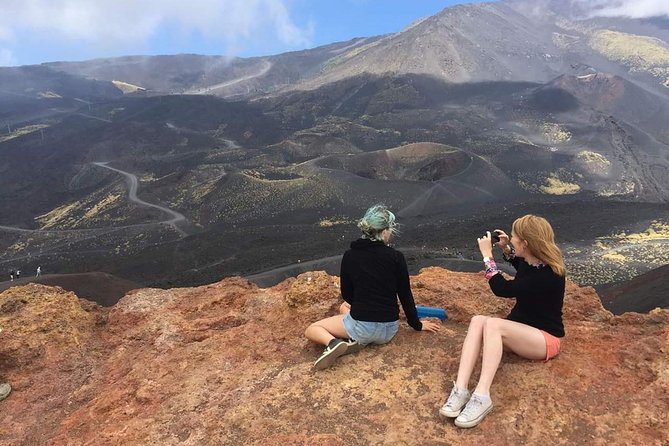
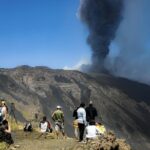
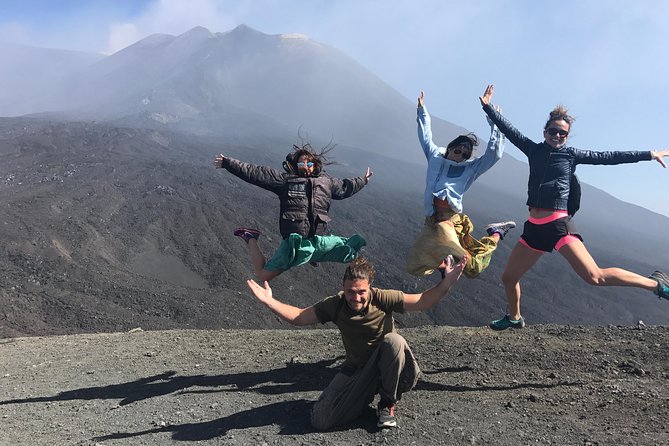
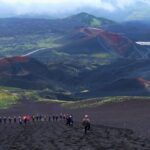
After the cave, you get a break at Valle del Bove, described as one of the most breathtaking overlooks of the volcanic “boiler.” This is the moment where you shift from hands-on exploration back to big-scale understanding.
Why a stop here matters: after walking and crawling through volcanic structures, it’s useful to pull back and see the larger bowl-shaped terrain. It’s one of those sights that helps you interpret the day’s earlier sights as part of a bigger system.
It’s only about 30 minutes, so don’t expect a long lounge. Instead, use the time for:
- quick photos (without blocking your guide),
- a short rest,
- and one or two questions about how this formation connects to earlier events.
Stop 4: Colata Lavica 1992—seeing the flow edge near Zafferana Etnea
Next comes a visit to the most extreme front of the 1991–1993 lava flow, reached by the lava up to the area of Zafferance Etnea. You’re not just looking at “lava shapes” in general—you’re seeing a specific flow episode and where it reached.
This stop is short—about 30 minutes—but it gives you a strong sense of scale. Lava isn’t just a volcanic term; it’s a force that changes geography. Seeing where a later flow pushed out helps make the older crater hike feel less abstract.
Quick tip: on a volcanic day, your eyes can bounce around trying to capture everything. Let your guide point out key features, then take your own photos once you understand what you’re photographing.
Stop 5: Oro d’Etna farm tasting—free samples and real local flavors
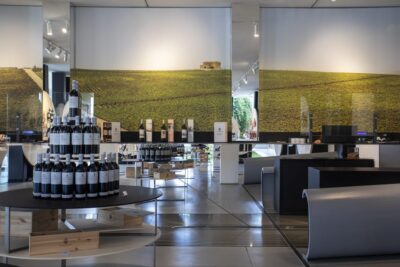
The tour includes a stop at Oro d’Etna, a local farm, for a free taste of typical Etna-area products. That includes things like honey, olive oils, pesto, wines, and liqueurs.
This is the kind of add-on I like because it’s practical. The tasting stop isn’t a museum-like sales moment built around pressure. It’s a chance to connect what you saw on Etna (a volcanic environment) to what people grow and make on the slopes.
And it’s efficient: about 30 minutes total. After that, you’re on the return path back toward Catania.
One more nice detail: many guides weave in stories while you taste. In past experiences, that’s where the day turns from “sights” into “place.”
The guides: certified naturalistic experts who speak your language
You’ll be with certified naturalistic guides, offered in English (and also Italian, French, Spanish). On the day, you might be guided by people like Monica, Sebastian, Paolo, Diego, Giuseppe, or Luigi—names that come up often.
What stands out in the experience isn’t just factual talk. It’s how guides handle questions, the patience they show, and how they connect eruptions to the views you’re standing in front of. The smaller group size helps here: you’re not shouting over other people’s audio.
If you’re the kind of traveler who loves learning the why behind the where, you’ll likely appreciate this.
Price and value: is $102.84 a fair deal for Etna?
At about $102.84 per person, the tour isn’t the cheapest way to see Etna—but it also isn’t padded with extra fluff. Your money covers:
- Air-conditioned transportation with a driver
- Certified naturalistic guiding in supported languages
- Helmets and flash lights for the lava tube
- Admission tickets for the main stops listed as free
- A small group size (max 16)
- A free tasting at Oro d’Etna
Compared with big-group versions that can balloon with time spent waiting, arguing over where people should stand, or feeling rushed, this one feels priced for what you actually do: hike, cave, viewpoints, and tasting, all within a compact morning.
My advice on value: if you care about the lava tube and a guided explanation (not just a photo stop), this price starts to look reasonable fast.
Who should book this tour, and who should think twice
This is a strong fit if you:
- want guided Etna without the chaos of a huge bus group,
- like a mix of viewpoints plus a hands-on cave experience,
- and enjoy local food tastings built into the schedule.
You might want to think twice if you:
- have trouble with steep, narrow paths on uneven terrain (the crater hike can include that kind of stretch),
- need lunch and drinks included (the tour doesn’t include them),
- or want a fully private one-to-one experience (this tour is small group, not unlimited private).
If you’re traveling with friends or family and you’re flexible about the day, the small-group format is a big plus. If you’re moving slower, consider telling the company ahead of time so the guide can advise on pacing and where to be careful.
Should you book the Etna Morning Tour from Catania?
If your goal is to see Etna in a way that makes sense—craters you can walk around, a lava tube you can enter, and viewpoint stops that tie it all together—this tour is a good bet. The small group cap, the cave gear, and the free farm tasting all add up to a morning that feels full without dragging.
Book it if:
- you want guidance and explanations in English (or another offered language),
- you’re comfortable with short hikes and cave walking,
- and you’re happy to handle food independently after the tour.
Skip it if:
- you have significant walking limitations due to steep/narrow terrain,
- or you expect lunch to be part of the package.
FAQ
How long is the Etna Morning Tour from Catania?
It runs about 5 to 6 hours.
Where does pickup happen?
You can be picked up from your lodging or from a meeting point previously agreed upon in Catania.
Is pickup available from Taormina?
Pickup from Taormina is only available for groups of at least 4 people, and there’s an extra charge.
What’s included during the tour?
The tour includes air-conditioned vehicle transfers, certified naturalistic guides, and helmets and flash lights for the lava tube. Admission tickets for the stops are listed as free, and there’s a free tasting at the local farm.
Does the tour include lunch or drinks?
No. Lunch and drinks are not included.
What group size should I expect?
The tour has a maximum of 16 travelers.
What language is the tour offered in?
English is offered, along with Italian, French, and Spanish.
Is the tour cancellable?
Yes—there is free cancellation if you cancel up to 24 hours before the experience start time.