REVIEW · SICILY
Group guided tour of the archaeological park of Neapolis
Book on Viator →Operated by Hermes Sicily Tourist guides group · Bookable on Viator
Neapolis can feel like a lot of ruins fast. This guided route in Syracuse helps you make sense of the Greek and Roman pieces in about 90 minutes. I like that the tour includes a radio guide, so you can actually follow the story while you walk.
What I really like is the way the stops are spaced for momentum, not long wandering. And I love that the route mixes famous landmarks with the quieter-but-weirdly-cool bits, like the cave called Ear of Dionysius.
One thing to consider: the Greek Theatre can be covered during spring and summer shows, so you may see only part of it. That does not ruin the visit, but it changes what you get from that stop.
In This Review
- Key highlights
- Why this Neapolis tour works when your time is tight
- Meeting at Largo Anfiteatro: where to start and what to expect
- The park ticket situation: what’s included vs what you pay for
- Stop 1: Parco Archeologico della Neapolis, the orientation that saves you later
- Stop 2: The Ear of Dionysius cave visit
- Stop 3: Teatro Greco and the reality of show season
- Stop 4: Ara di Ierone, a short stop with a noticeable mood
- Stop 5: Syracuse Roman Amphitheater, where the story turns again
- Stop 6: Latomia del Paradiso walk through a stone quarry garden
- Pacing, group size, and radio guide: why you’ll stay connected
- Price and value: what $26.43 buys you here
- Practical notes that affect the experience
- Who should book this Neapolis guided route
- Tips to make your 90 minutes go smoothly
- Should you book this guided Neapolis park tour?
- FAQ
- Is the archaeological park ticket included?
- How long is the guided tour of Neapolis?
- What language is the tour offered in?
- Where do we meet for the tour?
- What kind of ticket do I get?
- Is the Greek Theatre fully visible during all seasons?
Key highlights
- Radio guide for clear, hands-free listening while you move through the park
- Small group size (max 15), so the pace stays human
- A smart mix of Greek and Roman sites without feeling like you’re racing
- Ear of Dionysius cave visit plus a guided look at how it fits the bigger story
- Greek Theatre visibility changes during show season
- Mobile ticket included, with the meeting point set near the park area
Why this Neapolis tour works when your time is tight
Syracuse’s Parco Archeologico della Neapolis is big, and without a plan it’s easy to end up in “look at another wall” mode. This tour gives you an efficient route that stays readable: legend, theatre, altar, then Roman structures, then the stone-quarry gardens.
I also like the practical setup. You get a radio guide to hear the explanations even if you’re not planted shoulder-to-shoulder with the guide.
If you’re visiting in a limited window—cruise days, short stays, or simply the kind of day when you want results fast—this is built for you.
You can also read our reviews of more guided tours in Sicily

Meeting at Largo Anfiteatro: where to start and what to expect
You’ll meet at Largo Anfiteatro, 2, 96100 Siracusa SR, Italy, and the tour ends back at the same place. That simple loop matters, because it lowers the “how do we regroup?” stress.
The tour begins with a historical introduction when you meet at the entrance of the archaeological park. Plan to arrive a touch early so you’re not scrambling at the last minute—especially because the park ticket part can mean lines if you leave it for the last second.
Small but important detail: the tour starts at the street entrance area (the group meets at the designated meeting point), not necessarily at the ticket booth you might instinctively target first. Showing up at the right meeting spot saves time.
The park ticket situation: what’s included vs what you pay for
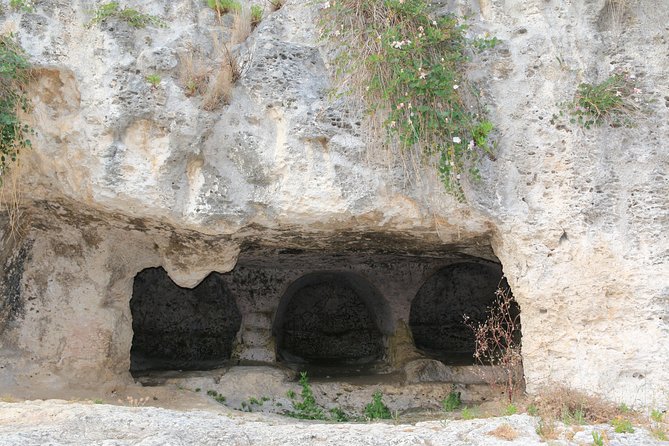
Here’s the money logic, plain and simple. The guided portion runs for about 1 hour 30 minutes, but the archaeology park admission ticket is not included as part of the base price.
Most of the internal stops listed are marked as free for the guided visit, while the park entry itself is the part that may require you to buy a ticket (unless you choose the combined tour + ticket option, if available on your booking).
I think this is good value if you already plan to visit Neapolis anyway. You’re paying for a guided route and the radio listening setup, not just “access to stones.”
If you’re trying to minimize total spending, check whether you’re booking the tour only or the tour + ticket option, then match it to how you plan to enter the park.
Stop 1: Parco Archeologico della Neapolis, the orientation that saves you later
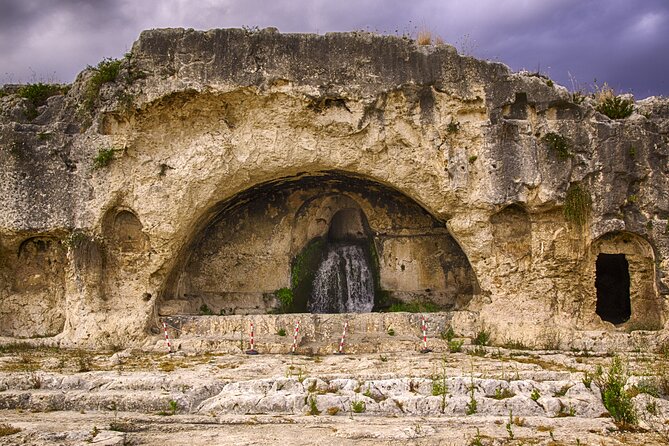
The tour kicks off at the park entrance with a guided introduction to the ancient city. This is the part that helps the rest of the walk click into place.
I like this kind of start because you’re not just being shown structures—you’re being given a quick map of how they relate to Syracuse’s past. Without that, the sites can feel like separate highlights that never connect.
You’ll spend about 5 minutes here, so it’s not a lecture. It’s more like getting your bearings fast before the walk turns into real sightseeing.
Stop 2: The Ear of Dionysius cave visit
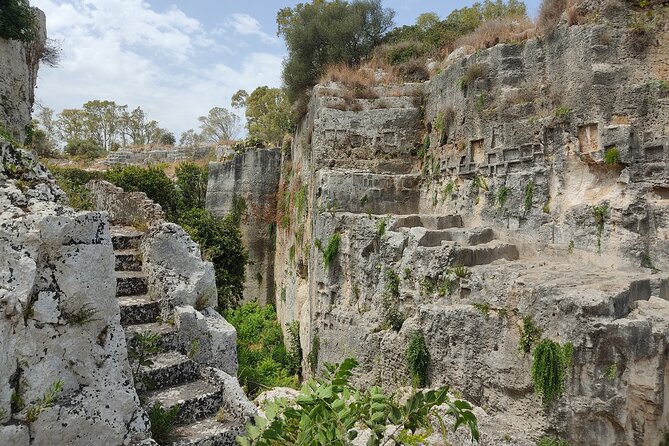
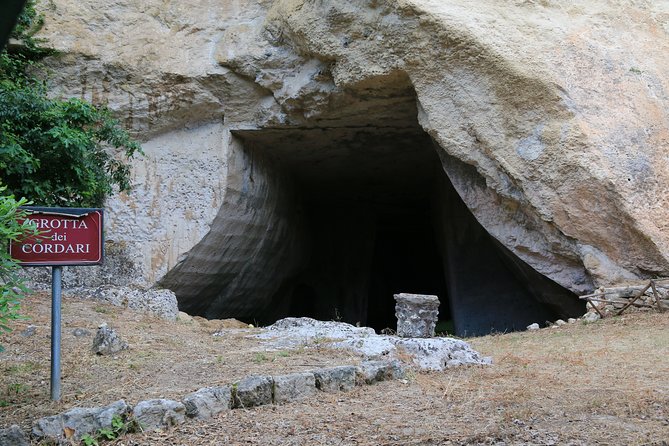
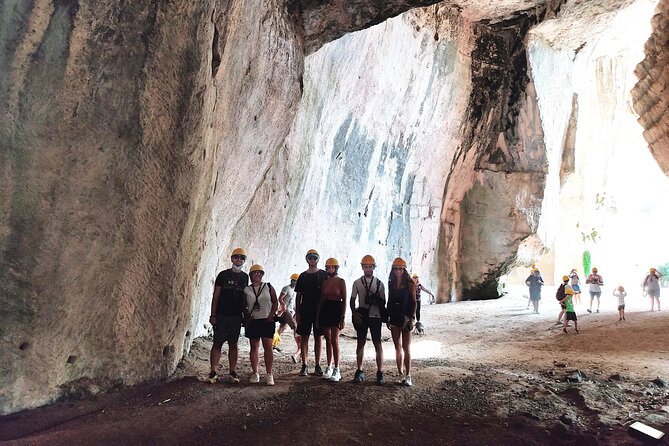
Next comes the Ear of Dionysius, a legendary cave often described as a famed underground “listening” space. On this tour, you get an internal visit for about 15 minutes, guided from start to finish.
This stop is the perfect palate cleanser after an open-air intro. It’s one of those places where you can’t help but feel the oddness of the setting, and a guide’s storytelling helps you understand why it mattered in the larger ancient world.
Admission for this stop is listed as free for the tour visit, so what you’re really paying for here is the interpretation and the time inside, not another add-on fee.




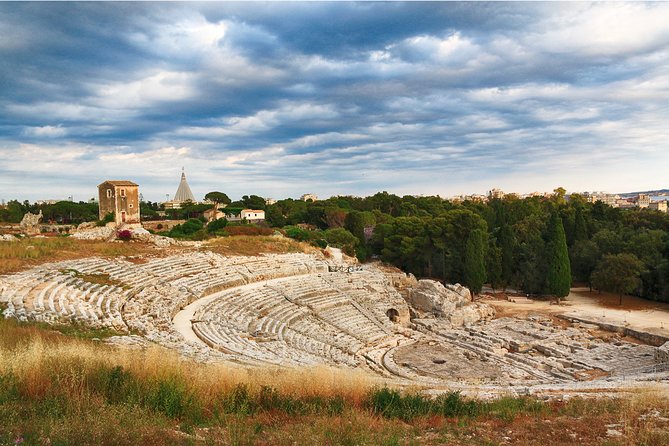
Stop 3: Teatro Greco and the reality of show season
The Greek Theatre is a star, and the guide typically uses it as a teaching moment—how the space worked, what it suggests about the culture around it, and how to read the archaeological details.
You’ll have about 30 minutes at the theatre, and this is where the tour can feel especially rewarding if you enjoy theatre history and architecture.
Here’s the key catch: during the period of the shows (usually spring and summer), the theatre is covered and only partially visible. That means your experience may shift from “full visual look” to “guided understanding with limited viewing.”
Still, even partial visibility can be a strong stop if you came for context, not just photos of every seating tier.
Stop 4: Ara di Ierone, a short stop with a noticeable mood
The Ara di Ierone is visited for about 10 minutes. It’s another guided history stop—this time focused on the monument itself and why it feels so striking even when you only spend a short window there.
I like short stops like this because they reset your eyes. After the theatre focus, the altar/monument focus helps you see how different structures served different roles in ancient civic life.
This is also one of the easiest stops to “fit” if you’re traveling with mixed ages or attention spans, because you get the idea quickly and move on.
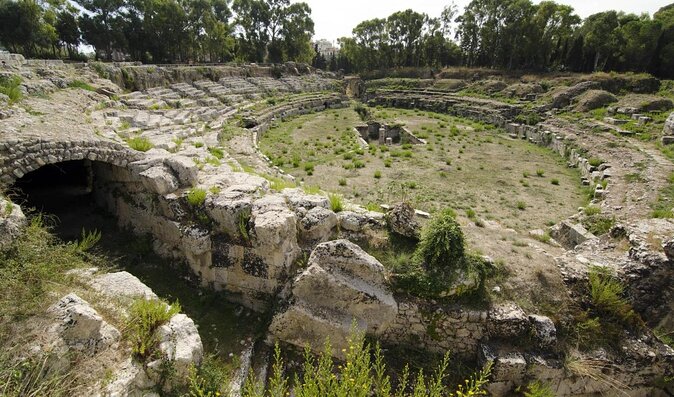
Stop 5: Syracuse Roman Amphitheater, where the story turns again
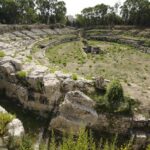
Then you shift gears. The tour moves to the Syracuse Roman Amphitheater for about 20 minutes, with guided interpretation of the site.
This stop is valuable because it shows you the layered identity of the same region: Greek spaces earlier, Roman ones later, and the way ideas about crowds, performance, and public gathering evolve over time.
Roman amphitheaters often feel more “directly usable” in your imagination—like you can picture the noise and movement more easily than in some ruins. The guide helps you translate that feeling into what you’re actually looking at.
Stop 6: Latomia del Paradiso walk through a stone quarry garden
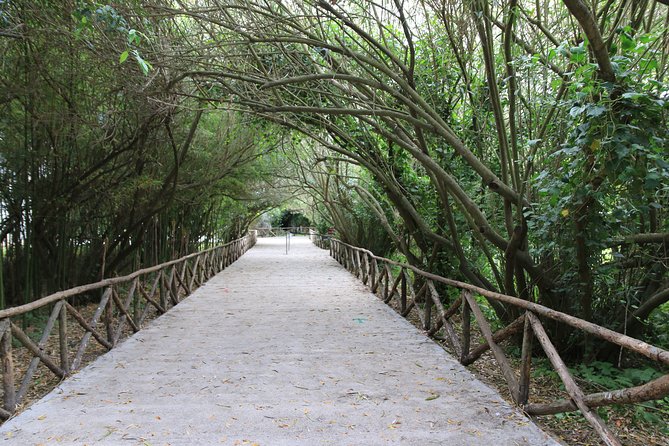
The last stop is Latomia del Paradiso, with a panoramic and guided walk through the gardens of an ancient stone quarry. You’ll spend about 20 minutes, and this is where the tour changes from “buildings and seats” to “space and setting.”
I like this finale because it gives you breathing room. The quarry setting plus the greenery-as-a-part-of-the-story makes it easier to end the tour with something memorable beyond the major monuments.
Also, the walk-and-look format pairs nicely with the radio guide. You’re moving, but you’re not rushed, and the guide can point things out while you’re already naturally slowing down to take in views.
Pacing, group size, and radio guide: why you’ll stay connected
This tour is built for clarity. The group maximum is 15 travelers, which is small enough for a real guided rhythm, not a chaotic herd.
You also get a radio guide, which helps you hear the explanations even if you’re slightly behind or to the side. This matters a lot at archaeological sites, where the natural tendency is to look around and drift half a minute out of sync.
I’ve found that tours without audio support often fall into gaps—someone hears, someone misses, and the story breaks. With the radio guide, you keep the thread.
It’s also offered in English, and if you’re not fluent in Italian, you still get the full arc of the route. Guides like Federica, Eva, Gaetano, and Sebastiano have been praised for making the information clear and easy to follow at a comfortable pace.
Price and value: what $26.43 buys you here
The listed price is about $26.43 per person, and that’s where the value math depends on the ticket situation.
Because the base price does not automatically include the park admission ticket, you should think of what you’re buying as the guided route + radio guide + structure across multiple major sites. In other words, you’re paying for interpretation and time efficiency.
If you’re doing Neapolis anyway, this is a smart way to turn “I saw ruins” into “I understood what I saw.” And if you’re short on time, the fixed route helps you avoid indecision inside a large park.
Also, the tour is scheduled in a way that fits a busy day: about 1 hour 30 minutes. You’re not committing to a full half-day of wandering on your own.
Practical notes that affect the experience
A few details can make or break how smooth your visit feels.
First, the experience is weather-dependent. If conditions aren’t suitable, you’ll be offered a different date or a refund. When you’re planning around Sicily sun, that flexibility can be a relief.
Second, good communication starts at the meeting point. Use Largo Anfiteatro, 2 as your anchor, and show up early enough to sort out the park ticket portion without rushing.
Third, it’s a mobile ticket setup. That’s usually easier than last-minute paper hassles, especially if you’re moving around Syracuse by foot or transit.
Finally, the group size is capped, which helps with crowd flow. One guide was specifically praised for navigating around heavy cruise crowds—another sign that this is not just a generic script.
Who should book this Neapolis guided route
This tour is a strong fit if:
- You want a guided overview across multiple Greek and Roman sites without spending hours
- You like stories and legends tied to places, not just facts on plaques
- You prefer a small group experience that stays coordinated
- You need English guidance and have limited time to plan a self-guided route
It may be less ideal if:
- You’re hoping for a long, slow exploration with lots of free time at every monument
- You’re visiting specifically during the spring/summer theatre show season and want a full unobstructed view of the Teatro Greco (you may see only part of it)
- You want to build a personalized itinerary across the entire park rather than a set route
Tips to make your 90 minutes go smoothly
Keep it simple and follow the structure:
- Aim to arrive at the designated meeting point at Largo Anfiteatro, 2 rather than guessing based on the ticket booth location.
- If you’re going for the best flow, buy the park ticket in advance to reduce waiting at entry.
- If you’re visiting in show season, adjust expectations for the theatre view and lean into the guide’s explanation of what you’re seeing.
- Use the radio guide properly by keeping it in hand and tuned as the group moves, so you don’t miss the transitions between stops.
Should you book this guided Neapolis park tour?
I’d book it if you want a structured, English-guided route that makes Syracuse’s Parco Archeologico della Neapolis feel coherent in about 90 minutes. The strongest reason is the combination of small group pacing and the radio guide—two things that keep you connected to the story instead of getting lost in the ruins.
If you’re particularly sensitive to the Greek Theatre view being partially covered during spring/summer shows, you can still enjoy the tour, but read the season correctly and treat that stop as interpretation-first.
Overall: for most visitors, especially first-timers or short-on-time planners, this is a practical, good-value way to see the core of Neapolis with context you can actually use.
FAQ
Is the archaeological park ticket included?
The admission ticket for the park is not included, except if you choose a tour + ticket option. Most of the listed internal stops during the tour are marked as free for the visit.
How long is the guided tour of Neapolis?
It lasts about 1 hour 30 minutes (approximately).
What language is the tour offered in?
The tour is offered in English.
Where do we meet for the tour?
You meet at Largo Anfiteatro, 2, 96100 Siracusa SR, Italy. The tour ends back at the meeting point.
What kind of ticket do I get?
You receive a mobile ticket.
Is the Greek Theatre fully visible during all seasons?
During the period of the shows (usually spring and summer), the Greek Theatre is covered and only partially visible.