REVIEW · SYRACUSE
Siracusa Walking Tour with Audio and Written Guide by a Local
Book on Viator →Operated by Walking Cap · Bookable on Viator
Ortigia is small, but it feels like a whole Mediterranean world. This self-paced audio + written walk strings together the island’s highlights and the big ancient sights of Syracuse, with stories you won’t get from a quick brochure. You follow a map and hear the local context as you go, not after the fact.
I like the freedom most: you stop when you want, linger at a viewpoint, then pick up again. I also like the practical language setup—audio and text in English, Spanish, Italian, German, and French—so you’re not stuck reading or guessing. The one thing to consider is that the guide depends on your smartphone + internet, and a few people report occasional audio or connection hiccups if service is weak.
In This Review
- Key points before you go
- A self-guided walk with audio for Ortigia and beyond
- Price and what you actually get for about $7.84
- How the route feels: pace, phone use, and group size
- Mercato di Ortigia: your best warm-up stop
- Temple of Apollo and Piazza Archimede: short stops, big meaning
- Syracuse Cathedral: the feeling of building on older stone
- Arethusa Spring: a poet’s pause near the sea
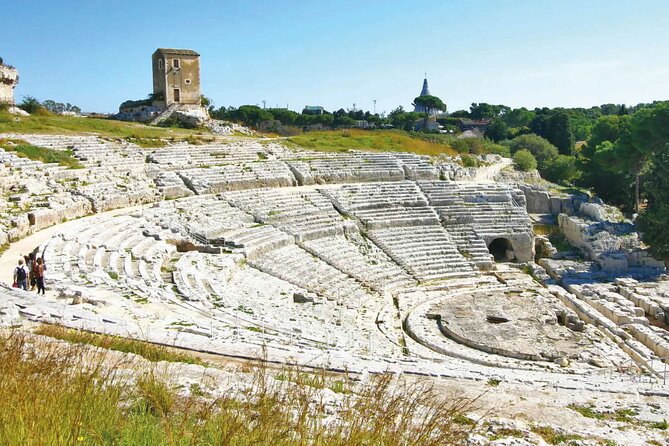
- Neapolis Archaeological Park: Greek Theatre and the Latomia caves
- Madonna delle Lacrime and Santa Lucia al Sepolcro: faith landmarks with stories
- Food stop strategy: use the restaurant tips without losing your freedom
- Accessibility and who this tour fits best
- Should you book this Siracusa Walking Tour?
- FAQ
- How long is the walking tour?
- Do I need headphones?
- What languages are available?
- Which stops are free, and which aren’t?
- Do I need internet on my phone?
- Where does the tour start and end?
- Is there free cancellation?
Key points before you go
- Walk on your time: you’re not tied to a loud group pace.
- Audio and text in multiple languages: English is available, plus four others.
- Free sights built into the route: Mercato di Ortigia, Fontana di Diana, Arethusa Spring, and two sanctuary stops have no ticket required.
- You’ll hit the “big names” without rushing: Temple of Apollo, Cathedral area, Neapolis (including Greek Theatre and Latomia caves).
- Smartphone-based guidance with Google Maps connection: less wandering, fewer wrong turns.
- Phone audio works both ways: you can use your speakers or headphones (headphones aren’t included).
A self-guided walk with audio for Ortigia and beyond
This experience is designed for people who want structure, but not control. You get a mobile, map-based route with short audio and matching written notes, so you can learn while you wander. And because it’s built for independent strolling, you’re free to take the scenic detour—or skip a detail—without feeling guilty.
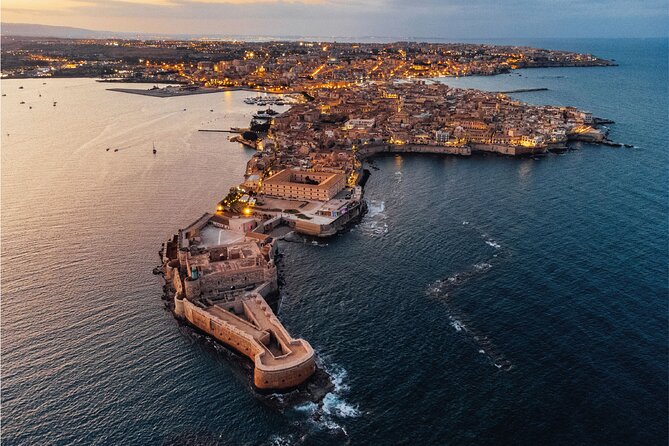
The route covers two very different vibes. Ortigia (the island core) is about atmosphere: markets, fountains, temples, and church façades that sit cheek-by-jowl on narrow streets. Then it stretches into Syracuse proper for the large-scale ancient remains in Neapolis, where the setting opens up and the ruins do the talking.
The walking is real, though. Plan on a steady pace for roughly 4 to 5 hours, with extra time if you’re the type who stops to read every inscription or just stares at stone that’s older than your country’s oldest highway.
You can also read our reviews of more walking tours in Syracuse

Price and what you actually get for about $7.84
At $7.84 per person, the value comes from what’s included: a digital guide for a full route, with audio and text, plus practical tips for food and monuments. For most people, the cost feels small compared with paying for a traditional guided tour—especially because you’re not locked into a fixed group schedule.
What you’re paying for is not just directions. The notes aim to give you “why this matters” context as you pass each site: commercial history at the market, mythology and architecture at the temple and spring, and the dramatic story behind modern sanctuaries. Even better, the guide includes links that help you check opening hours and tickets for monuments that aren’t included.
The only catch is that you still need your own smartphone, and you’ll ideally have a decent internet connection. If your connection is shaky, you can still read the text portions, but the experience won’t feel as smooth.
How the route feels: pace, phone use, and group size
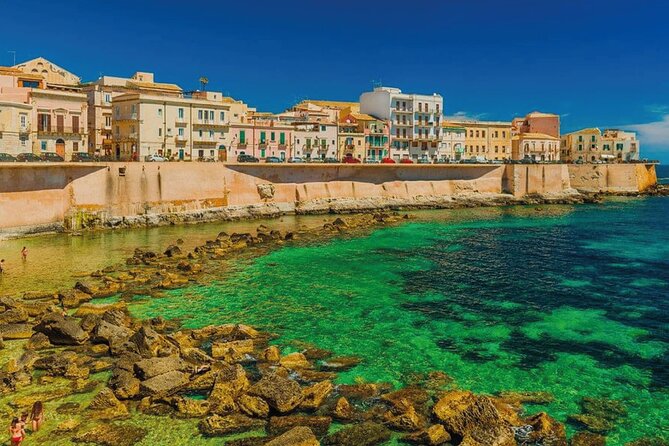
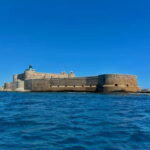
You’ll start at Mercato di Ortigia in Vicolo Bagnara and finish at Castello Maniace on Piazza Federico di Svevia. The provider caps group size at 104 travelers, but the smart design is meant to reduce the usual herd effect. You follow the route and the audio prompts as you go, and you’re not stuck waiting for others to round a corner.
You’ll want to use the guide through your smartphone. The tour is connected with Google Maps, and the voucher includes details to activate the digital guide. Also note: headphones aren’t included. The audio can play through your phone speakers, and you can bring headphones if you prefer not to broadcast your narration to strangers.
Practical tip from real-world usage patterns: if you know your day will have low signal (for example, some port areas or tours days), start with a plan to avoid frustration. I’d strongly consider downloading anything you can before service gets spotty, and keeping a calm backup method: read the text if audio drops.
Mercato di Ortigia: your best warm-up stop
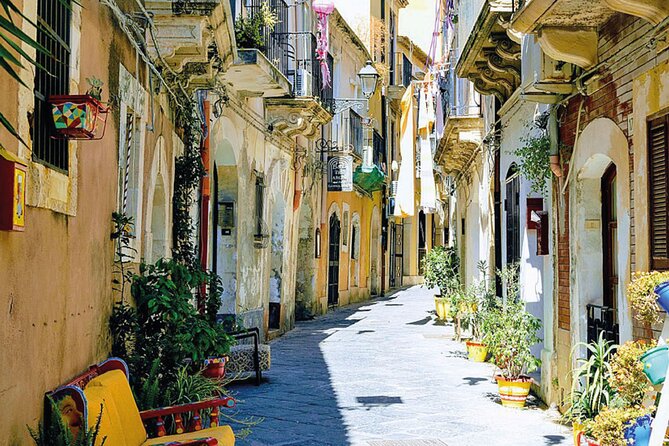
Your first stop is Mercato di Ortigia, the commercial heart of the island since Greek and Roman times. The market sat near the port and acted like a meeting point for traders from around the Mediterranean. The guide’s angle here is smart: it’s not just a place to look at food—it’s a snapshot of how Syracuse traded, mixed cultures, and kept ideas moving along with spices.
This stop is about 20 minutes and has no admission ticket cost. It’s also a great “settle in” moment. Before you hit the temples and churches, you get grounded in the local rhythm: smells, stalls, people moving. Then when you walk a few minutes onward, the stories feel more connected to the streets.
Possible drawback: markets are active and sometimes crowded. If you prefer wide-open spaces for photos, you might feel a little rushed here. But the timing is short, so you’re not trapped in the noise.
Temple of Apollo and Piazza Archimede: short stops, big meaning
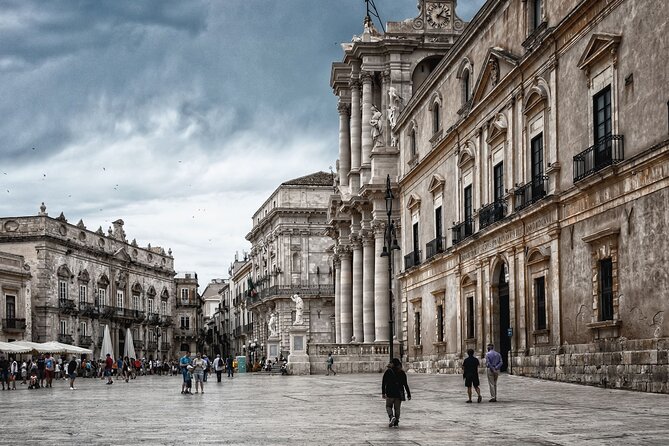
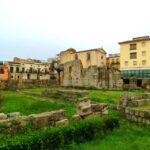
Next comes one of Ortigia’s architectural anchors: the Temple of Apollo, built at the beginning of the 6th century BC. It’s described as the oldest example of a Doric temple in Sicily. Even if you don’t know your Doric from your Ionic, the guide gives you enough framing to notice proportions and the sense of scale that comes with “older than old.”
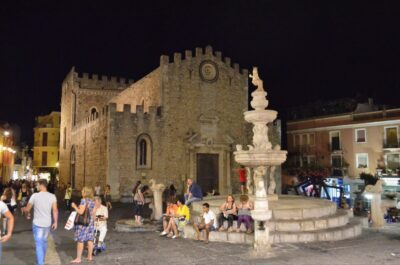
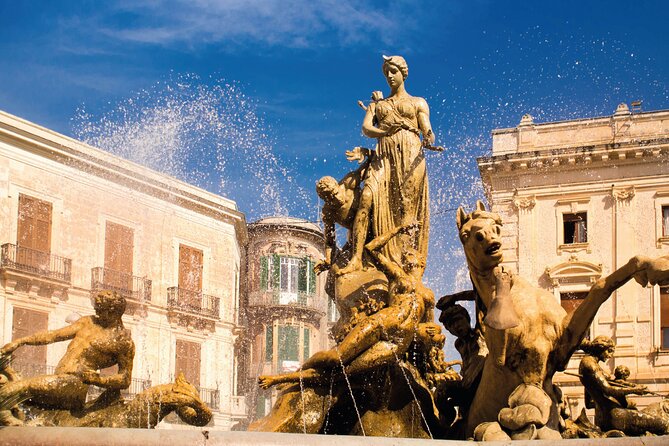
Then you move to the Fontana di Diana in Piazza Archimede. This fountain dates to 1906–1907, created by Palermo sculptor Giulio Moschetti. It’s a quick 10-minute stop, but it’s the kind of sight that makes you slow down just enough. When a place is this central, even small landmarks become part of how you navigate and how the neighborhood feels.
These are free stops, and they work well back-to-back. You get ancient weight, then you get modern craft in the same compact island space.
Practical tip: if you’re photographing, aim to catch the fountain area when the light is kinder. Also, use the map guidance to keep moving; Ortigia’s streets can look similar, especially if you’re planning meals next.
You can also read our reviews of more guided tours in Syracuse



Syracuse Cathedral: the feeling of building on older stone
The Syracuse Cathedral (Cathedral of the Nativity of the Blessed Virgin Mary, often called the Cathedral of Syracuse) is where the route connects you to layers of time. The guide notes it sits on foundations of an ancient Doric temple dedicated to Athena, built by the Greek-Siceliots in the 5th century BC.
Admission isn’t included here, and the stop is about 25 minutes. That timing makes sense because the cathedral area deserves attention, but it also needs your flexibility: if you go in for the interior, you’ll likely want extra minutes beyond the audio segment.
This is also a place where you’ll notice how Syracuse uses “reuse” as a cultural language. New religious structures rise over old sacred ground, and the result feels less like a museum and more like a living city.
Drawback to consider: because the ticket isn’t included, you’ll want to budget a little extra and check what’s needed before you arrive. The guide includes links to opening hours and ticket info for sights like this, which helps you avoid dead-end frustration.
Arethusa Spring: a poet’s pause near the sea

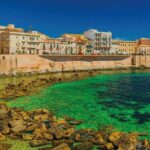
Then it’s back to something intimate and natural: Arethusa Spring (Fonte Aretusa). The guide explains this fresh-water spring, located a short distance from the sea, has inspired poets and writers since ancient times. You’ll also hear its nickname, a funtana re papiri—the fountain of papyrus—which adds a mythy, place-based layer to what might otherwise seem like just another water feature.
This stop is about 10 minutes and is free. It’s also one of the best “reset moments” in the route. After temples and churches, this is where the air changes. You get a calmer visual rhythm and a story that connects to how people imagined the world long before modern maps existed.
Practical tip: keep your eyes open for small details near the water. The spring’s magic is in how it sits inside a living urban fabric rather than standing alone in a field.
Neapolis Archaeological Park: Greek Theatre and the Latomia caves

The big jump comes with Parco Archeologico della Neapolis, about 1 hour 30 minutes. Admission isn’t included. The park covers roughly 240,000 square meters, and it’s described as one of the largest archaeological areas in the Mediterranean. That size matters because it explains why people can feel both impressed and overwhelmed here.
Inside Neapolis, the guide points you toward major highlights:
- The Greek Theatre of Syracuse, remembered for its grandeur and noted as one of the largest ancient Greek theatres (compared with Athens in scale terms).
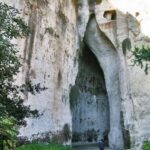
- The Ear of Dionysius in the Latomia del Paradiso, a famous cave-like space. The guide notes it was dug by quarrymen following limestone veins, which gives you a useful idea of how human labor shaped the “spectacle” you see today.
Because the guide is self-paced, you can choose your intensity. If you love theatre architecture and want to read the guide carefully, give yourself more than the audio baseline. If you want to hit the highlights quickly and keep moving, you can also fast-forward in a way that suits your feet.
One key consideration: this area can take longer than you expect if you stop for photos or if you’re with someone who moves slower. A practical approach is to treat the Neapolis portion as its own mini-adventure rather than a “checklist item.”
Madonna delle Lacrime and Santa Lucia al Sepolcro: faith landmarks with stories
After the ancient park, the route pivots to modern religious history—still dramatic, just in a different way.
First is the Santuario Madonna delle Lacrime, about 20 minutes, free to visit. The guide describes it as built after a miracle in 1953, when an effigy of the Immaculate Heart of Mary, located in the home of the Iannusos, began to weep. Even if you’re not into religious sites, the story adds human stakes: it’s about belief, community, and the way events can rewrite a place’s meaning.
Then comes Santuario di Santa Lucia al Sepolcro, about 15 minutes, also free. It’s outside the walls of Syracuse on the site associated with the martyrdom and burial of Santa Lucia, the city’s patron saint. The guide’s focus here helps you understand why this shrine is more than a pretty façade—it’s tied to identity.
These are good finishing stops because they feel less like “ancient facts” and more like Syracuse’s continuing voice. And since they’re free, you can spend time here without worrying about ticket logistics.
Food stop strategy: use the restaurant tips without losing your freedom
One of the quietly valuable parts of this guide is its “best advice for local restaurant with authentic food.” Because your pace is self-managed, you can choose meals based on what you actually want at that moment—cafe-style, sit-down, late lunch, or an early dinner.
Here’s a practical way to use it:
- Treat the restaurant suggestions as a shortlist.
- Pick based on the direction you’re already walking near the end points.
- If you need a break after Neapolis, prioritize comfort over ambition.
The guide also helps you move through the route efficiently, which means you spend less time hunting for a plan and more time eating.
Accessibility and who this tour fits best
This experience is listed as wheelchair and stroller accessible, which is a big plus in an area where streets can be tight. Service animals are allowed too.
This tour fits especially well if:
- you want independent pacing instead of trailing behind or waiting on others
- you want to understand what you’re seeing without needing a live guide to translate every question
- you’re okay using your phone for directions and audio (since that’s the core delivery method)
It’s less ideal if you strongly dislike smartphone-based navigation or you know you’ll have no reliable internet and no patience for troubleshooting.
Should you book this Siracusa Walking Tour?
Yes—if you want a structured route with the freedom to control your time. For the price, you get meaningful context at major stops, plus a map-driven way to move through Ortigia and into Neapolis without feeling lost.
Skip it (or at least rethink) if you expect to have zero smartphone access or you hate audio guides. The tour depends on your phone, and while the text backup exists, audio dropouts or connection issues can make the experience feel less seamless.
If you like history but not the pressure of a standard group tour schedule, this one is a smart match.
FAQ
How long is the walking tour?
It lasts about 4 to 5 hours.
Do I need headphones?
No, headphones are not included. You can hear the audio through your smartphone speakers, or you can use headphones if you have them.
What languages are available?
The guide offers audio and text in English, Spanish, Italian, German, and French.
Which stops are free, and which aren’t?
Free stops include Mercato di Ortigia, Fontana di Diana, Syracuse Cathedral? (No—cathedral is not included), Arethusa Spring, Madonna delle Lacrime, and Santa Lucia al Sepolcro. Not included admissions are listed for Syracuse Cathedral and Parco Archeologico della Neapolis.
Do I need internet on my phone?
Yes. You’ll need a smartphone with an internet connection to use the digital guide.
Where does the tour start and end?
It starts at Ortigia Street Market, Vicolo Bagnara, 96100 Siracusa SR, Italy and ends at Castello Maniace, Piazza Federico di Svevia, 5, 96100 Siracusa SR, Italy.
Is there free cancellation?
Yes. You can cancel for a full refund up to 24 hours in advance of the experience start time. If you cancel within 24 hours, the amount paid isn’t refunded.