REVIEW · SICILY
Guided Geological Excursion to Ustica
Book on Viator →Operated by Escursioni Ciprea Ustica · Bookable on Viator
Ustica geology feels like science fiction. This 2-hour guided outing (starting at 6:00 pm) takes you to dramatic sea views while you learn how Ustica was shaped by volcanoes, rock fractures, and a few physics tricks that can send compasses into chaos.
I really love the way Vittorio turns geology into something you can actually picture, with clear explanations and an upbeat, fun approach that works well even for kids. I also love the variety packed into a short walk: magnetic rocks nicknamed dazzling, a land cave that reaches the sea, basaltic colonnades, illuminating rocks, and a fault studied by geologists from around the world—set against black volcanic cliffs and the lighthouse at Punta Cavazzi.
One possible drawback: this tour is weather-dependent, and it’s scheduled in the evening. If you’re planning a tightly timed day or you hate waiting out rain, have a backup plan for your schedule.
In This Review
- Key highlights you won’t forget
- Entering Ustica’s geology at Punta Cavazzi (and why it works)
- Meeting point and timing: what to plan for
- The guide factor: Vittorio’s storytelling makes the science stick
- Punta Cavazzi: where the island’s volcanic past becomes a live lesson
- Magnetic rocks that make compasses go crazy (dazzling rocks)
- The terrestrial cave that leads to the sea
- Basaltic colonnades inserted in a beach re-emerged
- Illuminating rocks and the fault geologists study worldwide
- The real ending: sunset over the sea
- Price and value: why $17.79 feels fair for what you get
- What to wear and bring (keep it simple)
- Who will enjoy this most
- Pair it with other Ciprea experiences if you click with the guide
- Should you book this geological excursion?
- FAQ
- How long is the guided geological excursion to Ustica?
- What time does the tour start?
- Where does the tour meet?
- Is pickup available and do I get a mobile ticket?
- What will I see during the geology tour?
- What if the weather is bad?
Key highlights you won’t forget
- Punta Cavazzi lighthouse setting gives you the perfect frame of cliffs, sea, and volcanic rock clues
- Magnetic dazzling rocks make compasses act up, turning a lecture into a real-world demo
- A terrestrial cave that leads to the sea connects landforms to ocean forces in one story
- Basaltic colonnades show how lava cooled into columns right by the shoreline
- Illuminating rocks and a well-studied fault add mystery plus real geologic science
- Sunset over the sea makes the whole geology lesson feel like a mini adventure
Entering Ustica’s geology at Punta Cavazzi (and why it works)
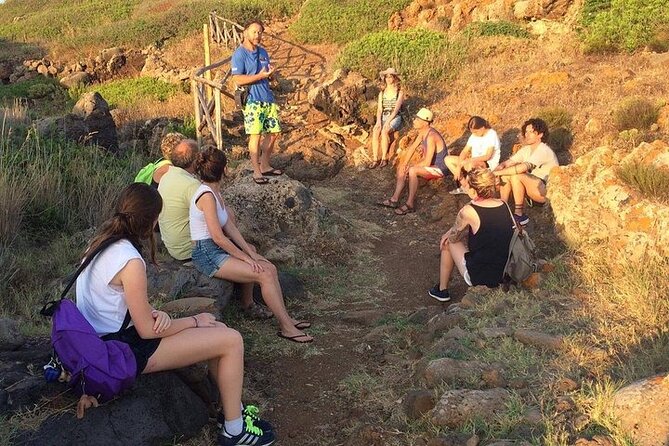
If you’re the type of traveler who starts a trip by asking what made a place the way it is, Ustica will grab you fast. The island’s rock story is written in black cliffs, sea-cut shapes, and the evidence of ancient eruptions—then the tour ties it all together with a human-sized pacing. You’re not stuck reading signs for an hour. You’re walking between key spots and getting the “why” behind each one.
This is also the kind of tour that benefits from seeing it at the right time of day. At 6:00 pm, you get the late-day light that helps volcanic shapes look sharper, and you finish with a happy ending over the water. Even if you’re not a geology person on paper, it becomes a visual experience.
The pacing also feels efficient for the price. At about 2 hours, you get multiple stops and multiple rock types, not just one viewpoint and a goodbye.
You can also read our reviews of more guided tours in Sicily



Meeting point and timing: what to plan for
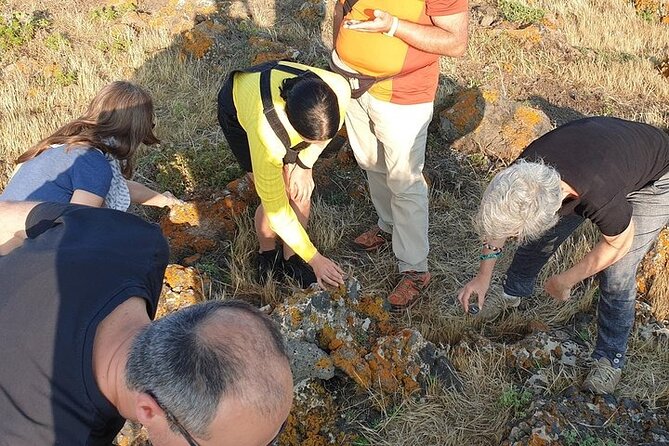
You’ll start at Comune di Ustica, Via Petriera, snc, 90051 Ustica PA, Italy. The activity ends back at the meeting point, so you don’t need to figure out transportation afterward. Pickup is offered, which matters on an island where every minute counts and walking in the evening can be less fun if you’re tired.
Practical tip: plan to arrive a bit early so you’re not rushing your way into the group. Since this starts at a specific time and runs about two hours, being late can squeeze the first stop.
The guide factor: Vittorio’s storytelling makes the science stick
I think this tour works best because the explanation style matches the subject. Geology can sound like a lot of terms in a hurry, but Vittorio is the kind of guide who helps you build mental pictures. The result is that you’re not just hearing facts—you’re learning how the island’s pieces connect.
From what you’ll experience on the ground, expect an approach that keeps you awake: you get moments that feel interactive, and the way concepts are broken down makes it easier to follow even if you’re starting from zero. People also seem to appreciate the humor and personality, which is a big deal on a subject that can otherwise feel dry.
And yes, he’s the same person who runs other Ciprea experiences too (things like cultural and astronomy-focused outings). If you like the way he teaches, you’ll probably want to add another one while you’re in Ustica.
Punta Cavazzi: where the island’s volcanic past becomes a live lesson
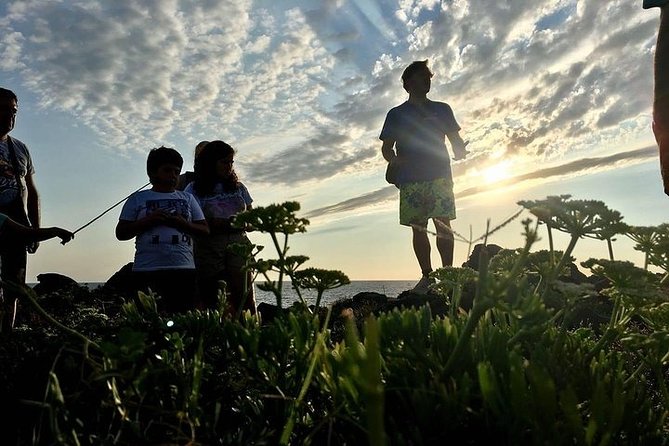
The tour centers on the spreader area dominated by Punta Cavazzi lighthouse. That matters because the setting is more than scenic—it’s part of the explanation. You can see how the sea frames the rock, how cliffs rise out of black volcanic material, and how shorelines expose what the ocean would otherwise hide.
This lighthouse zone also anchors the big theme: Ustica’s birth between volcanic eruptions and the strange behavior of certain rocks. If you remember only one idea from the walk, make it this: the island isn’t random. It’s the outcome of specific processes acting over time, and each stop gives you another piece of the puzzle.
Magnetic rocks that make compasses go crazy (dazzling rocks)
One of the most memorable parts is the story of magnetic rocks called dazzling. The tour doesn’t just name them. It sets you up to understand why they matter: they make compasses behave differently than you expect.
In plain terms, this is a physics lesson hidden in a geology walk. When you see something like that in real life, it sticks. You start thinking about how minerals in the rocks carry magnetic properties, and how those properties reveal themselves in the environment around you.
If you like hands-on learning—even small-scale demos—this is a big reason to book. It’s the kind of moment where you stop being a passive observer and start paying attention to details on the ground.



The terrestrial cave that leads to the sea
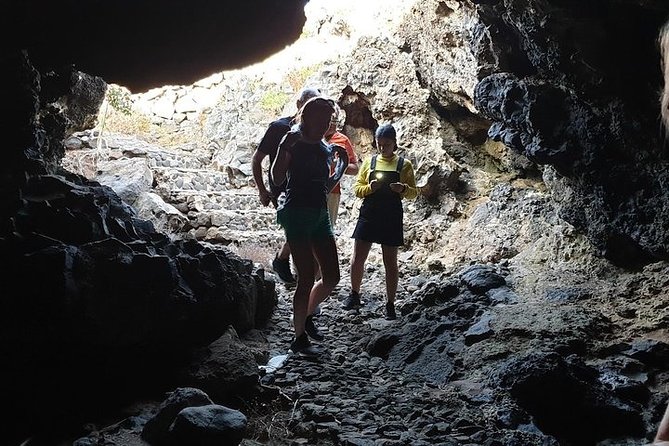
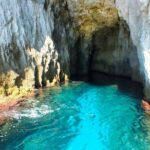
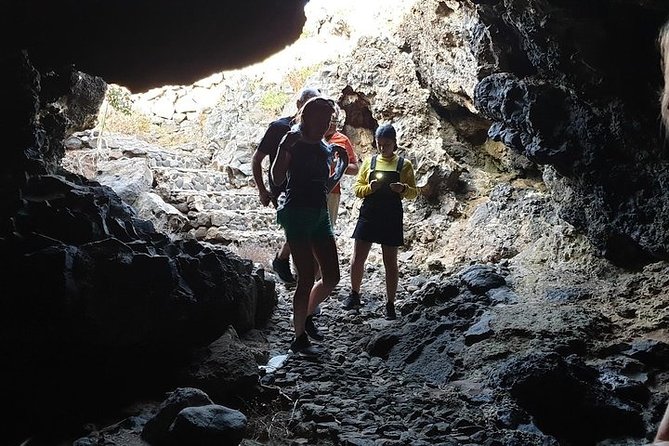
Next you’ll move to a terrestrial cave that leads to the sea. That’s a powerful concept because it connects two worlds: the island’s land shapes and the ocean that constantly works on them.
You’re looking at a natural passage that helps explain how water and rock interact. Even without heavy technical wording, the takeaway is clear: features like caves often reflect a long chain of events—fractures, erosion, and the ocean finding weak points over time.
A small consideration: caves and uneven rock areas aren’t always easy for everyone. The good news is the tour is described as possible for most travelers, but it’s still a smart idea to be cautious with footing.
Basaltic colonnades inserted in a beach re-emerged
Then comes one of the most visually striking geology types: basaltic colonnades—columns of cooled lava—inserted in a beach that has re-emerged.
This is where Ustica’s volcanic origin becomes unmistakable. Basalt columns are what you often imagine when you picture lava solidifying in a structured way. The tour uses this spot to show that geology isn’t only about what rocks are, but how they cooled, fractured, and were later shaped by the coast.
If you’re into photography, you’ll likely pause here. The black cliff frame and the column shapes create strong contrast, and the sea background helps you read the scene as more than just rocks.
Illuminating rocks and the fault geologists study worldwide
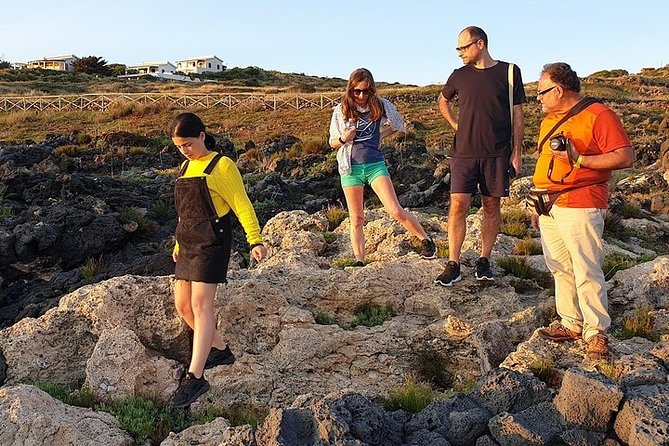
The tour also includes rocks with a science-fiction vibe—rocks described as having an illuminating characteristic—and it finishes by addressing a fault highly studied by geologists from all over the world.
This combination is great because it adds two different kinds of curiosity:
- One is about how certain rock properties can appear to interact with light or give off an effect you notice in the environment.
- The other is about structural geology, where faults are like readable scars showing stress, movement, and the way the island’s crust has changed.
Even if you don’t remember every term, you’ll walk away with a sense that Ustica is a living classroom for researchers. And that’s part of what makes the tour feel serious in a good way: the explanations aren’t just local folklore. They connect to real scientific interest.
The real ending: sunset over the sea
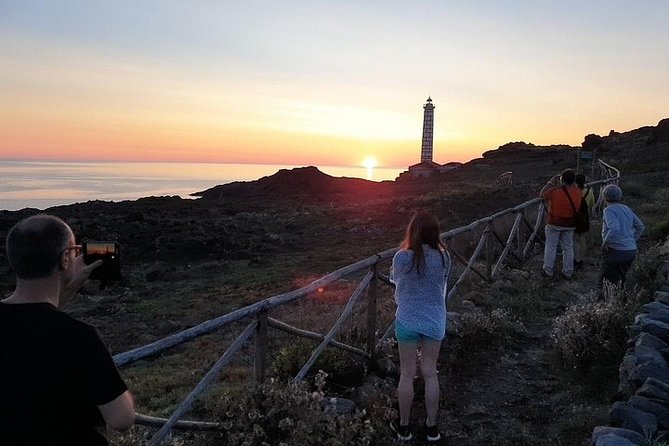
The tour promises a happy ending with sunset over the sea, and that’s a big part of the value. Geology often feels abstract unless you tie it back to place—here, the place is the ocean, the cliffs, and the lighthouse.
This ending also helps you process what you’ve learned. When you can look out at the coastline while thinking about erosion, lava cooling, and faulting, the island’s story stops feeling like a list. It becomes one continuous timeline.
Price and value: why $17.79 feels fair for what you get
At $17.79 per person for about 2 hours, this sits in the “small price, big satisfaction” category—especially because you’re not just getting access to a viewpoint. You’re paying for guided interpretation at multiple stops.
A lot of low-cost tours are either very short or focused on one thing. This one covers several distinct geological features—magnetic rocks, a cave, basalt columns, illuminating rocks, and a fault—plus the lighthouse setting. That variety is what makes the price feel sensible.
Also, the group limit is up to 150 travelers. That sounds large, but the tour is still built around walking between spots and receiving explanations. If you want a more intimate experience, I’d aim to be near the front at the start and pay attention early, so the first stops set the tone.
What to wear and bring (keep it simple)
This is an evening walk in a coastal volcanic area. You’ll be moving between viewpoints, so wear something with good grip and plan for cooler conditions if you tend to feel chilly at night.
Bring water if you’re prone to thirst, especially if you’re the type who likes to stop and linger for photos. And if you’re traveling with kids, this is one of those experiences where being patient for explanation is rewarded by the fun bits.
Who will enjoy this most
I’d recommend this geological excursion if:
- You like learning without the lecture vibe
- You enjoy science when it has real-world visuals
- You’re traveling as a family and want something that can hold attention
The tour’s approach also seems to work across ages, including kids who may not want to sit still. That’s not a small thing. When a guide can explain complicated ideas simply and keep it entertaining, you get the best of both worlds: education plus amusement.
Pair it with other Ciprea experiences if you click with the guide
If Vittorio’s style appeals to you—and it seems to—consider stacking another experience during your Ustica stay. Ciprea offers other outings mentioned alongside this one, including an astronomical under-the-stars experience and a guided snorkeling trip to Cala Sidoti, plus cultural and archeology-focused options.
That can be a smart move because Ustica isn’t just a geology island. It’s sea life, night skies, and human stories layered on top of volcanic ground.
Should you book this geological excursion?
Yes, I think you should book it if you want Ustica to feel alive instead of just scenic. This is a short trip that gives you multiple geological “wow” moments, with a guide who makes tricky ideas easy to follow. The magnetism demonstration and the mix of cave, basalt columns, and faults are the kind of combo that’s hard to find in one place.
Skip it only if you know you dislike evening activities or you’re not comfortable with uneven, coastal terrain. Otherwise, it’s a strong way to spend a couple of hours while Ustica is glowing toward sunset.
FAQ
How long is the guided geological excursion to Ustica?
It lasts about 2 hours.
What time does the tour start?
The start time is 6:00 pm.
Where does the tour meet?
The meeting point is Comune di Ustica, Via Petriera, snc, 90051 Ustica PA, Italy.
Is pickup available and do I get a mobile ticket?
Pickup is offered, and you’ll receive a mobile ticket.
What will I see during the geology tour?
You’ll learn about Ustica’s geology in the Punta Cavazzi lighthouse area, including magnetic dazzling rocks that make compasses go crazy, a terrestrial cave leading to the sea, basaltic colonnades, illuminating rocks, and a fault studied by geologists worldwide.
What if the weather is bad?
This experience requires good weather. If it’s canceled due to poor weather, you’ll be offered a different date or a full refund.