REVIEW · SICILY
2002 Crater Excursion – Northern Etna
Book on Viator →Operated by Guide Vulcanologiche Etna Nord · Bookable on Viator
Etna feels real on this north-side hike. You start at Piano Provenzana and spend a few hours walking where the October 2002 eruption reshaped the ground, then you trace older volcanic scars on the way back.
I really like how the pace stays doable while the guide still explains what matters. In the feedback, guides such as Giuseppe and Luca show up patient and even funny, with stops timed so you can catch your breath and catch up on the science.
One thing to think about: the route includes crater-edge walking and volcanic ground that can be loose in spots, so if you get vertigo easily or you show up in the wrong shoes, this won’t feel good. Also, you’re told you must have adequate trekking shoes because accident insurance coverage depends on it.
In This Review
- Key points before you go
- Where Piano Provenzana Sets the Tone (and Helps You Warm Up)
- The Hike’s Heart: Walking the 27 Oct 2002 Lava Flow
- Older Eruptions on the Same Route: 1911–1923 Flows and the 1911 Craters
- From Vents to Bombs: The 2002 Fracture and Explosive Mouths
- The Descent: Ash Channels, Beech Forest, and Ski-Slope Footing
- Gear That Keeps You Comfortable (and Covered)
- The Most Praised Part: Guides Who Mix Science With Real Energy
- Time on the Ground: What 3 Hours Feels Like
- Price and Value: Why € Maybe Small Add-Ons Still Matter
- Weather Changes Happen on Etna
- Who This Tour Is Perfect For (and Who Should Rethink It)
- Should You Book the 2002 Crater Excursion – Northern Etna?
- FAQ
- How long is the 2002 Crater Excursion on Mt Etna?
- Where is the meeting point?
- What’s included in the price?
- Do I need trekking shoes?
- Is bottled water included?
- How big is the group?
- Is pickup from my accommodation included?
- Is the hike suitable for everyone with low mobility?
- Does the route include crater edges?
- What happens if weather conditions are poor?
Key points before you go
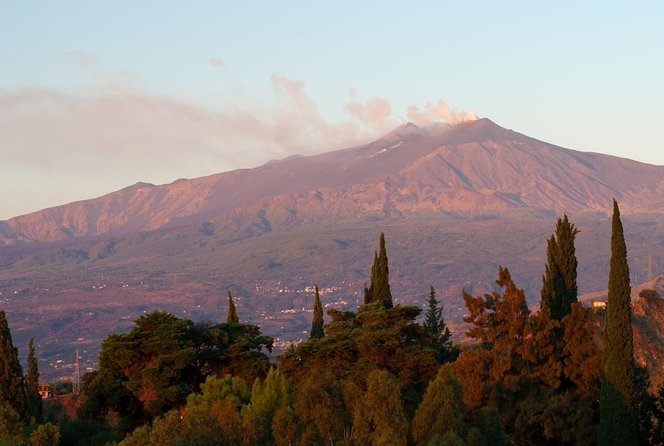
- North slope, fewer crowds: you’ll be on the less busy side of Etna rather than the heavy-traffic approach.
- Actual 2002 eruption trail: walk parts of the 27 Oct 2002 lava flow, including where a buried hotel is now only visible by a roof.
- Small group size: capped at 20 travelers, which helps questions and keeps the hike moving.
- About 5 km round trip: roughly 300 m up and down, usually in the 2.5–3 hour walking window.
- Crater edges and footing: vertigo-sensitive guests need extra caution, and volcanic soil can be incoherent.
- A guide who teaches by doing: the best reviews highlight humor plus clear explanations, not just a lecture.
Where Piano Provenzana Sets the Tone (and Helps You Warm Up)
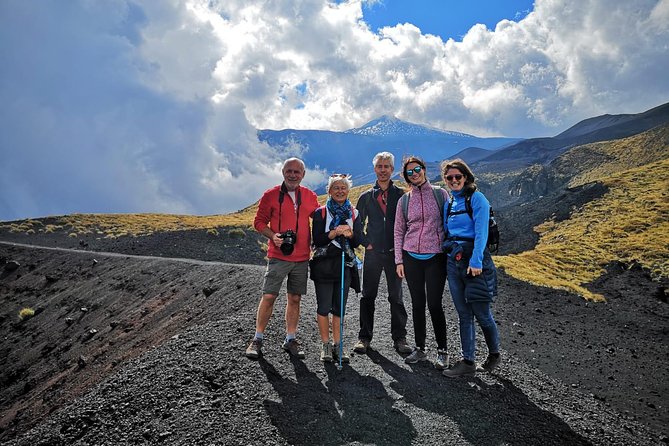
Piano Provenzana is the staging area on Etna’s north side. It’s reachable by fully paved public roads, and you’ll find practical comforts right there: cafés and bars for breakfast or a coffee, souvenir stops, and places to refill water bottles. In winter it works like a ski resort, and in warmer months it’s a common starting point for guided hikes.
This matters because Etna days can start fast. You begin at 9:15 am at the Ufficio Guide Vulcanologiche Etna Nord on Via Provenzana, 35, in Linguaglossa. Having a real meeting place with parking and basic services makes it easier to get calm before the hike begins.
I also like that this station tends to feel quieter. The north side is often less crowded than other Etna routes, which makes the whole experience feel more like a mountain outing and less like a theme-park line.
You can also read our reviews of more tours and experiences in Sicily.
The Hike’s Heart: Walking the 27 Oct 2002 Lava Flow
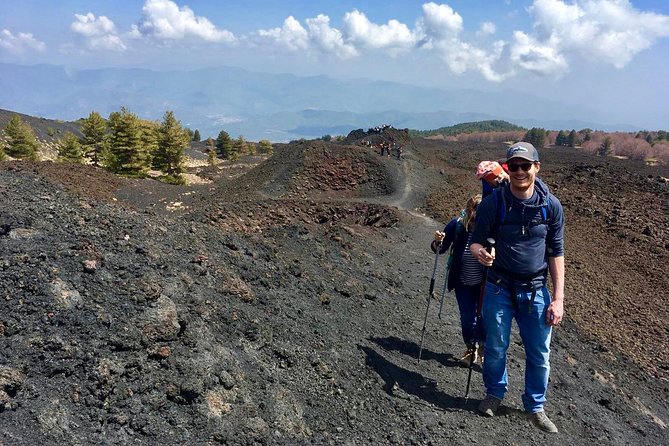
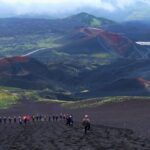
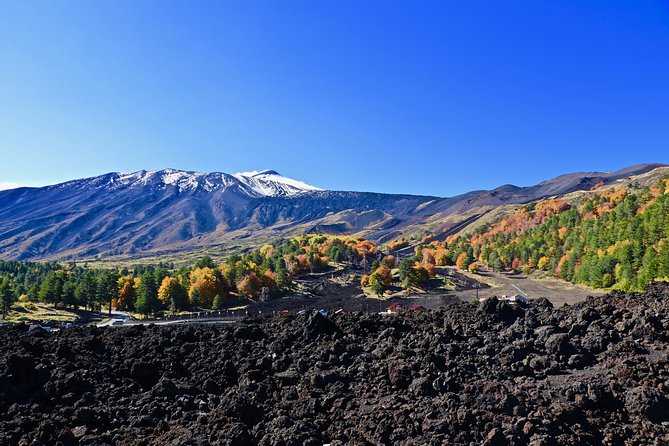
The main action is the guided hike from Piano Provenzana across the ground changed by the October 2002 eruption. You walk across a vast 7.2 km lava flow from 27 Oct 2002, which is exactly why this tour earns repeat bookings. You’re not just looking at Etna from a viewpoint—you’re covering the kind of terrain that documents how quickly volcanic land can shift.
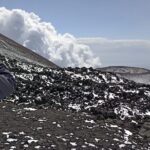
Here’s what you can expect to see along the way. The tour route passes areas where, after the eruption, hotels, shops, restaurants, and even a large car park ended up buried. In at least one spot, only the roof of a hotel remains visible. That single detail gives you a gut-level sense of scale: the eruption didn’t just create a crater. It moved through the built environment.
You’ll also get guidance on how to read the terrain. The guide’s job isn’t just to lead you across rocks; it’s to connect what you’re stepping on to what the volcano actually did—flow paths, fractures, and explosive activity.
And based on feedback, the pacing works. People praise guides who give breaks at the right moments and keep the hike from turning into a grind. That’s a big deal on a day when the ground isn’t always smooth.
Older Eruptions on the Same Route: 1911–1923 Flows and the 1911 Craters
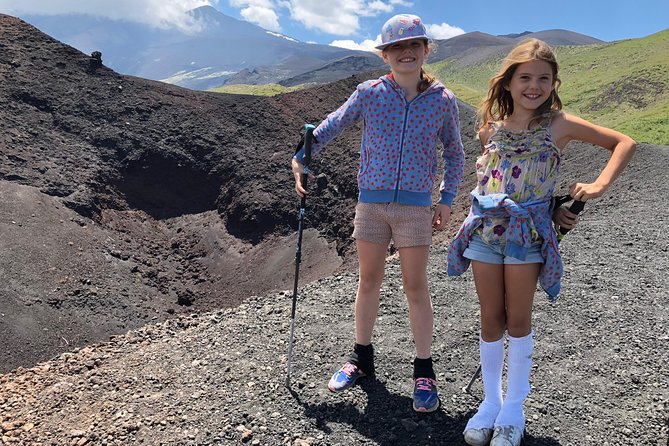
After the 2002 terrain, the hike keeps going through older volcanic material. The route continues through forested sections and then onto flows from 1911 and 1923. This part is less about dramatic newness and more about pattern-spotting.
You also pass a chain of 1911 craters, including shafts reported to be about 7 to 40 meters deep. Walking near crater features changes how you think about the mountain. Suddenly, Etna becomes more than one big event—it becomes a repeating system. You start noticing how old craters and flows guide the shape of today’s paths.
Then comes the climb toward the ridge of the huge 2002 eruptive fracture. The route here is described as a canyon-like area strewn with volcanic bombs. If you’re expecting a gentle stroll, this segment is the reality check. It’s still manageable for most people, but this is where attention and balance matter more.
From Vents to Bombs: The 2002 Fracture and Explosive Mouths
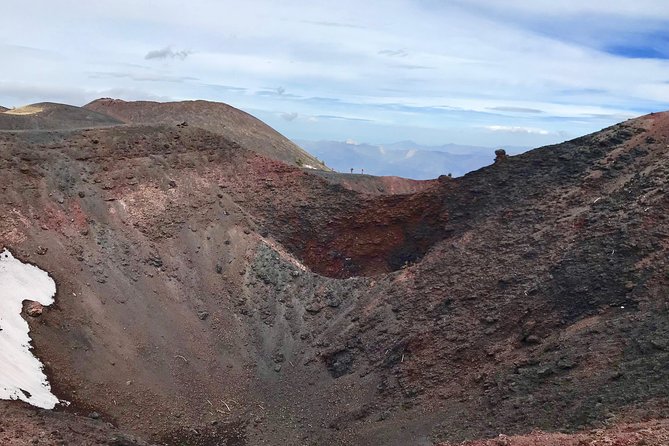
The top end of the hike brings you close to what produced the destructive flow. The route is designed to reach the vent linked to that flow, plus other large explosive mouths up to around 2,100 meters.
This is one of the tour’s best “why it’s worth it” moments. Etna doesn’t just look like a mountain. It behaves like a machine, with pressure building, breaking, and blasting. When you reach the vent and explosive areas on foot, the story becomes physical.
It’s also where the guide’s tone really matters. If you’re the kind of person who gets restless with long explanations, you’ll probably like how the best guides balance short facts with movement and timing. In the reviews, people specifically mention guides who interject facts and explanations with picture-style stops, then nudge you along before you lose energy.
A quick heads-up: this is also where vertigo can show up. The route foresees ascent and passage along crater edges, so if you’re sensitive to heights or uneven exposure, take that seriously.
The Descent: Ash Channels, Beech Forest, and Ski-Slope Footing
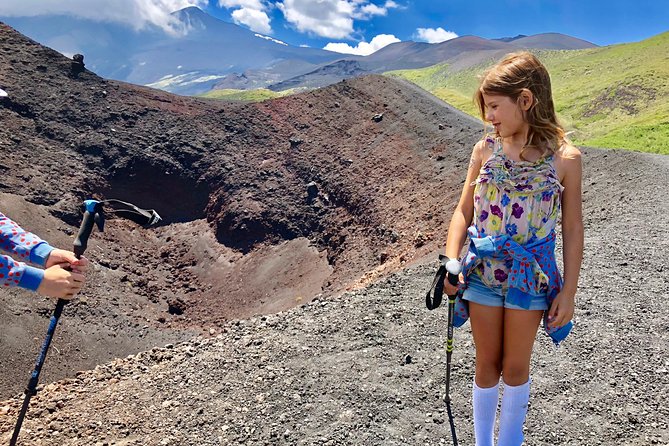
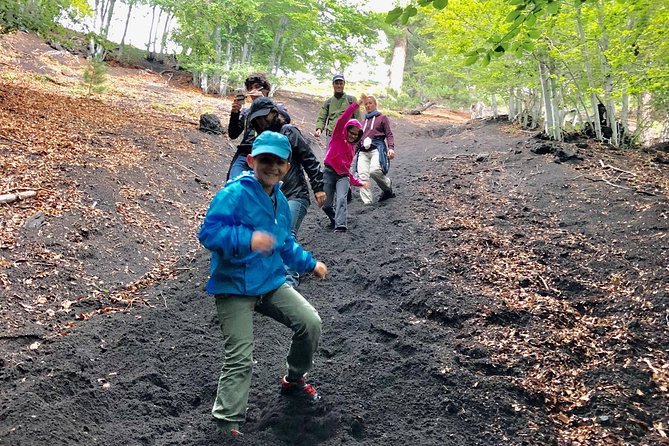
The way back isn’t just reverse-the-map. You descend via soft ash channels, then through beech forest and back past ski-slope areas toward the start point. Descents can feel easier than the climb until you realize the ground is softer and uneven.
That’s why the footwear topic matters more than people expect. One review notes that taller boots would have helped for the downhill, and another suggests hiking sticks for lava-rock crossing. Trekking poles aren’t included, but if you’ve used poles before, they can be a comfort upgrade for this kind of footing.
This portion is also a reminder that lava terrain isn’t always uniform. Some volcanic soil can be incoherent and unstable, and your step placement needs to be deliberate. The good news is the route isn’t described as having particularly difficult passages overall—just treat the ground with respect.
At the end, you return to Piano Provenzana. You’re finished back at the meeting point, so you don’t need to plan for a separate drop-off.

Gear That Keeps You Comfortable (and Covered)
I’m going to be blunt here: don’t gamble on your shoes.
Trekking shoes aren’t included, though you can rent them on site at authorized rentals for about €5 per pair. The big rule is also the one people forget: without adequate shoes, you’re not covered by accident insurance. So if you’re thinking of doing this in worn sneakers, pause and upgrade.
Beyond shoes, think about weather layers. The tour notes hat and gloves are especially important in winter, spring, and autumn. Even if the hike is only a few hours, Etna conditions can change quickly, and the wind near higher volcanic areas can bite.
Trekking poles aren’t included either. If you like them, bring them. If you don’t, just slow down on downhill sections and keep your stride short.
Also keep in mind what the route does to your balance. The ground is volcanic and can be coarse. That’s not a reason to avoid it. It’s a reason to dress like you expect real outdoor terrain, not a paved walkway.
The Most Praised Part: Guides Who Mix Science With Real Energy
This is the kind of tour where the guide can make or break your day. The highest ratings consistently talk about guides who are friendly, informative, and willing to answer questions without turning into a professor.
The names Giuseppe and Luca show up in the feedback, and their styles seem to have a common thread: patient explanations, humor, and well-timed breaks. One review even describes the guide as a comedian-tour-guide combination, mixing facts with visuals on the move.
That matters because Etna geology can feel abstract if it’s just spoken at you. Here, you’re walking on the proof. When the guide connects what you’re seeing—like the buried structures after the 2002 eruption—to why it happened, it clicks fast.
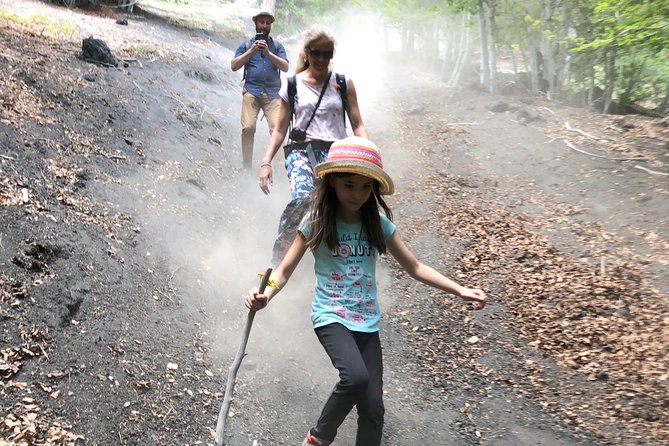
You’ll also notice the group stays small (max 20), which helps the guide keep the pacing right. People mention that the north slope walk is doable even for families, including kids, when the guide controls the rhythm and offers tips on steep or sandy bits.
Time on the Ground: What 3 Hours Feels Like
The total experience is about 3 hours, and the hike itself is described as roughly 2.5–3 hours. The round trip hiking distance is about 5 km, with around 300 meters of ascent and descent.
So yes, it’s exercise. No, it’s not a technical climb with gear. But it’s also not a stroll you can do while half-daydreaming.
If you’re used to walking several kilometers and you’re comfortable with some elevation changes, you’ll likely find it manageable. If you usually do little motor activity, the tour specifically notes trekking isn’t recommended.
And remember: the total duration depends on your gait. You don’t lose time, but you do control how steady you are. Go slow early and you’ll feel better on the crater-edge sections and the descent.
Price and Value: Why € Maybe Small Add-Ons Still Matter
The listed price is $43.55 per person for a guided Mt Etna northern excursion of about 3 hours. At this cost, you’re paying for two big things: an authorized volcanological guide and accident insurance.
It’s not a “just show up and wander” experience. The guide is legal-authorized, and the insurance is included. That alone makes it good value compared with DIY hikes where you’re responsible for everything.
What’s not included can still affect your total day:
- Bottled water (you can likely refill water on-site at Piano Provenzana)
- Trekking shoe rental (about €5 if needed)
- Hat and gloves
- Trekking poles
- Parking fees (around €5 on weekdays and €8 on Sundays/public holidays, based on the notes)
- Snowshoe rental in winter (listed as €15)
- Pickup service from your accommodation
Also, the tour is offered in English and uses a mobile ticket, which is convenient if you prefer not to hunt for paper confirmations.
Weather Changes Happen on Etna
This experience requires good weather. If conditions aren’t right, the tour can be changed or interrupted at the discretion of the guides for safety. That’s not a “gotcha.” It’s how Etna works—wind, rain, or volcanic activity can alter what’s safe to walk.
One review mentions the outing ending in hail, but the group still got enjoyment out of the hike. Still, pack for variability and be ready for a plan tweak.
Who This Tour Is Perfect For (and Who Should Rethink It)
You’ll probably love this excursion if you want:
- A guided Mt Etna hike on the less crowded north side
- A close-up walk over the 2002 lava flow
- A guide who explains volcano behavior clearly and with energy
- A day that’s outdoors and educational without being all-day exhausting
It can suit families with kids when the kids are comfortable walking and the group pace is handled well by the guide. The feedback includes mentions of doing the hike with children.
Rethink it if:
- You get vertigo easily (the route includes crater edges)
- You have cardio, respiratory, or hypertension issues (the tour notes it’s not suitable for those with these conditions)
- You usually do very little physical activity and want zero elevation or rough footing
- You’re not prepared to wear adequate trekking shoes (insurance coverage depends on it)
Should You Book the 2002 Crater Excursion – Northern Etna?
If you’re choosing between “look at Etna” and “walk Etna,” book this. The value comes from the combination of an authorized guide, a real scientific walk over the 2002 lava flow, and a route that stays on Etna’s calmer north side.
I’d skip it only if crater-edge exposure scares you or if you’re not willing to dress for uneven volcanic ground. If you can handle about 5 km of walking with 300 meters of elevation change, you’ll get a day that feels grounded in what the volcano actually did—not just what it looks like from far away.
FAQ
How long is the 2002 Crater Excursion on Mt Etna?
The excursion is about 3 hours overall, with the hike taking roughly 2.5–3 hours.
Where is the meeting point?
You meet at Ufficio Guide Vulcanologiche Etna Nord, Via Provenzana, 35, 95015 Linguaglossa CT, Italy. Start time is 9:15 am.
What’s included in the price?
You get accident insurance and a volcanological guide authorized in accordance with the law.
Do I need trekking shoes?
Yes, trekking shoes are required for accident insurance coverage. If you don’t have them, you can rent trekking shoes on site for about €5 per pair.
Is bottled water included?
No, bottled water is not included. There are places to refill water bottles at Piano Provenzana.
How big is the group?
The tour has a maximum of 20 travelers.
Is pickup from my accommodation included?
No pickup service is included.
Is the hike suitable for everyone with low mobility?
It’s not recommended for people who usually do little motor activity. The tour is intended for people in good physical health without specific pathologies.
Does the route include crater edges?
Yes. The route includes ascent and passage along crater edges, which could be a problem if you’re sensitive to vertigo.
What happens if weather conditions are poor?
The experience requires good weather. If it’s changed or interrupted due to atmospheric or volcanic conditions, that decision is made for safety, and you may be offered a different date or a refund if it’s canceled due to poor weather.