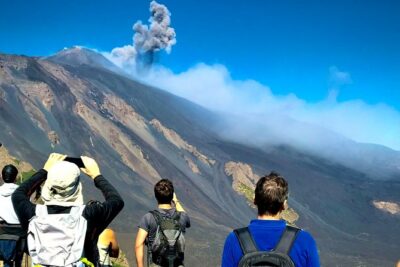
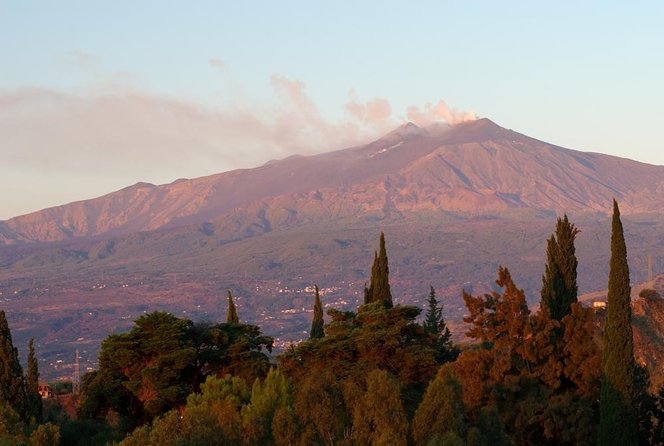
Etna keeps your whole day on high alert. This guided hike takes you from Nicolosi up toward the active crater rim, with crater stops like Bocca Nuova and the North East Crater.
I love the fact that you’re outfitted from the start with trekking boots and a helmet, plus a jacket/gear set that helps for cold and windy conditions. I also like how guides such as Marco, Simone, and Vincenzo focus on keeping the pace steady and the group together on steep, rocky ground.
One consideration: summit access can change. If the crater rules are tight, you may be stopped around 3000m instead of reaching the full higher edge.
In This Review
- Key highlights worth planning for
- Getting to Etna: Nicolosi, a 9:00am start, and the ride to 2900m
- The 1.5-hour uphill to the crater rim: where the hike turns real
- Bocca Nuova and the Voragine: what you’re really seeing up close
- North East Crater summit time: 360° views and the reality of changing rules
- Descending the Valle del Bove: steep, long, and surprisingly manageable
- What’s included vs. what costs extra: the $84.69 value math
- Gear and comfort: boots help, but you still need the right mindset
- Guides and group size: safety on an active volcano
- Who should book Etna Summit Craters, and who should skip it
- Should you book this Etna summit crater hike?
- FAQ
- What time does the Etna Summit Craters tour start, and how long is it?
- Where does the tour meet, and do you return there?
- Is the cable car and 4×4 ride included in the price?
- What hiking equipment is included?
- Is this tour suitable if I have asthma?
- Can I get a full refund if I cancel?
Key highlights worth planning for
- You start early (9:00am) and you’ll still have your evening free
- Cable car and 4×4 get you to about 2900m before the real climb
- You reach the crater rim to see Bocca Nuova and the Voragine area
- A short, steep push can take you toward the North East Crater (when allowed)
- Descent cuts through the Valle del Bove, a huge volcanic amphitheater
- You get hiking gear, but the uphill transport costs extra
Getting to Etna: Nicolosi, a 9:00am start, and the ride to 2900m
This is a morning-first Etna experience, starting at 9:00am in Nicolosi at La Terrazza Dell’Etna (Etna Sud), Piazza Vittorio Emanuele. I like this timing because it’s early enough that you’re not losing the day to transport and crowds, and you still end back where you started.
The big head start comes from getting hauled up to roughly 2900m. You take a cable car, then a 4×4 minibus toward the Torre del Filosofo area. That matters because it saves you hours of lower-altitude slog and gets you into crater territory while your legs still feel fresh.
You can also read our reviews of more tours and experiences in Sicily.
The 1.5-hour uphill to the crater rim: where the hike turns real
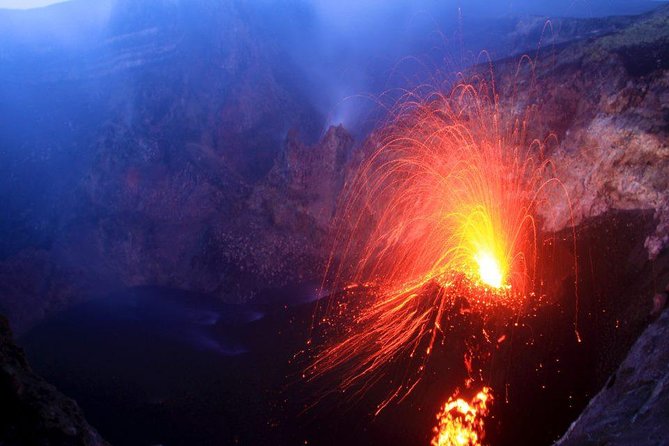
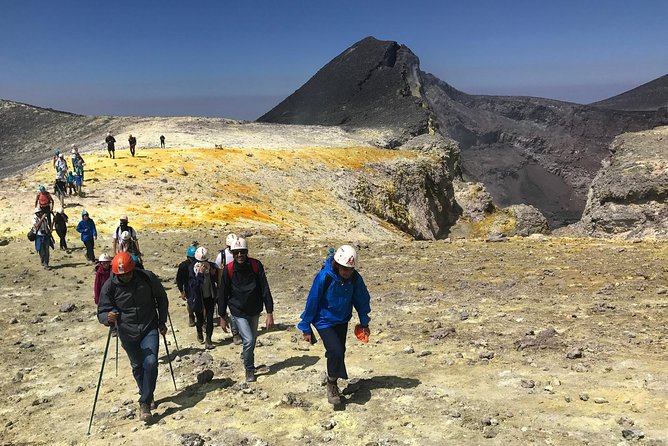
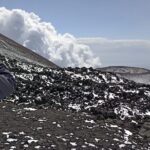
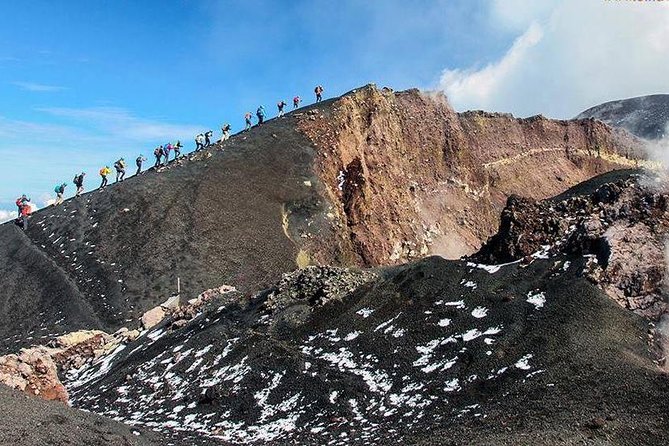
From the higher drop-off point, it’s about 1.5 hours of uphill walking to the edge of the central crater. This is where you feel the mix of altitude, wind, and volcanic ground. The terrain isn’t like a groomed trail—think uneven, rocky, and made for careful steps, not casual strolling.
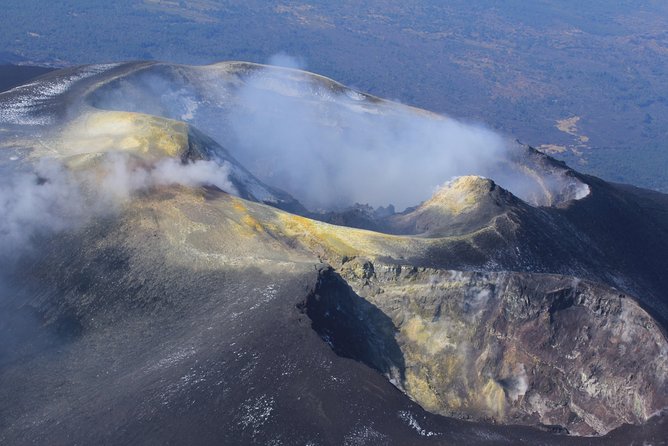
Once you get to the rim, you’re positioned for one of the tour’s strongest moments: the view of Bocca Nuova (about 3250m). This crater opened in 1968, and from here you’re not looking at a diagram. You’re seeing a living volcano, with the scale hitting you all at once.
Bocca Nuova and the Voragine: what you’re really seeing up close
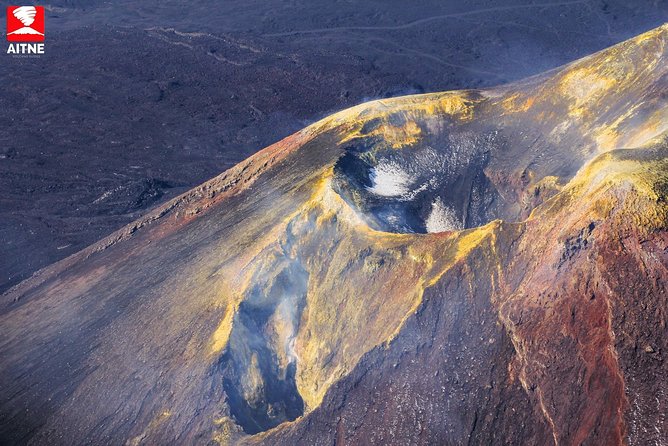
After the rim viewpoint, you continue around the Bocca Nuova area and reach the edge of the Voragine, often described as the heart of Etna’s central crater zone. The point isn’t just sightseeing. You’re gaining elevation in a way that turns the whole volcano into a readable map of ridges, openings, and volcanic bowls.
From the Voragine edge, the route includes a steep but short climb toward the North East Crater (formed in 1911, around 3329m when conditions allow). This climb segment is short on distance, but it’s usually the moment you feel your breathing and legs most clearly.
If the weather cooperates, the view can reach far enough that you might spot the Aeolian Islands to the north. And even on gray days, the crater geometry still shows. Clouds may hide distant points, but they also make the steam and volcanic texture pop.
North East Crater summit time: 360° views and the reality of changing rules
When you reach the higher area, you can spend time looking around—often described as a 360° viewpoint. That’s the payoff: the volcano is no longer an object you visit. It becomes a place you can understand from above, with the slopes and crater walls laid out in front of you.
Now the part you should plan for honestly: the volcano is active, so rules can change. Several hikers report that access to the very top may be restricted on certain days, leading to a stop around 3000m rather than the higher edge published in standard descriptions. On some days you might gain only a small amount above that threshold; on others you might get closer to the planned maximum.
So if Etna is your one big “volcano summit” day, go in with flexibility. You’ll still get crater views and real altitude either way. The guide’s job is to adapt the route to what’s permitted and what’s safe at that moment.
Descending the Valle del Bove: steep, long, and surprisingly manageable
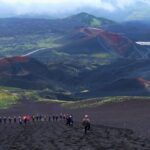
After the higher crater viewing time, you start the long descent. It’s described as steep but on a slope that’s easier than it sounds, with ashes and scoria underfoot. This is the kind of ground where you want good boots, steady pacing, and confidence in foot placement.
A highlight here is passing through the Valle del Bove, a large volcanic amphitheater. You’re dealing with scale: it’s listed as about 8 km long and 4 km wide. Even if you don’t measure it in your head, you feel that “big bowl” effect as the path funnels you through.
Eventually you return to the cable car arrival station around 2500m. Then it’s back down toward the meeting point area, and you can finally switch from hike mode to day-planning mode.
What’s included vs. what costs extra: the $84.69 value math
The tour price (listed around $84.69 per person) covers the guide and the hiking equipment. In particular, you get trekking boots, a jacket, a felapt (a warm layer provided with the gear set), and a helmet.
What’s excluded is the round-trip cable car and 4×4 ride up to around 2900m. This is a key value point: the tour price feels affordable, but the real “get to crater height” cost sits outside it.
How much extra? Based on what hikers have reported, you should expect a meaningful add-on—often discussed in the range of roughly €60–€78 per person for the cable car/4×4 combination, while another report cites €50 per person for the funicular. In other words, don’t assume the published price is the whole day’s cost.
Also, one practical snag: bring cash. At least one traveler was surprised that payment was accepted in cash only for the transport portion, and they had to locate an ATM quickly. If you hate the stress, solve it before you get there—plan for extra spending with euros ready.
Gear and comfort: boots help, but you still need the right mindset
Because boots and a helmet are included, you don’t have to show up in sneakers and hope for the best. That said, expect the summit area to be windy and cold, even in months that feel mild lower down. One review notes bringing a hoodie/jacket for cold conditions in June, which tracks with the reality of moving high into the open.
You’ll also want to think about gas and emissions. Multiple people emphasize that the air at altitude and crater zones can be strong enough to irritate breathing. Bring a mask or at least a buff you can put over your mouth and nose if the air gets uncomfortable. Some travelers even recommend FFP2-type protection.
Finally, plan your food like you’re going hiking, not commuting. The hike is described as about 5 hours, but some people report it can run over 6 hours depending on conditions and the group. Bring enough water and snacks, and consider packing a full lunch if you tend to get hungry on climbs.
Guides and group size: safety on an active volcano
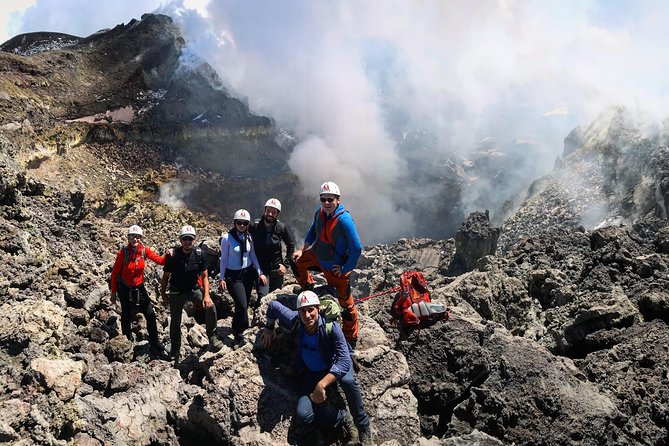
The group is capped at 15 travelers, and that size matters. It’s big enough to feel social, but small enough that a guide can manage pace, spacing, and safety without losing control on steep terrain.
This is not a normal walk with perfectly marked trails. With Etna, where you can step and what route you can take may shift with activity and regulations. Guides are also handling wind exposure and sheltering the group at key moments. Several named guides—Marco, Simone, Vincenzo, Davide, Massimo, Fabio, Giuseppe, and Nino—come up in guidance stories, and the consistent theme is pacing and safety.
If you’re nervous about heights or altitude, this kind of guide-led structure helps. Expect more frequent pace adjustments and time to catch your breath, especially near the steeper portions.
Who should book Etna Summit Craters, and who should skip it
This trip is built for people with moderate physical fitness. You’re walking uphill and descending on volcanic terrain at high altitude, so it’s not a flat city stroll.
It’s also not recommended for people with asthma problems. If you know you’re sensitive to fumes or breathing stress, take that seriously and consider a different Etna day that doesn’t put you up where gas can be an issue.
Families are possible, but go in with eyes open. One traveler describes the experience as not suitable for children under 12, and another mentions leaving a toddler at the meeting point because the hike wasn’t a fit. If you’re traveling with kids, confirm age guidance before you assume everyone can participate comfortably.
Should you book this Etna summit crater hike?
Book it if you want a real volcanic experience where the itinerary is built around getting you to crater viewpoints: Bocca Nuova, the Voragine edge, and the chance to reach higher ground toward the North East Crater when permitted. The included gear, the small group size, and the early start make it a strong value for people who want Etna without turning it into a logistics puzzle.
Don’t book it if you’re hoping for a casual hike or you need guaranteed summit-top access. The volcano can shut down the highest points, and your day may end up around 3000m instead. Also, if you’re unsure about altitude effects, breathing sensitivity, or you don’t want a steep climb and long descent, you’ll likely be happier with a lower-altitude option.
If you do book, I’d plan your success checklist like this: pack extra snacks and water, bring a mask/buff for emissions, wear solid socks and your best foot-care habits, and keep euros in your pocket for the cable car/4×4 portion.
FAQ
What time does the Etna Summit Craters tour start, and how long is it?
It starts at 9:00am and runs for about 5 hours (approx.).
Where does the tour meet, and do you return there?
The meeting point is La Terrazza Dell’Etna (Etna Sud), Piazza Vittorio Emanuele, 95030 Nicolosi CT, Italy. The activity ends back at the same meeting point.
Is the cable car and 4×4 ride included in the price?
No. The guide and equipment are included, but the round-trip cable car and jeep up to 2900m are excluded.
What hiking equipment is included?
The price includes hiking equipment such as trekking boots, a jacket, a felapt (warm layer), and a helmet.
Is this tour suitable if I have asthma?
It is not recommended for travelers with asthma problems.
Can I get a full refund if I cancel?
Yes. You can cancel up to 24 hours in advance for a full refund. If you cancel less than 24 hours before the start time, the amount you paid won’t be refunded.