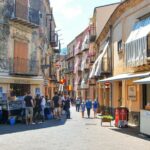
Ortigia at night turns history into a walk. You get a guided evening stroll through Syracuse’s Ortigia peninsula, with key stops that explain what you’re seeing and why it matters, all in about two hours. It’s timed for an easier pace when the light is soft and the streets feel calmer.
I love the way Italo Giordano (archaeologist and guide) ties ancient Greek sites to the later layers of Syracuse, without making it feel like a lecture. I also like the human scale of the route: you pass the Temple of Apollo, the Giudecca district story, and end around the famous fountain area—plus a real sense of evening atmosphere.
The main thing to consider is that it runs on foot and depends on good weather, so plan for a reschedule if it’s not pleasant outside.
In This Review
- Key things to know before you go
- Ortigia After Dark: how this 2-hour walk really works
- Temple of Apollo starting point: set the Greek tone early
- Ortigia by night: sea breeze, evening lights, and the calmer pace
- Giudecca and the Syracuse Jewish quarter: the story in the narrow alleys
- Piazza Duomo at night: the square that holds a thousand years
- Ending near Fonte Aretusa: a satisfying finish point
- Price and value for a small private group
- Who this Ortigia night tour fits best
- Should you book Ortygia by night?
- FAQ
- How long is Ortygia by night?
- What does the tour cost?
- Is this tour private?
- Where does the tour start and end?
- Is the tour offered in English?
- Do I need a paper ticket?
- Are service animals allowed?
- When will I get confirmation after booking?
- What if the weather is bad?
- What’s the cancellation policy?
Key things to know before you go
- A private group (up to 15 people) keeps the pace friendly and questions easy.
- Temple of Apollo is your opening anchor at the start point, setting the Greek context fast.
- Ortigia’s night streets are built around the sea breeze and evening lights.
- Giudecca (the Jewish quarter) story is focused on real neighborhoods, not a museum vibe.
- Piazza Duomo at night is treated like the emotional center of the walk.
- You finish at Fonte Aretusa, so the tour ends near a landmark area rather than stopping randomly.
Ortigia After Dark: how this 2-hour walk really works
This is the kind of evening tour that makes you look up. Once the sun drops, Ortigia’s streets change character: facades look warmer, shadows fall in nicer angles, and the sea breeze can make a big difference in summer.
The timing matters because you’re not just “passing sights.” You’re walking a tight loop with narration that helps you connect the dots—Greek Syracuse, later religious communities, and the central square that holds everything together. Since it’s about 2 hours, it’s also short enough that you won’t feel stuck on your feet for the whole night.
It’s offered in English, and the operator provides a mobile ticket, so you’re not hunting for printouts. Since it’s near public transportation, you’re not forced into a complicated travel plan just to get to the meeting point.
You can also read our reviews of more guided tours in Sicily


Temple of Apollo starting point: set the Greek tone early
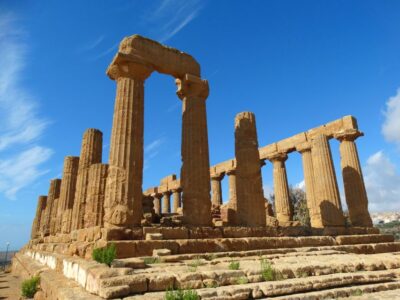
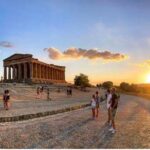
You begin at the Temple of Apollo (96100 Syracuse), which is a smart choice. It means the walk starts with a clear historical anchor: the Temple of Apollo is one of the oldest surviving examples of Greek stone temple architecture, dating to the beginning of the 6th century BC.
Even if you don’t consider yourself a history person, this stop gives you a reference point. You can look at the stone mass and proportions and then use the guide’s explanation to understand what you’re seeing later in the neighborhood streets. Starting here also avoids the awkward feeling of getting dropped into a maze and then learning what you’re looking at.
One practical note: starting at a known landmark makes it easier to stay oriented, especially at night when street signs can feel less obvious than in daylight. If you’re the type who hates being late, this setup helps you get your bearings fast.
Ortigia by night: sea breeze, evening lights, and the calmer pace
After the opening anchor, the walk moves through Ortigia, an islet that’s also one of Syracuse’s historic neighborhoods. At night, Ortigia has a texture you don’t get at noon: the historic center looks better in evening light, and the breeze from the sea can keep the air comfortable.
I like this kind of “by night” format because it solves a real travel problem—temperature and mood. You’ll often find that the evening feels more social and more walkable than midday, especially in warmer months. The guides can also point out details while you’re in the right lighting, not just when you’re rushing past.
And because the group is limited (up to 15), the pace tends to stay human. That matters on narrow streets, where a larger crowd can stretch the walking line and make it harder to follow the story. A small group is also good if you want to ask questions when something doesn’t make sense.
Giudecca and the Syracuse Jewish quarter: the story in the narrow alleys
One of the most meaningful parts of this walk is the stop connected to the Jewish community of Syracuse and the neighborhood known as Giudecca. The key idea here is integration. This wasn’t portrayed as a sealed-off world.
In the account shared during the tour, the Jewish community was described as one of the largest in the Mediterranean basin and described as well integrated into society rather than living in a ghetto. You’ll also hear about the expulsion in 1492, and how the community did not return to live in Ortigia afterward.
Walking through the narrow alleys while hearing that story is what makes this section stick. It gives you a “place in space” feeling: you’re not just memorizing dates. You’re trying to imagine how everyday life would have moved through these streets, in and out of community spaces, while the city around them evolved.
A fair consideration: this part of the tour is emotionally heavy, even though it’s delivered in a walking format. If you prefer purely scenic nights, you might find this section more intense than expected. But if you like understanding how places changed over time, this is the heart of the tour.
Piazza Duomo at night: the square that holds a thousand years
The tour includes Piazza Duomo, often described as one of the most evocative and beautiful squares in Italy. The important detail isn’t just that it’s pretty. The square is presented as a place that encompasses about a thousand years of Syracuse’s story.
At night, a big square works differently. Instead of being a “pass-through,” Piazza Duomo becomes a focal point where you can slow down, look around, and absorb the geometry of the surrounding buildings. This is where the tour’s narrative pays off: the Greek beginnings, the later community stories, and the evolving city center all funnel into this kind of shared space.
I also like that the square is treated as a destination, not just a stop for photos. A good guide’s job here is to help you read what you’re seeing—how the square functions, why it matters, and what the architecture suggests about the long timeline of the city.
If you’re traveling with someone who gets impatient with “tour talk,” Piazza Duomo is where you’ll likely see the best payoff. It’s a place you can enjoy on your own terms even after the explanation ends.
You can also read our reviews of more evening experiences in Sicily

Ending near Fonte Aretusa: a satisfying finish point
The tour ends at Fonte Aretusa. Finishing near a landmark area is one of those small travel details that makes the whole experience feel smoother. You don’t get the “now what?” moment where you’re stuck figuring out your next move in the dark.
Fonte Aretusa is also the kind of place where you can keep your own pace after the guide steps away. If you want one last look back at Ortigia or you’re hunting for a simple late-night snack, this ending location makes it easier.
Price and value for a small private group
The price is $212.93 per group for up to 15 people, and the tour lasts about 2 hours. That price is not “budget,” but it can be fair value depending on what you want from an evening walk.
Here’s how I’d judge the value:
- If you want a guided explanation that connects multiple layers of Syracuse (Greek temple, Giudecca Jewish community story, central square), the guide adds real meaning to the sights.
- If you’re traveling as a small group, the per-person math drops quickly compared with tours priced per head.
- If you’re aiming to avoid the worst of summer heat, an evening route is often worth it by comfort alone.
The private setup is also a practical value point. Only your group participates, which usually means fewer interruptions, less waiting, and a better chance of a conversational pace.
And from the feedback I saw, the guide approach is a major reason people feel satisfied. There were strong notes about Italo being friendly and making extra effort, including helpful restaurant recommendations after the walk. Even if you don’t need food advice, it signals that he cares about your night, not just the clock.
Who this Ortigia night tour fits best
This is a great match if you:
- want to see Ortigia’s main emotional spots without spending a whole night wandering
- like city walks that explain what you’re looking at in plain language
- enjoy learning the human stories of neighborhoods, not just big monuments
- want a shorter evening activity that avoids daytime heat
It may not be ideal if you:
- prefer strictly scenic walks with zero heavier historical content
- want a long, free-form evening with lots of downtime (this one is timed and guided)
- need a completely weather-proof plan, since the experience requires good weather
Should you book Ortygia by night?
If you want an evening in Syracuse that feels more like understanding than sightseeing, I’d book it. The Temple of Apollo start gives the Greek anchor, the Giudecca segment brings a deeper layer to Ortigia’s streets, and Piazza Duomo ties it together in a square that’s made for night viewing. Add a small private group and an archaeologist guide named Italo Giordano, and you’ve got a tour that’s built for both atmosphere and meaning.
Just make sure the weather cooperates, and you’ll be set up for a confident, rewarding night walk.
FAQ
How long is Ortygia by night?
It lasts about 2 hours.
What does the tour cost?
The price is $212.93 per group (up to 15 people).
Is this tour private?
Yes. It’s private, and only your group participates.
Where does the tour start and end?
The tour starts at the Temple of Apollo (96100 Syracuse) and ends at Fonte Aretusa (96100 Siracusa SR).
Is the tour offered in English?
Yes, it’s offered in English.
Do I need a paper ticket?
No. A mobile ticket is provided.
Are service animals allowed?
Yes, service animals are allowed.
When will I get confirmation after booking?
Confirmation is received within 48 hours of booking, subject to availability.
What if the weather is bad?
This experience requires good weather. If it’s canceled due to poor weather, you’ll be offered a different date or a full refund.
What’s the cancellation policy?
Free cancellation is available. You can cancel up to 24 hours in advance for a full refund. If you cancel less than 24 hours before the start time, the amount paid isn’t refunded.