REVIEW · SICILY
Palermo Walking Tour and Guided Visit to Palazzo dei Normanni
Book on Viator →Operated by Towns of Italy · Bookable on Viator
Palermo feels like a living museum, and this walking tour keeps it moving. You get a smart loop through Teatro Massimo and the city’s central Baroque core, then you finish with guided entry into the Palazzo dei Normanni complex. The big plus is the pace: 5.5 hours where the monuments connect to each other, not just stand there for photos. One thing to consider is the Teatro Massimo ticket is extra, so plan on budgeting €12 per person if you want to go inside.
If you like your sightseeing with stories you can actually use, this works well. I like the mix of grand buildings, church art, and street-level stops like La Vucciria, because Palermo is not only architecture. I also like that the Palatine Chapel is a guided highlight, since that’s where the “why Sicily looks different” really clicks. The only drawback is that most stops are time-boxed, so if you want long, slow museum-style attention, you may want to add extra time on your own afterward.
In This Review
- Key highlights worth planning for
- The big idea: why this Palermo route makes sense
- Start at Teatro Massimo (and plan for the extra €12)
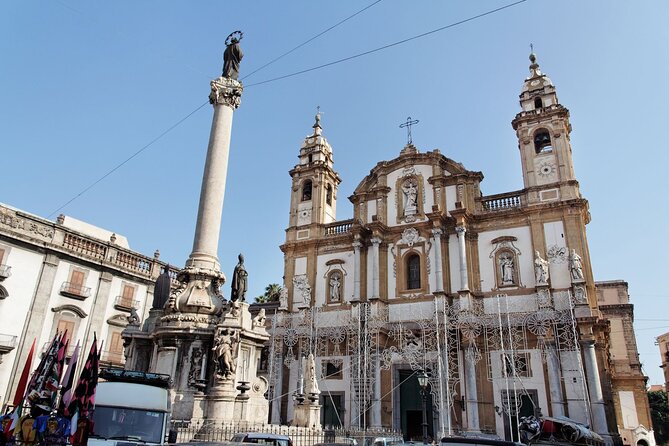
- San Domenico: a Baroque church with a very human “who’s who”
- La Vucciria market: where the tour slows to let Palermo be Palermo
- Piazza Pretoria and Quattro Canti: Baroque design you can stand inside
- Palermo Cathedral: the Assumption of Mary and the city’s core faith
- Palazzo dei Normanni: royal power you can still point to
- Palatine Chapel: where styles mix and the story clicks
- Price and value: $97.55 is not just a walk
- Who should book this tour, and who might not
- Should you book this Palermo Walking Tour and Palatine Chapel visit?
- FAQ
- What time does the tour start?
- How long is the experience?
- Is the Teatro Massimo admission included?
- Are tickets for the Palazzo dei Normanni complex included?
- What’s the maximum group size?
- Where does the tour meet and where does it end?
Key highlights worth planning for
- Skip the main headache at Palazzo dei Normanni with guided tickets included for the complex
- Palatine Chapel as the showstopper, with its Norman, Byzantine, and Fatimid mix explained clearly
- Teatro Massimo is the big opera moment, but entry costs extra at €12 per person
- San Domenico’s Baroque interior plus the Pantheon-style tombs makes the church stop feel specific
- Praetorian Fountain and Quattro Canti let you read Palermo’s Baroque city design in real scale
- A real market stop at La Vucciria, focused on fish, meat, and produce
The big idea: why this Palermo route makes sense
This tour is built around a simple theme: Palermo’s power, religion, and everyday life all overlap in the same walkable zone. You start with one of the city’s most famous opera landmarks, then move through church architecture and public squares before ending at the seat of ruling authority at Palazzo dei Normanni. That order matters because each stop helps you “map” the city in your head.
You’ll also see how Palermo’s identity is layered. Sicily’s history isn’t one straight line. It’s a stack, with different rulers leaving different design habits, and you get to spot those shifts as the tour goes on.
Time-wise, you’re in the streets long enough to feel like you’re getting bearings, but not so long that everyone turns into a sad zombie. Still, expect a real walking pace, plus short explanations at each place.
You can also read our reviews of more walking tours in Sicily
Start at Teatro Massimo (and plan for the extra €12)
Teatro Massimo Vittorio Emanuele sits on Piazza Verdi and is dedicated to King Victor Emanuel II. It’s known as the biggest opera house in Italy and one of the largest in Europe, which is a claim you can actually feel when you see the scale in person.
You get about 25 minutes here, and admission is not included. If you want the best value from this tour, decide early if you care about stepping inside the opera house. Tickets are €12 per person, so weigh that against your other sightseeing priorities for the day.
Practical tip: if you do buy the Teatro Massimo ticket, wear comfortable shoes and be ready for waiting time that can vary by day. Opera houses draw crowds, and your guided time is fixed, so smooth entry matters.
San Domenico: a Baroque church with a very human “who’s who”
San Domenico is a Baroque Roman Catholic church located in central Palermo, tied to the ancient quarter around La Loggia. The stop is about more than pretty architecture. This church is known as the Pantheon of illustrious Sicilians because it houses burial monuments of notable locals.
That makes it a good counterpoint to the louder streets nearby. You get a quiet space where you can understand why Palermo’s religious sites often double as civic memory, almost like a hometown hall of fame carved in stone.
This is also a free entry stop, so you’re not paying extra to make time for it. You’ll still want to be respectful and move at a walking pace inside, since it’s an active church environment.
La Vucciria market: where the tour slows to let Palermo be Palermo
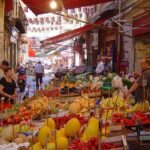
La Vucciria is Palermo’s best-known market area around Piazza San Domenico. The stalls mainly focus on fish, meat, and produce, but you’ll usually spot a little of everything if you wander a few lanes.
This is the stop that helps you understand the city after the monuments. Palermo isn’t only about rulers and chapels. It’s about food culture and street life that never fully shuts down, even when the fancy squares are nearby.
Your guide will point you toward what to notice without turning this into a long food tour you didn’t book. It’s a great time to reset your legs, too, because it’s not another staircase and another heavy façade.
Entry here is free, so it’s a high-value add-on compared to many tours that treat markets as a quick photo-op.
Piazza Pretoria and Quattro Canti: Baroque design you can stand inside
Next you hit Piazza Pretoria, dominated by the Praetorian Fountain. The fountain has an unusual backstory: it was originally built in 1544 in Florence by Francesco Camilliani, then it was transferred and reassembled in Palermo in 1574. That little fact alone makes the piazza feel like a conversation between cities.
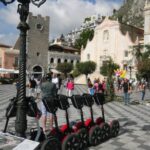
From there, you move to Quattro Canti, also known as Piazza Vigliena. This Baroque square is considered the center of Palermo’s historic quarters. What I like about this stop is that it turns city planning into something you can see from street level, not something locked inside a textbook.
You’ll get about 25 minutes here, which is enough to take photos, notice the layout, and understand why locals treat these crossroads as a reference point. If you tend to study architecture with your feet—looking up, then stepping back—this will land well.
You can also read our reviews of more guided tours in Sicily
Palermo Cathedral: the Assumption of Mary and the city’s core faith
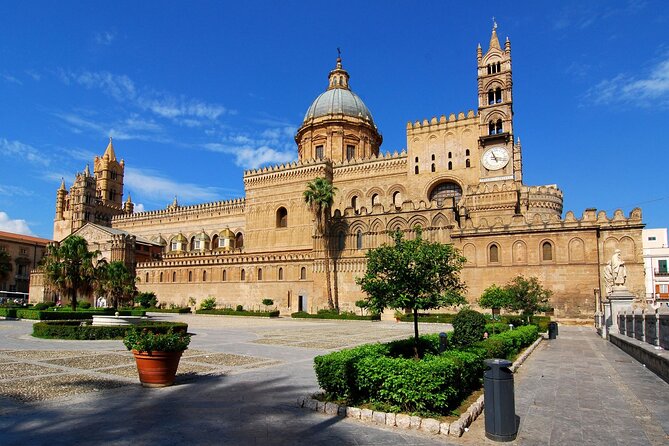
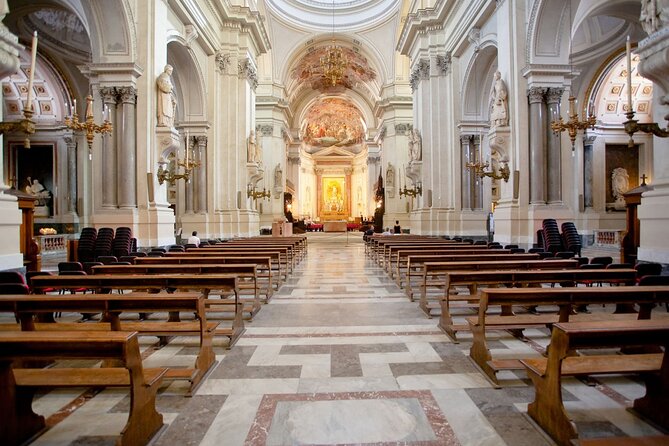
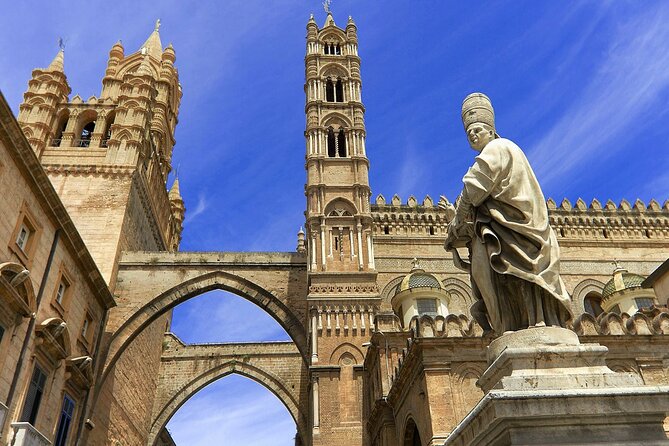
Palermo Cathedral is the cathedral church of the Roman Catholic Archdiocese of Palermo. It’s dedicated to the Assumption of the Virgin Mary, and the building gives you a clear sense of how central religion is to the city’s identity.
This stop is free and timed at about 25 minutes, which means you won’t get an in-depth guided sermon-length explanation. Instead, the value is in getting the big picture: where the cathedral fits in the city and how it ties to Palermo’s longer timeline of rule and belief.
If you like to visit churches but don’t want to spend half a day decoding them, this is a good compromise. You’ll still have time to look closely for details, even if your attention span is more “walk and read” than “museum and sit.”
Palazzo dei Normanni: royal power you can still point to
Now the tour shifts into full “this is where decisions were made” territory. The Palazzo dei Normanni, also called the Royal Palace of Palermo, served as the seat of the Kings of Sicily with the Hauteville dynasty. Later rulers kept it as a main seat of power, and since 1946 it has been the seat of the Sicilian Regional Assembly.
That last detail matters for your visit. You’re not just looking at a dead monument. You’re standing in a building that kept a governing role into modern times. It’s one of those places where the scale and gravity make sense because people still use it in a civic way.
Tickets and the guided visit to the Palazzo dei Normanni complex are included in your tour price, so you don’t have to juggle a separate purchase decision at the last minute. You’ll also get a guide’s framing, which helps you avoid the common problem of walking into a palace and leaving with only “pretty rooms” in mind.
Palatine Chapel: where styles mix and the story clicks
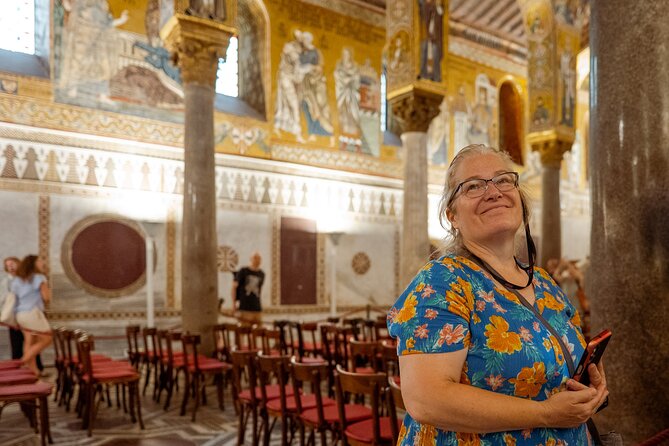
If you’re only going to remember one part of this tour, make it the Palatine Chapel. This royal chapel is inside the Norman Palace complex, and it’s a blend of Byzantine, Norman, and Fatimid architectural influences.
That mix isn’t random style shopping. It reflects Sicily’s tricultural state during the 12th century after Roger I and Robert Guiscard conquered the island. Once you hear that explanation, your eyes start catching contrasts: the way different traditions shape the feel of the space.
This is also the stop many people end up calling the highlight because it feels like an answer to the question, Why does Palermo look like this? The chapel’s timing is about 30 minutes, which is long enough to absorb the big visual cues without rushing you out.
Tickets for this are included, so you’re getting one of the tour’s most expensive-feeling components without extra costs at the counter.
Price and value: $97.55 is not just a walk
At $97.55 per person for roughly 5.5 hours, this tour isn’t priced like a generic “see the sights” loop. The value comes from what’s included: the guided visit and tickets for the Palazzo dei Normanni complex.
The one extra cost you should plan for is Teatro Massimo at €12 per person. That’s not a small add-on, but it’s also optional depending on whether you want the inside visit. If you’re the type who loves architecture and public interiors, you’ll likely see it as money well spent. If you’d rather allocate budget elsewhere, you can still enjoy the exterior context without it.
Group size is capped at 20 travelers, which helps the experience stay personal rather than chaotic. You’ll get enough time for explanations and questions, not just a line of people being moved from stop to stop.
One more value factor: this tour ends back where it starts. That’s convenient if you’re planning a second block of sightseeing later (or if you have dinner reservations and need control over your schedule).
Who should book this tour, and who might not
Book this if you want a guided structure that connects Palermo’s main monuments into a coherent story. It’s ideal for first-timers, and it also works if you’ve already seen some big sights but want a stronger sense of how Palermo’s layers fit together.
You’ll probably like it if you enjoy churches and palaces but want the explanations to do the heavy lifting. The Palatine Chapel is the classic reason to book, especially if you’re curious how multiple cultures shaped a single place.
Skip it or add a different plan if you’re the kind of traveler who wants long, slow time in a single venue. This tour moves. It gives you the main beats and then gets you out to the next one.
Should you book this Palermo Walking Tour and Palatine Chapel visit?
I think it’s a strong choice if your priority is Palazzo dei Normanni plus the Palatine Chapel, delivered with tickets and guidance. The walking route also earns its keep, because the church, fountains, squares, and the market stop help you understand what you’re seeing instead of just collecting landmarks.
If you’re budgeting tightly, go in knowing Teatro Massimo costs extra at €12 per person. If that doesn’t matter to you, this is a well-paced way to spend a day in central Palermo with a guide’s help.
FAQ
What time does the tour start?
The tour starts at 9:00 am.
How long is the experience?
It runs for about 5 hours 30 minutes.
Is the Teatro Massimo admission included?
No. Teatro Massimo entrance tickets are not included, and they cost €12.00 per person.
Are tickets for the Palazzo dei Normanni complex included?
Yes. Tickets and a guided visit to the Palazzo dei Normanni complex are included.
What’s the maximum group size?
The tour has a maximum of 20 travelers.
Where does the tour meet and where does it end?
It starts at Towns of Italy (Tourist Hub & Cooking School), Palermo, Via Volturno, 44, 90138 Palermo, and it ends back at the meeting point.