REVIEW · MOUNT ETNA
Taormina and Catania: Private guided Etna hike by cable car
Book on GetYourGuide →Operated by Etna Unlimited · Bookable on GetYourGuide
Etna is one of Europe’s most active playgrounds. This private hike gets you up near the summit by jeep and cable car, then follows a tailored route around real volcanic features for big views over the Ionian coast. I love that it’s set up as a round-track style hike guided closely by an expert, and I also like that you’re not just driven around—you actually walk through the volcanic terrain. One thing to consider: the hike depends on weather and Etna’s current activity, so the final altitude can change for safety.
You’ll start from either Catania or Taormina, then move onto an off-road vehicle before reaching the cable car portion. A big plus here is the human factor: in the past, guides like Roberto have been singled out for being experienced and easy-going, which matters when you’re hiking on ash and working around active volcanic conditions. Still, this isn’t a casual stroll. Even with provided gear, you’re hiking on slopes at high altitude, and it’s not suitable for everyone.
In This Review
- Key highlights you’ll feel immediately
- Why Etna by cable car beats the usual up-and-down day
- Hotel pickup to off-road jeep: the start from Catania or Taormina
- Cable car ascent: getting near the active craters faster
- The hiking portion: a guided round-track around the 2001 craters
- What makes the guidance especially useful
- Valle del Bove: seeing the eastern-flank depression at scale
- Jeep, cableway, and break time: how the pacing usually works
- Gear you get for the ash and altitude
- Weather and volcanic alerts: why the route can change
- Bilingual private guiding: worth it when you’re walking through real craters
- Price and value: $609.79 for up to 2 people
- Who should book this Etna hike
- Should you book Etna Unlimited’s private guided hike?
- FAQ
- How long is the Etna private guided hike?
- Where are the pickup and drop-off locations?
- What’s included in the price?
- How do you get up the mountain?
- What altitude does the hike reach?
- Is it suitable for everyone?
Key highlights you’ll feel immediately
- Cable car access to high altitude, cutting out the slow slog and maximizing crater time
- Expert-led crater route linked to eruptions from 2001, with an uphill then ash-descent rhythm
- Valle del Bove viewpoints, giving context for Etna’s huge eastern-flank depression
- Real volcano terrain underfoot, including volcanic ash sections that make it feel truly hands-on
- Private, bilingual guiding (English/French/Italian) for a smaller, calmer experience
- Provided hiking gear, including poles, rain protection, and helmets for the volcanic environment
Why Etna by cable car beats the usual up-and-down day
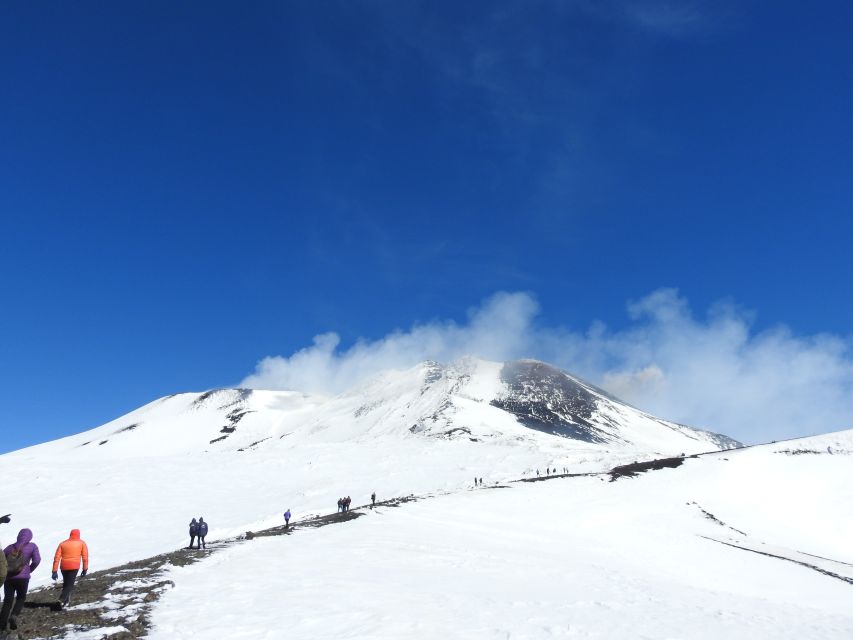
Etna has a way of making people feel like they’ve seen it, even when they’ve mostly passed it. This experience is different because it combines two smart things: you get a high-altitude lift via cable car, then you spend your time walking through the volcanic zones rather than sitting on a bus.
The payoff is that you can focus on what makes Etna special: active craters, fresh-looking volcanic textures, and the wide-open scale of the area. You’ll also get the kind of context that turns photos into understanding—especially when your guide points out how certain craters formed and why the terrain looks the way it does.
You can also read our reviews of more guided tours in Mount Etna
Hotel pickup to off-road jeep: the start from Catania or Taormina
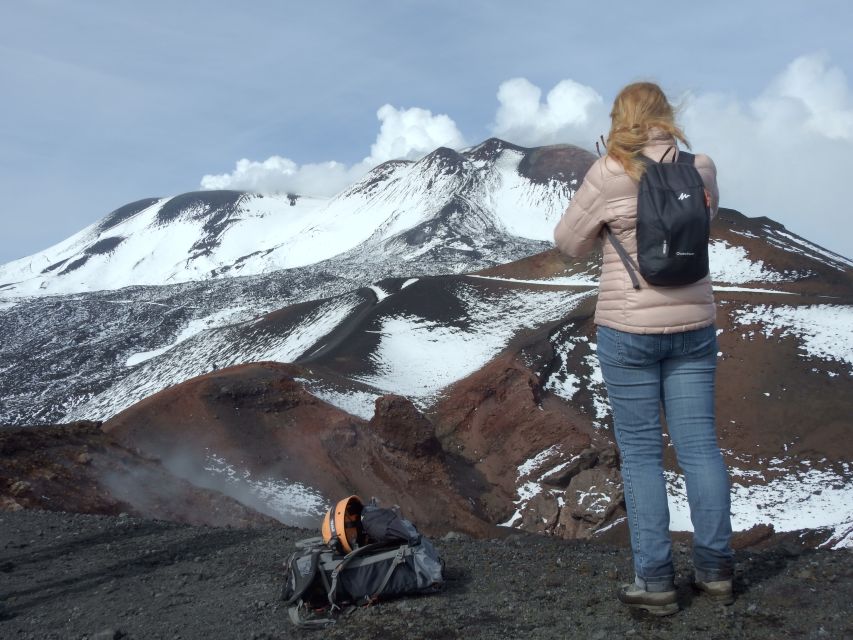
Your day begins with pickup from your hotel, with two options: Catania or Taormina. That convenience is more than comfort. It saves you from the hassle of coordinating transport up-slope on your own, which can turn into a time sink in Sicily.
After pickup, you’ll ride in a Jeep/SUV for about 1 hour. This off-road portion matters because it positions you for the cable car segment and helps you get into the “real” Etna approach instead of only seeing roadside views. It’s also a quiet transition period—enough time to get oriented, but not so long that you feel dragged into the day.
A small practical note: you’ll be asked to wait in the hotel lobby about 10 minutes before your scheduled pickup time. If you travel with a slow-moving group or you’re still finishing coffee, plan a little buffer.
Cable car ascent: getting near the active craters faster
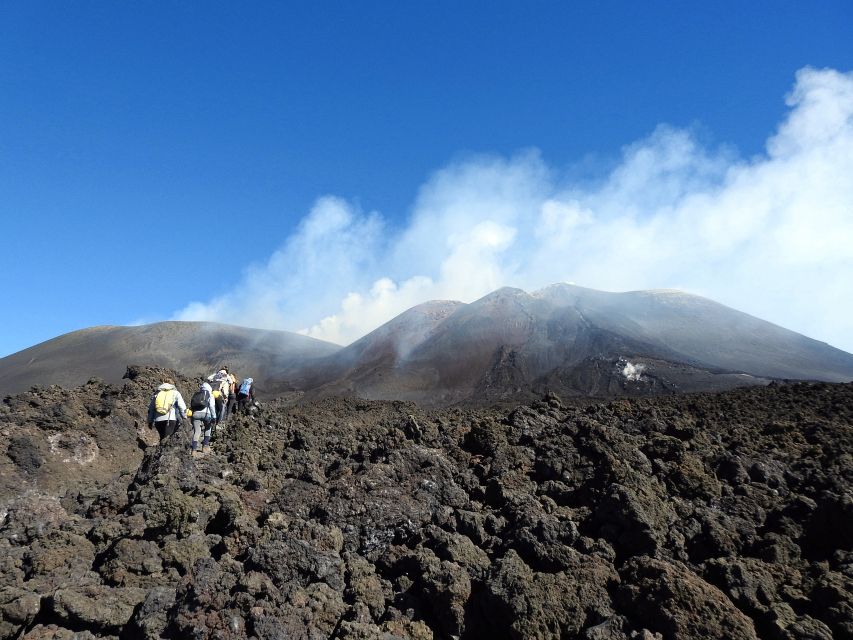
From there, you move to the cable car segment (about 20 minutes). The value here is straightforward: cable car gets you close to high altitude quickly, which helps when you’re planning a hike. At Etna, altitude isn’t just a number—it changes how you feel and how much time you can comfortably spend walking.
Once you reach the upper area (you’ll be around 8200 feet / 2500 m), you’re set up for the start of the hiking portion. The hike begins from a panoramic zone close to the active summit craters, with the upper area around 8500 feet / 2600 m.
During this phase, expect scenery to shift fast. You’re going from Mediterranean surroundings into a world where the ground, the air, and the views all feel volcanic. And because you’re going upward efficiently, you spend more time where it counts: on the route.
The hiking portion: a guided round-track around the 2001 craters
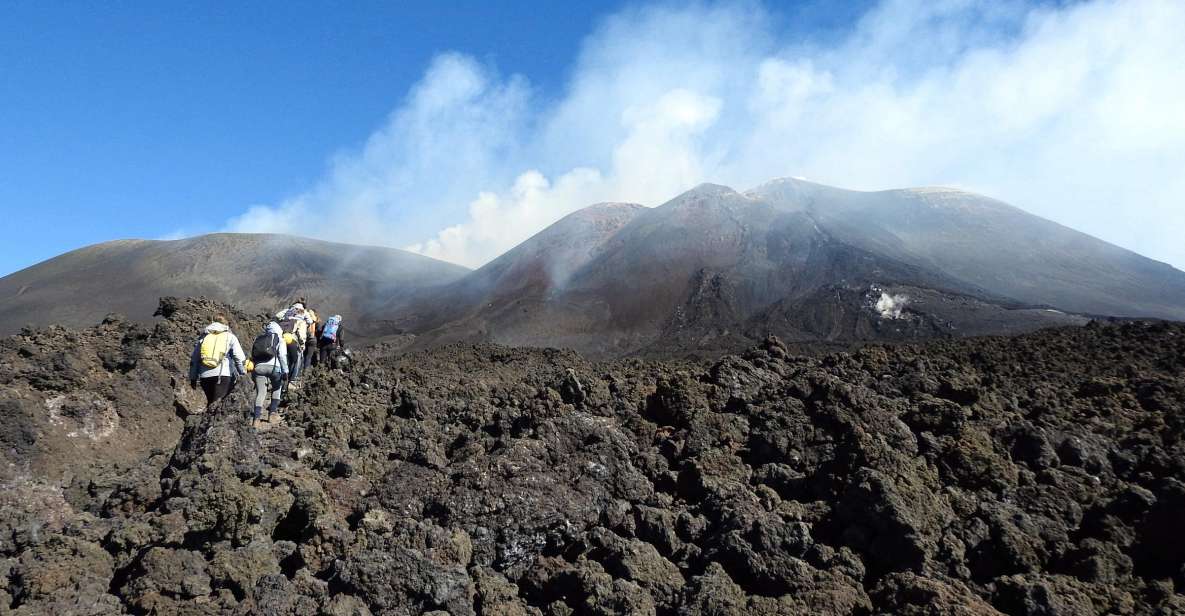
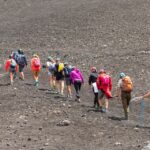
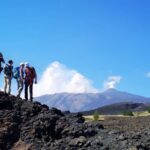
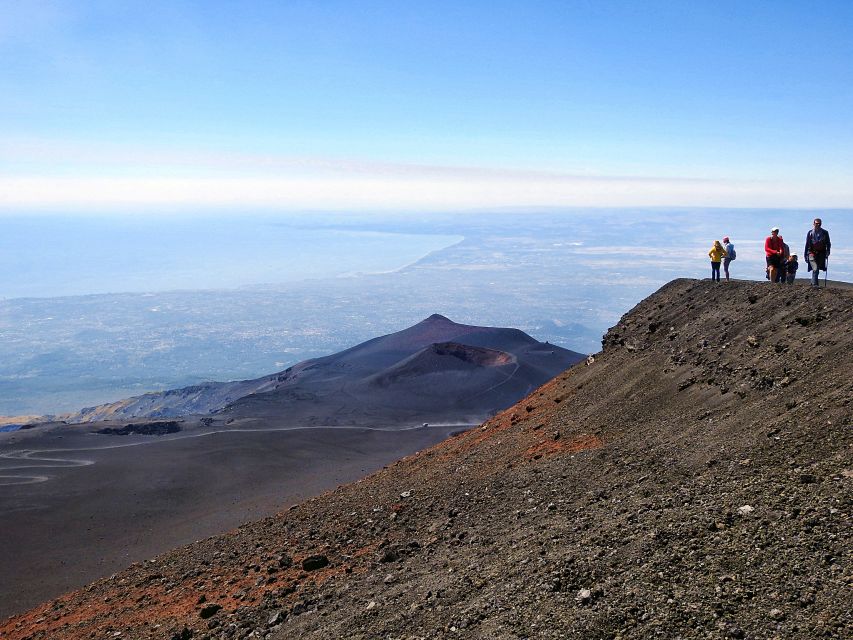
This is the core of the experience. You’ll have a guided walk through a path that follows craters formed during eruptions in 2001. The itinerary is built around a classic Etna rhythm: climb up, then descend on volcanic ash.
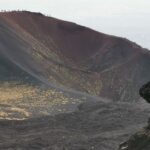
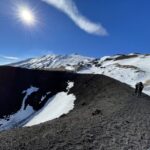
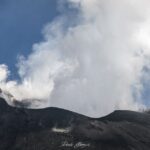
The uphill portion takes you to the top of the 2001 crater. This isn’t a “walk and forget” segment. Even without extreme technical difficulty, altitude and uneven footing mean you’ll want to keep a steady pace and listen to your guide’s safety guidance. The reward is that first big sense of place—this is where you see how active Etna can look up close, including smoky craters on one side.
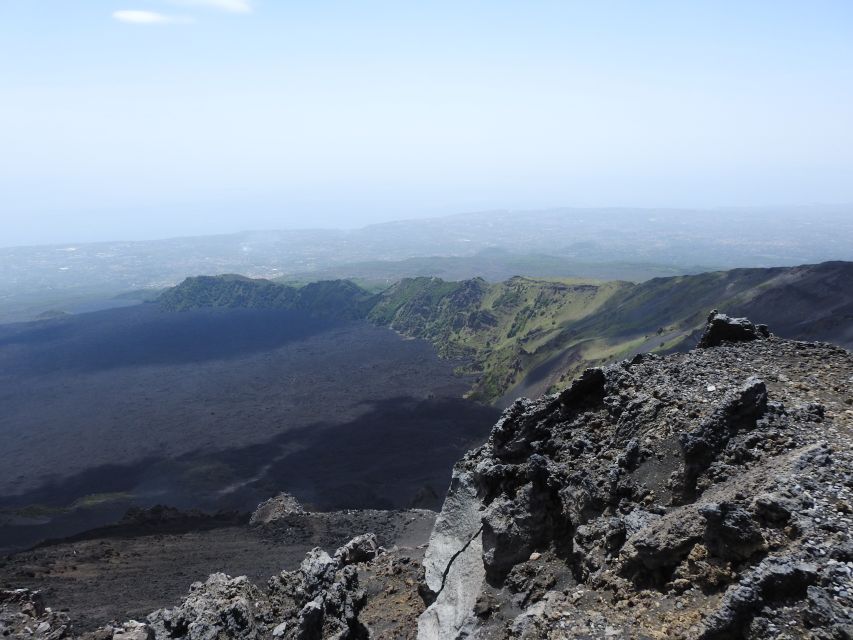
After that, the descent begins on volcanic ash accumulated during eruptions, heading toward Valle del Bove—a large caldera-like depression where much of the lava flow has moved over time. Walking down on ash has a different feel than typical trail dirt. You’re closer to the raw materials of eruption, and that makes the experience more memorable and more educational.
What makes the guidance especially useful
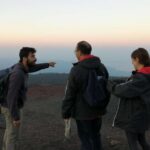
A crater hike is not just about steps. It’s about knowing what you’re looking at and how the terrain connects. With a private guide, you can ask questions in real time and get answers tied to your exact vantage points—rather than general explanations that don’t match what you’re seeing.
In at least one highlighted review, Roberto was praised for being highly experienced and easy-going, which is a nice combination when you want confidence without feeling rushed.
You can also read our reviews of more private tours in Mount Etna
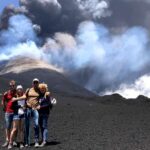
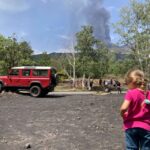
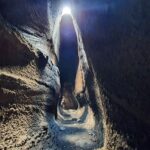
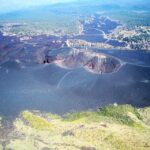
Valle del Bove: seeing the eastern-flank depression at scale
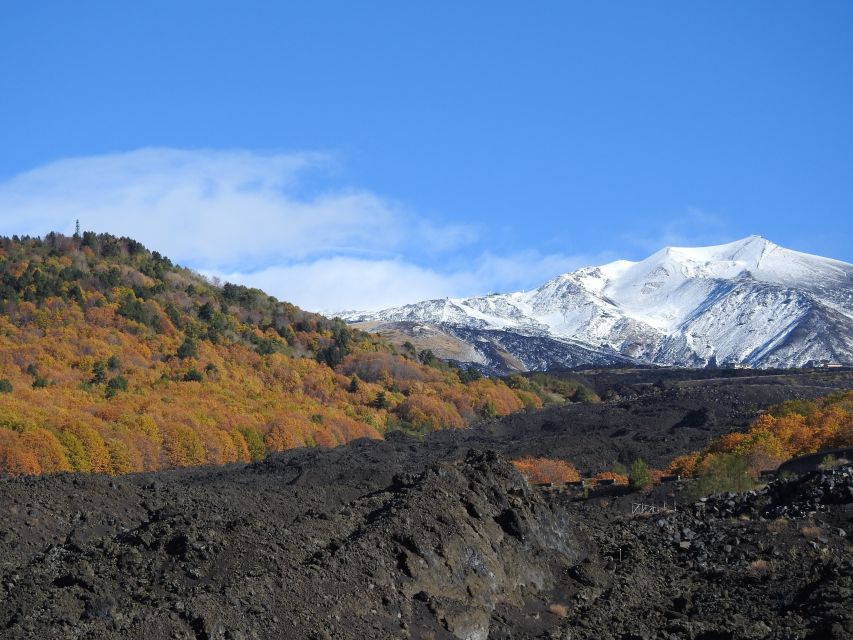
You’ll get the chance to see Valle del Bove, described as a huge depression covering much of Etna’s eastern flank. In practical terms, this means your viewpoints can pull back from “one crater at a time” into the bigger story of how the volcano shapes whole sections of land.
You’ll also get a split-screen feel during the hike: smoky crater activity in one direction and wide views over the Ionian coast in the other. That combination is one reason this route stands out. It helps you understand that Etna isn’t just a peak—it’s a system.
If you care about photos, you’ll find yourself wanting to stop more often than you planned. Even if you’re not chasing perfect shots, the view is the kind that makes you slow down and actually look.
Jeep, cableway, and break time: how the pacing usually works
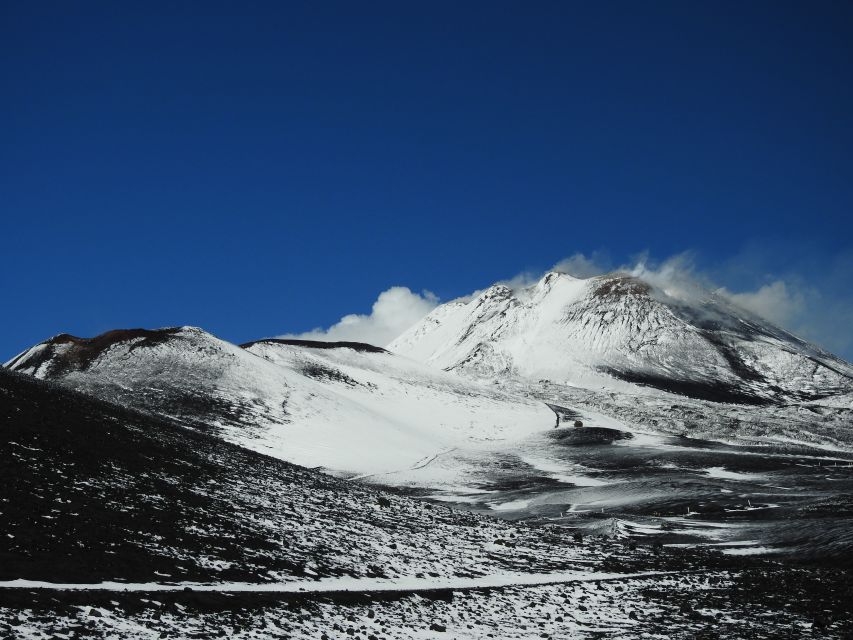
Your day runs about 5 hours total. The schedule includes several segments that keep things moving but not frantic:
- Jeep/SUV ride (about 1 hour)
- Cable car (about 20 minutes)
- Cableway of Etna plus guided time with a break, visits, hiking, and safety briefing, totaling about 2.5 hours on that active upper-area phase
That “break time + visit + guided tour + hiking” combo is important. At altitude, fatigue sneaks in. A built-in pause helps you regroup, hydrate, and prepare for the more demanding parts of the ash descent.
Gear you get for the ash and altitude
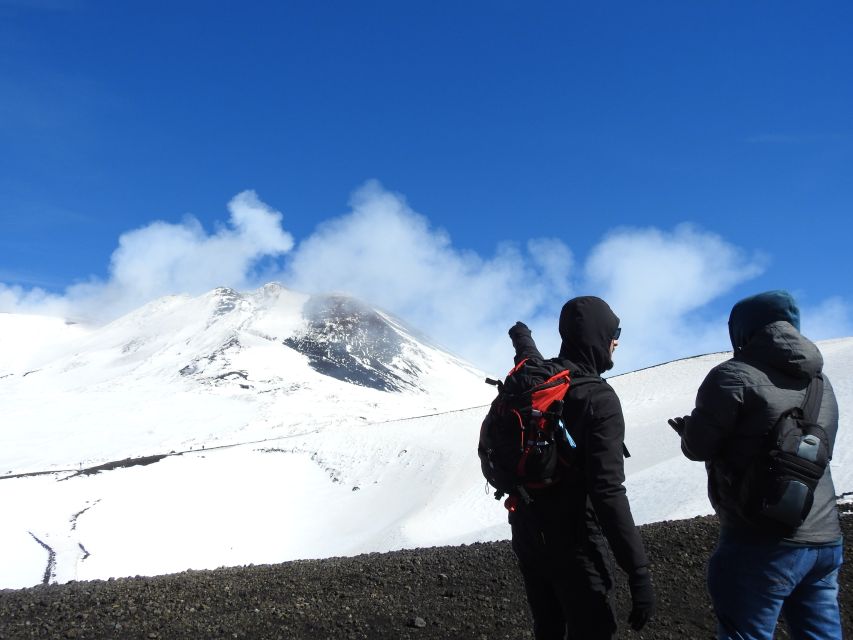
You won’t need to haul a full hiking kit yourself. You’ll have access to basic hiking equipment, including:
- Backpacks
- Hiking poles
- Raincoats
- Caving helmets
That helmet detail is a clue that the environment is treated as more than a normal nature walk. It’s volcanic terrain with safety rules, and having the right gear reduces mental clutter. It also means you can pack lighter if you’re already juggling Sicily luggage for the rest of your trip.
If you tend to get cold at higher elevations, bring layers even in warmer months. Rain gear helps, but wind and cool air can still happen near the summit zone.
Weather and volcanic alerts: why the route can change
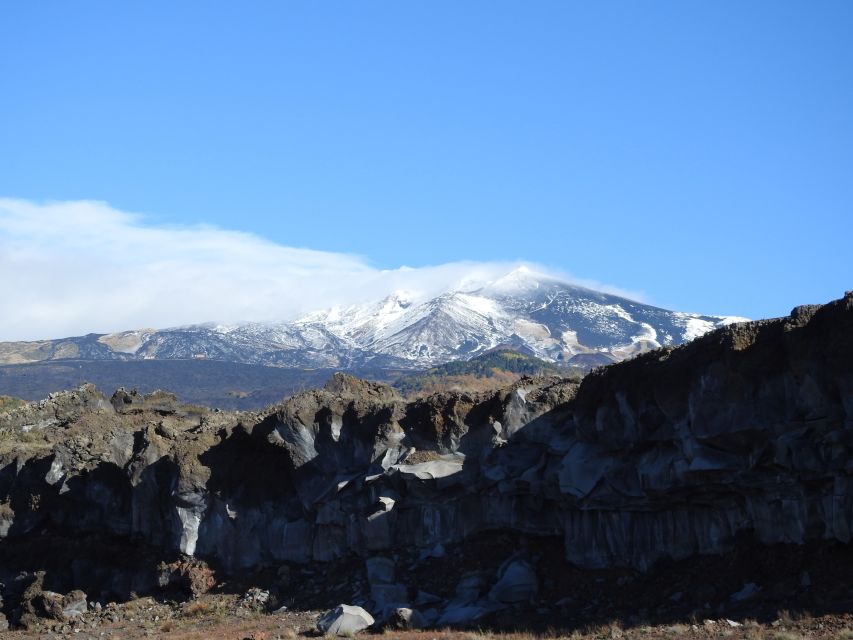
Here’s the reality of Etna: the hike to the summit depends on weather and on the volcano’s geo-dynamic activity, including possibilities like eruptions, explosions, lava flows, and volcanic alerts. When that happens, the schedule and route can shift.
What you can count on is a safety-first adjustment: in those cases, the hike is carried out to the maximum authorized altitude. Translation for you: don’t plan your day like it’s a theme-park ride with fixed timing. Instead, treat it as a flexible, live volcano experience.
If you want the best chance of reaching higher zones, pick a day with more stable weather and keep your expectations flexible.
Bilingual private guiding: worth it when you’re walking through real craters
This tour is a private group with a bilingual guide. Languages offered are English, French, and Italian.
This matters because the value isn’t only in transportation. It’s in interpretation. You’re walking through features like the craters from 2001 and heading toward the caldera area of Valle del Bove. Without guidance, you’d likely see cool shapes and steam, then move on. With guidance, you build a mental map of why those features look the way they do and what it means in the broader story of Etna.
In the review highlights, Roberto’s experience and relaxed style came through as a major reason the tour felt like a full Etna package rather than a basic transport ride. That’s a good reminder: you’re paying for expertise in a place where conditions can change quickly.
Price and value: $609.79 for up to 2 people
At $609.79 per group (up to 2 people), this isn’t the cheapest Etna day you’ll find. But when you break down what’s included, the price starts to look more rational than it first appears.
You’re getting:
- Hotel pickup and drop-off
- Bilingual guide
- Cable car tickets
- A structured day built around off-road access, high-altitude travel, and a guided hiking route
The strongest value is that you’re not just going up and back. You’re guided through active volcanic zones and you’re walking the ash descent portion, which is typically where the “experience” happens.
If you’re comparing against cheaper options that mainly do a bus-based up-and-down approach, this one is built for actual walking time near the craters. For couples or two-person groups, private guiding can also feel calmer and more efficient—especially when you want questions answered on the spot.
Who should book this Etna hike
This experience fits best if you:
- Want a private crater-focused day rather than a crowd ride
- Enjoy walking and can handle uneven volcanic ash ground
- Appreciate guides who can explain what you’re seeing as you’re seeing it
- Like the combination of summit-area views plus the bigger-scale Valle del Bove perspective
It’s not a fit if you:
- Are pregnant
- Have mobility impairments
- Prefer fully flat, easy walking
Even if you’re generally fit, think of this as a hike at high altitude with volcanic surfaces. Go in prepared.
Should you book Etna Unlimited’s private guided hike?
I’d book this if you want your Etna day to feel like a real guided hike with high-altitude access, not just a drive to a viewpoint. The mix of jeep + cable car, the guided route tied to 2001 craters, and the ash descent toward Valle del Bove is exactly the kind of structure that turns Etna into more than a quick stop.
Book it with the right mindset: it’s weather- and alert-dependent. If you can handle that flexibility, you’ll likely find this one of the more worthwhile ways to see Etna’s active side while still getting a meaningful hike time.
FAQ
How long is the Etna private guided hike?
The duration is about 5 hours. Starting times depend on availability.
Where are the pickup and drop-off locations?
Pickup and drop-off are available from Catania or Taormina, with two pickup options and two drop-off options.
What’s included in the price?
The tour includes hotel pickup and drop-off, a bilingual guide (English, French, Italian), and cable car tickets.
How do you get up the mountain?
You travel by Jeep/SUV for about 1 hour, then take the cable car for about 20 minutes, reaching roughly 2500 m (8200 ft) before starting the hike near the summit area.
What altitude does the hike reach?
The hike involves areas up to around 8500 ft (2600 m), but the maximum authorized altitude can change based on weather and volcanic activity.
Is it suitable for everyone?
It is not suitable for pregnant women or people with mobility impairments. The hike depends on conditions and involves hiking on volcanic terrain.