REVIEW · SYRACUSE
Ortigia guided night tour, Syracuse
Book on GetYourGuide →Operated by Sicily in Travel · Bookable on GetYourGuide
Ortigia looks different at night. This 2-hour guided walk turns the island’s alleyways into a live story, with lights on stone and a guide who explains how places changed through time.
I especially like two parts. First, you start at the Temple of Apollo, one of Ortigia’s anchors, and you get immediate context instead of wandering blind. Second, the route packs in major stops—Piazza Duomo, Palazzo Bellomo area, Maniace Castle, and Arethusa Spring—without making you rush so hard you miss the details.
The one drawback to plan around: the pace is short and walking-focused, so if you want long, sit-down time or indoor views, you’ll be happier elsewhere. Also, the cathedral inside isn’t part of the visit.
In This Review
- Key highlights worth knowing
- Ortigia after dark: what makes this night tour work
- Getting oriented fast at the Temple of Apollo
- Piazza Archimede and the Diana Fountain (1907)
- Piazza Duomo: learning the cathedral story without going inside
- Palazzo Bellomo area: what you spot from the street
- Via Castello Maniace: walking toward the Swabian viewpoint
- Maniace Castle at night: the moment that ties it together
- Palazzo Montalto: the hidden-palace pause in the alleys
- Arethusa Spring (Fonte Aretusa): legend with night calm
- Price and value: is $88 for 2 hours a fair deal?
- Languages, timing, and how to plan your evening
- Who this Ortigia guided night tour suits best
- Small practical tips to enjoy it more
- Should you book this Ortigia guided night tour?
- FAQ
- How long is the Ortigia guided night tour in Syracuse?
- Where does the tour start?
- What are the main stops on the route?
- Can I enter the cathedral at Piazza Duomo?
- Is a meal or drinks included?
- What does the tour cost?
- What languages are the guides available in?
- Is the tour wheelchair accessible?
- Is free cancellation available?
- Is there a reserve and pay later option?
Key highlights worth knowing
- Temple of Apollo opener: you begin with one of Ortigia’s oldest Doric landmarks, then build from there.
- Piazza Archimede and the Diana Fountain (1907): a quick stop that’s perfect for night photos and orientation.
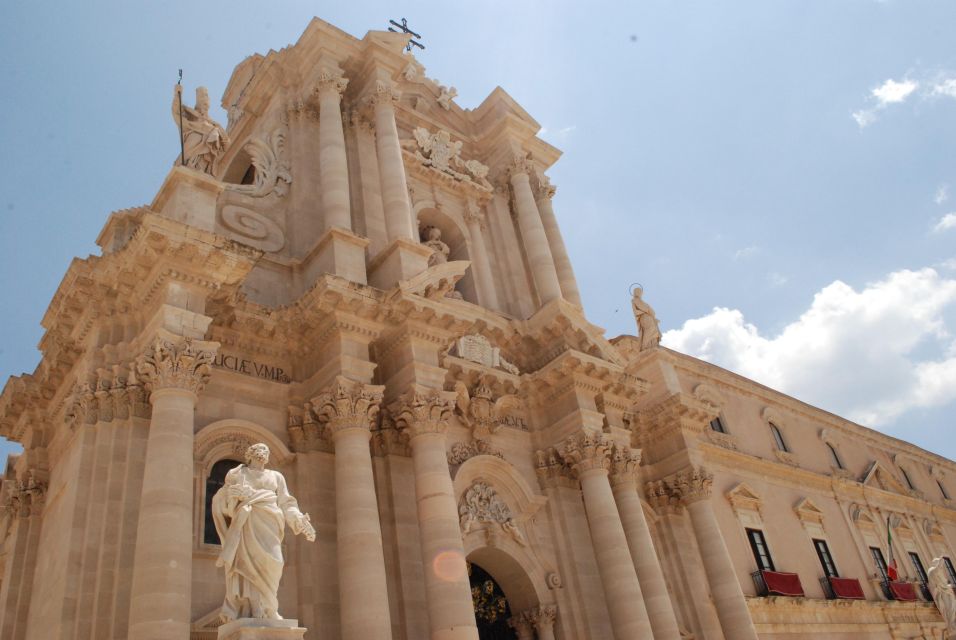
- Piazza Duomo, from the outside: you’ll learn the cathedral’s layered story, even though you can’t go inside.
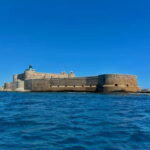
- Maniace Castle at the tip of Ortigia: a Swabian-period setting that feels extra dramatic after dark.
- Fonte Aretusa / Arethusa Spring: you’ll pause here for the legend tied to the spot.
Ortigia after dark: what makes this night tour work
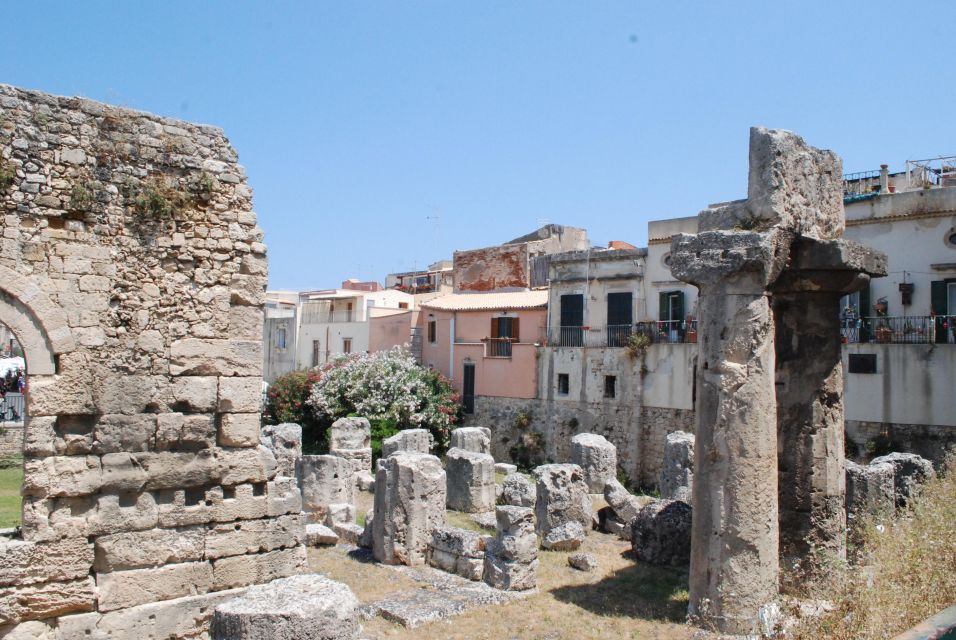
Ortigia is built for wandering, but at night it gets smarter. The streets narrow, the lights bounce off pale stone, and suddenly the island’s layout makes sense fast. This tour is designed for that exact moment: you get a guided path through the key sights while the atmosphere does the heavy lifting.
I like that the focus stays practical. In just two hours, you come away with a mental map of where the landmarks sit and how they relate to each other. That matters in Syracuse because Ortigia isn’t one single monument—it’s a small world of squares, churches, palaces, and viewpoints.
One more thing I appreciate: the narration is history-linked without turning into a museum lecture. You learn how different colonisations and transformations shaped what you see now. The guide isn’t just pointing; they’re connecting the dots between the Greek-era temple, the medieval castle, and the cathedral area that evolved over time.
You can also read our reviews of more guided tours in Syracuse

Getting oriented fast at the Temple of Apollo
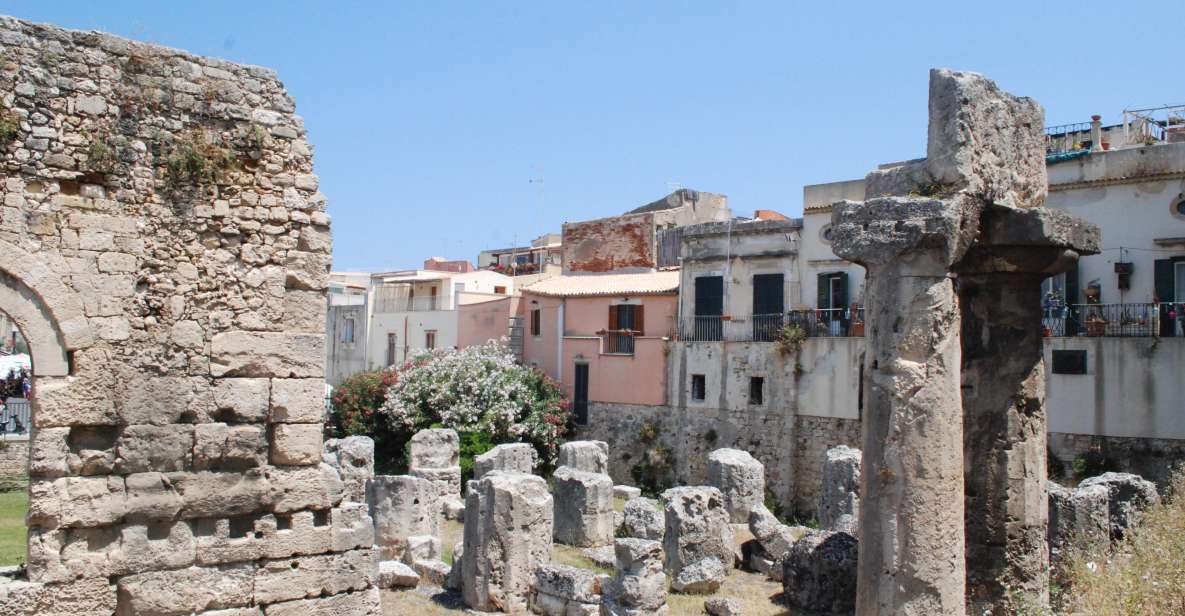
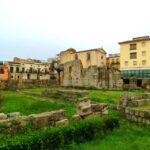
Your tour kicks off at the Temple of Apollo, with about 15 minutes here to settle in. This is one of the most important monuments on Ortigia and described as the oldest temple in the Doric West. Even if you’re not a classics nerd, it’s a strong starting point because it’s clearly ancient and clearly central to the island’s story.
What I like about starting here is psychology. If you begin with a landmark that feels rooted in deep time, everything you see afterward clicks into place. You’re better able to judge distances and understand why certain squares and streets developed where they did.
At night, the stone takes on a different mood. Rather than feeling like a daytime monument you rush past, the temple becomes a quiet anchor before the rest of the lights and alleyways pull you onward.
Piazza Archimede and the Diana Fountain (1907)
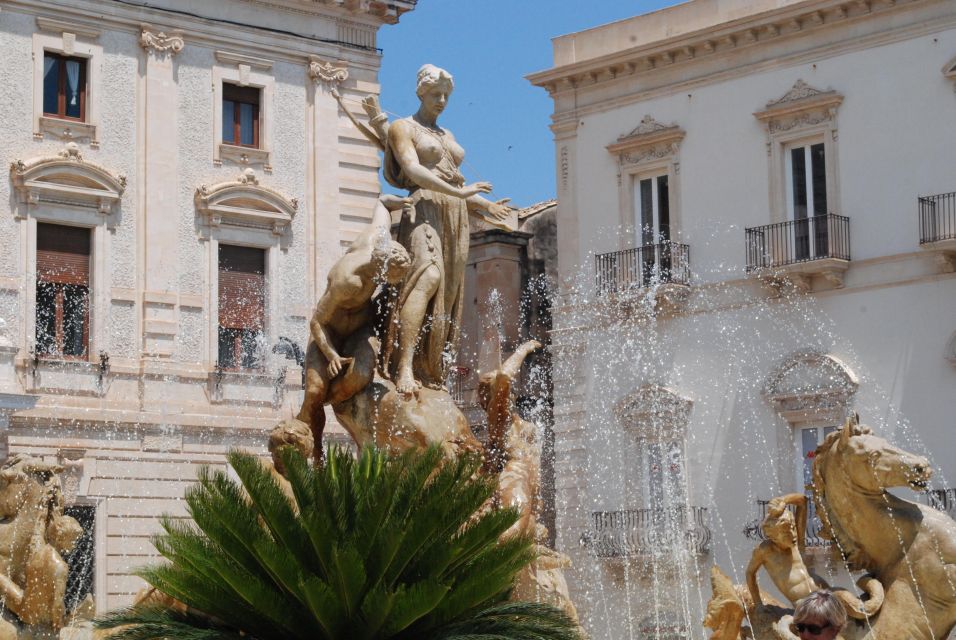
Next you move to Piazza Archimede, with about 10 minutes on site. The main reason to pay attention here is the Diana Fountain, dating from 1907. That date is useful because it reminds you Ortigia isn’t frozen in ancient time—it keeps changing, adding new layers as the island develops.
This stop also plays a role in the tour’s flow. Small square breaks are important on a night walk because they give you a place to pause, look up, and reset your bearings. Even if you only have a few minutes, the fountain gives you a clear visual waypoint.
If you’re the kind of traveler who wants at least one moment of beauty that isn’t a ruin, this is it. It’s also one of those spots where nighttime lighting helps you see the fountain’s shape instead of just its existence.
Piazza Duomo: learning the cathedral story without going inside
You’ll spend around 25 minutes in Piazza Duomo. This is where you get the “main square” energy of Ortigia, and it’s also where the tour balances drama with realism: you can’t visit the church interior, but your guide pauses to explain the cathedral’s history through multiple colonisations and transformations.
That limitation can feel like a bummer if you came hoping for an indoor visit. But from a value standpoint, the stop still makes sense. You’re getting context for one of the island’s most significant religious buildings, and you’re doing it in a way that helps you understand what you’ll notice from the outside later.
Here’s how to make the most of it: stand where your guide points out architectural changes. In a square like this, small shifts in style and massing often tell the story. Even without entering, you can connect what you learned to what you see in real time.
Palazzo Bellomo area: what you spot from the street
The itinerary includes a 10-minute visit to the Galleria regionale di Palazzo Bellomo di Siracusa area. The key idea here is not that you’re spending hours in an art program. Instead, you’re observing a historic building and learning what to look for as part of Ortigia’s layered identity.
This stop is one of those “small time, big payoff” moments. You don’t need long hours to appreciate that the palace setting shapes the feel of the surrounding streets. Even if you’re not stepping inside, you leave knowing where this cultural landmark fits into the island’s wider geography.
It’s also a good breather. After a longer square stop, a short pause at a prominent building keeps the pace moving while giving your eyes time to regroup.
You can also read our reviews of more evening experiences in Syracuse


Via Castello Maniace: walking toward the Swabian viewpoint
Then comes a longer 25-minute stretch along Via Castello Maniace. This is where you start feeling the geography shift: you’re moving toward the tip of Ortigia, and the walking route gradually changes the mood.
At night, the approach matters. The streets can feel like a maze in daylight, but after dark it’s still possible to follow the route when a guide is explaining what you’re looking at and where you’ll end up next.
This is your lead-in to Mani ace Castle, which the tour describes as one of the most important monuments of the Swabian period. The night atmosphere is specifically called out as magical, and that makes sense because a castle silhouette often benefits from darkness and dramatic lighting cues.
Maniace Castle at night: the moment that ties it together
Stopping near Castello Maniace—at the tip of Ortigia—you get a classic “arrive and breathe” moment. The castle’s importance in the Swabian period gives the stop a stronger story than many viewpoints. You’re not just looking at a pretty end of the street; you’re seeing a power-era landmark placed where it could oversee the island.
I like that the tour builds here after teaching you about other periods. By the time you reach the castle, you’ve already seen older monumental forms and civic-religious space. That makes the castle feel like the natural next chapter.
If you’re taking photos, this is the place to slow down and frame carefully. The combination of open-ish viewing angles, stone textures, and night lighting gives you a better chance at shots that look like Syracuse instead of just another Italian street at night.
Palazzo Montalto: the hidden-palace pause in the alleys
Next is Palazzo Montalto, about 10 minutes. The description frames it as a beautiful historical palace hidden among Ortigia’s alleys. That’s exactly how you should treat this stop: don’t expect a grand open courtyard moment. Expect a short pause where the guide helps you notice how the palace presence shapes the narrow streets around it.
This is also where the tour’s “alleyway discovery” idea becomes real. Ortigia is famous for its walking lanes, and Palazzo Montalto is a good example of how history can feel close by even when you’re not facing a single, dramatic front door.
From a traveler perspective, I find these quick palace stops worth it because they prevent the walk from becoming only temples and squares. You get the residential/palace layer, which is a big part of how Ortigia feels lived-in.
Arethusa Spring (Fonte Aretusa): legend with night calm
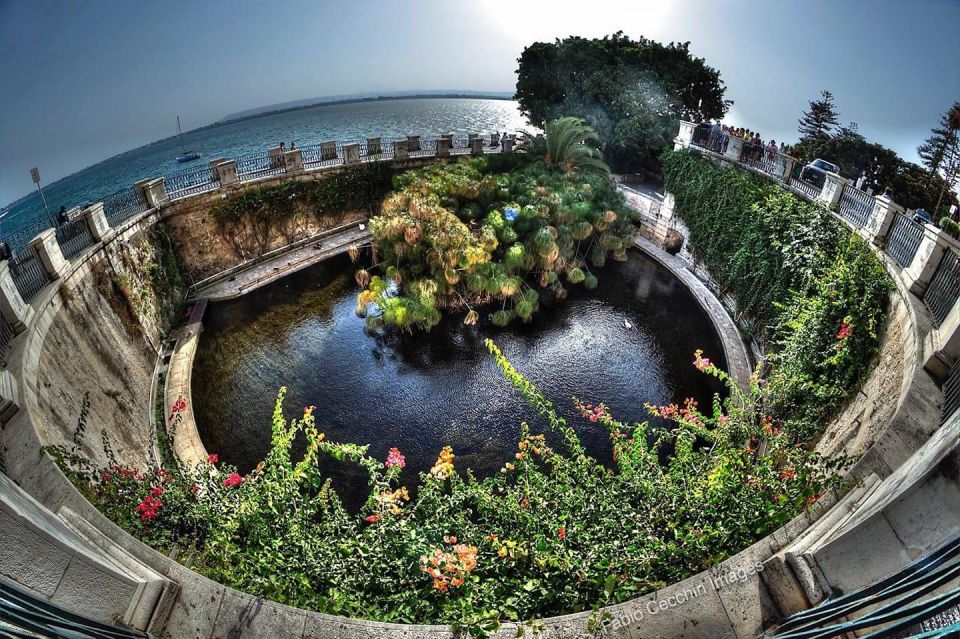
You’ll finish with a longer 25-minute visit at Fonte Aretusa, also known as Arethusa Spring. This stop is built around a legend, and that’s a big part of why it’s a good tour capstone. After seeing monuments and civic spaces, you end with a story tied to water and place.
I like ending here because the pace feels different. The spring area tends to feel calmer, and you can reset your senses after walking through heavier visual moments like squares and castle structures.
If you remember one thing from the tour, make it this: you’re learning Ortigia as a whole system of meaning—stone buildings, public spaces, and a spring with its own story. That blend is what makes the guided approach feel worth it instead of simply collecting photo spots.
Price and value: is $88 for 2 hours a fair deal?
At $88 per person for a 2-hour guided tour, the value depends on what you want from the night in Ortigia.
You are getting:
- a qualified tour guide
- a structured route through key monuments
- history narration tied to the landmarks you’ll see
- a pace that fits into a short evening window
What you’re not getting is equally important:
- no meal or drinks are included
- you can’t visit the cathedral interior
So, where does that leave you? If you’re the type who likes context and orientation, this price can make sense because it replaces the need to research every stop yourself. You also save time. Instead of figuring out which sights to prioritize, you follow a path designed to hit the island’s main points in a tight schedule.
If you’re hoping for lots of indoor time or self-guided freedom to linger for an hour at each place, then the short format is less of a fit. This tour is for seeing and learning fast, not for slow exploring.
Languages, timing, and how to plan your evening
The tour runs with a live guide in Italian, English, and Russian. That’s handy if you’re traveling with people who prefer a specific language, and it also suggests the guide can keep narration clear for different audiences.
Duration is 2 hours, and starting times depend on availability. For night tours, the timing matters more than you think. You’ll want comfortable walking shoes and a quick plan for how you’ll get back to your dinner place after returning near the Temple of Apollo.
Also, keep in mind this is a walking-focused experience around older streets and landmarks. Even though the tour is wheelchair accessible, your comfort will still depend on your ability to handle uneven paving and narrow lanes at night.
Who this Ortigia guided night tour suits best
This is a great fit if you want:
- a high-impact orientation to Ortigia in a short evening
- guided history tied directly to the monuments around you
- a structured way to see the island without spending hours planning
It’s also smart for first-timers. If Syracuse is new to you, having a route that hits Apollo Temple, Archimede Square, Duomo Square, the Palazzo Bellomo area, Maniace Castle, Palazzo Montalto, and Fonte Aretusa helps you understand the island as a network.
If you already know Ortigia well and want to linger at one or two specific spots, you may find this tour too short. But for most people who want a memorable night walk with clear takeaways, it lands in a sweet spot.
Small practical tips to enjoy it more
A night tour feels easy until you’re in it. Here are a few practical moves that help:
- Dress for a real evening temperature change. Sicily can cool off after sunset even when afternoons feel warm.
- Bring a way to capture low-light photos, but don’t get stuck shooting every single stop.
- If you care about cathedral architecture, listen closely during the Piazza Duomo explanation. Since you can’t go inside, the viewing points become the whole experience.
- Save your big meal for after. This tour doesn’t include food, and you’ll enjoy it more without juggling hunger.
Should you book this Ortigia guided night tour?
I’d book it if you want an efficient, story-led night walk that shows you Ortigia’s main monuments and how they connect. The route is built around high-value landmarks—Temple of Apollo, Piazza Duomo area, Maniace Castle, and Fonte Aretusa—and the guide’s job is to connect the dots instead of letting you guess.
Skip it if your priority is extended indoor time, long stays at each stop, or a food-and-wine evening built around tasting. This tour is about walking and learning, not dining.
Based on the strong review score and comments about a friendly, well-prepared guide, it’s the kind of experience that usually delivers when you want your night to feel guided and satisfying.
FAQ
How long is the Ortigia guided night tour in Syracuse?
The tour lasts 2 hours.
Where does the tour start?
It starts at the Temple of Apollo.
What are the main stops on the route?
The tour includes the Temple of Apollo, Piazza Archimede (with the Diana Fountain), Piazza Duomo, the Galleria regionale di Palazzo Bellomo area, Via Castello Maniace, Palazzo Montalto, and Arethusa Spring (Fonte Aretusa), then returns to the Temple of Apollo.
Can I enter the cathedral at Piazza Duomo?
No. The tour includes explanations in Piazza Duomo, but it is not possible to visit the church inside.
Is a meal or drinks included?
No. Meal and drinks are not included.
What does the tour cost?
The price is listed as $88 per person.
What languages are the guides available in?
The live tour guide is available in Italian, English, and Russian.
Is the tour wheelchair accessible?
Yes, the tour is wheelchair accessible.
Is free cancellation available?
Yes. You can cancel up to 24 hours in advance for a full refund.
Is there a reserve and pay later option?
Yes. You can reserve now and pay later.